St. Croix
15 km away
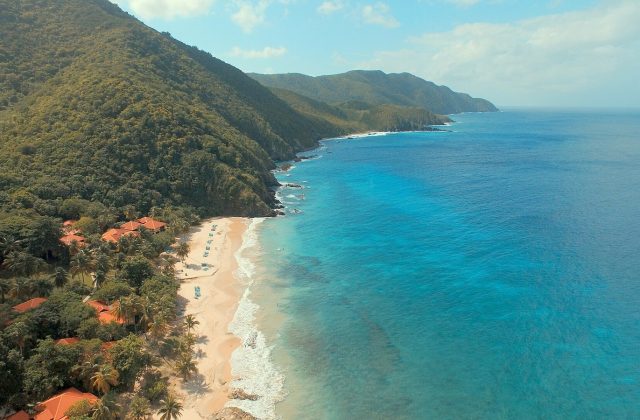
St. Croix is the largest of the US Virgin Islands, a 215-square-kilometre island south of St. Thomas with two Danish…
3 tours & trips
US Virgin Islands · Caribbean Sea · Nature & wildlife island
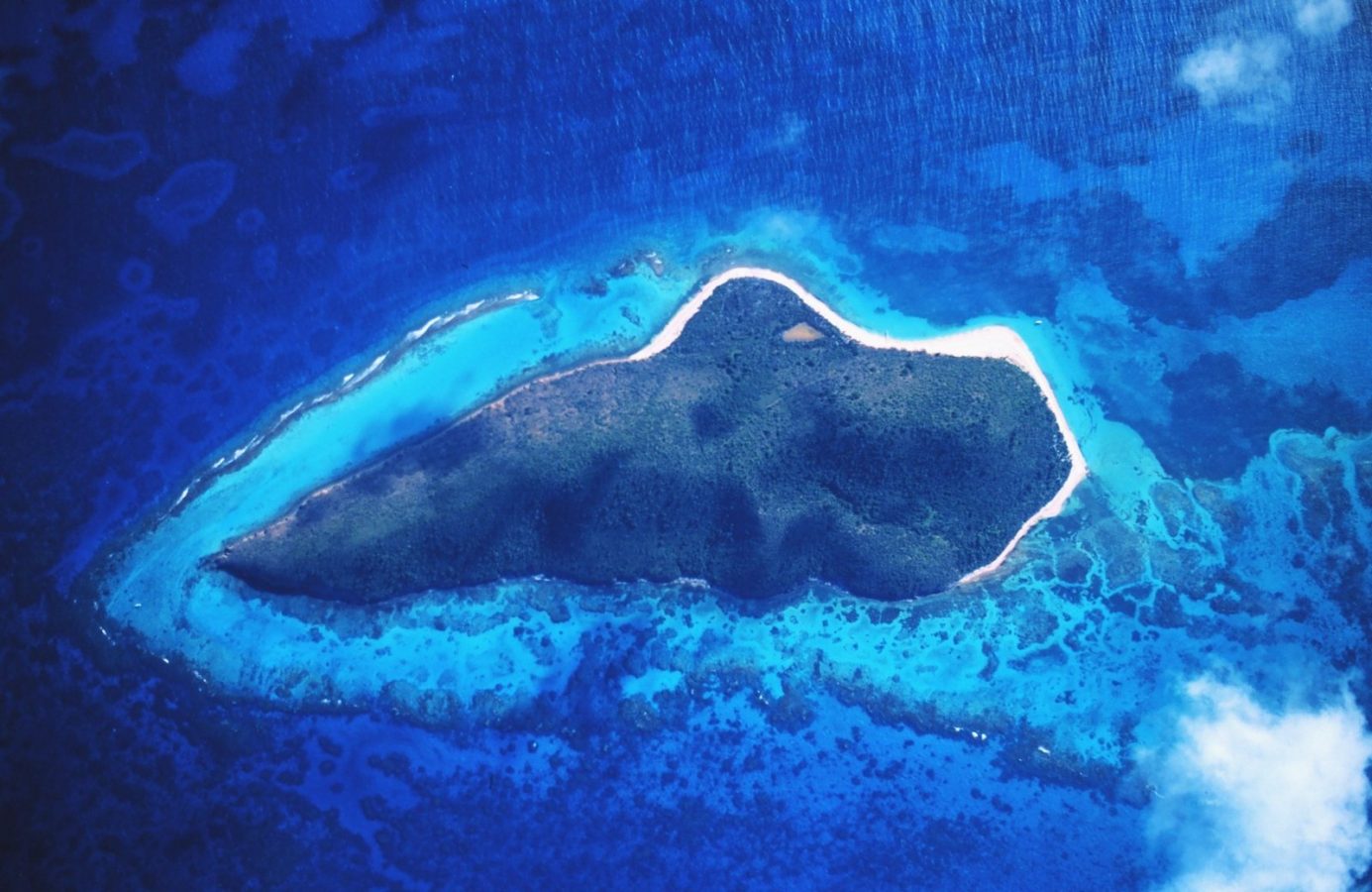
Buck Island is a small, uninhabited island about 2.5 km off the north-east coast of St Croix in the US Virgin Islands, protected as Buck Island Reef National Monument. Visitors come on a half-day boat trip for a swim along an underwater snorkel trail through elkhorn coral and an hour on the white sand of Turtle Beach.
| Getting there | Licensed boats from Christiansted take about 45 min to 1 h; from the east-end marinas about 20 min |
|---|---|
| Gateway | Christiansted (St Croix) |
| Travel time | About 45 min to 1 h by boat |
| Days | A half-day or day trip is enough |
| Best months | Dec–Apr dry and breezy; May–Jun calm seas; hurricane season Jun–Nov |
| Getting around | On foot only: one beach, one hiking trail and the snorkel trail; no shop or water |
| Booking | Boat trips a few days ahead in winter and on cruise days; full-day sails sell out first |
| Cost | Mid-range for the Caribbean |
| Beaches | Turtle Beach on the west end: fine white sand, shallow clear water and picnic tables |
| Sea | Caribbean Sea |
| Archipelago | Virgin Islands |
| Area | 0.7 km² |
| Population | Uninhabited |
| Highest point | 95 m |
| Airport | No |
| Checked | November 2026 |
Nothing is sold online for this Buck Island itself. In practice you book directly with one of the boat operators licensed by the National Park Service, since only these concessioners and private boats with a permit may carry visitors to the monument.
The standard product is a half-day trip from the Christiansted waterfront on a catamaran, a trimaran or a fast powerboat. It normally includes the boat, snorkel gear, a short briefing and a guide in the water along the underwater trail, followed by a stop at Turtle Beach. Full-day sails add a picnic lunch, drinks and more beach time, and some boats leave from the east-end marinas, which cuts the crossing to about 20 minutes. A small park entry fee is usually added to the price; check whether it is included, and bring a towel and reef-safe sunscreen.
Smaller boats mean less crowding on the trail and more help for nervous swimmers, so they are worth the extra cost. The best choice for most people is a morning half-day trip, when the water is calmest and clearest, booked a few days ahead.
On the east end, inside the lagoon behind the barrier reef, a marked trail leads past underwater signs that name the corals and fish around you. Expect elkhorn and brain coral, parrotfish, blue tangs and sometimes turtles or rays in water of a few metres. Your boat moors nearby and a guide swims the route with the group.
After snorkelling, boats move to the west end and anchor off this curve of fine white sand with shallow, very clear water. You have an hour or so to swim, rest under the sea grape trees and use the picnic tables and toilets. Hawksbill and green turtles nest here, so keep away from marked nests.
From near Turtle Beach a trail climbs through dry tropical forest to an observation point with views over the reef and St Croix's north coast. The walk takes under an hour there and back. Wear shoes, carry water and avoid the manchineel trees, whose sap and small green apples burn the skin.
An elkhorn coral barrier reef wraps around much of the island, and divers on longer trips explore its outer edge. From the boat watch for brown pelicans diving, frigatebirds overhead and terns on the rocks. Corals here were badly hit by disease from the 1980s, and you can see damaged and recovering patches side by side.
The departure town is worth half a day of its own. Danish colonial warehouses and arcades line the waterfront, and the yellow Fort Christiansvaern is part of a national historic site. Stroll the boardwalk where the Buck Island boats moor, then eat in one of the courtyard restaurants in the old streets.
First you reach St Croix. Henry E. Rohlsen Airport on the south coast has flights from Miami, other mainland US cities and San Juan in Puerto Rico; US citizens need no passport. Seaplanes link the harbours of St Thomas and Christiansted, and cruise ships dock at Frederiksted on the west end, about 40 minutes by road from Christiansted.
Boats to Buck Island leave from the Christiansted boardwalk, a crossing of 45 minutes to an hour depending on the boat, and from the marinas east of town, where the trip is about 20 minutes. There is no ferry and no overnight stay: the monument is open for day use only. Private boaters need a free permit from the park and must use the moorings rather than anchor on coral.
Buck Island has no roads, shops or drinking water, so everything you need comes with you on the boat. You move between the snorkel trail and Turtle Beach by boat, and on land you walk the beach and the single hiking trail. On St Croix you will want a rental car to reach the marinas, beaches and towns; remember that traffic drives on the left. Taxis meet flights and cruise ships, and open-sided taxi buses run along the main road.
The water is warm all year, around 26 to 29 degrees, so snorkelling is always possible. December to April is the dry, sunny high season with steady trade winds, the most visitors and the highest prices on St Croix; on a breezy day the crossing can be bumpy. May and June often bring the calmest, clearest water and fewer people before the summer.
Hurricane season runs from June to November, with September and October the riskiest months and some businesses closing for a few weeks. Turtles nest on the beaches in summer and autumn. St Croix's Christmas festival, with parades and music from late December into early January, makes that period lively and busy. Book the boat for your first good-weather morning, as trips are sometimes cancelled when the sea is rough. Half a day is enough for Buck Island; three to five nights cover St Croix.
You cannot stay on Buck Island, so choose a base on St Croix. Christiansted is the most practical: walkable streets, restaurants, bars and the Buck Island boats a few steps from your room. The resorts and villas of the east end are quieter, close to the marinas with the shortest crossing and to the island's wildest scenery. Frederiksted on the west end has sunsets, long beaches and a slower pace, and Cane Bay on the north shore suits divers.
Buck Island has never had a permanent population. Through the colonial era, when St Croix was a Danish sugar island, its forest was cut and goats were left to graze it, which is the likely origin of the name. The United States bought the Danish West Indies in 1917, and in 1961 President Kennedy declared the island and its reef a national monument; it was greatly enlarged in 2001. Goats and rats were later removed, and the dry forest, seabirds and nesting turtles have been slowly recovering since, under strict park rules.
Spend the rest of your time on St Croix: Point Udall at the eastern tip, the wall dive at Cane Bay and the town of Frederiksted. St Thomas is about 25 minutes away by seaplane, with ferries from there to St John and its national park, and San Juan in Puerto Rico is a short flight.
15 km away
St. Croix is the largest of the US Virgin Islands, a 215-square-kilometre island south of St. Thomas with two Danish…
3 tours & trips
70 km away
Tortola is the largest island of the British Virgin Islands, 55.7 square kilometres of steep green hills rising to…
1 tour
75 km away
Jost Van Dyke is the smallest of the four main British Virgin Islands, about 8 square kilometres of steep green hills…
1 tour
Licensed boats from Christiansted take about 45 min to 1 h; from the east-end marinas about 20 min.
From Christiansted (St Croix): about 45 min to 1 h by boat.
A half-day or day trip is enough.
Dec–Apr dry and breezy; May–Jun calm seas; hurricane season Jun–Nov.
On foot only: one beach, one hiking trail and the snorkel trail; no shop or water.
Go if you want one of the best marked snorkel trails in the Caribbean on a half-day trip. Skip it if you are not comfortable swimming in open water or want shade, food and facilities, as there are only picnic tables and toilets.
Mid-range for the Caribbean.
Turtle Beach on the west end: fine white sand, shallow clear water and picnic tables.
Boat trips a few days ahead in winter and on cruise days; full-day sails sell out first.
Virgin Islands, US Virgin Islands
St. Croix is the largest of the US Virgin Islands, a 215-square-kilometre island south of St. Thomas with two Danish…
3 tours & trips
Virgin Islands, US Virgin Islands
St John is the smallest of the three main US Virgin Islands, about 51 square kilometres of steep green hills and…
No tours listed
Virgin Islands, US Virgin Islands
St Thomas is the busiest of the US Virgin Islands, about 81 square kilometres of steep green hills rising to 474 metres…
No tours listed