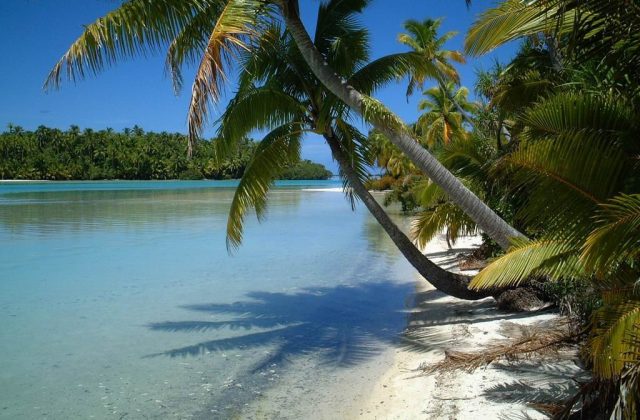
Rarotonga
Cook Islands
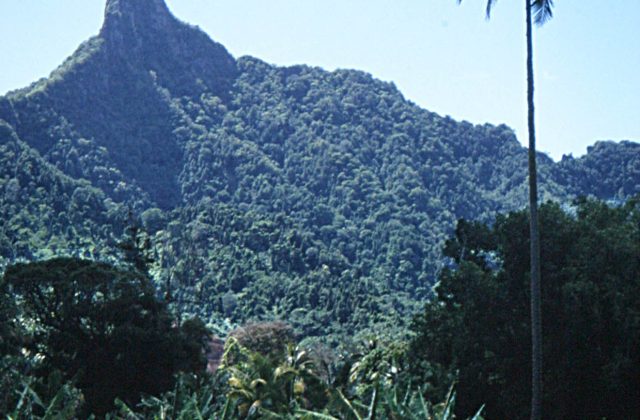
Rarotonga is the main island of the Cook Islands, a ring of green volcanic peaks rising to 652 metres inside a…
4 tours & trips
Cook Islands · Pacific Ocean · Beach island
The Cook Islands are a self-governing Polynesian nation of 15 islands scattered across a vast area of the South Pacific, in free association with New Zealand. Most visitors come to Rarotonga, a green volcanic island ringed by a lagoon and a 32 km coast road, and add Aitutaki, whose huge turquoise lagoon is a short flight north.
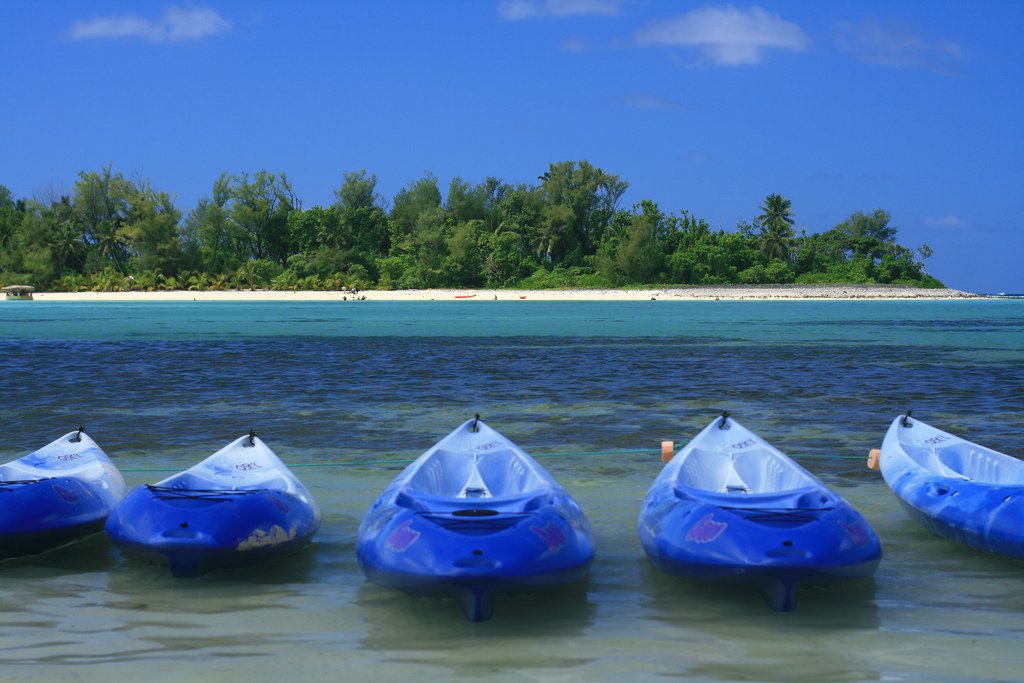
Photo: User: (WT-shared) TVerBeek at wts wikivoyage, CC BY-SA 2.0
| Getting there | Flights to Rarotonga from Auckland in about 4 h, with fewer links from Sydney, Tahiti and Los Angeles |
|---|---|
| Gateway | Auckland, then Rarotonga |
| Travel time | About 4 h by air from Auckland |
| Days | A week or more |
| Best months | May–Oct, dry and cooler; Nov–Apr hot, humid and cyclone season |
| Getting around | Round-island bus and rented scooters on Rarotonga; flights to Aitutaki and other islands |
| Booking | Flights and rooms months ahead for NZ school holidays; Aitutaki cruises a few days ahead |
| Cost | Expensive, with New Zealand price levels |
| Beaches | White sand and shallow lagoons: Muri and Titikaveka on Rarotonga; the sandbanks of Aitutaki |
| Sea | Pacific Ocean |
| Area | 237 km² |
| Population | 14,222 (2023) |
| Highest point | 652 m (Te Manga) |
| Airport | Yes, scheduled flights |
| Car-free | No |
| Checked | October 2026 |
Very little is sold online for the Cook Islands compared with the size of the tourist industry; most activities are booked locally, often through your accommodation, after you arrive.
What does appear in advance are snorkelling outings in Rarotonga's lagoon, with a guide, gear and transport, some focused on finding turtles.
Locally, the choice is wide. On Rarotonga, glass-bottom boats and kayaks explore Muri lagoon and its small islets, and dive centres take certified divers outside the reef. Guided walks cross the island via the Needle, and cultural evenings combine a buffet with drumming and dance. A tour of the island by bus or bike introduces its marae, churches and plantations.
Aitutaki is the highlight for many visitors. Day trips from Rarotonga combine the flight with a lagoon cruise, snorkelling stops and lunch on a motu; they are long but worthwhile if you cannot stay. Better still, spend two or three nights there and take the cruise from the island.
For a first trip, book flights and rooms ahead, then arrange the Aitutaki cruise and a guided snorkel once you land.
On the south-east coast, a wide, shallow lagoon with four small islets is the island's best place to swim, kayak and paddleboard. Paddle out to the motu at high tide, snorkel over the coral gardens, and eat at the beachfront restaurants in the evening. Muri is about 20 minutes by bus from Avarua.
A 50-minute flight north of Rarotonga, Aitutaki has a triangular lagoon of extraordinary colour dotted with sandy motu. A day cruise visits giant clams, coral and fish, then lands on One Foot Island, where you can have your passport stamped at a tiny post office. Stay at least two nights if you can.
This walk of about three to four hours crosses Rarotonga from Avarua to the south coast, climbing through forest to the base of Te Rua Manga, the Needle, a rock spire with a wide view. The path is steep, rooty and slippery after rain; go with a guide if unsure and catch the bus back.
The small capital on the north coast has the harbour, shops, cafes and the Punanga Nui market, busiest on Saturday mornings, with food stalls, fresh fruit, black pearls and local crafts. On Sunday, visit a Cook Islands Christian Church service to hear the remarkable unaccompanied singing; dress modestly.
On the south coast between Muri and the airport side, the lagoon at Titikaveka has some of Rarotonga's best snorkelling, with clear water and coral close to shore around the Aroa marine reserve. Swim inside the reef only, away from the passages, where currents run out to sea.
For a quieter side of the country, fly to Atiu, a raised coral island with limestone caves, native birds and a coffee plantation, or to Mangaia, one of the oldest islands in the Pacific. Flights are infrequent and accommodation simple, so plan these legs carefully.
Our pick for each kind of trip, with live dates and prices. Free cancellation on most.
Best for: First visit, snorkelling the lagoon
A guide takes you to the best coral and fish in Rarotonga's lagoon, with gear provided, a safer start than swimming out alone near the passages.
Rarotonga's international airport, just west of Avarua, is the entry point. Air New Zealand flies from Auckland, about four hours, several times a week to daily, and there are seasonal or weekly links from Sydney, Los Angeles and Tahiti. Many visitors combine the trip with New Zealand. Note that flying east from Auckland crosses the date line, so you arrive on the previous calendar day.
Between the islands, Air Rarotonga runs domestic flights: several a day to Aitutaki in about 50 minutes and a few a week to Atiu, Mangaia and the other islands. There is no regular passenger ferry for visitors, and cargo ships to the outer islands are infrequent. Cruise ships call occasionally and anchor offshore.
On Rarotonga, two buses circle the coast road, one clockwise and one anticlockwise, roughly every hour in the day, and they stop anywhere you wave. Scooters, cars and bicycles are widely rented; traffic drives on the left, the speed limit is low and the road is flat, so cycling is pleasant. Check licence rules when you hire a scooter. On Aitutaki, rent a scooter or bicycle, as there is no regular bus.
The Cook Islands are tropical. May to October is the dry season, with temperatures in the mid twenties, lower humidity and the most settled weather; it is also the peak time, especially during New Zealand and Australian school holidays in July. From July to October humpback whales pass close to the reef and can be seen from shore.
November to April is hotter and more humid, with heavy showers and the risk of cyclones, most likely from January to March; prices can be lower and the sea is at its warmest. The Te Maeva Nui festival around early August celebrates independence with dance and music. A week allows four or five nights on Rarotonga and two or three on Aitutaki; with less time, focus on Rarotonga.
On Rarotonga, the Muri area on the south-east coast is the most popular base, with the calmest lagoon, restaurants and water sports. Titikaveka on the south coast is quieter, with good snorkelling. The west coast near Arorangi faces the sunset and suits those who want to be close to the airport. Avarua is practical but has no real beach. On Aitutaki, places to stay are spread around the lagoon, from simple bungalows to resorts on small motu.
Polynesian voyagers settled these islands many centuries ago, and Rarotonga is remembered as one of the starting points of the canoes that reached New Zealand. James Cook sighted several of the southern islands in the 1770s, and the group was later named after him. Missionaries from the London Missionary Society arrived in the 1820s, and their coral-lime churches still dominate every village. The islands became a British protectorate, were annexed by New Zealand in 1901 and have been self-governing since 1965. Most Cook Islanders now live in New Zealand, yet the language, dance and drumming are thriving.
Most travellers pair Rarotonga with Aitutaki, 50 minutes away by air. The Cook Islands also fit as a stopover between New Zealand and North America, or on a longer Pacific trip with Tahiti and French Polynesia, which have direct flights to Rarotonga, and with Auckland, about four hours away.
Flights to Rarotonga from Auckland in about 4 h, with fewer links from Sydney, Tahiti and Los Angeles.
From Auckland, then Rarotonga: about 4 h by air from Auckland.
A week or more.
May–Oct, dry and cooler; Nov–Apr hot, humid and cyclone season.
Round-island bus and rented scooters on Rarotonga; flights to Aitutaki and other islands.
Go if you want calm lagoons, easy snorkelling and relaxed Polynesian island life a few hours from Auckland. Skip it or choose Fiji if you want cheaper resorts, more variety and shorter flights from Australia.
Expensive, with New Zealand price levels.
White sand and shallow lagoons: Muri and Titikaveka on Rarotonga; the sandbanks of Aitutaki.
Flights and rooms months ahead for NZ school holidays; Aitutaki cruises a few days ahead.
Yes. Boat trips, guided tours and day trips for Cook Islands can be booked online; live prices and free cancellation on most are shown on this page.
Cook Islands
Rarotonga is the main island of the Cook Islands, a ring of green volcanic peaks rising to 652 metres inside a…
4 tours & trips
Cook Islands
Aitutaki is an almost-atoll in the Cook Islands: a low, green main island of about 18 square kilometres beside a vast…
No tours listed