Cook Islands
Cook Islands
The Cook Islands are a self-governing Polynesian nation of 15 islands scattered across a vast area of the South…
195 tours & trips
Cook Islands · Pacific Ocean · Beach island
Rarotonga is the main island of the Cook Islands, a ring of green volcanic peaks rising to 652 metres inside a turquoise lagoon, only 32 km around. It combines lagoon snorkelling, a mountain hike across the middle and an easy-going Polynesian capital, and is the gateway to Aitutaki.
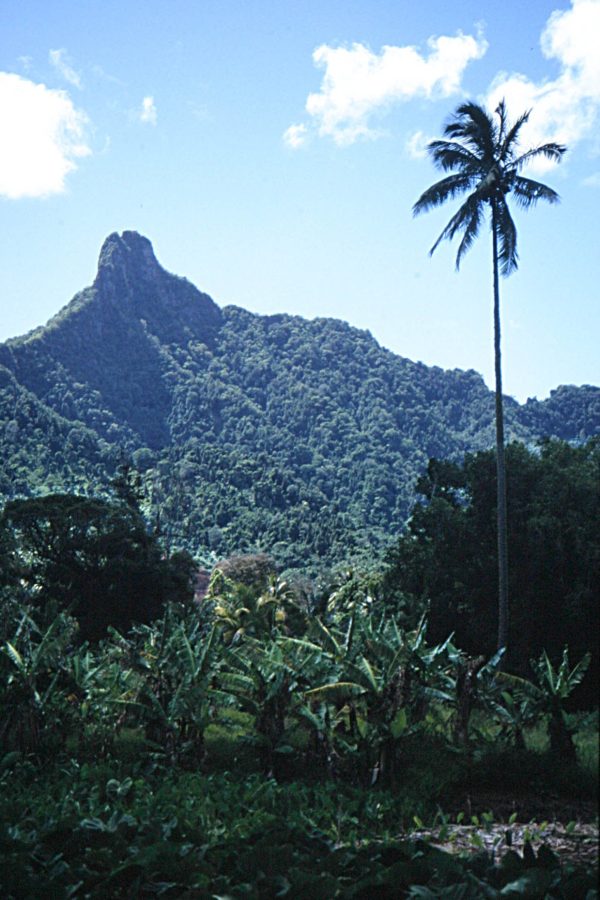
Photo: W. Bulach, CC BY-SA 4.0
| Getting there | Flights to Rarotonga airport near Avarua, about 4 h from Auckland; less frequent from Sydney, Tahiti, LA |
|---|---|
| Gateway | Auckland (flights to Rarotonga airport) |
| Travel time | About 4 h by air from Auckland |
| Days | A week or more |
| Best months | May–Oct dry and cooler; Nov–Apr hot, humid, cyclone risk |
| Getting around | Round-island buses in both directions; rent a car, scooter or bike |
| Booking | Flights and rooms months ahead for NZ school holidays; Aitutaki trips a week ahead |
| Cost | Mid-range for the South Pacific; imported goods expensive |
| Beaches | White sand along the lagoon; Muri and Aroa for swimming and snorkelling, Black Rock for sunsets |
| Sea | Pacific Ocean |
| Area | 67 km² |
| Population | 10,898 (2021) |
| Highest point | 652 m (Te Manga) |
| Airport | Yes, scheduled flights |
| Car-free | No |
| Checked | October 2026 |
Rarotonga has a wide choice of small, locally run activities, most of them on or near the water.
The most popular are lagoon trips. Glass-bottom boats and small cruises leave from Muri in the southeast, visit the motu islets inside the reef and include snorkelling, a barbecue lunch and often a coconut-husking show. Turtle snorkelling trips go outside the reef by boat, usually for two to three hours, with masks and fins included and sometimes underwater photographs; private versions exist for families. From July to October whale-watching boats look for humpbacks, which pass close to the reef.
On land, the guided Cross-Island walk takes a group over the central ridge with transport back, and cultural evenings, known as Island Nights, combine a buffet with drumming and dance. Surf lessons, paddleboard hire, kitesurfing at Muri and scuba diving are also easy to arrange.
The other big product is a day trip by plane to Aitutaki, with a lagoon cruise, lunch and flights included; it is expensive but very popular.
Most activities can be booked a day or two ahead once you arrive. A good first week includes a lagoon cruise, a turtle snorkel, the cross-island hike and an Island Night.
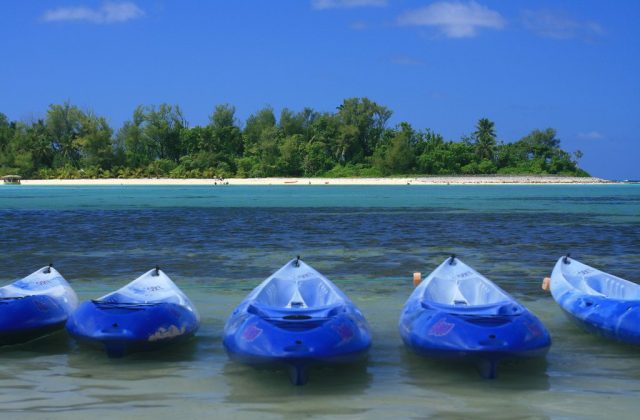
On the southeast coast, Muri is the widest and calmest stretch of the lagoon, a shallow turquoise bay protected by four small motu islets. You can paddle a kayak or wade out to the motu at low tide, swim in water that is waist deep, or join a glass-bottom boat. In the evening the night market here sells cheap local food.
The track climbs from the north coast through rainforest to the foot of Te Rua Manga, a rock spire known as the Needle, then drops to Wigmore's Waterfall on the south side. It takes three to four hours, is steep and slippery after rain, and is best walked with a guide or in a group. Start early.
The southern lagoon near Titikaveka has the island's best snorkelling, with a marine reserve at Aroa where fish are protected. Swim out from the beach to coral heads with parrotfish, trevally and sometimes turtles. Stay inside the lagoon and well away from the passages through the reef, where currents can be strong.
The small capital on the north coast has the parliament, the harbour, shops and cafes. On Saturday mornings the Punanga Nui market fills the waterfront with fruit, fresh fish, black pearls, carvings and live music. Nearby stands the coral-lime church built by missionaries in the 19th century, where the singing at the Sunday service is memorable.
Inland of the coastal road runs the Ara Metua, an ancient road said to be about a thousand years old, past taro gardens, fruit trees and old ceremonial sites. It is best seen by bike. The marae of Arai-te-Tonga, near the north coast, is one of the most important.
On the northwest coast, beyond the airport, a dark volcanic outcrop stands in the lagoon at Black Rock, where in Maori tradition the spirits of the dead depart. The beach is good for swimming and snorkelling, and the west coast is the place to watch the sun set over the reef with a drink.
Our pick for each kind of trip, with live dates and prices. Free cancellation on most.
Best for: Snorkelling with turtles
A boat trip outside the reef to swim with green turtles, with a guide who takes photographs under water, so you can enjoy it without a camera.
Rarotonga International Airport, just west of Avarua, is the only way in for most visitors. The main link is Auckland, with daily flights taking about four hours; there are also less frequent flights from Sydney, from Tahiti and from Los Angeles, the latter usually weekly. Because the island lies east of the date line, you arrive a day earlier than you left New Zealand.
From Rarotonga, domestic flights reach Aitutaki in about 50 minutes, several times a day, and other outer islands less often. There is no passenger ferry for visitors to the other islands, apart from slow cargo ships. Cruise ships call occasionally, anchoring off Avarua and sending passengers ashore by tender. Most hotels offer airport transfers, as the airport is within 30 minutes of any part of the island.
Getting around is easy. A single coastal road, the Ara Tapu, circles the island in 32 km, and the round-island buses run clockwise and anticlockwise, roughly hourly in the day and less often at night and on Sundays. Scooters, cars and bicycles are widely rented; the speed limit is low and the roads are flat, but watch for dogs and potholes, and drive on the left. Taxis exist but are few. The inland Ara Metua is quieter and pleasant by bike.
Rarotonga is warm all year. The dry season from May to October is the most comfortable, with temperatures in the mid-20s, low humidity, cooler nights and the best conditions for hiking; the lagoon is around 23 to 25 degrees. July to October is also humpback whale season.
From November to April the weather is hotter, wetter and more humid, with heavy downpours and the risk of cyclones, especially from January to March. Prices are a little lower then and the lagoon is at its warmest.
The busiest times are the New Zealand and Australian school holidays, Christmas and the Te Maeva Nui festival around early August, which celebrates self-government with dance and music. Sundays are very quiet, with most shops closed. Allow a week, or ten days with a few nights on Aitutaki.
Muri, on the southeast coast, is the most popular base, with calm water, kayaking, restaurants and the night market. The south coast around Titikaveka is quieter and has the best snorkelling from the beach. The west coast, beyond the airport, has good sunsets and is near Avarua but with a slightly rougher lagoon. Avarua itself suits those who want shops, cafes and nightlife. Because the island is small, anywhere is less than 30 minutes from anywhere else, so choose by the beach you prefer.
Rarotonga was settled by Polynesian voyagers late in the first millennium, and its people trace their ancestors to canoes that arrived from the islands to the east. Society was organised around chiefly titles and marae, many of which survive inland. Europeans arrived only in the early 19th century, and missionaries soon followed, building the white coral-lime churches still in use. The Cook Islands became a British protectorate, then part of New Zealand, and have governed themselves in free association with New Zealand since 1965. Tourism grew after the international airport opened in 1974, but building heights are kept low.
The natural pairing is Aitutaki, 50 minutes away by plane, whose large lagoon and motu are among the most beautiful in the Pacific; three or four nights there is ideal. Rarotonga is also often combined with New Zealand, about four hours away, and with Tahiti and French Polynesia on a longer Pacific trip.
Flights to Rarotonga airport near Avarua, about 4 h from Auckland; less frequent from Sydney, Tahiti, LA.
From Auckland (flights to Rarotonga airport): about 4 h by air from Auckland.
A week or more.
May–Oct dry and cooler; Nov–Apr hot, humid, cyclone risk.
Round-island buses in both directions; rent a car, scooter or bike.
Go if you want a relaxed, safe South Pacific island with lagoon snorkelling, hiking and Polynesian culture without big resorts. Skip it or choose Aitutaki or Bora Bora if your priority is a picture-perfect lagoon and luxury overwater stays.
Mid-range for the South Pacific; imported goods expensive.
White sand along the lagoon; Muri and Aroa for swimming and snorkelling, Black Rock for sunsets.
Flights and rooms months ahead for NZ school holidays; Aitutaki trips a week ahead.
Yes. Boat trips, guided tours and day trips for Rarotonga can be booked online; live prices and free cancellation on most are shown on this page.
Cook Islands
The Cook Islands are a self-governing Polynesian nation of 15 islands scattered across a vast area of the South…
195 tours & trips
Cook Islands
Aitutaki is an almost-atoll in the Cook Islands: a low, green main island of about 18 square kilometres beside a vast…
No tours listed