Chiloe
Chiloe Archipelago, Chile
Chiloe is the large, green island off southern Chile, about 8,400 square kilometres, reached by a 30-minute ferry from…
7 tours & trips
Chile · Pacific Ocean · Remote island
Easter Island, Rapa Nui to its people, is a triangle of 164 square kilometres in the South Pacific, about 3,500 kilometres off the coast of Chile and one of the most remote inhabited islands in the world. Nearly 1,000 moai, the giant stone statues, stand in a UNESCO-listed national park covering much of the island.
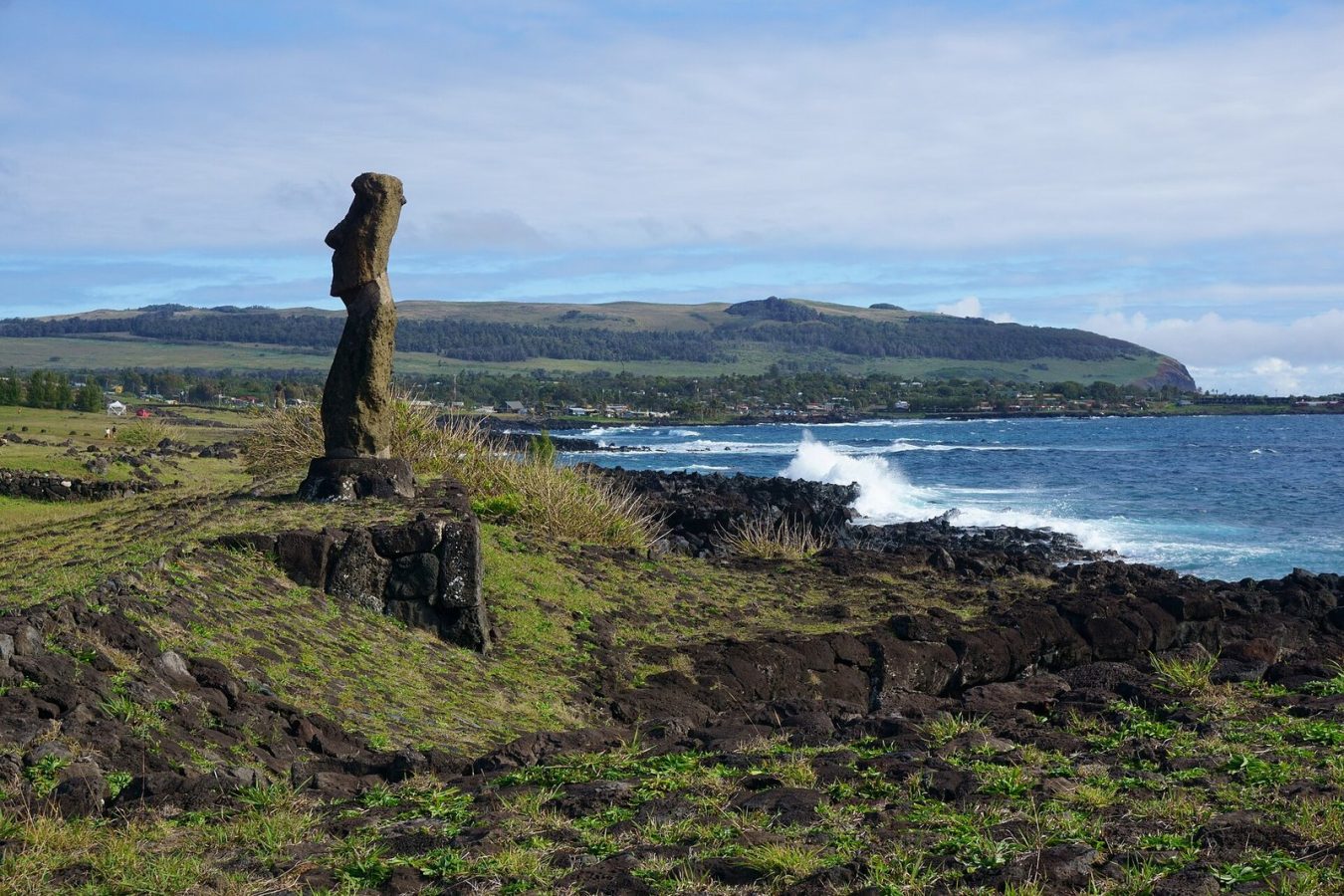
Photo: kallerna, CC BY-SA 4.0
| Getting there | Flights from Santiago, about 5.5 hours; Santiago is the only regular gateway |
|---|---|
| Gateway | Santiago de Chile |
| Travel time | About 5.5 h by air |
| Days | 3 to 5 nights |
| Best months | Dec–Mar warmest, Tapati festival in Feb; Apr–Nov cooler, wetter and cheaper |
| Getting around | Rent a car, scooter or bike, or join guided tours; no public buses |
| Booking | Flights and rooms months ahead, especially for February; national park ticket online |
| Cost | Expensive for Chile |
| Beaches | Two white-sand beaches, Anakena and Ovahe, on the north coast; elsewhere rocky shores |
| Sea | Pacific Ocean |
| Area | 164 km² |
| Population | 7,750 (2017) |
| Highest point | 507 m (Terevaka) |
| Airport | Yes, scheduled flights |
| Car-free | No |
| UNESCO | Rapa Nui National Park |
| Checked | October 2026 |
Since the island reopened after the pandemic, most sites in Rapa Nui National Park can only be visited with a licensed local guide, which shapes what is sold. You also need a park ticket, valid for several days and bought in advance or on arrival, which allows one entry each to Rano Raraku and Orongo.
The standard plan is two or three days of guided touring. Full-day tours cover the south-east coast, Ahu Tongariki and the Rano Raraku quarry, ending at Anakena beach. Half days visit Orongo and the Rano Kau crater, or Ahu Akivi, the Puna Pau quarry and the caves. Many operators sell two-day packages covering everything; private tours with your own guide and vehicle cost more but allow flexible timing, such as sunrise at Tongariki.
Beyond the moai, there are horse rides and hikes to Terevaka, the highest point, diving and snorkelling in very clear water, Polynesian canoe outings, boat trips to Motu Nui, stargazing, and carving demonstrations. Most guided tours include transport and a guide; the park ticket and lunch are normally extra.
Recommendation: book a two-day highlights tour with a local guide, then use a rental car for sunset and swimming.
Almost all the moai were carved from the soft volcanic rock of this crater, and hundreds remain on its slopes, some half-buried to their shoulders, others unfinished in the rock face. Walking among them, you see every stage of the work. Inside the crater, a reed-fringed lake holds more statues. Allow two hours with a guide.
Below the quarry, on the south-east coast, fifteen moai stand in a row on the largest ceremonial platform on the island, re-erected in the 1990s after a tsunami had scattered them. This is the classic sunrise spot, about 30 minutes by car from Hanga Roa. Come early to see the sun rise behind the statues.
At the south-western tip, the huge crater of Rano Kau holds a lake covered in reeds. On its rim stands Orongo, a village of low stone houses used for the birdman ceremony, when young men swam to the islet of Motu Nui to collect the first sooty tern egg. Petroglyphs cover the rocks.
On the north coast, about 40 minutes by car from Hanga Roa, Anakena is a white coral sand beach with palms and turquoise water, guarded by Ahu Nau Nau, a row of moai with their red stone topknots. According to tradition, the first king landed here. There are food stalls, and the swimming is good.
The only town has the harbour, restaurants, craft market and the island museum, which tells the story of the Rapa Nui people. At its northern edge, Ahu Tahai has moai, including one with restored eyes, silhouetted against the sunset. It is a 15-minute walk from the centre and free to visit.
The island's highest point, at 507 metres, is reached on foot or on horseback across open grassland, with a view of the whole island and the ocean all around. On the way, Ahu Akivi has seven moai facing the sea, the only ones that do. Nearby are lava tube caves.
Our pick for each kind of trip, with live dates and prices. Free cancellation on most.
Best for: First visit, two days of highlights
Covers the main moai sites over two days with a licensed guide, including the quarry, the platform of fifteen statues and Anakena, which matches the park rules.
Mataveri International Airport, at the edge of Hanga Roa, has flights from Santiago de Chile, taking about 5.5 hours and operating most days. Santiago is the only regular gateway, so connect there from Europe, North America or the rest of South America. Flights at times have also linked the island with Tahiti, but check current schedules.
Fares vary widely, and booking several months ahead usually pays off, especially for February and the Chilean summer holidays. Visitors must fill in an entry form and show a return ticket and accommodation booking; stays are limited to 30 days. Most guesthouses and hotels meet you at the airport, which is a few minutes from town. Some cruise ships anchor offshore and send passengers ashore by tender, but landings are often cancelled because of the swell.
There is no public bus. A rental car or jeep is the most practical way to reach the sights, sunrise at Tongariki and the beach at Anakena. Scooters, quads and bicycles can be rented in Hanga Roa, though the island is hilly and windy. Taxis are cheap within town. Many sites require a guide, so most visitors combine guided tours with a car for free days.
The island has a mild subtropical climate. From December to March, the southern summer is warm and humid, with temperatures around 25 to 28 degrees and the sea warmest for swimming. February brings the Tapati Rapa Nui festival, two weeks of traditional sports, dance and music, when flights and rooms are hardest to find.
From April to November, it is cooler, around 18 to 22 degrees, with more rain and wind from May to August, but fewer visitors and lower prices. Rain comes in short showers rather than all-day downpours. Water visibility for diving is excellent all year. Plan for at least three full days: two for guided touring and one for the beach, a hike or a sunrise. Five nights give time to see the island at a slower pace.
Almost all accommodation is in Hanga Roa, the only town, ranging from campsites and family guesthouses to lodges and a few upmarket hotels. Staying near the centre puts you within walking distance of restaurants, the harbour and Ahu Tahai. Quieter places on the edges of town have sea views and gardens. A few lodges outside town offer isolation, but you will need a car. Many guesthouses are run by Rapa Nui families and can arrange guides.
Polynesian voyagers settled the island around 800 to 1200 and built a society that carved the moai to honour their ancestors, setting them on platforms facing inland. Deforestation and conflict changed the culture, and the birdman cult grew. The Dutch arrived on Easter Sunday in 1722 and gave the island its name. Peruvian slave raids in the 1860s and disease reduced the population to around a hundred people. Chile annexed the island in 1888, and the Rapa Nui language and identity have since revived.
Easter Island is usually combined with mainland Chile: Santiago and the wine valleys, Valparaiso, the Atacama Desert or Patagonia. Allow at least one night in Santiago on each side because of flight times. Travellers crossing the Pacific can sometimes continue to Tahiti, about six hours west.
Flights from Santiago, about 5.5 hours; Santiago is the only regular gateway.
From Santiago de Chile: about 5.5 h by air.
3 to 5 nights.
Dec–Mar warmest, Tapati festival in Feb; Apr–Nov cooler, wetter and cheaper.
Rent a car, scooter or bike, or join guided tours; no public buses.
Go if you want to see the moai, Polynesian culture and volcanic landscapes, and you have at least three full days. Skip it if the long flight and high prices outweigh the history, and choose Tahiti or the Chilean coast instead.
Expensive for Chile.
Two white-sand beaches, Anakena and Ovahe, on the north coast; elsewhere rocky shores.
Flights and rooms months ahead, especially for February; national park ticket online.
Yes. Boat trips, guided tours and day trips for Easter Island can be booked online; live prices and free cancellation on most are shown on this page.
Chiloe Archipelago, Chile
Chiloe is the large, green island off southern Chile, about 8,400 square kilometres, reached by a 30-minute ferry from…
7 tours & trips
Chile
Isla Magdalena is a small treeless island in the Strait of Magellan, about 35 kilometres north-east of Punta Arenas,…
5 tours & trips
Chile
The Juan Fernández Islands are a remote volcanic archipelago in the Pacific Ocean, about 670 km off the coast of Chile,…
No tours listed