Easter Island
Chile
Easter Island, Rapa Nui to its people, is a triangle of 164 square kilometres in the South Pacific, about 3,500…
39 tours & trips
Chile · Pacific Ocean · Remote island
The Juan Fernández Islands are a remote volcanic archipelago in the Pacific Ocean, about 670 km off the coast of Chile, where the sailor Alexander Selkirk was marooned from 1704, inspiring Robinson Crusoe. Fewer than a thousand people live here, almost all in one village, surrounded by steep green peaks, rare wildlife and rich seas.
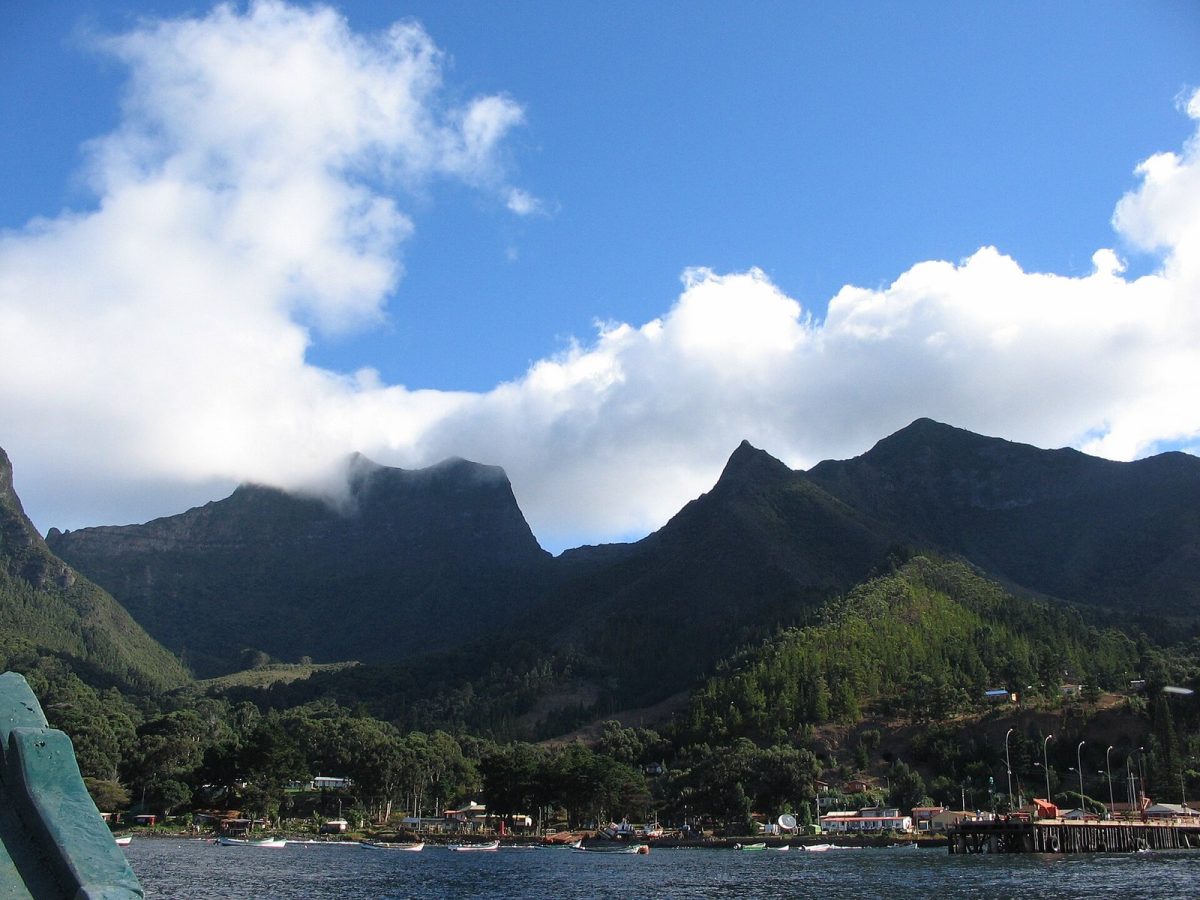
Photo: No machine-readable author provided. Serpentus~commonswiki a, CC BY-SA 3.0
| Getting there | Light aircraft from Santiago in about 2 to 3 h, then a boat to the village; occasional ships |
|---|---|
| Gateway | Santiago (light aircraft) |
| Travel time | 2 to 3 h by small plane, then about 1.5 h by boat |
| Days | A week or more |
| Best months | Oct–Mar (southern summer); flights depend on weather |
| Getting around | Walk in the village; boats and trails to the rest; very few vehicles |
| Booking | Flights and lodging weeks or months ahead; allow spare days for delays |
| Cost | Expensive for Chile |
| Beaches | Hardly any beaches; rocky coves and clear water for swimming and diving |
| Sea | Pacific Ocean |
| Area | 100 km² |
| Highest point | 420 m |
| Airport | Yes, scheduled flights |
| Car-free | No |
| Checked | October 2026 |
Nothing is sold online for the Juan Fernández Islands, and every trip requires direct planning. The key booking is the small-plane flight from Santiago, run by a few air taxi operators with small aircraft and limited seats; fares include a strict baggage limit, and the boat transfer from the airstrip to the village is usually arranged with the flight. Some operators and guesthouses sell packages combining flights, lodging and meals, which simplifies a complicated trip.
Once on Robinson Crusoe Island, guesthouses and local guides arrange the rest. Dive centres in San Juan Bautista run trips to walls, caves and the wreck of the German cruiser Dresden in Cumberland Bay, with fur seals often joining divers. Boat trips go to coves along the coast, to the fur seal colonies and sometimes to Santa Clara island. Guided hikes in the national park are required on several trails, and fishing trips with lobster fishermen can be arranged.
The plain recommendation is to book a package or a guesthouse that handles flights and transfers, allow at least a week including spare days, and arrange diving and guided hikes once you arrive.
The only village lies on Cumberland Bay on the north coast, with colourful houses, fishing boats and lobster traps on the pier, and green cliffs rising behind. It was largely rebuilt after the tsunami of 2010. Walk to the ruins of the 18th-century Spanish fort of Santa Bárbara above the bay and the caves where Chilean patriots were imprisoned in 1814.
A steep trail of about two hours climbs from the village through native forest to the saddle where Alexander Selkirk is said to have watched for ships. From the lookout you see both coasts of the island, the jagged peaks and the endless ocean. Bring water and a wind layer, and go on to the airstrip side if you have arranged a boat back.
The cold, clear waters around the islands offer walls, kelp forests, caves and abundant fish found nowhere else, and fur seals often swim with divers. In Cumberland Bay lies the wreck of the German cruiser Dresden, scuttled in 1915 at a depth of around 70 metres, suitable only for experienced technical divers. Simpler dives start close to the village.
The Juan Fernández fur seal, once hunted almost to extinction, now breeds again in large numbers on rocky shores around the island. Boat trips from the village approach colonies along the coast, and the area near the airstrip at the south-western tip has seals on the rocks. Watch from a respectful distance and go with a local guide.
The national park protects plants and birds found nowhere else, including the red Juan Fernández firecrown, a hummingbird that survives in small numbers in the forests above the village. Guided walks in the park reveal giant ferns and endemic trees that have survived goats, rabbits and invasive plants. Conservation projects to restore the forest are visible along the trails.
There are no scheduled airline flights and no regular ferry. Small aircraft fly from aerodromes in Santiago to the airstrip at the south-western tip of Robinson Crusoe Island, taking about two to three hours depending on the plane and the weather. Flights carry few passengers, have tight baggage limits and are often delayed for days by wind or cloud, so build spare days into your plans. From the airstrip, a boat takes about an hour and a half to reach the village, a trip that can be rough.
The alternative is by sea from Valparaíso on the occasional supply ships that serve the island, taking around two days, with limited and basic passenger berths. Cruise ships occasionally call.
San Juan Bautista is small and easily walked, and there are very few vehicles on the island and almost no roads beyond the village. Everything else is reached on foot along steep trails or by boat. Several trails in the national park require a registered local guide. Boats from the village go to the coves, the fur seal colonies and the airstrip, and are arranged through guesthouses or fishermen. Bring good boots, rain gear and layers.
The southern summer, from October to March, is the best season, with warmer, drier weather, longer days and more reliable flights. January and February are the warmest months and the time when the most visitors and Chilean families come, though numbers stay small. The sea is cool all year, around 15 to 19 degrees, so divers need thick wetsuits.
From April to September, the southern winter brings rain, strong winds and rough seas, and flights and boat transfers are more often cancelled; some services reduce. The lobster fishing season shapes village life, and the fresh lobster is a highlight of a visit.
Because flights depend on the weather, plan a week or more, and keep your onward plans flexible in case you are stuck on the island for a few extra days.
All accommodation is in or near San Juan Bautista on Cumberland Bay, in small family guesthouses and a few lodges, many offering meals because restaurants are few. Places on the slopes above the village have sea views but involve steep walks. Choose somewhere that can arrange flights, boat transfers, diving and guides, since services are informal. Camping is possible with permission in the national park at designated sites.
The islands were uninhabited when the Spanish navigator Juan Fernández found them in the 1570s. Pirates and privateers used them for water and food, and in 1704 the Scottish sailor Alexander Selkirk was left here at his own request, surviving alone for more than four years before rescue. His story is thought to have inspired Defoe's novel. Spain later built a fort and used the islands as a prison for Chilean patriots. Settled by fishing families, the main island was renamed Robinson Crusoe in 1966 and is famous for its lobster.
Santiago and Valparaíso, the colourful port city about 90 minutes from Santiago by road, are natural stops before or after the trip. Wine valleys such as Casablanca lie between them. For another remote Chilean island, Easter Island is reached on scheduled flights from Santiago, but there are no direct connections between the two archipelagos.
Light aircraft from Santiago in about 2 to 3 h, then a boat to the village; occasional ships.
From Santiago (light aircraft): 2 to 3 h by small plane, then about 1.5 h by boat.
A week or more.
Oct–Mar (southern summer); flights depend on weather.
Walk in the village; boats and trails to the rest; very few vehicles.
Go if you want a truly remote Pacific island with hiking, diving, fur seals and the real Robinson Crusoe story. Skip it or choose Easter Island if you need reliable flights, more comfort or a shorter trip with famous archaeology.
Expensive for Chile.
Hardly any beaches; rocky coves and clear water for swimming and diving.
Flights and lodging weeks or months ahead; allow spare days for delays.
Chile
Easter Island, Rapa Nui to its people, is a triangle of 164 square kilometres in the South Pacific, about 3,500…
39 tours & trips
Chiloe Archipelago, Chile
Chiloe is the large, green island off southern Chile, about 8,400 square kilometres, reached by a 30-minute ferry from…
7 tours & trips
Chile
Isla Magdalena is a small treeless island in the Strait of Magellan, about 35 kilometres north-east of Punta Arenas,…
5 tours & trips