Rangiroa
253 km away
Rangiroa is the largest atoll in the Tuamotus of French Polynesia, a ring of about 415 coral islets around a lagoon so…
7 tours & trips
French Polynesia · Pacific Ocean · Nature & wildlife island
Fakarava is a coral atoll in the western Tuamotus of French Polynesia, a thin ring of land around a lagoon of about 1,100 square kilometres, roughly an hour's flight north-east of Tahiti. Divers come for its two passes, where grey reef sharks gather in hundreds, and everyone else for still water, pink-sand shores and almost no traffic.
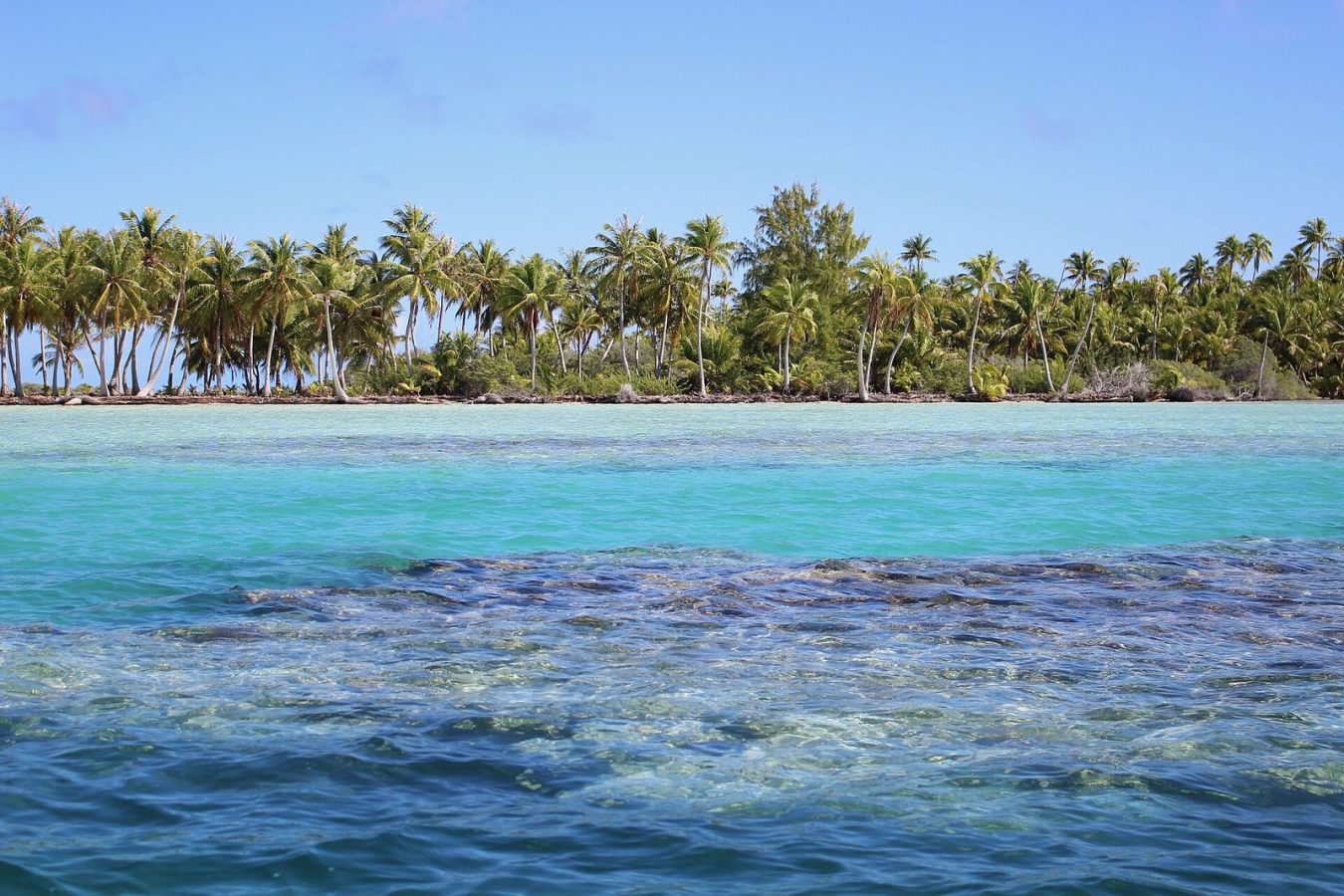
Photo: Fanny98716, CC BY-SA 4.0
| Getting there | Flights from Papeete, Tahiti in about 1 h, some via Rangiroa; supply ships from Papeete take a few passengers |
|---|---|
| Gateway | Papeete, Tahiti |
| Travel time | About 1 h by air |
| Days | 3 to 5 nights |
| Best months | Apr–Nov dry season; Dec–Mar hot and wet; Jun–Jul for the grouper spawning |
| Getting around | Bike or walk around Rotoava; boat transfers to the south pass; a few rental cars |
| Booking | Flights and pensions months ahead; dives with a local centre a few days ahead |
| Cost | Expensive, though pensions cost less than Bora Bora resorts |
| Beaches | Coral-sand strips along the lagoon; pink sand and the Blue Lagoon in the south, by boat only |
| Sea | Pacific Ocean |
| Archipelago | Tuamotu Archipelago |
| Area | 24 km² |
| Population | 837 |
| Airport | Yes, scheduled flights |
| Car-free | No |
| Checked | October 2026 |
Nothing is sold online for Fakarava alone, which reflects how the atoll works: almost everything is arranged on the spot through your pension or one of the small dive centres in Rotoava and at the south pass.
Diving is the main reason people come. Centres run drift dives in Garuae, the huge northern pass, timed for the incoming tide, and day trips to Tumakohua in the south, where a wall of grey reef sharks hangs in the current. Dives are normally sold singly or in packs of five or ten, with equipment hire extra; beginners can take an introductory dive inside the lagoon.
Non-divers book lagoon excursions by boat: a full day to the southern end with snorkelling in the pass, a picnic of grilled fish and stops at the pink-sand beaches, or a day to the Blue Lagoon, a shallow pool cut off by small islets. These usually include the boat, a guide, snorkel gear and lunch.
Some visitors see the atoll for a day from a cruise ship or yacht. If you come by plane, the sensible plan is three or four nights: one or two days diving or snorkelling the north pass, and one long boat day to the south, booked through your accommodation as soon as you arrive.
The narrow southern pass is the most famous dive site in French Polynesia. On the incoming tide hundreds of grey reef sharks hold position in the current, and in June and July thousands of marbled groupers gather here to spawn, drawing even more sharks. It is about two hours by boat from Rotoava; snorkellers float over the shallow edge near Tetamanu.
Garuae is the widest pass in French Polynesia, about 1.6 km across, and lies a short boat ride from Rotoava. Strong tidal currents carry divers over a gentle slope busy with sharks, eagle rays and barracuda, with dolphins and manta rays at times. Experienced divers time it for the incoming tide; snorkellers stay on the calmer edges with a guide.
The main village sits near the airport at the north-east corner: a church, a few shops, a bakery, a post office and pensions along the lagoon shore. Rent a bike and ride the quiet road along the rim, stopping at small pearl farms that welcome visitors and at coral jetties where rays and small sharks cruise in knee-deep water.
On the northern rim, an easy bike ride from the village, stands the old Topaka lighthouse, an unusual stepped pyramid that is the atoll's best-known landmark. Cross to the ocean side here to see the contrast with the lagoon: surf breaking on the reef flat, coral rubble shores and seabirds. Go at low tide and wear reef shoes on the sharp coral.
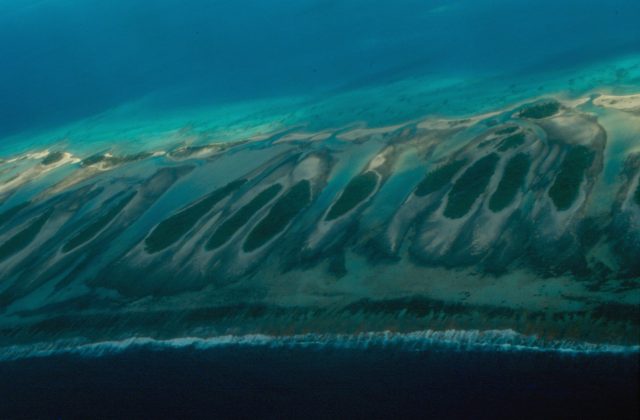
In the south-west corner, a shallow lagoon within the lagoon is ringed by palm-covered islets, with turquoise water barely waist deep and blacktip reef sharks patrolling the edges. Further along the rim, beaches of pink-tinged sand form where crushed red coral mixes with white. Both are reached only by boat, usually on a full-day excursion with a picnic.
The tiny village beside the south pass was the first administrative centre of the Tuamotus in the nineteenth century. Its coral-stone church, built by Catholic missionaries, still stands among the palms with an old cemetery beside it. Today only a handful of people live here, around a couple of dive pensions where you can sleep right on the pass.
Fakarava's airport lies close to Rotoava at the northern end of the atoll. Air Tahiti flies from Papeete on Tahiti in about an hour, with several flights a week and more in the dry season; some stop at Rangiroa or connect onward to other Tuamotu atolls. Air passes covering Tahiti, the Tuamotus and the Society Islands usually work out cheaper than single tickets. Pensions meet guests at the airport, so arrange the transfer when you book.
There is no regular passenger ferry. Cargo ships that supply the atolls carry a few passengers from Papeete, taking a day or more depending on the route. Fakarava is also a regular stop for yachts crossing the Pacific and for small expedition cruise ships, which anchor in the lagoon off Rotoava.
You do not need a car. A paved road runs along the northern rim on either side of Rotoava, and bicycles are the usual way to get around; most pensions lend or rent them. A few rental cars and scooters exist but are rarely necessary. Everything beyond the road, including the south pass, Tetamanu and the Blue Lagoon, is reached by boat across the lagoon, about two hours each way and dependent on the weather.
The dry season from April to November is the best time, with lower humidity, less rain and trade winds that keep the heat bearable; air temperatures sit around 25 to 29 degrees all year and the lagoon is warm enough to snorkel without a wetsuit. June and July bring the grouper spawning in the south pass, the busiest weeks for divers, so book early. From December to March the weather is hotter and wetter, with heavy showers and the occasional cyclone in the region, though diving goes on and pensions are easier to find.
Strong trade winds, mostly in the cooler months, can make the long crossing to the south rough and cancel trips, so build in spare days. The July festival season across French Polynesia fills flights from Papeete. Three nights is the minimum to see both passes; divers often stay a week, splitting the time between Rotoava and Tetamanu.
Most visitors stay in or near Rotoava, where pensions and small bungalow hotels line the lagoon, the airport and shops are close and the north pass is a short boat ride away. It suits snorkellers, cyclists and anyone on a first visit. Divers who want the south pass at its best should spend a few nights near Tetamanu, where simple dive pensions sit right beside the current; there is little else, so meals are included. A few isolated places along the rim offer total quiet but depend on boat transfers.
The atoll was settled by Polynesian voyagers centuries before Europeans arrived, and local tradition holds that the Pomare family, later kings of Tahiti, came from here. The Russian navigator Bellingshausen recorded it in 1820 as Wittgenstein Island. In the nineteenth century Catholic missionaries built coral churches, and Tetamanu served as the seat of government for the Tuamotus. Pearl diving, copra and later black-pearl farming supported the inhabitants, and the airport brought divers. Today about 850 people live on the atoll, most of them in Rotoava, and its reefs are protected.
Fakarava pairs naturally with other Tuamotu atolls: Rangiroa, with its own famous pass and dolphins, and Tikehau, quieter and good for snorkelling, are each a short flight away. Most itineraries start and end with a night in Papeete and add Moorea, a short ferry ride from Tahiti, or Bora Bora, under an hour from Papeete by air, for mountains and contrast.
253 km away
Rangiroa is the largest atoll in the Tuamotus of French Polynesia, a ring of about 415 coral islets around a lagoon so…
7 tours & trips
308 km away
Tikehau is a small, round coral atoll in the Tuamotu Islands of French Polynesia, about an hour's flight northeast…
4 tours & trips
Flights from Papeete, Tahiti in about 1 h, some via Rangiroa; supply ships from Papeete take a few passengers.
From Papeete, Tahiti: about 1 h by air.
3 to 5 nights.
Apr–Nov dry season; Dec–Mar hot and wet; Jun–Jul for the grouper spawning.
Bike or walk around Rotoava; boat transfers to the south pass; a few rental cars.
Go if you dive or snorkel and want sharks, clear lagoon water and quiet days on an atoll. Skip it or choose Moorea or Bora Bora if you want mountains, varied sightseeing, nightlife or resort comforts.
Expensive, though pensions cost less than Bora Bora resorts.
Coral-sand strips along the lagoon; pink sand and the Blue Lagoon in the south, by boat only.
Flights and pensions months ahead; dives with a local centre a few days ahead.