Tasmania
241 km away
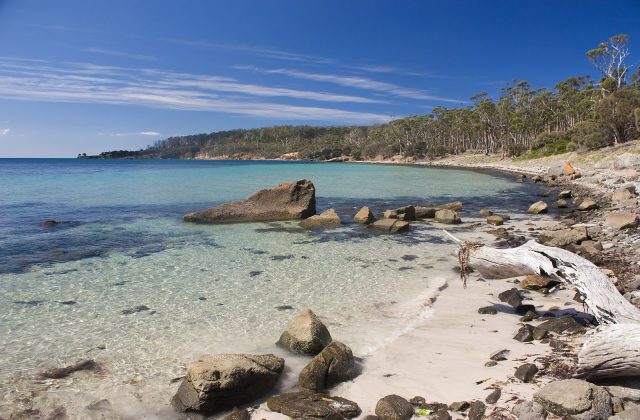
Tasmania is Australia's island state, about 240 km south of the mainland across Bass Strait, with a main island of…
33 tours & trips
Australia · Pacific Ocean · Nature & wildlife island
Flinders Island is the largest island of the Furneaux Group in Bass Strait, about 54 km off the north-east tip of Tasmania. It covers 1,367 square kilometres but has under a thousand residents, so most of its granite peaks, empty white beaches and wildlife-filled bush are shared with very few visitors.
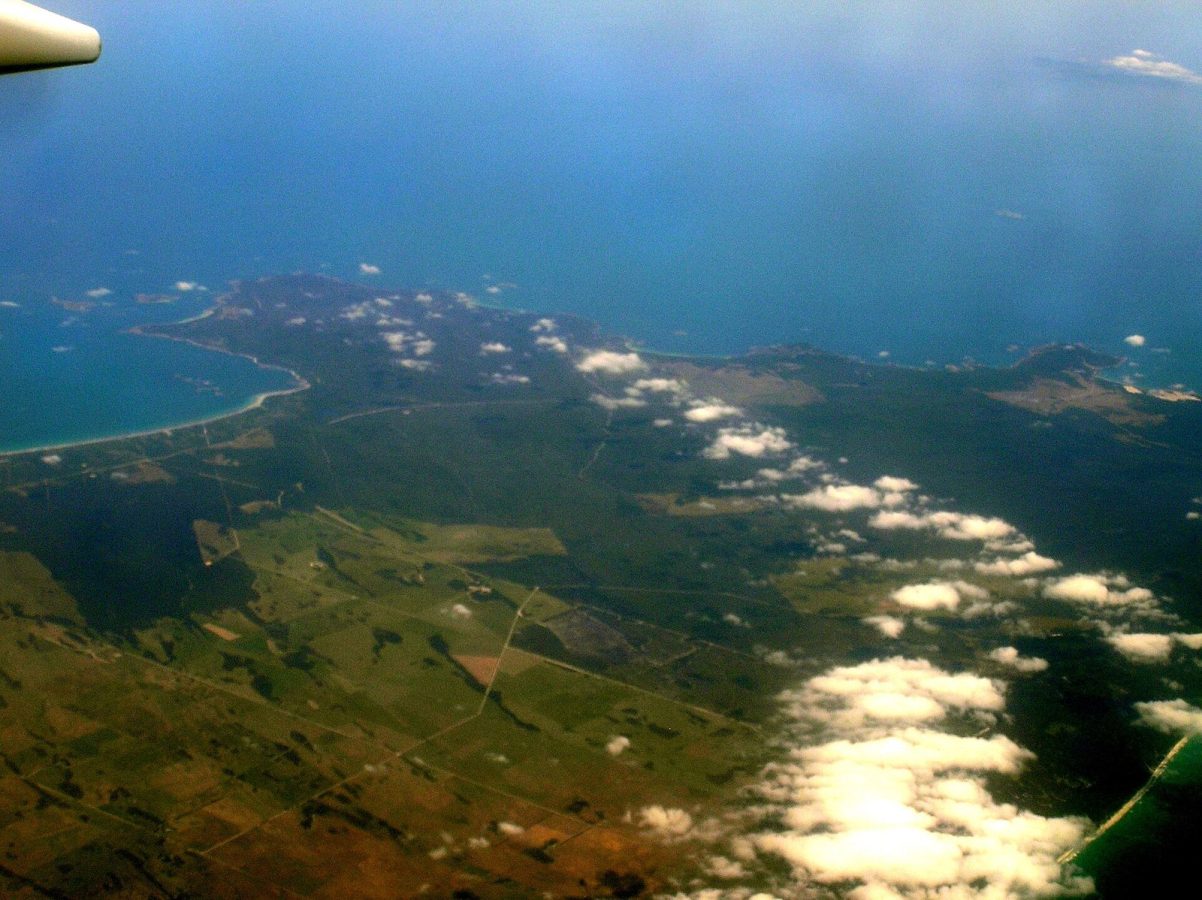
Photo: Graeme Bartlett, CC BY-SA 3.0
| Getting there | Small-plane flights from Launceston (about 35 min) and Melbourne (about 1 h); freight ferry from Bridport |
|---|---|
| Gateway | Launceston or Melbourne (flights) |
| Travel time | 35 min by air from Launceston, 1 h from Melbourne |
| Days | 3 to 5 nights |
| Best months | Nov–Apr for warmth and swimming; windy all year; Mar–Apr settled |
| Getting around | Hire a car; mostly gravel roads, no public transport, few taxis |
| Booking | Flights, car hire and rooms well ahead in summer; all are limited |
| Cost | Expensive for Australia, mainly flights and car hire |
| Beaches | Long white granite-sand beaches: Trousers Point, Killiecrankie Bay, Sawyers Bay, Palana |
| Sea | Pacific Ocean |
| Archipelago | Furneaux Group |
| Area | 1,367 km² |
| Population | 776 |
| Highest point | 756 m (Mount Strzelecki) |
| Airport | Yes, scheduled flights |
| Car-free | No |
| Checked | November 2026 |
Almost nothing is sold online for Flinders Island itself. The island has only about 776 residents, so services are few.
Visitors usually arrange the trip in pieces: a flight from Launceston or Melbourne, a hire car waiting at Whitemark airport and a cottage or lodge booked directly. Some operators sell air-and-car packages for two to five nights, which is the simplest way to secure all three in summer, when seats and cars run out.
On the island, a handful of local guides offer half-day and full-day 4WD tours to remote beaches, fishing charters, boat trips to the outer islands of the Furneaux Group and guided walks, including the climb of Mount Strzelecki. Tours are small and arranged by phone or through your accommodation, often a day or two ahead. Most visitors do much of the island themselves, since walks are well marked and the beaches are signposted from the main road.
Recommendation: book flights and car together first, plan three or four nights, and add one guided day on the water or in a 4WD for the parts the hire car cannot reach.
The highest point of the island, at 756 metres, rises from the national park in the south-west. A steep marked track climbs through eucalypt forest and over granite slabs to a summit with views across the Furneaux islands and, on clear days, to Tasmania. Allow four to five hours return, start early and go only in fine weather.
A short drive from the foot of Strzelecki, this is the island's best-known beach: white sand, turquoise water and granite boulders covered in orange lichen. A picnic area and campsite sit behind the dunes, a coastal walk links it with neighbouring coves, and the shallow water is fine for swimming on a calm summer day.
A wide, sheltered bay in the far north, under the granite of Mount Killiecrankie, about an hour's drive from Whitemark. It is known for Killiecrankie diamonds, clear topaz washed out of the granite, which locals still fossick in the creeks. The bay is good for swimming and has a small settlement of holiday shacks.
On the west coast near Emita, the restored brick chapel and cemetery mark the settlement where Aboriginal people from mainland Tasmania were exiled in the 1830s and 1840s and where many died. The site is now owned by the Aboriginal community. A small museum at Emita covers island history, from sealers to shipwrecks.
The port at the southern end looks over Franklin Sound to Cape Barren Island and smaller islets. Boat charters from here visit the outer islands, seal colonies and the shearwater rookeries, where the birds return at dusk in spring and summer. The lookout on Vinegar Hill nearby gives the best view of the sound.
At sunset the island's grasslands fill with wallabies, pademelons and wombats, and Cape Barren geese graze in the paddocks. Drive slowly on any road after dark, as animals are everywhere. Short walks such as the Castle Rock track and the lagoons near Patriarchs are good places to watch birds and animals.
There is no passenger ferry in the usual sense, so nearly everyone flies. Small propeller planes link Flinders Island airport at Whitemark with Launceston in about 35 minutes and with Melbourne's smaller airports, Essendon or Moorabbin, in about an hour, on most days of the week. Seats are few, baggage limits are strict and fares are high, so book early.
A freight ferry from Bridport on Tasmania's north-east coast carries vehicles and a limited number of passengers to Lady Barron about once a week; the crossing takes most of a day and is used mainly by locals moving cars or goods. For most visitors it is far easier to fly and hire a car on the island than to bring their own.
A car is essential: there are no buses, taxis are few and the main sights are spread over a large island. Hire cars are limited and collected at Whitemark airport, so reserve one with your flight. The main road from Lady Barron through Whitemark to the north is sealed, but many roads to beaches and walks are gravel; drive slowly, carry water and fill up in Whitemark or Lady Barron. Cycling is possible but the wind is relentless.
Flinders Island lies in the Roaring Forties, so expect wind in every season. The warmest months are December to March, with days in the low to mid 20s, long evenings and the best chance of swimming, though the sea rarely gets above 18 degrees. This is also the busiest time, when flights, cars and the few rooms fill first, especially over Christmas, New Year and Easter.
March and April are often the most settled months, with calmer days, clear light and fewer visitors. Spring, from September to November, brings wildflowers, birds and the return of the shearwaters, but showers and strong westerlies are common. Winter is cool, wet and windy, and some services reduce hours. Three to five nights give time for the mountain, the beaches and a day out with a local guide.
Whitemark, on the west coast by the airport, has the island's shops, pub, fuel and most services, and suits a first stay. Lady Barron in the south is a quiet fishing port near Strzelecki, Trousers Point and the boat charters. In the north, cottages and shacks around Killiecrankie, Palana and Emita are the most remote and closest to the best beaches. Self-catering is the norm, so buy food in Whitemark.
People first reached Flinders Island at least 35,000 years ago, when Bass Strait was dry land, and lived here until about 4,500 years ago. Matthew Flinders charted the islands in 1798, and sealers soon followed, living with Aboriginal women in small settlements on the outer islands. In the 1830s the colonial government moved surviving Aboriginal people from Tasmania to Wybalenna, where most died. Soldier settlement after the Second World War cleared land for farms, and grazing and fishing still shape the island.
Most visitors pair Flinders Island with Tasmania. Fly in from Launceston and add the Tamar Valley wineries, the Bay of Fires on the north-east coast, about three hours away by road, or Cradle Mountain. From Melbourne, the island makes a long weekend; King Island, at the western end of Bass Strait, is a similar trip by small plane.
241 km away
Tasmania is Australia's island state, about 240 km south of the mainland across Bass Strait, with a main island of…
33 tours & trips
293 km away
Maria Island is a mountainous national park 4 km off the east coast of Tasmania, reached by a 30-minute ferry from…
211 tours & trips
299 km away
Phillip Island is a low, farm-covered island about 125 km south-east of Melbourne, joined to the mainland by a bridge…
45 tours & trips
Small-plane flights from Launceston (about 35 min) and Melbourne (about 1 h); freight ferry from Bridport.
From Launceston or Melbourne (flights): 35 min by air from Launceston, 1 h from Melbourne.
3 to 5 nights.
Nov–Apr for warmth and swimming; windy all year; Mar–Apr settled.
Hire a car; mostly gravel roads, no public transport, few taxis.
Go if you want empty beaches, granite mountain walks, wombats and wallabies and a slow island that feels a world away. Skip it or choose Bruny Island or Maria Island if you want an easy, cheap trip without flights and car hire.
Expensive for Australia, mainly flights and car hire.
Long white granite-sand beaches: Trousers Point, Killiecrankie Bay, Sawyers Bay, Palana.
Flights, car hire and rooms well ahead in summer; all are limited.