Santorini
Cyclades, Greece
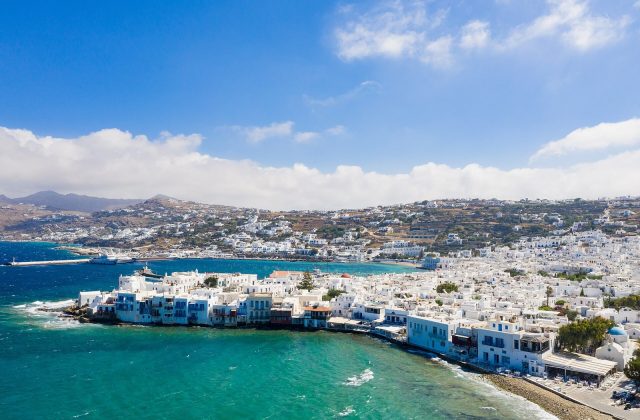
Santorini is the ring of a drowned volcano in the southern Cyclades: white villages along a 300-metre cliff, black-sand…
772 tours & trips
Greece · Aegean Sea · Beach island
Folegandros is a small, steep island in the southern Cyclades, 32 square kilometres with about 700 inhabitants, whose main village of Chora stands on the edge of a cliff high above the sea. It has no airport, few cars and beaches mostly reached on foot or by boat, which keeps it calm when nearby Santorini is overrun.
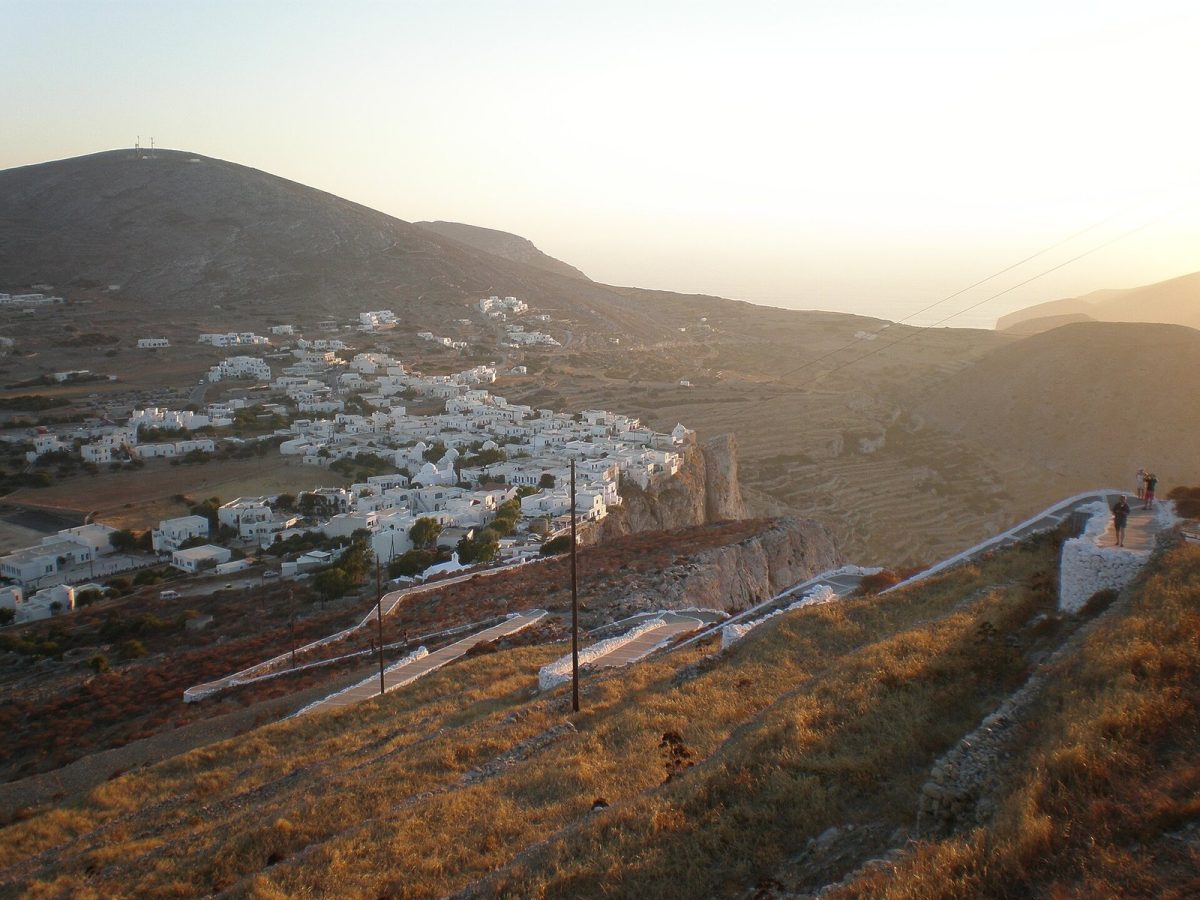
Photo: Pel thal, CC BY-SA 3.0
| Getting there | Ferry from Piraeus in about 4 to 9 h; fast boats from Santorini, Milos, Ios and Paros in 1 to 2 h |
|---|---|
| Gateway | Athens (Piraeus) |
| Travel time | 4 to 5 h by fast ferry or up to 9 h by slow ferry |
| Days | 3 to 5 nights |
| Best months | May–Jun and Sep–Oct; Jul–Aug windy and busy; most places shut Nov–Mar |
| Getting around | Buses link the port, Chora, Ano Meria and some beaches; scooters or a small car; boats |
| Booking | Ferries and rooms in Chora for Jul–Aug well ahead; boat trips a day or two ahead |
| Cost | Mid-range for Greece; far cheaper than Santorini |
| Beaches | Pebble and sand coves; Katergo by boat, Agali and Agios Nikolaos on foot, Livadaki in the north |
| Sea | Aegean Sea |
| Archipelago | Cyclades |
| Area | 32 km² |
| Population | 719 (2021) |
| Highest point | 455 m |
| Airport | No |
| Car-free | No |
| Checked | October 2026 |
Most of what is sold on Folegandros happens on the water, run by a handful of local skippers from Karavostasis.
The main choice is between shared and private boat trips. Shared trips run for most of the day along the coast, stopping at beaches that are hard to reach by land, such as Katergo and the coves of the south, and at sea caves, with time to swim and snorkel; snacks or a simple lunch, soft drinks and snorkel gear are normally included. Some trips are led by dive professionals who take you to the better reefs. Private speedboats, from small six-metre boats to larger ten-metre ones, can be hired for half or full days, and the skipper adjusts the route to the wind, which on this exposed island matters a great deal. Sunset cruises with wine are the evening version.
On land, there are tastings at the island's small winery, a long food and wine pairing dinner, and guided walks through Chora and the old customs of Ano Meria. Private speedboat trips to Milos and Polyaigos, and even helicopter transfers, are sold for those short of time.
The plain recommendation: book one shared boat trip on a calm day, early in your stay so you can reschedule if the meltemi blows, and walk to the remaining beaches yourself.
The main village sits about 200 metres above the sea on the cliff edge, a chain of small squares shaded by trees and lined with tavernas. At its core is the Kastro, a medieval walled quarter where the outer walls of the houses form the fortification, with wooden balconies and narrow lanes. Come in the evening when the squares fill for dinner.
A zigzag path climbs from the edge of Chora to the white church of the Virgin on the hill above, about 15 to 20 minutes on foot. The views back over the village, the cliffs and the sea are the best on the island, especially at sunset. The church itself is usually opened only for services and feast days.
At the southeast tip near the port, this pale pebble beach faces a rock islet and has some of the clearest water in the Cyclades. Small boats shuttle from Karavostasis in summer, or you can walk in about an hour over a rough path with no shade. There are no facilities, so take water, food and an umbrella.
The second village stretches for several kilometres along the ridge in the north, a scatter of farmhouses, threshing floors and chapels. A small folklore museum shows rural life, and tavernas serve matsata, the local hand-made pasta. From here marked paths lead down to the beaches of Livadaki, Agios Georgios and Ambeli, each a steep walk of 30 to 60 minutes.
On the southwest coast, a bus or short drive from Chora brings you to the steep path down to Agali, a sandy cove with a couple of tavernas. From there a coastal path of about 20 minutes leads to Agios Nikolaos, a larger sand and pebble beach below a chapel, with a summer taverna. In high season a small boat also links the two.
On the north coast, the Golden Cave opens in the cliff just above the waterline and can only be reached by boat, and entered when the sea is calm. Inside, archaeologists found ancient inscriptions and traces of use going back to antiquity. Most boat trips pass the entrance; a few stop for a closer look when the weather allows.
Our pick for each kind of trip, with live dates and prices. Free cancellation on most.
Best for: First visit, around the island by boat
A shared boat day along the coast to the coves and caves that are hard to reach by land, with swimming and snorkelling stops, the easiest way to see the island's best water.
There is no airport, so everyone arrives by sea at Karavostasis, the small port on the east coast. Ferries from Piraeus run daily in summer and several times a week in winter; conventional boats take around seven to nine hours, high-speed boats about four to five. Folegandros sits on the western Cyclades line, so in season fast boats connect it with Milos, Sifnos and Kimolos as well as Santorini, Ios, Naxos and Paros, mostly in one to two hours. The nearest airports are on Santorini and Milos. Book summer crossings early, and keep a spare day at the end of your trip, as the meltemi wind occasionally cancels the smaller fast boats. Bringing a car is possible but rarely worth it.
A paved road runs from the port up to Chora and along the ridge to Ano Meria, with side roads to Agali and Angali. In summer, buses connect all of these several times a day and are timed to the ferries, and there are a few taxis. Scooters, quads and small cars can be hired in Chora and at the port, but parking in Chora is restricted to the edge of the village. Many beaches are reached only by footpath or boat.
The best months are late May, June and September, when the sea is warm, the paths are pleasant for walking and rooms are available. Early October is still lovely, though some tavernas start closing. July and August bring the highest prices and most visitors, though even then the island feels far calmer than its neighbours, and the meltemi, the strong north wind, often blows for days, making some beaches and boat trips uncomfortable.
From November to March most hotels and restaurants close, ferries are fewer and the weather can be wet and windy, but the island is quiet and the hills turn green. Spring flowers peak in April. Easter brings processions, and the feast of the Virgin on 15 August a festival with music. Three nights is the minimum; five allows walks, a boat trip and lazy days.
Chora is the obvious base: most rooms, restaurants and the evening life are here, and the cliff-side places have the views, at a price. Karavostasis at the port suits those who want a beach on the doorstep and early ferries, with a few tavernas. Ano Meria offers quiet rented houses and easy access to the northern trails, but you will want transport. Agali has a handful of rooms right on the beach.
The island takes its name, according to myth, from a son of Minos, and in antiquity it was a small city-state on the site of Chora, paying tribute to Athens in the Delian League. An ancient poet called it iron Folegandros for its harsh rock. Venetian lords built the Kastro in the thirteenth century, and the island later suffered pirate raids and long periods of near emptiness. In the twentieth century Greek governments used it as a place of exile for political prisoners. Tourism arrived late and stayed modest, which is why its villages look much as they did.
Folegandros links easily with Milos, about an hour by fast boat, for its coloured coastline, and with Santorini, about an hour away, though the contrast can be striking. Sikinos, Ios and Naxos are close on the same line. A good route is Milos, Folegandros, then Santorini, finishing with a flight from Santorini to Athens.
Ferry from Piraeus in about 4 to 9 h; fast boats from Santorini, Milos, Ios and Paros in 1 to 2 h.
From Athens (Piraeus): 4 to 5 h by fast ferry or up to 9 h by slow ferry.
3 to 5 nights.
May–Jun and Sep–Oct; Jul–Aug windy and busy; most places shut Nov–Mar.
Buses link the port, Chora, Ano Meria and some beaches; scooters or a small car; boats.
Go if you want a cliff-top Cycladic village, walking paths and quiet coves without big crowds. Skip it or choose Naxos or Paros if you need easy sandy beaches, frequent ferries and a car-friendly island with plenty of nightlife.
Mid-range for Greece; far cheaper than Santorini.
Pebble and sand coves; Katergo by boat, Agali and Agios Nikolaos on foot, Livadaki in the north.
Ferries and rooms in Chora for Jul–Aug well ahead; boat trips a day or two ahead.
Yes. Boat trips, guided tours and day trips for Folegandros can be booked online; live prices and free cancellation on most are shown on this page.
Cyclades, Greece
Santorini is the ring of a drowned volcano in the southern Cyclades: white villages along a 300-metre cliff, black-sand…
772 tours & trips
Cyclades, Greece
Mykonos is a small, dry and windy island in the central Cyclades, about 85 square kilometres of brown hills ringed by…
294 tours & trips
Cyclades, Greece
Naxos is the largest and greenest of the Cyclades, 428 square kilometres of long sandy beaches, marble villages and…
208 tours & trips
Cyclades, Greece
Paros sits at the heart of the Cyclades, about 150 km south-east of Piraeus and a short hop from Naxos and Mykonos, a…
138 tours & trips
Cyclades, Greece
Milos is a volcanic island at the south-western edge of the Cyclades, wrapped round a large flooded caldera that forms…
122 tours & trips
Cyclades, Greece
Antiparos is a small, relaxed island in the Cyclades, separated from Paros by a channel less than two kilometres wide…
38 tours & trips