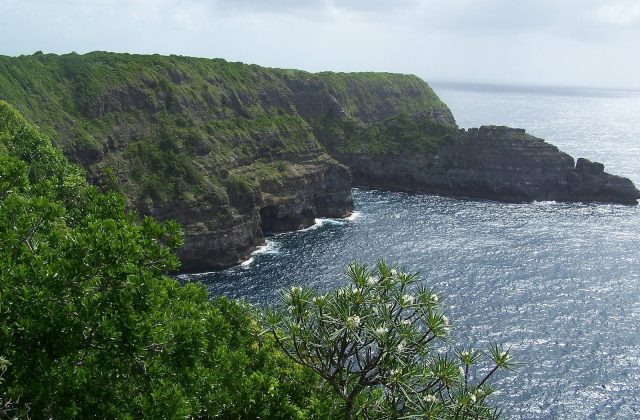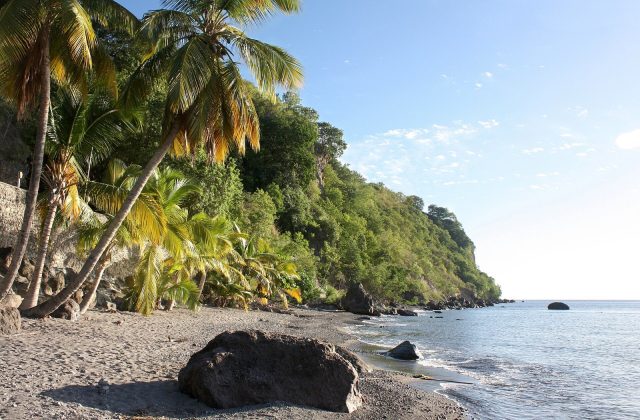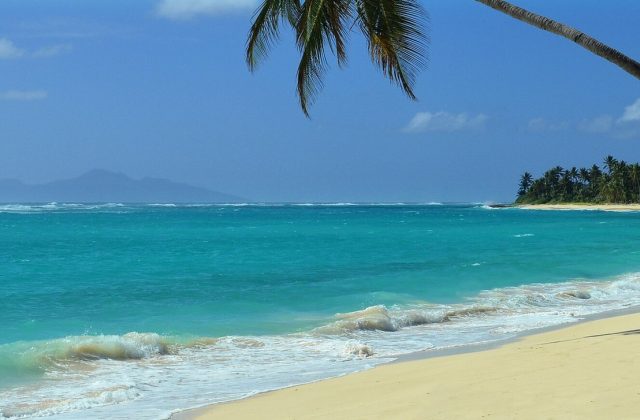
Marie-Galante
37 km away
Marie-Galante is a flat, round island of 158 square kilometres south of Guadeloupe, about an hour by ferry from…
1 tour
French West Indies · Caribbean Sea · Beach island
Les Saintes is a cluster of small volcanic islands just south of the main island of Guadeloupe, where a single village of painted houses looks over one of the prettiest bays in the Caribbean. Only Terre-de-Haut and Terre-de-Bas are inhabited, and ferries from Trois-Rivières cross in well under an hour.
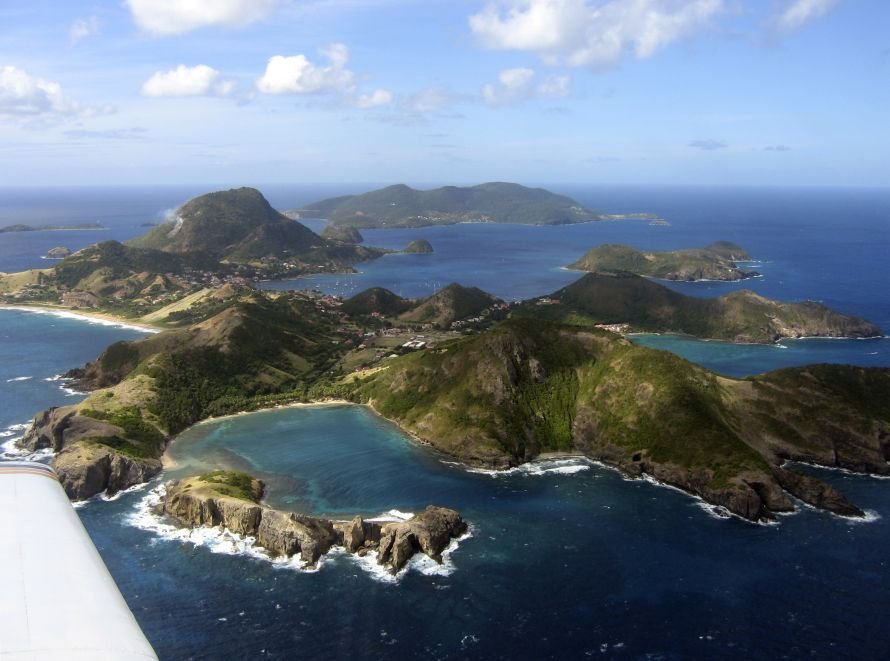
Photo: Original uploader was Vilars at fr.wikipedia, CC BY-SA 1.0
| Getting there | Ferry from Trois-Rivières in about 20 to 30 min, or about 1 h from Pointe-à-Pitre |
|---|---|
| Gateway | Trois-Rivières or Pointe-à-Pitre (Guadeloupe) |
| Travel time | 20 to 30 min by ferry from Trois-Rivières |
| Days | A day trip, better 1 to 2 nights |
| Best months | Dec–May (dry season); hurricane risk Jun–Nov, highest Aug–Oct |
| Getting around | Walk, or rent an electric scooter or e-bike at the pier; few cars on narrow lanes |
| Booking | Rooms ahead for winter and school holidays; ferries a day or two ahead in peak season |
| Cost | Mid-range to pricey for Guadeloupe |
| Beaches | Small sandy coves; Pompierre for calm swimming, Pain de Sucre for snorkelling, Grande Anse wild |
| Sea | Caribbean Sea |
| Archipelago | Guadeloupe |
| Area | 13 km² |
| Population | 2,619 (2016) |
| Highest point | 309 m |
| Checked | October 2026 |
Nothing is sold online for Les Saintes alone, but the islands are easy to visit independently. Most people simply buy a return ferry ticket to Terre-de-Haut, walk off the boat into the village and spend the day on foot or on a rented electric scooter. That is the best value and gives you full control of your time.
In Guadeloupe itself, catamaran day trips sail to the bay from the south coast and sometimes from the resorts around Saint-François. These usually include the crossing, a stop for snorkelling, lunch and drinks on board and a couple of hours ashore, which is enough for the village and a beach but not for Fort Napoléon and Le Chameau as well. On the island, small operators near the pier offer glass-bottom boat rides, snorkelling and diving trips to the reefs around the Pain de Sucre and the outer islets, and minibus tours of the hill roads; book these on the spot.
The recommendation is to stay at least one night. Day visitors arrive mid-morning and leave mid-afternoon, and the bay is at its loveliest in the early morning and at sunset, when the village belongs to residents again.
The ferry lands in the heart of the village of Terre-de-Haut, a few lanes of wooden Creole houses with coloured shutters, small shops and seafood restaurants along the waterfront. The bay in front, sheltered by green islets, is full of fishing boats and yachts. Try the coconut tart called tourment d'amour, sold from baskets at the pier, then follow the shore road in either direction.
A 19th-century fort on the hill north of the bay, about 20 minutes uphill on foot from the pier, with the best view over the whole archipelago. Inside is a small museum on local history and the naval Battle of the Saintes, and the ramparts are planted with a garden of cacti where iguanas sun themselves. Opening hours are limited, often mornings only, so check before you climb.
A horseshoe of sand on the north-east coast, almost closed off from the sea by rocky islets, with calm shallow water that suits children and lazy swims. It is about a 20-minute walk from the village. Shade comes from sea grape and palm trees, goats and iguanas wander the beach, and the far end is good for snorkelling along the rocks.
A small rounded peninsula of columnar basalt on the west side of Terre-de-Haut, about 30 minutes on foot from the village past the anse du Bourg. A tiny beach sits at its foot, and the water around the rock is the island's best easy snorkelling, with coral heads, sea fans and plenty of reef fish. Bring your own mask or rent one in the village.
The highest point of Les Saintes, at about 309 metres, is crowned by an old stone watchtower. A steep concrete track climbs from the edge of the village; allow an hour up in the heat, start early and carry water. From the top you see Basse-Terre and its volcano, Marie-Galante and, on clear days, Dominica to the south.
The second inhabited island, a short boat ride from Terre-de-Haut, is greener, sleepier and almost free of visitors. Its two small villages are linked by a road and by marked walking trails through dry forest. Grande-Anse beach is good for a swim, and the island suits anyone who wants to see how Les Saintes lived before tourism.
Ferries to Terre-de-Haut leave from Trois-Rivières on the south coast of Basse-Terre several times a day, taking about 20 to 30 minutes, and some continue to Terre-de-Bas. There are also daily fast ferries from Pointe-à-Pitre, which take around an hour, and occasional sailings from the town of Basse-Terre. Tickets can be bought online or at the port; in the winter high season and during school holidays, book a day or two ahead.
International flights land at Pointe-à-Pitre airport, about an hour's drive from Trois-Rivières. Leave the car in the car park at the Trois-Rivières ferry terminal, as there is no point bringing one. Yachts anchor in the bay, and small cruise ships occasionally call.
Terre-de-Haut is about 5 km across, and the village, Fort Napoléon and the main beaches are all within a 30-minute walk of the pier. The hills are steep, though, so many visitors rent an electric scooter or e-bike from the shops at the quay. A few minibuses offer short island tours. Car traffic is light and roads are narrow, sometimes very steep, and there is little parking. Terre-de-Bas is reached by a small shuttle boat.
The dry season from December to May is the best time to visit: sunny days around 28 to 30 degrees, steady trade winds, low rainfall and a sea of about 26 degrees. It is also the busiest and most expensive period, especially over Christmas, February and the French school holidays.
From June to November the weather is hotter and more humid, with frequent showers, and this is hurricane season, with the highest risk from August to October; ferries can be cancelled in rough seas and some places close for a few weeks in September. Prices fall and the islands are very quiet.
Day visitors fill the village between about 10 am and 4 pm, so a night or two lets you enjoy the bay early and late. One full day covers the fort, a beach and Le Chameau; a second allows Terre-de-Bas and a dive.
Almost everyone stays on Terre-de-Haut. The village around the pier is the most convenient base, close to the restaurants, ferries and scooter rental. The quieter edges, towards Marigot Bay and Pompierre in the north-east or the Pain de Sucre in the west, have guesthouses and villas with bay views but involve a walk or scooter ride. Terre-de-Bas has only a few rooms and suits travellers who want real quiet.
Columbus sighted the islands in November 1493 and named them after All Saints' Day. Arawak and later Kalinago people visited but did not settle, as there is no spring water. The French arrived in the 17th century, and because the dry hills were unsuited to sugar, few plantations or enslaved workers came; the islanders were mostly fishermen of French descent, known for their wide palm-leaf hats. In 1782 the British fleet defeated the French in the Battle of the Saintes nearby, and Fort Napoléon was built in the 19th century. Fishing and tourism sustain the islands today.
Les Saintes pairs naturally with Basse-Terre, the mountainous western half of Guadeloupe, with its rainforest trails, waterfalls and the Soufrière volcano, all within an hour of Trois-Rivières. Marie-Galante, with its long beaches and rum distilleries, is about an hour by ferry from Pointe-à-Pitre, and La Désirade is reached from Saint-François. Dominica lies just to the south.
37 km away
Marie-Galante is a flat, round island of 158 square kilometres south of Guadeloupe, about an hour by ferry from…
1 tour
46 km away
Guadeloupe is a French overseas department in the Lesser Antilles, shaped like a butterfly: the volcanic, rain-forested…
32 tours & trips
56 km away
Dominica is a volcanic, rain-forested island nation in the Lesser Antilles, between Guadeloupe and Martinique, known as…
32 tours & trips
Ferry from Trois-Rivières in about 20 to 30 min, or about 1 h from Pointe-à-Pitre.
From Trois-Rivières or Pointe-à-Pitre (Guadeloupe): 20 to 30 min by ferry from Trois-Rivières.
A day trip, better 1 to 2 nights.
Dec–May (dry season); hurricane risk Jun–Nov, highest Aug–Oct.
Walk, or rent an electric scooter or e-bike at the pier; few cars on narrow lanes.
Go if you want a walkable French Caribbean village, a beautiful bay, snorkelling and a hilltop fort. Skip it or choose Marie-Galante if you want long empty beaches, more room to roam and fewer day-trippers.
Mid-range to pricey for Guadeloupe.
Small sandy coves; Pompierre for calm swimming, Pain de Sucre for snorkelling, Grande Anse wild.
Rooms ahead for winter and school holidays; ferries a day or two ahead in peak season.
Guadeloupe, French West Indies
Marie-Galante is a flat, round island of 158 square kilometres south of Guadeloupe, about an hour by ferry from…
1 tour