Hvar
Dalmatian Islands, Croatia
Hvar is a long, narrow island off the Dalmatian coast, about 68 km from end to end, known for the Venetian harbour of…
170 tours & trips
Croatia · Adriatic Sea · Historic island
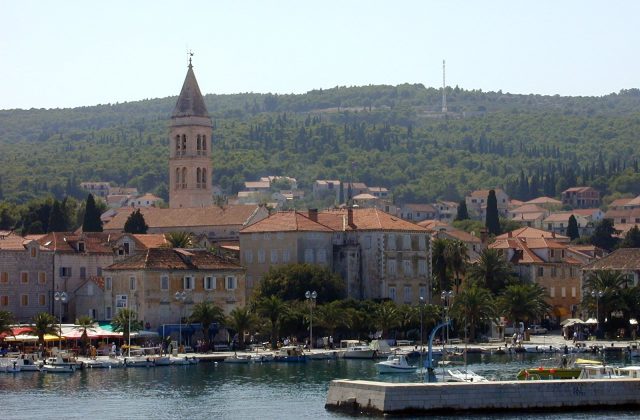
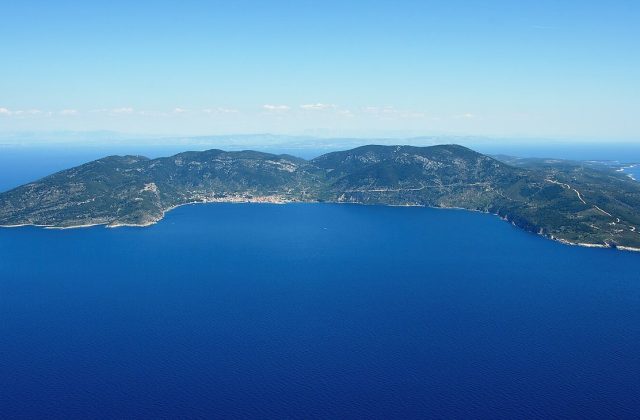
Korcula is a long, wooded island in southern Dalmatia, 47 km from end to end and separated from the Peljesac peninsula by a strait under 1 km wide at its narrowest. Its main town is a walled medieval peninsula of stone lanes, and the island is known for its white wines, coves, sword dances and the claim to be Marco Polo's birthplace.
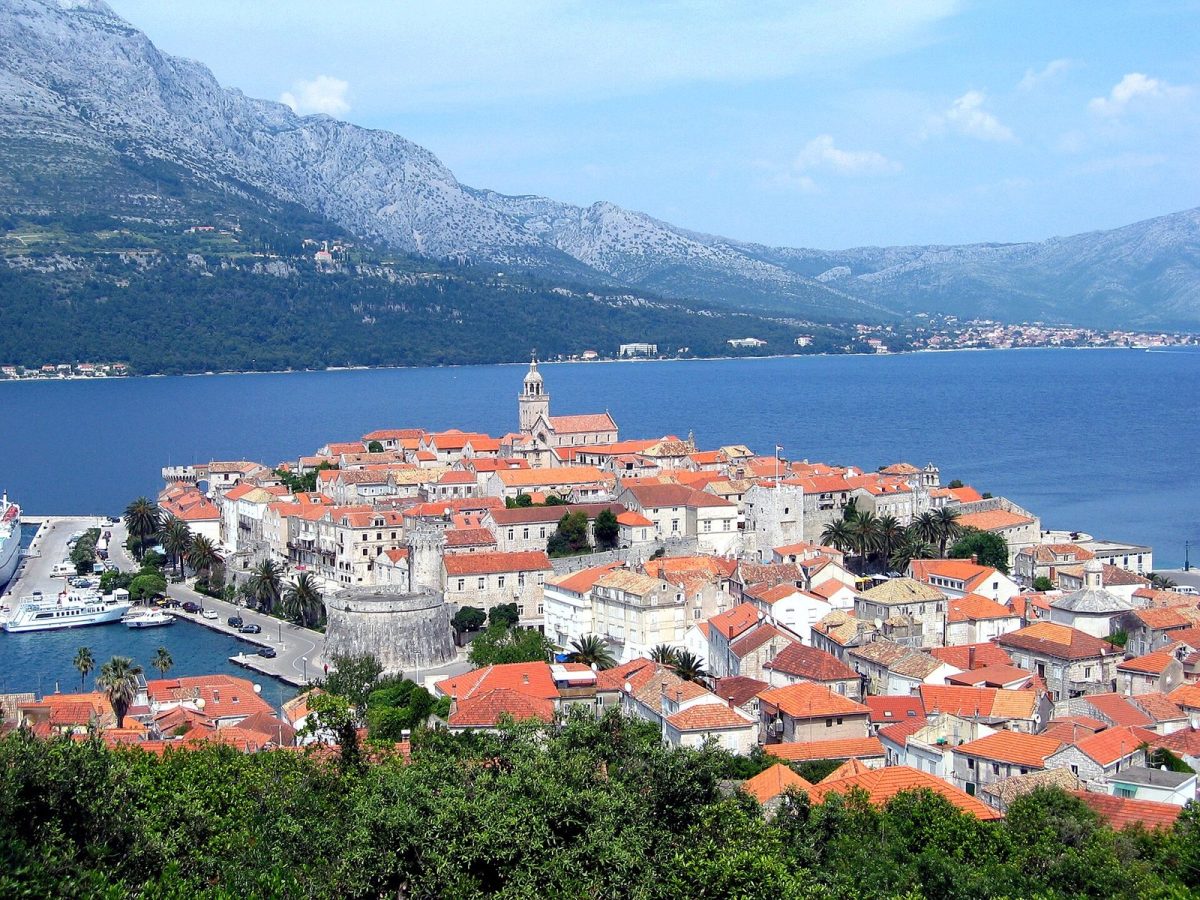
Photo: CC BY-SA 3.0
| Getting there | Catamarans from Split via Hvar or from Dubrovnik about 2 h; car ferry from Orebic 15 min; car ferry Split–Vela Luka |
|---|---|
| Gateway | Dubrovnik or Split; Orebic for the car ferry |
| Travel time | About 2 h by catamaran or 15 min ferry from Orebic |
| Days | 3 to 5 nights |
| Best months | May–June and September; July–August hot and crowded |
| Getting around | Buses link Korcula town, Lumbarda, Blato and Vela Luka; a car or scooter helps for coves |
| Booking | Summer catamarans and rooms in the old town a few weeks ahead; boat trips a day ahead |
| Cost | Mid-range for Croatia |
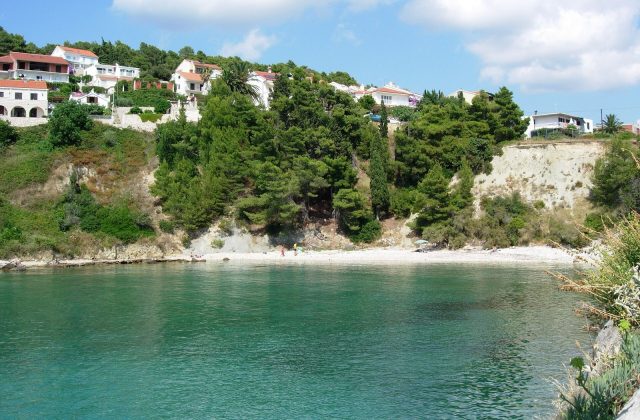
| Beaches | Mostly pebble and rock coves; Lumbarda has the few sandy beaches; Badija islet for a quiet swim |
| Sea | Adriatic Sea |
| Archipelago | Dalmatian Islands |
| Area | 279 km² |
| Population | 15,522 (2011) |
| Highest point | 569 m |
| Airport | No |
| Car-free | No |
| Checked | October 2026 |
What is sold on Korcula falls into four groups.
Day trips from Dubrovnik are the main products for people based on the mainland. A minibus or coach crosses the Peljesac peninsula, often stopping at Ston for its walls and oysters and at a winery, then takes the short ferry from Orebic to Korcula town for a guided walk and free time. Expect a long day of ten or eleven hours; private versions let you set the pace. A few trips also run from Makarska and Baska Voda.
On the island, boat trips leave Korcula town and Lumbarda for the small islets of the archipelago east of the town, with swimming, snorkelling and often a fish lunch; private boats with a skipper suit families and groups. Kayak and outrigger canoe tours paddle the same channels, including sunset versions with wine.
Wine and food tours visit cellars in Lumbarda, Smokvica and Cara, with olive oil tastings, and buggy or quad safaris cover the hilly interior. Walking tours of the old town explain its street plan and the Marco Polo story.
If you can, stay two nights or more rather than coming on a day trip, and book a boat or kayak outing to the islets.
The walled town fills a small peninsula on the north-east coast. Its lanes run off the main street like the bones of a fish, laid out to let the summer breeze in and keep winter winds out. Climb the bell tower of St Mark's Cathedral, see the house linked to Marco Polo, and walk the seafront walls at sunset.
Off the town lies a small archipelago of wooded islets. Badija has a Franciscan monastery and tame deer, and the others have clear coves for swimming. Water taxis run to Badija in summer, and kayaks can be rented in town or in Lumbarda, about 6 km away. Paddle in the morning before the wind picks up.
A village of vineyards and stone houses at the eastern tip, famous for Grk, a white wine made almost nowhere else. Lumbarda also has the island's sandy beaches, rare in Dalmatia, with Przina the best known. Family cellars offer tastings, and a cycle path from Korcula town makes it an easy half-day trip.
Korcula keeps alive the Moreska, a sword dance telling the story of two kings fighting over a captured princess, with clashing blades and brass band. Local troupes perform it in the old town several evenings a week in summer, and in other villages similar dances survive. Buy tickets in town on the day.
Drive the island road west through Pupnat, Cara and Smokvica, where Posip white wine comes from, and on to Blato with its long lime avenue. The road ends at Vela Luka, a busier port in a deep bay, near Vela Spila, a large cave inhabited in prehistoric times. Stop at coves on the south coast on the way.
Our pick for each kind of trip, with live dates and prices. Free cancellation on most.
Best for: First visit, a day from Dubrovnik
A guided day by road across Peljesac with the short ferry to Korcula town, time in the old town and usually a wine stop on the way.
Korcula is reached by sea, and you can come with or without a car. Catamarans carry foot passengers from Split, via Hvar, to Korcula town in about two and a half hours, and from Dubrovnik, often via Mljet, in about two hours; they run several times a day in summer and less often in winter. A car ferry also links Split with Vela Luka in about two and three-quarter hours.
The shortest crossing is the car ferry from Orebic on the Peljesac peninsula, which runs frequently and takes about 15 minutes to Domince near Korcula town; small passenger boats go straight to the old town. Since the Peljesac Bridge opened in 2022, the drive from Dubrovnik to Orebic takes about two hours. Dubrovnik and Split airports are the nearest.
Korcula town and Lumbarda are walkable and linked by a cycle path. Buses run along the island road from Korcula town to Blato and Vela Luka, timed with the ferries, but they are infrequent, especially on Sundays. For the coves of the south coast and the wine villages, rent a car, scooter or e-bike; the roads are narrow and winding but quiet outside August. Parking near the old town is limited and paid.
The season runs from May to October. May and June bring warm days, sea temperatures reaching the low 20s and quiet lanes. July and August are hot, around 30 degrees, the sea is warmest, and the old town is crowded when day trips and yachts arrive; prices peak. September is the best balance of warm sea, harvest time in the vineyards and fewer people, and early October is still good for walking.
From November to April many restaurants and rooms close, ferry and catamaran services are reduced, and the bora wind can bring cold, clear days, while the jugo brings rain.
The Moreska is danced regularly in summer and on 29 July, the town's feast day. Three to five nights let you see the town, the islets and the wine villages.
Korcula town is the obvious base, with the old town, ferries and restaurants together; rooms inside the walls are atmospheric but can be noisy in summer. Lumbarda, 6 km away, suits families, with sandy beaches, vineyards and calmer nights. Vela Luka at the western end is a working town with the Split ferry and a deep bay, good for exploring the west. Small coves such as Pupnat Luka and Brna have a few apartments for a quiet stay.
Greek settlers called the island Black Korkyra after its dark pine forests. It later passed between Byzantium, Croatian and Hungarian kings and city republics, and from 1420 to 1797 it belonged to Venice, which shaped the stone town, its walls and its skilled masons and shipbuilders. In 1298 Venice and Genoa fought a sea battle off the island, and tradition holds that Marco Polo was captured there. Austrian rule followed in the 19th century, then Yugoslavia and, from 1991, Croatia. Wine, olive oil and tourism now support the island.
Korcula fits between Split and Dubrovnik on an island-hopping route: Split, Hvar, Korcula, then Mljet and Dubrovnik by catamaran. Across the strait, the Peljesac peninsula has red wine villages, Orebic beaches and Ston's walls and oyster beds, an hour or so by car. Lastovo, the remote island to the south, is reached from Vela Luka.
Catamarans from Split via Hvar or from Dubrovnik about 2 h; car ferry from Orebic 15 min; car ferry Split–Vela Luka.
From Dubrovnik or Split; Orebic for the car ferry: about 2 h by catamaran or 15 min ferry from Orebic.
3 to 5 nights.
May–June and September; July–August hot and crowded.
Buses link Korcula town, Lumbarda, Blato and Vela Luka; a car or scooter helps for coves.
Go if you want a compact walled old town, wine villages, sea kayaking and easy coves without the scale of Hvar. Skip it or choose Mljet or Vis if you want wilder nature, or Brac if a big beach such as Zlatni Rat is the priority.
Mid-range for Croatia.
Mostly pebble and rock coves; Lumbarda has the few sandy beaches; Badija islet for a quiet swim.
Summer catamarans and rooms in the old town a few weeks ahead; boat trips a day ahead.
Yes. Boat trips, guided tours and day trips for Korcula can be booked online; live prices and free cancellation on most are shown on this page.
Dalmatian Islands, Croatia
Hvar is a long, narrow island off the Dalmatian coast, about 68 km from end to end, known for the Venetian harbour of…
170 tours & trips
Dalmatian Islands, Croatia
Brač is the largest island in Dalmatia, 396 square kilometres of olive groves and white limestone just off Split, with…
52 tours & trips
Dalmatian Islands, Croatia
Šolta is a small, low island of olive groves, vineyards and stone villages just south of Split, about an hour away by…
28 tours & trips
Dalmatian Islands, Croatia
Vis is the most distant inhabited island of central Dalmatia, about 90 square kilometres of vineyards, pine woods and…
23 tours & trips