Thasos
100 km away
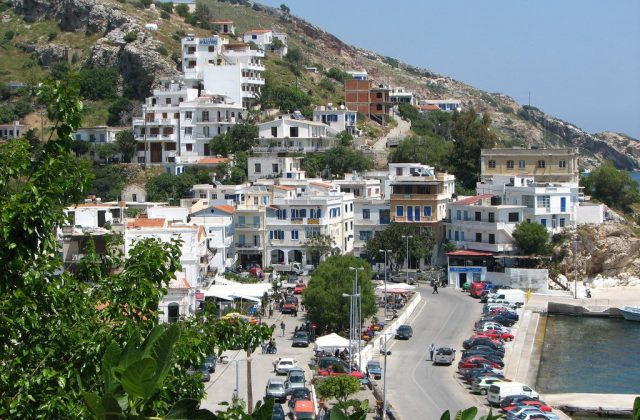
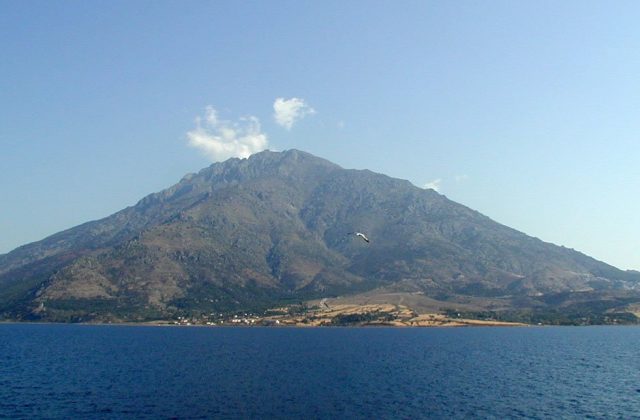
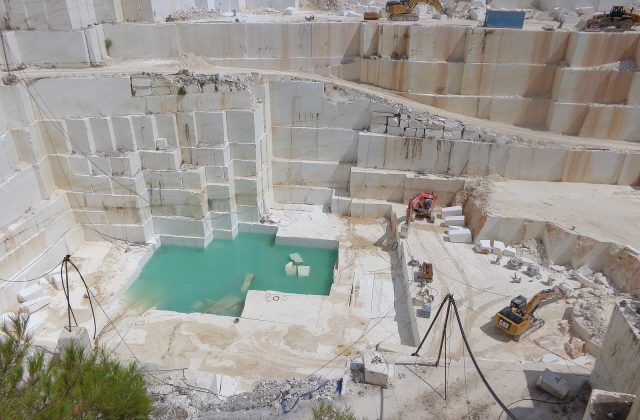
Thasos is the northernmost large Greek island, a round, green mountain of marble and pine forest just off the coast of…
17 tours & trips
Greece · Aegean Sea · Beach island
Lemnos is the eighth-largest Greek island, a flat, golden landscape of volcanic hills, vineyards and sand dunes in the northern Aegean, halfway between Mount Athos and the Turkish coast. Its long sandy beaches, prehistoric town of Poliochni, castle above Myrina and quiet villages see few foreign tourists, and prices stay low.
| Getting there | Flights from Athens about 50 min and from Thessaloniki; ferries from Kavala and Lavrio, and island links |
|---|---|
| Gateway | Lemnos airport; ferries from Kavala or Lavrio |
| Travel time | 50 min by air or 4 to 5 h by ferry from Kavala |
| Days | 3 to 5 nights |
| Best months | Jun–Sep warmest; windy in Jul–Aug; May and Oct quiet and mild |
| Getting around | Rent a car; the island is large and buses link only the main villages |
| Booking | Car hire and rooms in Myrina for August; ferries a week ahead in summer |
| Cost | Cheap for a Greek island |
| Beaches | Long sandy beaches: Plati, Thanos and Riha Nera near Myrina; Keros wild and windy in the east |
| Sea | Aegean Sea |
| Archipelago | North Aegean Islands |
| Area | 478 km² |
| Population | 16,700 (2021) |
| Highest point | 430 m (Mount Skopia) |
| Airport | Yes, scheduled flights |
| Car-free | No |
| Checked | October 2026 |
Nothing is sold online for Lemnos on its own. Tourism here is small and independent: most visitors fly or take the ferry, rent a car and plan their own days, with a few activities arranged locally through travel offices in Myrina.
The main local options are boat trips around the western and southern coasts, which leave from Myrina harbour in summer and stop at beaches reachable only by sea, with swimming and sometimes lunch on board. Kitesurfing and windsurfing schools at Keros beach in the east offer lessons and rentals, and the strong summer winds make it one of the best spots in Greece for the sport.
On land, small local guides run archaeology days covering Poliochni, Hephaistia and the Kabeirion sanctuary, and wine tours visit producers of the island's Muscat and Limnio wines. Birdwatching trips to the salt lakes in spring and winter focus on flamingos.
There are no day trips to Lemnos from the mainland. The plain recommendation is to rent a car for your whole stay, base yourself in Myrina, take one boat trip and spend the other days exploring beaches, villages and ancient sites.
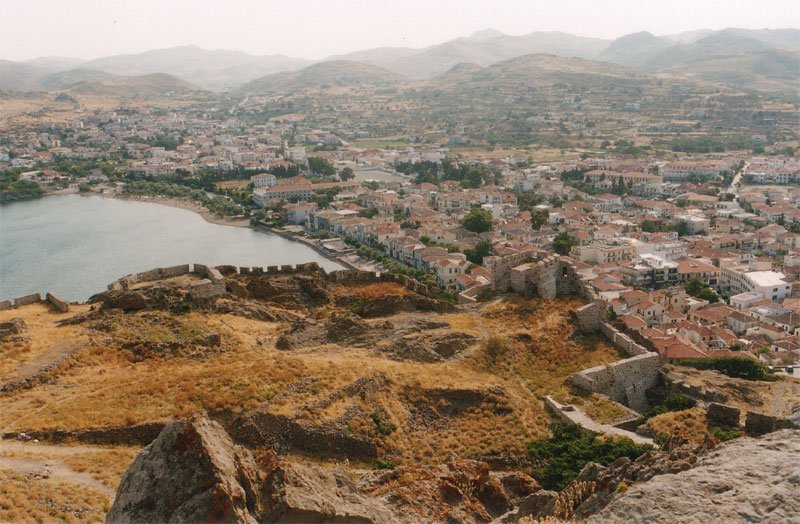
The island's capital sits on the west coast beneath a rocky headland crowned by a Byzantine and Venetian castle, where wild deer roam the walls. Climb up at sunset for views over the town and, on clear days, Mount Athos on the horizon. Below, the shopping street, harbour tavernas and the town beaches of Romeikos Gialos and Riha Nera are a short walk apart.
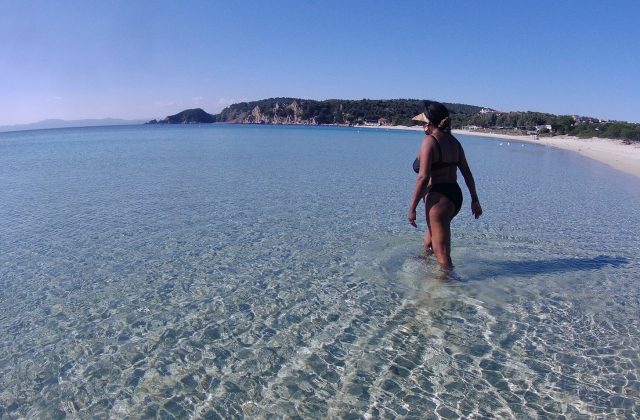
Just south of Myrina, a 10-minute drive, the long sandy bays of Plati and Thanos have shallow, clear water, beach bars and tavernas, and views of the volcanic coast. They are the most popular beaches on the island but rarely crowded. Thanos is quieter at its far end; continue south to the smaller coves of Agios Pavlos.
On the east coast, about 40 minutes from Myrina, the excavated prehistoric settlement of Poliochni is one of the earliest towns in Europe, dating back to around 4000 BC. Walk among the foundations of houses, streets and a public building that may have been an assembly hall. A small museum explains the layers of settlement and finds such as tools and pottery.
In the north, near the village of Katalakkos, a field of golden sand dunes covers about 7 hectares, unusual for Greece and often described as a small desert. Walk among the rippled sand and the juniper bushes, ideally in the early morning or late afternoon light, and bring water. The nearby beach of Gomati is wild and good for walks.
On the north-east coast, the remains of ancient Hephaistia, named after the god of fire who fell to Lemnos in myth, include a theatre restored for summer performances. A short drive away, the Kabeirion sanctuary, on a headland above the sea, was the centre of a mystery cult. Combine them with a stop at the flamingo lakes nearby.
Moudros, on the vast natural harbour in the middle of the island, was the base for the Allied fleet during the Gallipoli campaign in 1915. Two well-kept Commonwealth war cemeteries, at Moudros and Portianou, hold the graves of soldiers from Britain, Australia and New Zealand. A small museum in Portianou tells the story; allow an hour.
Lemnos airport, in the centre of the island about 20 km from Myrina, has flights from Athens of about 50 minutes several times a day and connections from Thessaloniki and some other islands; in summer a few charter flights arrive from abroad.
Ferries link Myrina with Kavala on the northern mainland in about four to five hours, and with Lavrio near Athens on a longer route, often overnight. Other lines connect Lemnos with Lesvos, Chios, Agios Efstratios and Thessaloniki, though frequencies are low and change by season, so check schedules close to travel and book cabins or car spaces ahead in August.
Bringing a car on the ferry is useful for long stays, but local rental is easy and often cheaper for short visits.
Lemnos covers 477 square kilometres, with beaches and sights spread across it, so a car is the best way to explore. Rental agencies are at the airport and in Myrina. Local buses connect Myrina with the main villages but run infrequently, mainly in the morning and early afternoon. Roads are good and traffic light, though some beach tracks are unpaved. Taxis are available in Myrina. Scooters and bikes suit only short trips because of the summer wind.
The best months are June to September. The sea is warmest in August and September, at about 24 to 25 degrees, and the beaches are long enough never to feel crowded. July and August bring the strong meltemi wind, which cools the air and is ideal for kitesurfing at Keros but can make swimming on the north and east coasts rough; the west coast near Myrina is more sheltered.
May and October are quiet and mild, good for walking, archaeology and birdwatching, but the sea is cooler and some tavernas and rooms are closed. August is the busiest and most expensive month, with Greek holidaymakers and village festivals, especially around 15 August. In winter the island is windy and quiet, and flamingos gather on the salt lakes. Three to five nights let you combine beaches with ancient sites.
Myrina is the best base for most visitors, with the widest choice of hotels and rooms, restaurants, shops and the nearby beaches of Riha Nera, Plati and Thanos; it suits first-timers and those without a car. Plati and Agios Ioannis, just outside town, offer quieter seaside stays. Moudros, in the centre of the island, suits those who want to explore the east coast and ancient sites. Keros has camping and simple stays for kitesurfers.
Lemnos has been inhabited since the Neolithic period, and Poliochni was one of the first urban centres in the Aegean. In myth the god Hephaestus fell here when thrown from Olympus, and the Argonauts stopped on the island. It passed through Athenian, Byzantine, Venetian and Genoese hands before more than four centuries of Ottoman rule, ending in 1912. In 1915 Moudros Bay hosted the fleet for the Gallipoli campaign, and in 1918 the armistice ending the war with the Ottoman Empire was signed there. Today the island lives mainly from farming, wine and tourism.
Lemnos pairs with Agios Efstratios, a tiny volcanic island about two hours south by ferry, and with Lesvos, about five to six hours away, for a north Aegean route. Ferries to Kavala let you add Thassos, a short crossing from the mainland. Flights to Athens and Thessaloniki make it easy to start or end a trip in either city.
100 km away
Thasos is the northernmost large Greek island, a round, green mountain of marble and pine forest just off the coast of…
17 tours & trips
118 km away
Lesbos is Greece's third largest island, a big, green slice of the north-east Aegean only a few kilometres off the…
5 tours & trips
122 km away
Ammouliani is the only inhabited island of Halkidiki, a low, sandy island of about 4.5 square kilometres in the gulf…
17 tours & trips
Flights from Athens about 50 min and from Thessaloniki; ferries from Kavala and Lavrio, and island links.
From Lemnos airport; ferries from Kavala or Lavrio: 50 min by air or 4 to 5 h by ferry from Kavala.
3 to 5 nights.
Jun–Sep warmest; windy in Jul–Aug; May and Oct quiet and mild.
Rent a car; the island is large and buses link only the main villages.
Go if you want quiet sandy beaches, good local food and wine and an authentic Greek island without mass tourism. Skip it or choose Thassos or Skiathos if you want frequent ferries, a lively resort scene or green, forested hills.
Cheap for a Greek island.
Long sandy beaches: Plati, Thanos and Riha Nera near Myrina; Keros wild and windy in the east.
Car hire and rooms in Myrina for August; ferries a week ahead in summer.
North Aegean Islands, Greece
Samos is a green, mountainous Greek island in the eastern Aegean, separated from the Turkish coast by a strait only 1.6…
29 tours & trips
North Aegean Islands, Greece
Chios is the fifth-largest Greek island, 842 square kilometres in the northeast Aegean just 7 km from the Turkish…
20 tours & trips
North Aegean Islands, Greece
Lesbos is Greece's third largest island, a big, green slice of the north-east Aegean only a few kilometres off the…
5 tours & trips
North Aegean Islands, Greece
Ikaria is a mountainous island in the eastern Aegean, about 19 km south-west of Samos, known for the long, healthy…
2 tours & trips
North Aegean Islands, Greece
Samothrace is a rugged island of 178 square kilometres in the far north of the Aegean, two hours by ferry from…
No tours listed