Isles of Scilly
181 km away
The Isles of Scilly are a cluster of low granite islands about 45 km south-west of Land's End, with five inhabited…
2 tours & trips
United Kingdom · North Sea & Channel · Nature & wildlife island
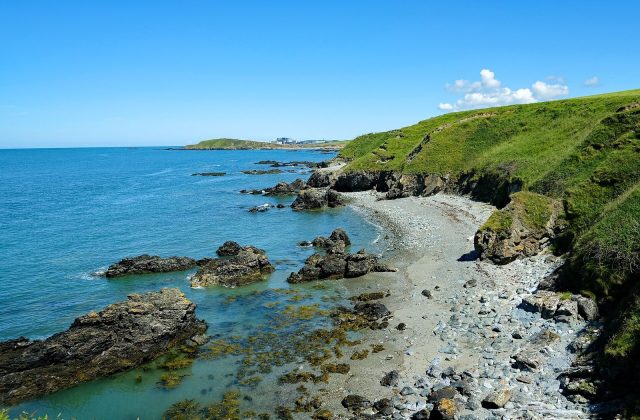
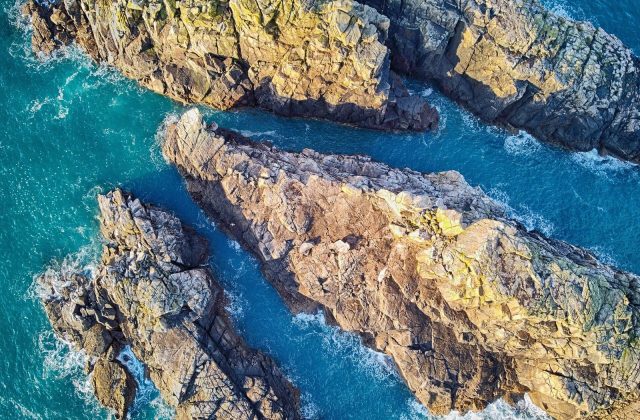
Lundy is a granite island in the Bristol Channel, about 5 km long and 1 km wide, lying some 19 km off the north Devon coast. Owned by the National Trust and run by the Landmark Trust, it has no cars, one pub and one shop, and is best known for puffins, seals and its clear protected waters.
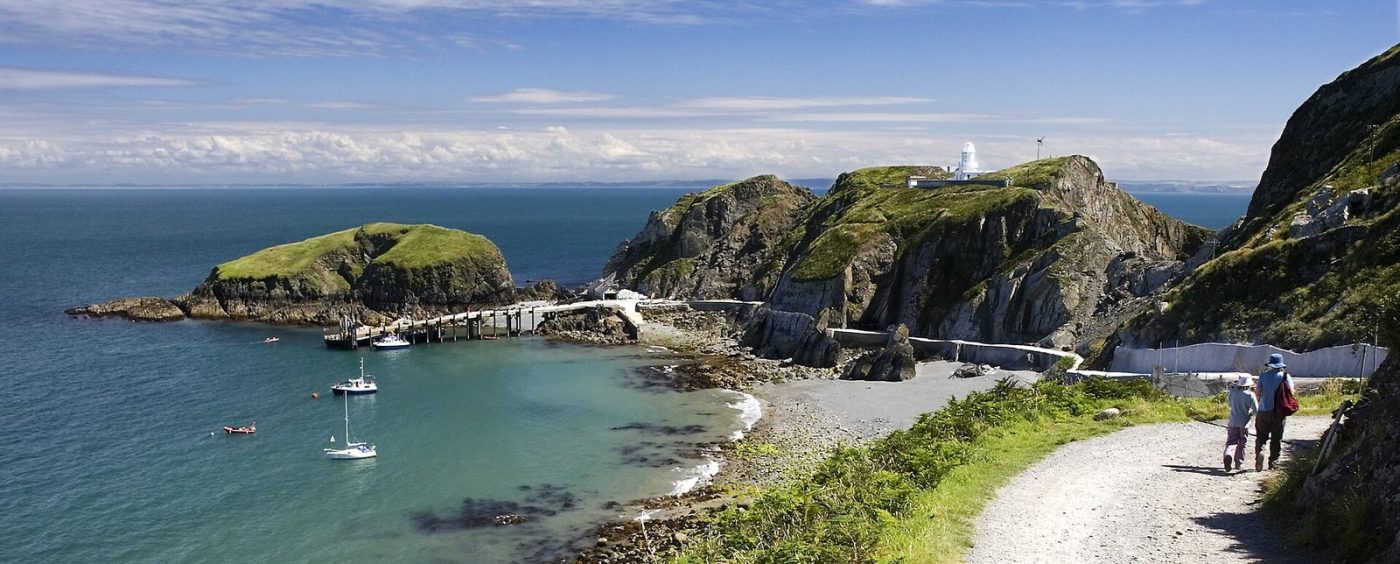
Photo: MichaelMaggs, CC BY-SA 3.0
| Getting there | Passenger boat from Bideford or Ilfracombe in about 2 h, Apr–Oct; winter helicopter from Hartland Point |
|---|---|
| Gateway | Bideford or Ilfracombe |
| Travel time | About 2 h by boat |
| Days | A day trip, or 2 to 3 nights |
| Best months | Apr–Oct for the boat; puffins May–July; seals and quiet in September |
| Getting around | Car-free: walk on tracks and footpaths; luggage taken up from the landing |
| Booking | Boat seats weeks ahead in summer; island cottages up to a year ahead |
| Cost | Mid-range; cottages pricey in high season |
| Beaches | No real beaches; a shingle cove at the landing and rocky shores; swim only in calm weather |
| Sea | North Sea & Channel |
| Area | 4.3 km² |
| Population | 29 (2021) |
| Ferry | 2 h from Bideford or Ilfracombe |
| Airport | No |
| Car-free | Yes |
| Checked | October 2026 |
Nothing is sold online for Lundy as a packaged tour. The island has its own passenger ship, which is how almost everyone visits, and you book it directly as a day return or as transport for a longer stay in one of the island's holiday cottages.
A day trip gives roughly four hours ashore, enough to walk to the northern tip and back or to make a loop of the southern half with the castle, the old lighthouse and the pub. The crossing itself is part of the outing: dolphins and seabirds are often seen on the way. Some summer sailings are offered as round-the-island or wildlife cruises without landing.
For a longer stay, the island rents out about two dozen properties, from a lighthouse keeper's cottage to a castle keep, plus a campsite. Diving is a strong draw thanks to the marine reserve and its wrecks; dive boats run from the north Devon harbours and must be arranged with local skippers.
Our advice: for a first look, take the day return on a settled day in June for the puffins; if you love walking and quiet, spend at least two nights, when the day visitors have gone and the island is yours.
Boats tie up at a jetty at the south-east corner, and a steep track climbs about 120 metres to the village, which takes 20 to 30 minutes on foot. Here are the Marisco Tavern, the shop where you can buy Lundy's own puffin stamps, the church of St Helena and an information point with the day's wildlife sightings.
Walk north along the western cliffs for the island's best views and seabirds. Puffins nest in burrows on the slopes from about April to July, best seen in May and June near Jenny's Cove, about 45 minutes from the village. Guillemots and razorbills crowd the ledges nearby, and grey seals haul out on the rocks below.
Just above the landing stands the square keep built in the thirteenth century after the crown took the island from the de Marisco family. The cliffs below have grassy terraces with views back to the Devon coast, and the South Light, still working, sits on its own rock at the corner, a short walk away.
This granite lighthouse of 1819 stands on the highest ground near the village, and its lantern room can be climbed for a view of the whole island. It was placed so high that fog often hid its beam, and it was replaced by new lights at both ends. The keepers' cottages beside it are now holiday lets.
A walk of about 5 km from the village along the plateau, with Soay sheep, sika deer and Lundy ponies grazing on the moorland, leads to the North Light and the wild cliffs at the tip. Allow at least three hours for the return on foot, and keep an eye on the time if you are on a day trip.
From about late March to the end of October the island's passenger ship sails several days a week from Bideford or Ilfracombe, depending on the tide; the crossing takes about two hours. Day returns leave in the morning and come back in the early evening. Sailings are cancelled in rough weather, sometimes on the day, so keep plans flexible and check the evening before. Book ahead in summer and on bank holidays.
From November to March the boat is replaced by a helicopter from Hartland Point, mainly for staying guests, flying on set days in a few minutes. Parking is available near both harbours. You cannot take a car or bike to the island; luggage for staying guests is carried up from the landing by the island staff.
Lundy is car-free, and the only way around is on foot. A main track runs up the spine of the island from the village to the north end, about 5 km, with footpaths along both coasts. The ground is easy but exposed: bring proper shoes, waterproofs and water, as there is no shelter beyond the village. The east side is gentler and greener, the west side higher and more dramatic. Keep away from cliff edges in wind and fog.
The boat season runs from about April to October, and the island changes through it. April and May bring the seabirds back and spring flowers on the east slopes; May to July is puffin time, with chicks in the burrows by midsummer. July and August are the busiest months for the boat and the warmest for diving, though the water stays cool. In September the seabirds leave, grey seals start pupping in the sea caves and the island is quieter, with good light for walking.
Winter is for staying guests only: wild, windy and very empty, with the helicopter as the lifeline and the pub as the social centre. Any time of year the weather can stop the boat, so a calm forecast matters more than the month. A day trip shows the essentials; two or three nights let you walk the whole island.
All accommodation is run by the island, in about two dozen restored buildings scattered around the village and the south end: cottages, a converted church hall, rooms in the castle keep and the old lighthouse keepers' quarters. The village is convenient for the pub and shop; the outlying properties are quieter and more atmospheric. The campsite near the village is the cheapest option. On the mainland, Bideford and Ilfracombe both have plenty of rooms for the night before an early sailing.
The name comes from the Norse for puffin island. In the Middle Ages the de Marisco family held Lundy as a pirate base until one of them was executed in 1242 and the crown built the castle. Pirates and smugglers used the island for centuries after, and in the 1920s its owner Martin Coles Harman issued his own coins, the puffins, and was fined. In 1969 the island passed to the National Trust, and its waters became one of the first marine reserves in Britain, with a no-take zone that has let lobsters and fish recover.
Lundy fits into a stay on the north Devon coast. Ilfracombe and Bideford are both bases with good walking on the South West Coast Path; the village of Clovelly is 20 minutes' drive from Bideford, and Exmoor begins just east of Ilfracombe. From London or Bristol, the drive to the north Devon harbours takes about three to four hours.
181 km away
The Isles of Scilly are a cluster of low granite islands about 45 km south-west of Land's End, with five inhabited…
2 tours & trips
236 km away
Anglesey is the largest island in Wales, about 676 square kilometres of farmland and coves joined to the mainland by…
14 tours & trips
242 km away
The Isle of Wight is England's largest island, 380 square kilometres of chalk downs, sandy bays and seaside towns…
7 tours & trips
Passenger boat from Bideford or Ilfracombe in about 2 h, Apr–Oct; winter helicopter from Hartland Point.
From Bideford or Ilfracombe: about 2 h by boat.
A day trip, or 2 to 3 nights.
Apr–Oct for the boat; puffins May–July; seals and quiet in September.
No. Lundy is car-free. Car-free: walk on tracks and footpaths; luggage taken up from the landing.
Go if you like cliff walks, seabirds, seals and the feeling of a small island almost without people. Skip it or choose a calmer outing on the Devon coast if you get seasick easily or need beaches, shops or evening entertainment. At about 2 h each way from Bideford or Ilfracombe, it is worth staying at least one night.
Mid-range; cottages pricey in high season.
No real beaches; a shingle cove at the landing and rocky shores; swim only in calm weather.
Boat seats weeks ahead in summer; island cottages up to a year ahead.
Inner Hebrides, United Kingdom
The Isle of Skye is the largest island of the Inner Hebrides, 1,656 square kilometres of sea lochs, moorland and jagged…
62 tours & trips
Northern Isles, United Kingdom
Orkney is an archipelago of about 70 low, green islands off the north coast of Scotland, 20 of them inhabited, with the…
23 tours & trips
United Kingdom
Anglesey is the largest island in Wales, about 676 square kilometres of farmland and coves joined to the mainland by…
14 tours & trips
United Kingdom
Eilean Donan is a small tidal island where three sea lochs meet in the western Highlands of Scotland, joined to the…
10 tours & trips
Channel Islands, United Kingdom
Guernsey is the second-largest of the Channel Islands, a self-governing British Crown dependency in the Gulf of St…
8 tours & trips
Inner Hebrides, United Kingdom
Mull is the second-largest island of the Inner Hebrides, a 45-minute ferry crossing from Oban on the west coast of…
8 tours & trips