Maria Island
Australia
Maria Island is a mountainous national park 4 km off the east coast of Tasmania, reached by a 30-minute ferry from…
211 tours & trips
Australia · Pacific Ocean · Historic island
Norfolk Island is a small Australian territory of about 35 square kilometres in the South Pacific, roughly 1,400 km east of the Australian mainland. It combines tall Norfolk pines, cliffs and a coral lagoon with the ruins of a brutal convict settlement and a community descended from the Bounty mutineers, who still speak their own language.
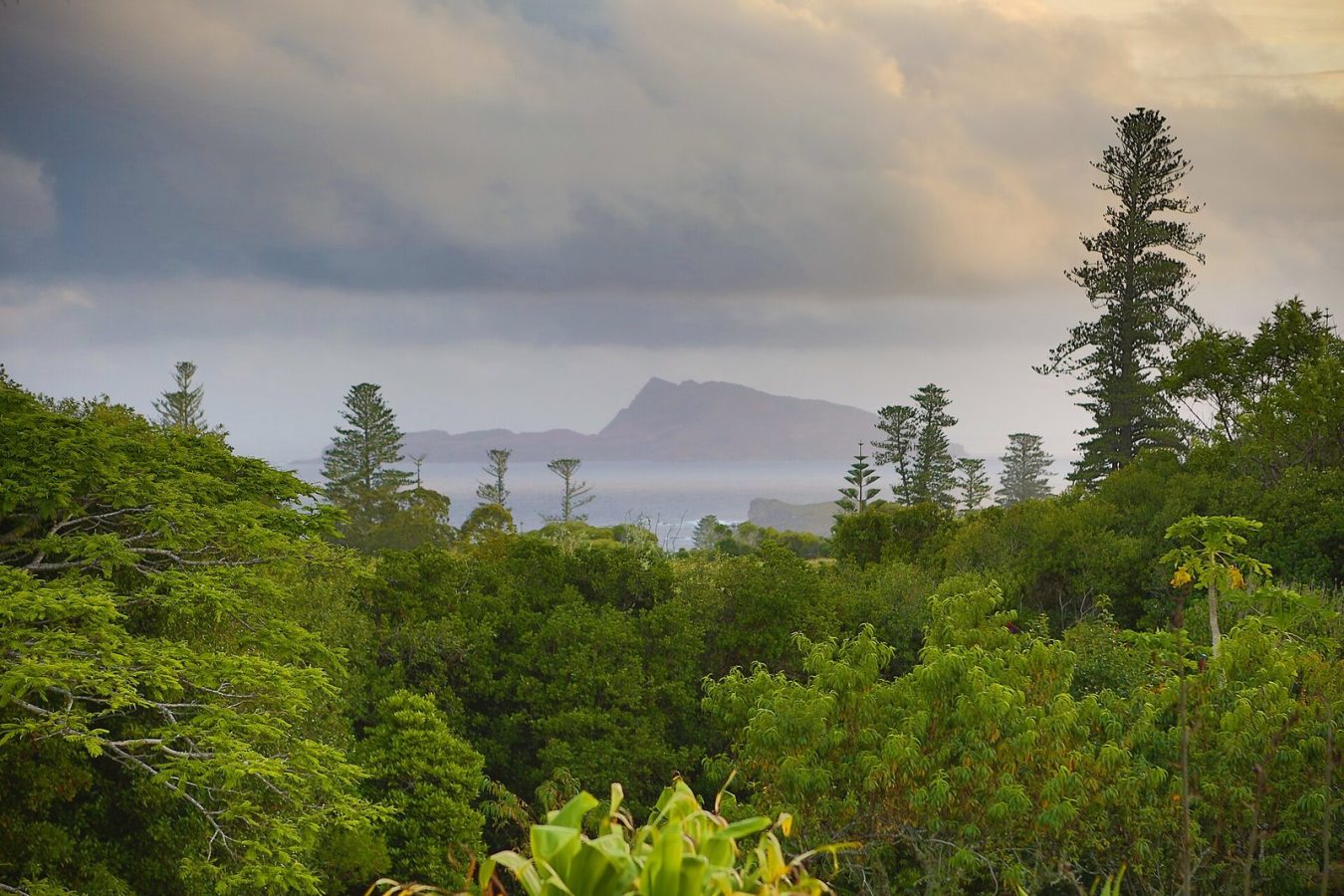
Photo: Peter James McNally, CC BY-SA 4.0
| Getting there | Flights of about 2.5 h from Sydney or Brisbane, a few times a week; no passenger ferry |
|---|---|
| Gateway | Sydney or Brisbane |
| Travel time | About 2.5 h by air |
| Days | A week |
| Best months | Sep–Apr; mild subtropical climate all year; Bounty Day on 8 June |
| Getting around | Rent a car; no public transport; cows have right of way on the roads |
| Booking | Flights and accommodation with a car months ahead; tours and the fish fry on arrival |
| Cost | Expensive, even by Australian standards |
| Beaches | Emily Bay and Slaughter Bay inside the reef for swimming; Anson Bay below cliffs |
| Sea | Pacific Ocean |
| Area | 35 km² |
| Population | 2,188 (2021) |
| Highest point | 319 m (Mount Bates) |
| Airport | Yes, scheduled flights |
| Car-free | No |
| UNESCO | Australian Convict Sites (Kingston and Arthur's Vale Historic Area) |
| Checked | October 2026 |
No tours for Norfolk Island itself are sold online, and the island works differently from most destinations. Many visitors come on packages bought through travel agents, which bundle flights, accommodation and a rental car, often with a few tours included. Others book flights and lodging separately and arrange everything else on arrival.
On the island, a handful of local operators run the main experiences, and the visitor centre in Burnt Pine is the place to book. The most popular are guided tours of the convict settlement at Kingston, which explain the ruins and the cemetery; half-day island orientation tours by coach; and evening events such as the sound-and-light show among the ruins, a ghost tour and the island fish fry, where locals cook freshly caught fish at a clifftop picnic.
In the lagoon at Emily Bay, glass-bottom boat trips show the coral and fish, and snorkelling gear can be rented. When the sea allows, boats take small groups to Phillip Island, a protected nature reserve offshore, and fishing charters go out for kingfish and trevally.
Recommendation: book flights, a room and a car together, then plan tours at the visitor centre on your first day, starting with a guided tour of Kingston.
The Kingston and Arthur's Vale Historic Area, part of the World Heritage listing of Australian convict sites, holds the Georgian buildings, ruined prisons and barracks of the penal settlement. Walk the old military quarters on Quality Row, visit the four small museums, then wander through the cemetery by the sea, where headstones tell of executions and shipwrecks.
Beside Kingston, a coral reef shelters Emily Bay and Slaughter Bay, creating a calm, clear lagoon ideal for swimming and snorkelling, with sand, pines and picnic tables behind it. Take a glass-bottom boat trip to see the coral, turtles and fish. Bring your own snorkel gear or hire it, and check the tides for the best conditions.
The park covers the island's highest ground, including Mount Pitt and Mount Bates, with forest trails, palms, tree ferns and native birds such as the green parrot. Drive up Mount Pitt for a view over the island, then follow the trails down towards the north coast. The walk to Captain Cook Lookout gives cliff views and seabirds.
This stone chapel was built in the late nineteenth century by the Melanesian Mission, which trained clergy for the Pacific islands from Norfolk. It is known for its rose window, stained glass and carved woodwork, with pews inlaid with mother-of-pearl. It stands in a quiet grove a short drive from Burnt Pine, and visitors are welcome outside services.
On the north-west coast, a steep path descends through pines to Anson Bay, a wild beach of golden sand below high cliffs, beautiful but exposed to swell, so swim only on calm days. Nearby, clifftop viewpoints look out to the sea and to Phillip Island on clear days. Combine it with a picnic, and watch the sunset from the cliffs.
Norfolk Island can only be reached by air for visitors. Flights depart from Sydney and Brisbane a few times a week, taking about two and a half hours, and arrive at the airport near Burnt Pine. There are sometimes also flights from New Zealand. Seats are limited and fares are high, so book well ahead, especially for school holidays and festival periods.
There is no regular passenger ferry, and supplies arrive by cargo ship. Some cruise ships call, but landing passengers depends on the sea, as there is no sheltered harbour; ships often cannot land anyone at all. Travellers from Australia need suitable identification, and other visitors need a passport and the right visa for Australia; check the requirements before booking. Since cars cannot be shipped over, rent one on arrival.
The island is small, about 8 km by 5 km, but has no public transport, so a rental car is essential and is often included in accommodation packages. Roads are narrow and winding, with a general speed limit of 50 km per hour, and cattle wander freely and have right of way. Locals wave to passing drivers. Taxis are few, and there are some bike rentals, though the hills are steep.
Norfolk has a mild subtropical climate, rarely very hot or cold, with daytime temperatures from about 18 C in winter to about 25 C in summer. September to April is the most popular period, warm enough for swimming in the lagoon from about December, while winter is cooler, windier and wetter but still pleasant for walking and history.
Festivals shape the calendar: Bounty Day on 8 June celebrates the arrival of the Pitcairn islanders with a re-enactment and picnic, and Thanksgiving Day in late November, a tradition brought by American whalers, is celebrated in church. School holidays in Australia bring more visitors and higher prices. Because flights are infrequent, most people stay a week, which allows time for history, walks, tours and simply slowing down.
Accommodation is mostly self-contained cottages, apartments, lodges and small hotels, spread across the island and often sold with a rental car. Burnt Pine, the central town, is convenient for shops, restaurants and the visitor centre. Kingston and the south coast suit those who want to be near the historic area and the lagoon. Rural properties in the north and west offer quiet, views and gardens, and you will drive everywhere.
Polynesian voyagers lived on Norfolk for a time and left before Europeans arrived. Captain Cook sighted it in 1774, and Britain settled it in 1788 as part of the colony of New South Wales. It became a penal settlement, abandoned for a decade, then reopened as a place of extreme punishment until 1855. In 1856 descendants of the Bounty mutineers moved here from Pitcairn Island, and their families still form the core of the community. Norfolk became an Australian territory in 1914.
Most visitors combine Norfolk with a few days in Sydney or Brisbane, their departure city. Lord Howe Island, another small island with dramatic mountains and coral reefs, is also reached from Sydney, though there are no direct flights between the two. New Zealand is a short flight away on occasional services, and New Caledonia lies to the north.
Flights of about 2.5 h from Sydney or Brisbane, a few times a week; no passenger ferry.
From Sydney or Brisbane: about 2.5 h by air.
A week.
Sep–Apr; mild subtropical climate all year; Bounty Day on 8 June.
Rent a car; no public transport; cows have right of way on the roads.
Go if you want convict history, quiet walks, a sheltered lagoon and a slow, friendly community far from the crowds. Skip it or choose Lord Howe Island if you want dramatic mountains and diving, or Fiji for cheaper beach holidays.
Expensive, even by Australian standards.
Emily Bay and Slaughter Bay inside the reef for swimming; Anson Bay below cliffs.
Flights and accommodation with a car months ahead; tours and the fish fry on arrival.
Yes. Norfolk Island is part of the World Heritage property Australian Convict Sites (Kingston and Arthur's Vale Historic Area).
Australia
Maria Island is a mountainous national park 4 km off the east coast of Tasmania, reached by a 30-minute ferry from…
211 tours & trips
Australia
Phillip Island is a low, farm-covered island about 125 km south-east of Melbourne, joined to the mainland by a bridge…
45 tours & trips
Australia
Rottnest Island is a low, sandy, car-free reserve 18 km off Fremantle, with turquoise bays, salt lakes and the small…
33 tours & trips
Australia
Tasmania is Australia's island state, about 240 km south of the mainland across Bass Strait, with a main island of…
33 tours & trips
Australia
Moreton Island is a sand island of high dunes and long beaches on the eastern edge of Moreton Bay, about 58 km…
24 tours & trips
Australia
Magnetic Island lies 8 km off Townsville in tropical north Queensland, a granite island of about 52 square kilometres,…
23 tours & trips