Nosy Be
Madagascar
Nosy Be is a volcanic island of about 320 square kilometres off the north-west coast of Madagascar and the…
57 tours & trips
Madagascar · Indian Ocean · Beach island
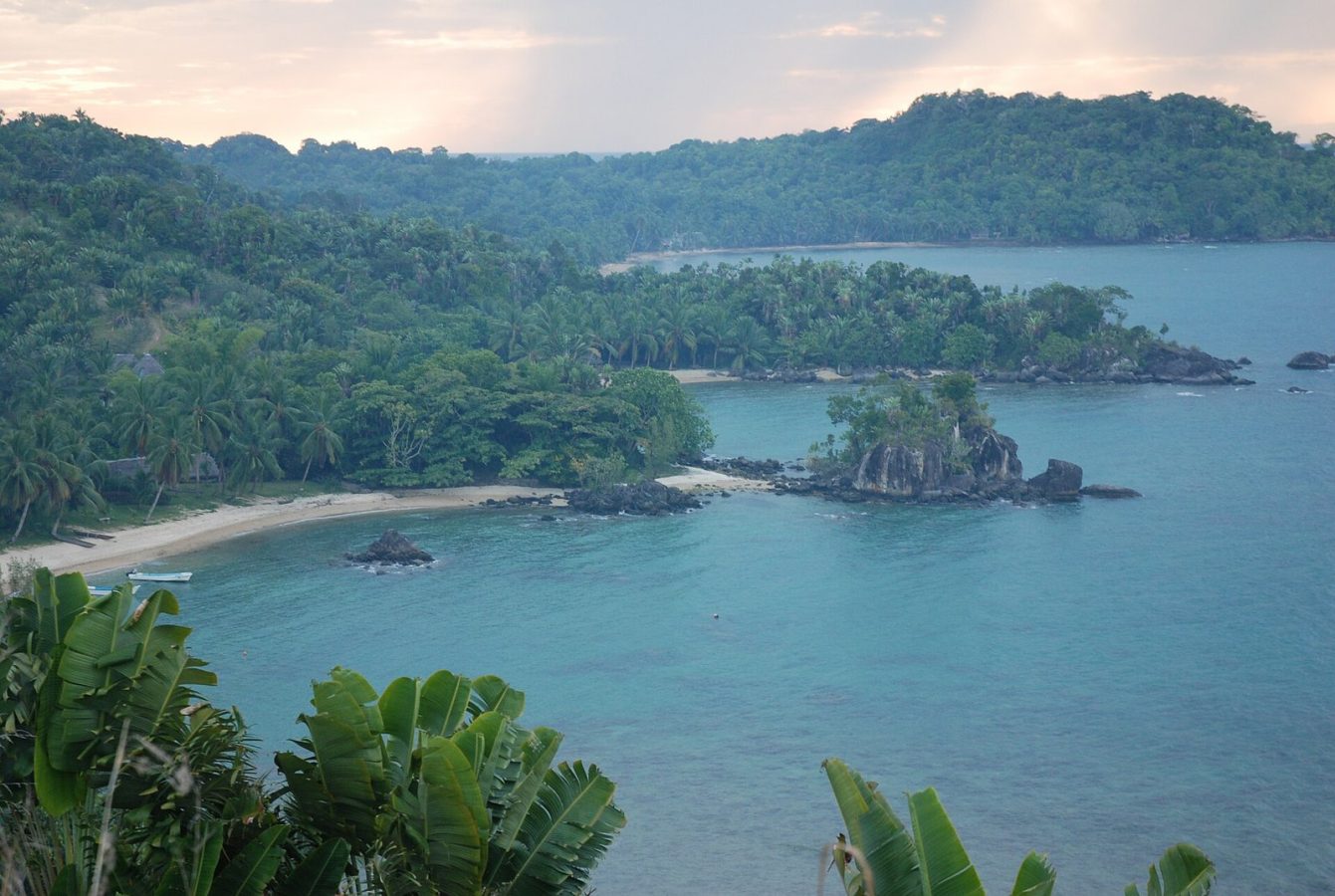
Île Sainte-Marie, or Nosy Boraha in Malagasy, is a long, narrow island off the east coast of Madagascar, about 60 km from end to end and under 10 km wide. Once a base for pirates, it is now known for palm-fringed beaches, a relaxed pace and the humpback whales that calve in its channel from July to September.
| Getting there | 1-h flight from Antananarivo, or road to Soanierana Ivongo then a boat of about 1.5 to 3 h |
|---|---|
| Gateway | Antananarivo (flight) or Soanierana Ivongo (boat) |
| Travel time | About 1 h by air; a long day by road and boat |
| Days | 3 to 5 nights |
| Best months | July–Sept for whales; Sept–Dec driest; Jan–Mar wet with cyclone risk |
| Getting around | Tuk-tuks, rented scooters or quads on the west-coast road; pirogue to Île aux Nattes |
| Booking | Flights and beach lodges ahead for July–Sept; whale trips a day ahead locally |
| Cost | Mid-range; dearer than mainland Madagascar |
| Beaches | Palm-lined sand behind a reef; the best on Île aux Nattes and at the southern tip |
| Sea | Indian Ocean |
| Area | 222 km² |
| Population | 16,325 |
| Highest point | 112 m |
| Airport | Yes, scheduled flights |
| Car-free | No |
| Checked | October 2026 |
Nothing is sold online for Île Sainte-Marie on its own as a tour. Most visitors book flights and a beach lodge, sometimes as part of a wider Madagascar itinerary arranged by a local agency, and then choose activities on the spot through their lodge or the small operators in Ambodifotatra.
In the whale season, from July to September, the main outing is a boat trip of two to three hours into the channel to watch humpback whales; reputable operators follow a code of conduct and limit time near each group. Diving and snorkelling trips visit reefs, coral gardens and, on the east coast, shallow natural pools. Pirogue trips go to Île aux Nattes and through the mangroves, and guided walks or quad tours combine the pirate cemetery, the old church and the northern villages.
Prices usually include the boat, guide and equipment; park fees, lunch and transfers may be extra, so ask. Standards vary, so check life jackets and the size of the boat before you go out in the open sea.
Our advice: fly rather than take the long road and boat journey, base yourself in the south, and book the whale trip with your lodge in the first days so bad weather does not rule it out.
Each southern winter humpback whales come from Antarctic waters to give birth in the warm, sheltered channel between the island and the mainland. From July to September boats leave the west coast daily to see mothers, calves and breaching males, and in calm weather whales are often visible from the beach. August is usually the peak.
At the southern tip, just past the airport, a pirogue crosses in a few minutes to this small car-free island with white sand, clear water and footpaths through palms and villages. A walk round it takes about three hours. It has a handful of lodges and beach restaurants and is the quietest place to stay in the area.
Above the Baie des Forbans, a short walk and a causeway from Ambodifotatra, an old graveyard holds tombs of sailors and settlers from the eighteenth and nineteenth centuries, one carved with a skull and crossbones. Local guides at the entrance tell the pirate stories and point out the bay where wrecks lie in the shallows below.
The island's small main town on the west coast has the harbour, a market, banks and a line of shops and cafes along the road. Its Catholic church, built in 1837, is often called the oldest in Madagascar, and a fort from the French period stands on the hill. Most lodges are 15 to 30 minutes away by tuk-tuk.
Near the northern tip of the island, on the wilder east coast, the volcanic rock has formed sheltered pools where you can swim while the waves break on the reef just beyond. Getting there is an expedition by quad, scooter or a long tuk-tuk ride on rough tracks, often combined with a stop at a vanilla or clove farm.
The quickest way is to fly. The domestic airline flies from Antananarivo in about an hour, with some routes stopping in Toamasina; schedules change and flights are sometimes cancelled, so allow a spare day before an international connection. The airport is at the southern end of the island, close to many lodges.
The overland route goes from Toamasina up the coast by road to Soanierana Ivongo or Mahambo, followed by a boat crossing of about one and a half to three hours. The boats leave in the morning and the sea can be very rough, especially in the trade-wind season, and safety standards vary, so choose a reputable operator and travel early. Leave any car on the mainland; it is not needed on the island.
One road runs down the west coast from the airport through Ambodifotatra towards the north, paved in parts and potholed in others; the east coast has only tracks. Tuk-tuks wait at the airport and in town and are cheap for short hops. Lodges rent scooters, motorbikes, quads and bicycles, which suit exploring at your own pace. Pirogues cross to Île aux Nattes, and boats can be hired for coastal trips.
The island lies on Madagascar's rainy east coast, so it can rain at any time of year. The driest months are usually September to December, with warm sea and calm days. July and August are cooler and windier, with showers, but this is the whale season and the busiest time, when flights and the best lodges fill up.
January to March is hot and very wet, and it is the cyclone season; some lodges close and boat crossings can be suspended for days. April to June is a quieter shoulder season with improving weather. The sea is warm enough to swim all year. A whale festival is held in Ambodifotatra at the start of the season. Three to five nights give time for a whale trip, Île aux Nattes and a day exploring the north.
Most visitors stay in the south, between the airport and Ambodifotatra, where beach lodges line the west coast with views of the whale channel and easy access to Île aux Nattes. Île aux Nattes itself suits those who want quiet, car-free days and the best sand. The area around Ambodifotatra is convenient but less attractive for swimming. The north has a few isolated lodges for travellers wanting solitude and rougher roads.
In the late seventeenth and early eighteenth centuries the island's sheltered bays and position on the route to India made it a favourite base for pirates, who traded, raided and married into local families. In 1750 the island was ceded to the French East India Company, and it remained a French possession, used for trade and missions, before becoming part of Madagascar. The Betsimisaraka people make up most of the population today, growing vanilla, cloves and rice, and the pirate graves and old church are the visible reminders of that past.
Sainte-Marie is usually added to a Madagascar trip as the beach stay. Toamasina, the main east-coast port, is the jumping-off point for the road route. Andasibe-Mantadia National Park, home of the indri lemur, lies about three to four hours by road from Antananarivo and fits well before the island, and the Pangalanes canals south of Toamasina make another stop.
1-h flight from Antananarivo, or road to Soanierana Ivongo then a boat of about 1.5 to 3 h.
From Antananarivo (flight) or Soanierana Ivongo (boat): about 1 h by air; a long day by road and boat.
3 to 5 nights.
July–Sept for whales; Sept–Dec driest; Jan–Mar wet with cyclone risk.
Tuk-tuks, rented scooters or quads on the west-coast road; pirogue to Île aux Nattes.
Go if you want to watch humpback whales from a beach bungalow and explore pirate history on a slow tropical island. Skip it or choose Nosy Be if you want calmer seas, drier weather, more flights and a livelier resort scene.
Mid-range; dearer than mainland Madagascar.
Palm-lined sand behind a reef; the best on Île aux Nattes and at the southern tip.
Flights and beach lodges ahead for July–Sept; whale trips a day ahead locally.
Madagascar
Nosy Be is a volcanic island of about 320 square kilometres off the north-west coast of Madagascar and the…
57 tours & trips
Madagascar
Madagascar is the world's fourth-largest island, about 587,000 square kilometres in the Indian Ocean off…
37 tours & trips
Madagascar
Nosy Komba is a small, steep volcanic island between Nosy Be and the north-west coast of Madagascar, best known for its…
5 tours & trips