Capri
Italy
Capri is a limestone island of just 10 square kilometres at the southern edge of the Bay of Naples, 20 minutes by fast…
513 tours & trips
Italy · Mediterranean Sea · Volcanic island
Pantelleria is a volcanic island of 83 square kilometres in the Strait of Sicily, closer to Tunisia, 68 kilometres away, than to Sicily, more than 100 kilometres north-east. It has no sandy beaches, but black lava coasts, a green crater lake, hot springs, domed stone houses and the sweet passito wine made from sun-dried Zibibbo grapes.
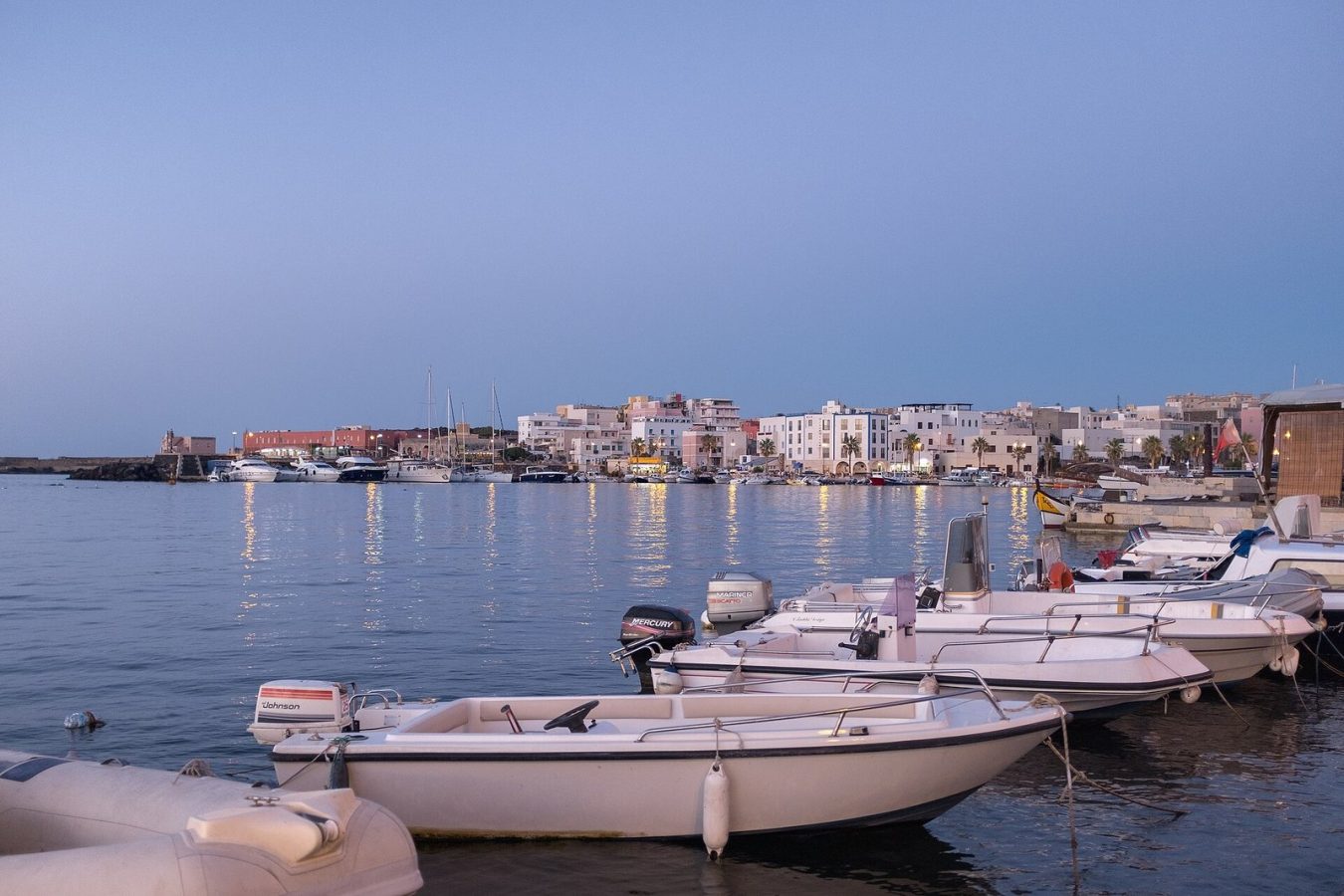
Photo: Giorgio Galeotti, CC BY 4.0
| Getting there | Flights of about 45 min from Trapani or Palermo, summer flights from Rome and Milan; ferry from Trapani |
|---|---|
| Gateway | Trapani or Palermo (flights); Trapani (ferry) |
| Travel time | 45 min by air or about 7 h by ferry |
| Days | 3 to 5 nights |
| Best months | May–June and Sep–Oct; August busiest; often windy; many places shut Nov–Mar |
| Getting around | Rent a car or scooter; buses are sparse; roads narrow and winding |
| Booking | Flights, car hire and a dammuso months ahead for July–August |
| Cost | Expensive for Sicily |
| Beaches | No sandy beaches; swim from lava rocks and coves: Cala Gadir, Cala Levante, Balata dei Turchi |
| Sea | Mediterranean Sea |
| Area | 83 km² |
| Population | 7,620 (2006) |
| Highest point | 836 m (Montagna Grande) |
| Airport | Yes, scheduled flights |
| Car-free | No |
| Checked | October 2026 |
Almost everything sold on Pantelleria starts on the island itself, and there are no day trips from Sicily: the distance is too great. You come for several days and choose a few outings.
The first is a boat trip around the coast. Shared tours on traditional wooden boats leave the port of Pantelleria town for a day or half day, stopping at the Arco dell'Elefante, sea caves and coves for swimming, often with lunch on board. Private boats with a skipper and self-drive boat hire, which needs no licence for small engines, are popular with couples and families.
The second is walking. Guides lead hikes up Montagna Grande, through the craters and fumaroles of the Favare, along lava flows and to the prehistoric tombs of the Sesi, with night walks in summer. Some combine a walk with snorkelling or a stop at the natural sauna.
The third is food and wine: winery tastings of passito and Zibibbo, cooking classes in a dammuso, and pastry lessons. Archaeology tours visit the acropolis and Bronze Age sites. Recommendation: book one boat day early in your stay, when the wind allows, and add a guided walk and a winery visit.
The coast is a ring of black and red lava cliffs with caves, arches and deep blue water. A boat trip of half a day or a day takes in the Arco dell'Elefante, a rock arch shaped like an elephant drinking, and the cliffs of Balata dei Turchi, with swimming stops where no road reaches. Calm days are best.
In a crater in the north of the island, about 15 minutes by car from the town, this lake of green and turquoise water is fed by warm springs. Its mud is used for skin treatments, and you can float in the mineral water. A path loops around the shore. Go in the morning before the wind rises.
The island's highest point, at 836 metres, is covered in pine and oak woods and is crossed by trails within the national park. On its southern flank, the Favara Grande releases jets of steam from the rock. Nearby, the Benikula cave is a natural sauna, where you sit in hot, damp air in the dark.
In the small harbour of Gadir, on the east coast, hot water fills stone pools by the sea, where you can soak and then swim. At Nika, in the south-west, the springs bubble up among the rocks at the water's edge. Both are free and open; Gadir is easier to reach and has a cafe.
The rural interior has the island's distinctive buildings: dammusi, square stone houses with white domed roofs, and round stone enclosures that shelter a single citrus tree from the wind. Vines are grown low in hollows, a method listed by UNESCO as intangible heritage. Visit a winery in the Ghirlanda or Bukkuram valleys.
On the west coast, the Sesi are domed Bronze Age tombs built of lava blocks, the largest of them like a small fortress. Above the town, the acropolis of San Marco preserves Punic and Roman remains, where marble portraits of Roman emperors were found. The Sesi are about 20 minutes by car from the port.
Our pick for each kind of trip, with live dates and prices. Free cancellation on most.
Best for: First visit, around the island by boat
The coast is the best of Pantelleria and much of it is out of reach by road, so a boat loop with swimming stops in the coves is the first thing to book.
The airport, a few kilometres from Pantelleria town, has year-round flights from Trapani and Palermo of about 45 minutes, and in summer direct flights from Rome, Milan and other Italian cities. Flying is the usual way to arrive, and seats in August sell out early.
The conventional car ferry from Trapani takes about seven hours and often sails overnight, a good option if you want to bring a vehicle. In summer, a faster passenger boat cuts the crossing to around 2.5 to 3 hours, but it is cancelled in strong wind. The sea in the Strait of Sicily can be rough, so check the forecast. Buy ferry tickets at the port or online. From Trapani airport, the port is about 20 minutes away. Without your own car, arrange a rental car to meet you at the airport or port, as taxis are few.
A car or a scooter is essential, as the island is about 14 kilometres long and the sights are scattered. A coastal road of about 45 kilometres circles it, with branches into the interior. Roads are narrow, lined with stone walls and winding, and the wind can make scooters tricky. Buses run a few times a day between the villages but are not practical for exploring. Book a car early for summer.
The best months are May, June, September and early October. The weather is warm and the sea clear, swimming is pleasant from June, and the countryside is green in spring and gold in autumn, with the grape harvest in late August and September. July and August are hot, with prices at their highest and Italian holidaymakers filling the island, though it never feels crowded like the big resorts.
The wind is the island's constant companion, and on strong days boat trips are cancelled and swimming moves to the sheltered side. From November to March, most restaurants, hotels and tour operators close, ferries and flights are fewer, and the weather is windy and wet, but the island is calm and green. Three to five nights allow a boat trip, a walk, a winery and time in the hot springs.
Pantelleria town, on the north-west coast by the port, has shops, restaurants and the most practical location, but less charm. Most visitors stay in a dammuso, a restored stone house, scattered in the countryside or by the sea. Scauri and Tracino in the south and east are quieter villages close to the swimming coves. Khamma and the Bukkuram valley suit those who want vineyards and views. A car is needed from any base.
Its black obsidian was traded across the Mediterranean in the Neolithic, and in the Bronze Age the Sesi people built their tombs here. Phoenicians and Carthaginians made it a stepping stone between Africa and Sicily, and the Romans called it Cossyra. Arabs ruled for centuries, leaving terraces, irrigation, place names and the local dialect. The Normans took it in 1123. In the Second World War, it was heavily bombed by the Allies before surrendering in June 1943. The national park was created in 2016.
Pantelleria pairs best with western Sicily: Trapani, the salt pans of Marsala, Erice and the Egadi Islands, all within an hour of Trapani. Lampedusa is the other remote Italian island in the Strait, but there are few direct links, so plan to return to Sicily between them. Palermo is two hours by road from Trapani.
Flights of about 45 min from Trapani or Palermo, summer flights from Rome and Milan; ferry from Trapani.
From Trapani or Palermo (flights); Trapani (ferry): 45 min by air or about 7 h by ferry.
3 to 5 nights.
May–June and Sep–Oct; August busiest; often windy; many places shut Nov–Mar.
Rent a car or scooter; buses are sparse; roads narrow and winding.
Go if you want a wild, windy volcanic island for walking, swimming from rocks, hot springs and wine, far from mass tourism. Skip it or choose Lampedusa or the Aeolian Islands if you need sandy beaches, cheap prices or easy island hopping.
Expensive for Sicily.
No sandy beaches; swim from lava rocks and coves: Cala Gadir, Cala Levante, Balata dei Turchi.
Flights, car hire and a dammuso months ahead for July–August.
Yes. Boat trips, guided tours and day trips for Pantelleria can be booked online; live prices and free cancellation on most are shown on this page.
Italy
Capri is a limestone island of just 10 square kilometres at the southern edge of the Bay of Naples, 20 minutes by fast…
513 tours & trips
Italy
Sicily is the largest island in the Mediterranean, a whole region of Italy separated from the mainland by the narrow…
227 tours & trips
Phlegraean Islands, Italy
Ischia is the largest island in the Bay of Naples, a green volcanic island about 30 km from the city, crowned by Mount…
193 tours & trips
Italy
The La Maddalena Archipelago is a national park of seven main granite islands and dozens of islets in the Strait of…
162 tours & trips
Venetian Lagoon, Italy
Murano is a cluster of small islands joined by bridges in the Venetian Lagoon, about 1.5 km north of Venice, and the…
120 tours & trips
Aegadian Islands, Italy
Favignana is the largest of the Egadi Islands, a flat butterfly-shaped island of 20 square kilometres about half an…
87 tours & trips