Guam
84 km away
Guam is the largest island in Micronesia and the southernmost of the Marianas, a United States territory in the western…
9 tours & trips
Guam · Pacific Ocean · Nature & wildlife island
Rota is the southernmost island of the Northern Mariana Islands, a US commonwealth in the western Pacific, about 74 km north of Guam. With fewer than 3,000 people on 85 square kilometres, it has very clear water, ancient Chamorro latte stones and almost no tourist development, which is exactly why divers and quiet travellers come.
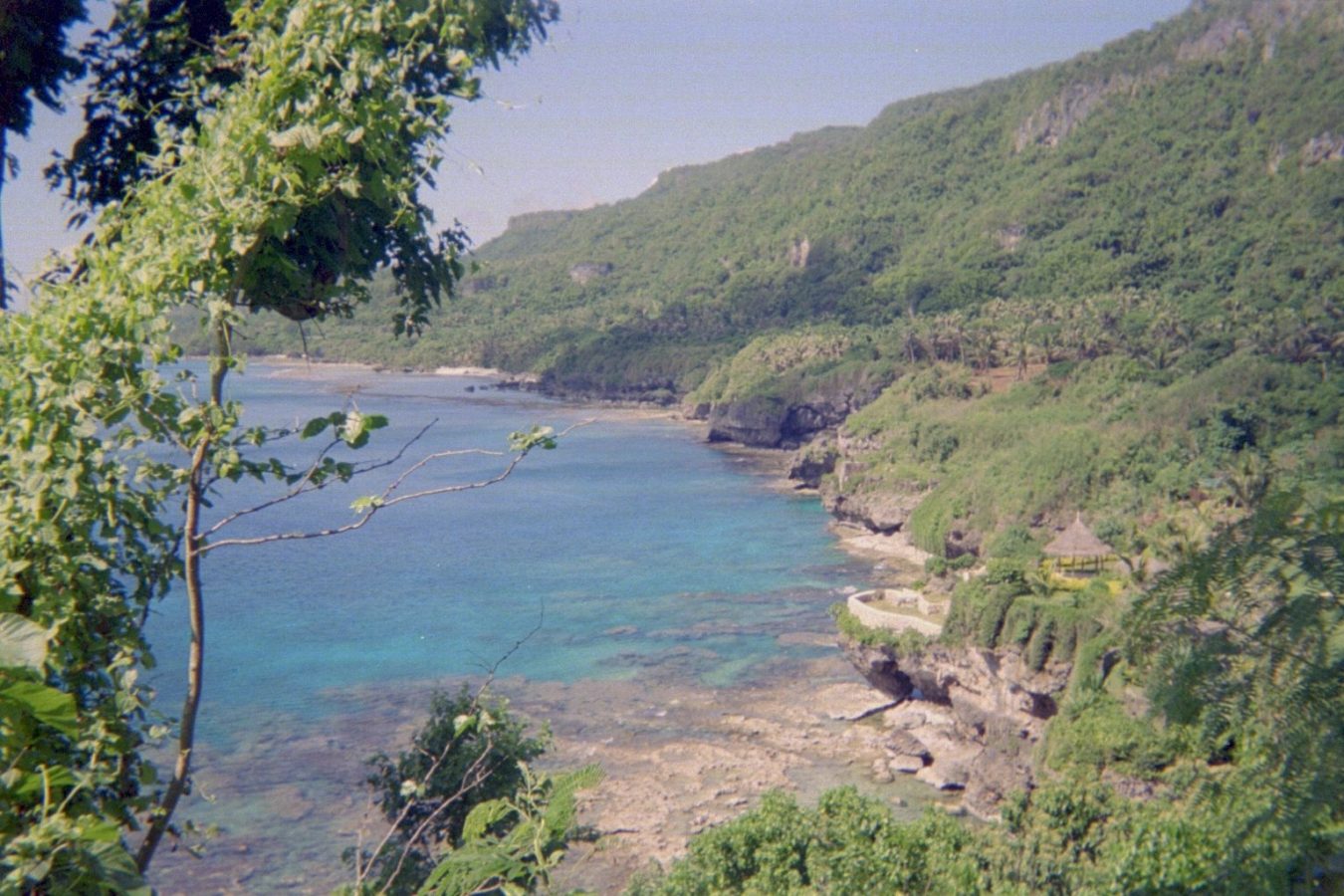
Photo: CT Snow from Hsinchu, Taiwan, CC BY 2.0
| Getting there | Short flights of about 30 min from Guam or Saipan on small commuter planes to Rota International Airport |
|---|---|
| Gateway | Guam or Saipan (flight) |
| Travel time | About 30 min by air |
| Days | 3 to 5 nights |
| Best months | Dec–Jun dry season; Jul–Nov wetter, with typhoon risk |
| Getting around | Rent a car at the airport; there are no public buses and few taxis |
| Booking | Flights and a rental car before you go; dives a day or two ahead |
| Cost | Mid-range for the US Pacific; few places to stay or eat |
| Beaches | Small sandy coves and rock pools; Teteto and Tweksberry for swimming; the Swimming Hole is calmest |
| Sea | Pacific Ocean |
| Archipelago | Mariana Islands |
| Area | 85 km² |
| Population | 3,283 |
| Airport | Yes, scheduled flights |
| Car-free | No |
| Checked | November 2026 |
Nothing is sold online for this island alone.
Visitors to Rota arrange almost everything on arrival or by contacting local operators directly. The main paid activity is diving: one or two small dive shops in Songsong run boat dives to the coral gardens of Sasanhaya Bay, the wreck of the Shoun Maru and the lit cavern of Senhanom Cave, usually with tanks, weights and a guide included and equipment hire extra. Snorkellers can join the boats or simply swim from shore at Teteto Beach and the Swimming Hole.
Land sightseeing is a matter of renting a car and driving yourself; a full loop of the island's paved roads takes a day with stops. Some hotels can put you in touch with a local guide for a historical tour of the latte quarry, Japanese wartime sites and the bird sanctuary, and fishing charters can be arranged at the harbour.
Our advice: book flights and a car in advance, plan two or three days of diving or snorkelling with a local shop, and leave a day for the latte quarry, the Sabana plateau and the cliffs of the north coast.
The older village lies on a narrow isthmus below Taipingot, the flat-topped, tiered peak locals call Wedding Cake Mountain. Walk the quiet streets to see the church, the old Japanese sugar train locomotive and a wartime cannon cave. A lookout above the village gives the classic view of the mountain and the two bays on either side.
Rota's water is among the clearest in Micronesia, often with visibility of 30 metres or more. Senhanom Cave is a large cavern where shafts of sunlight fall through holes in the roof. In Sasanhaya Bay, close to Songsong, lies the Shoun Maru, a Japanese freighter sunk in 1944, now covered in coral at around 30 metres.
In the forest inland from Sinapalo, this ancient quarry holds massive half-carved latte stones, the pillars and caps on which the Chamorro people built their houses. Some were never separated from the bedrock and lie exactly as the carvers left them. A short trail leads through the site; allow 30 minutes and use insect repellent.
On the north coast near Sinapalo, a natural pool has been formed by a ring of reef rock that breaks the waves, with steps and a ladder into clear, calm water. It is the easiest place on the island to swim with children or to snorkel in safety. Go at low to mid tide, when the pool is calmest.
A boardwalk on the northeastern coast leads to a viewpoint over cliffs and forest where frigatebirds, boobies, noddies and white terns nest and circle. Early morning and late afternoon bring the most activity. Nearby, the limestone cliffs of As Matmos drop sharply into the open ocean, with blowholes visible in a heavy swell.
The high limestone plateau in the middle of the island is reached by a steep road from Songsong. It is covered in forest and grassland, with farms growing vegetables, and has the best views over both coasts. Several small trails lead to caves and viewpoints; a four-wheel drive helps after heavy rain.
Rota has no regular ferry service, so almost everyone flies. Small commuter planes link Rota International Airport, near Sinapalo at the eastern end, with Guam and Saipan in about 30 minutes, several times a day on most days, though schedules are thin and can change. Guam has the main international airport of the region, with flights from Japan, Korea, the Philippines and Hawaii, so most visitors arrive there and connect.
Book the Rota leg early: the aircraft are small and fill quickly around holidays. Baggage allowances are lower than on jets, so check the limit if you bring dive gear.
Rota is part of the United States, and US entry rules apply. Citizens of some countries may enter the Northern Marianas under a visa waiver that does not cover onward travel to the mainland, so check the conditions before you fly. There are no cruise calls to speak of.
A rental car is essential, and the few agencies meet flights at the airport; reserve before arrival. The paved road links the airport, Sinapalo and Songsong along the south coast, about 20 minutes' drive, with branches to the Sabana plateau and the north. Other roads are rough. There is no public transport and taxis are scarce. Driving is on the right, and traffic is very light. Cycling is possible but hilly and hot.
The dry season runs from December to June, with trade winds, lower humidity and the calmest seas for diving; February to April is often the most settled. Air temperatures stay around 27 to 30 degrees all year and the sea is warm enough to dive without a thick wetsuit in every month.
From July to November the wet season brings heavier showers, higher humidity and the risk of typhoons, which can close the airport and cancel boat trips for days. Visitor numbers are small at any time, so crowds are never an issue, but the few hotel rooms can fill around Japanese and Korean holidays.
The main celebration is the fiesta of San Francisco de Borja in October, when villages host open feasts. Three to five nights are enough to dive, see the main sights and slow down.
Songsong, on the southwest isthmus, is the best base for divers: the dive shop, the harbour, a few small restaurants and the main sights are all within a short walk or drive. The eastern side around Sinapalo is closer to the airport and has the island's larger resort-style hotel, with quieter surroundings. Choice is limited to a handful of hotels and guesthouses, so book ahead. Groceries are basic; a car makes eating out at the few restaurants easier.
The Chamorro people settled the Marianas around 3,500 years ago and built houses on stone pillars, the latte, still found across Rota. Spain claimed the islands in the 16th century and in the late 1600s moved most Chamorros to Guam; Rota was one of the few places where communities remained. Germany bought the islands in 1899 and Japan took them in 1914, planting sugar cane and building the railway whose locomotive survives in Songsong. Bypassed by the American landings in 1944, Rota became part of the Northern Marianas commonwealth in 1978.
Rota pairs naturally with its neighbours. Guam, 30 minutes away by air, has the region's main airport, shopping and big hotels, and many visitors spend a few days there first. Saipan, also about 30 minutes away, has more beaches and WWII sites and links by short flight or boat to Tinian, so a two-week trip can cover Guam, Rota, Saipan and Tinian.
84 km away
Guam is the largest island in Micronesia and the southernmost of the Marianas, a United States territory in the western…
9 tours & trips
Short flights of about 30 min from Guam or Saipan on small commuter planes to Rota International Airport.
From Guam or Saipan (flight): about 30 min by air.
3 to 5 nights.
Dec–Jun dry season; Jul–Nov wetter, with typhoon risk.
Rent a car at the airport; there are no public buses and few taxis.
Go if you want clear-water diving, a WWII wreck, prehistoric latte stones and a slow village island with very few visitors. Skip it or choose Guam or Saipan if you want resorts, shopping, nightlife and sandy beaches with water sports.
Mid-range for the US Pacific; few places to stay or eat.
Small sandy coves and rock pools; Teteto and Tweksberry for swimming; the Swimming Hole is calmest.
Flights and a rental car before you go; dives a day or two ahead.
Mariana Islands, Guam
Guam is the largest island in Micronesia and the southernmost of the Marianas, a United States territory in the western…
9 tours & trips
Mariana Islands, Guam
Saipan is the largest island and capital of the Northern Mariana Islands, a US commonwealth in the western Pacific,…
No tours listed