Fiji
Fiji
Fiji is an island nation in the South Pacific of more than 330 islands, about a third of them inhabited, spread around…
76 tours & trips
Fiji · Pacific Ocean · Nature & wildlife island
Taveuni is Fiji's third-largest island, a 42-km-long volcanic ridge of rainforest known as the Garden Island, with Uluigalau rising to 1,241 metres. It draws divers to the soft corals of the Rainbow Reef and walkers to waterfalls and coastal trails, and the 180th meridian runs right across it.
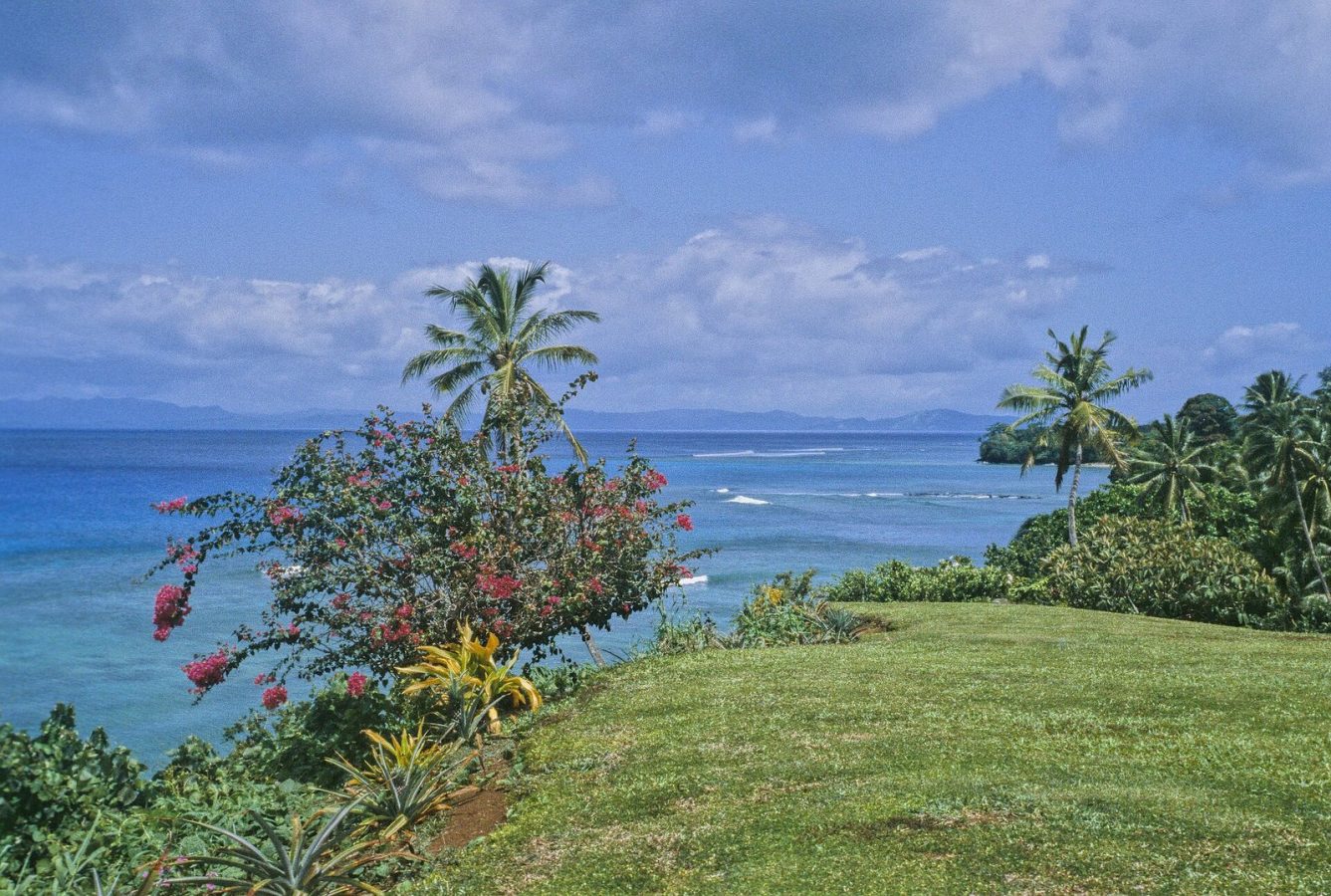
Photo: Barry Peters`, CC BY 2.0
| Getting there | Domestic flights from Nadi or Suva to Matei airstrip; ferries from Suva via Savusavu |
|---|---|
| Gateway | Nadi (flights to Matei) |
| Travel time | About 1.5 h by air from Nadi |
| Days | 3 to 5 nights |
| Best months | May–Oct, dry and cooler; Nov–Apr hot, wet and the cyclone season |
| Getting around | Taxis or a car with driver along the one coastal road; buses are slow and rare |
| Booking | Domestic flights and dive packages well ahead; waterfall tours a day or two ahead |
| Cost | Mid-range for Fiji |
| Beaches | Small sandy coves near Matei, such as Prince Charles and Beverly beaches; reef offshore |
| Sea | Pacific Ocean |
| Area | 434 km² |
| Population | 13,774 (2017) |
| Highest point | 1,241 m (Uluigalau) |
| Airport | Yes, scheduled flights |
| Car-free | No |
| Checked | October 2026 |
What is sold for Taveuni is small-scale and local: guided walks and boat trips to the waterfalls and the coast, plus diving booked directly with the dive centres.
The waterfall tours focus on the Lavena coast and Bouma National Heritage Park in the east. A coastal walk with a village guide follows the shoreline to Wainibau falls, while boat versions run along the cliffs to see waterfalls dropping into the sea, then return on foot or by boat. Most include transport from the Matei area, a guide and the village entrance fee; lunch is usually a packed meal or extra, and you need reef shoes and swimwear.
Diving is the other main reason people come. Dive centres near Matei and on the west coast take boats into the Somosomo Strait to the Rainbow Reef and the Great White Wall, with two-tank trips and courses; snorkellers can join some trips. Currents are strong, so dives are timed by the tide.
Our recommendation: spend one day on the Lavena walk, one on Bouma's three falls, and the rest diving or snorkelling, booking the dives before you arrive in the dry season.
In the Somosomo Strait between Taveuni and Vanua Levu, tidal currents feed reefs covered in soft corals of every colour. The Great White Wall, a drop-off cloaked in pale soft coral, is the signature dive, entered through a tunnel in the reef and dropping well below 25 metres. Boats leave from the west and north coasts, about 30 minutes away.
At the end of the road on the south-east coast, Lavena village is the start of a five-km trail along beaches, through forest and over streams to Wainibau falls, where you swim through a gorge to the cascades. Pay the fee at the village, allow three to four hours return and bring water.
In Bouma National Heritage Park, a short walk leads to the first and biggest of the three Tavoro waterfalls, with a deep pool for swimming. The trail climbs through rainforest to the second and third falls, about two hours return with views over the coast. It is about 45 minutes by road from Matei.
On a field near Waiyevo, on the west coast, a marker shows where the 180th meridian crosses the island, so you can stand with a foot on either side. The date line itself bends around Fiji, so both sides keep the same day. Combine it with the hilltop Catholic mission church at Wairiki nearby.
A crater lake in the mountains, around 800 metres up, is home to the tagimoucia, Fiji's national flower, a red and white vine that grows almost nowhere else. Reaching it is a long, muddy full-day hike with a guide, best from October to December when the flowers bloom. Only attempt it in dry weather.
A river near Waiyevo runs over smooth rock to form a natural slide, where local children show visitors how to ride down into the pools. It is a short walk from the road through a plantation, best after some rain but dangerous in a flood. Go with someone local and wear old swimwear.
Our pick for each kind of trip, with live dates and prices. Free cancellation on most.
Best for: First visit, coast and waterfall
A guided walk along the Lavena coastal trail through villages and forest, ending with a swim beneath the Wainibau falls, the best single day on land.
Matei airstrip, at the northern tip, takes small planes from Nadi, about one and a half hours, and from Suva, about an hour, usually daily but sometimes cancelled in bad weather. Baggage limits on the small aircraft are strict, so check them if you carry dive gear. Most international visitors fly into Nadi first and connect the same day or the next.
By sea, large ferries run from Suva via Savusavu on Vanua Levu, an overnight trip, a few times a week. From Savusavu there is also a bus and boat connection across the Somosomo Strait to Waiyevo, which takes about four hours in all. Car ferries can carry vehicles, but it makes more sense to arrange transport on the island. Small cruise ships and yachts sometimes anchor off the west coast.
One road runs along the west coast from the south to Matei and down the east side to Lavena; parts are sealed and parts are rough gravel. Local buses run a few times a day, slowly, and not on Sundays. Most visitors use taxis or hire a car with driver for the day, which is affordable. Self-drive rental is limited. Resorts arrange airport transfers and trips, and boats are needed to reach the offshore islands of Qamea and Matagi.
May to October is the best time: drier, cooler and less humid, with temperatures in the mid to high twenties and good visibility for diving. This is also the peak season, especially July and August, when Australians and New Zealanders arrive for the school holidays, so book dives and flights early.
From November to April it is hotter and much wetter, and Taveuni is one of the rainiest places in Fiji, with heavy downpours in the mountains. Cyclones can strike in this period, closing flights and ferries for days. The waterfalls are fuller, the reefs remain open and prices drop. The sea stays between about 25 and 29 degrees all year. Plan three to five nights to cover diving and hiking at a relaxed pace, and allow a buffer day before an international flight.
The north, around Matei, has most of the small resorts and guesthouses, the airstrip and beaches for snorkelling, and is the best all-round base. The west coast near Waiyevo and Somosomo is closer to the dive sites and the town shops, with simpler places. Remote eco-lodges in the south and east suit those who want quiet and rainforest. The islands of Qamea, Matagi and Laucala, off the north-east, have exclusive, expensive resorts reached by boat.
Taveuni has long been a seat of chiefly power: Somosomo is home to the Tui Cakau, the paramount chief of Cakaudrove, and villages still follow customary rules for visitors. In the 19th century the island's warriors fought invaders from Tonga, and Catholic missionaries founded the church at Wairiki. European planters cleared coastal land for coconuts and copra, and many old plantations remain. Volcanic soils make it Fiji's most fertile island, growing taro, kava and fruit for the rest of the country.
Savusavu on Vanua Levu, a small yachting town with hot springs, is a short boat and bus ride away. Most visitors pair Taveuni with a few days in the Mamanuca or Yasawa islands off Nadi for beaches, or with Suva and the Beqa Lagoon for more diving. Allow a day for each domestic flight connection.
Domestic flights from Nadi or Suva to Matei airstrip; ferries from Suva via Savusavu.
From Nadi (flights to Matei): about 1.5 h by air from Nadi.
3 to 5 nights.
May–Oct, dry and cooler; Nov–Apr hot, wet and the cyclone season.
Taxis or a car with driver along the one coastal road; buses are slow and rare.
Go if you want world-class soft-coral diving, waterfall hikes and traditional Fijian villages without big resorts. Skip it or choose the Mamanuca or Yasawa islands if you want white sand beaches and easy access from Nadi.
Mid-range for Fiji.
Small sandy coves near Matei, such as Prince Charles and Beverly beaches; reef offshore.
Domestic flights and dive packages well ahead; waterfall tours a day or two ahead.
Yes. Boat trips, guided tours and day trips for Taveuni can be booked online; live prices and free cancellation on most are shown on this page.
Fiji
Fiji is an island nation in the South Pacific of more than 330 islands, about a third of them inhabited, spread around…
76 tours & trips
Fiji
Viti Levu is Fiji's largest island, about 10,400 square kilometres of mountains, sugar cane and coral coast, home…
9 tours & trips
Fiji
Vanua Levu is Fiji's second-largest island, 5,587 square kilometres of mountains, rainforest and quiet coast about…
1 tour