Capri
Italy
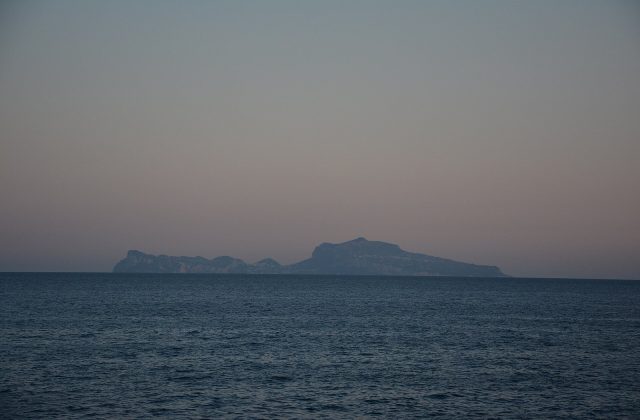
Capri is a limestone island of just 10 square kilometres at the southern edge of the Bay of Naples, 20 minutes by fast…
513 tours & trips
Italy · Tyrrhenian Sea · Volcanic island
The Aeolian Islands are seven volcanic islands off the north coast of Sicily, from Lipari and steaming Vulcano to Stromboli, which has been erupting almost continuously for centuries. Listed by UNESCO for their volcanoes, they combine hiking, black beaches, capers and Malvasia wine, and boat trips between very different islands.
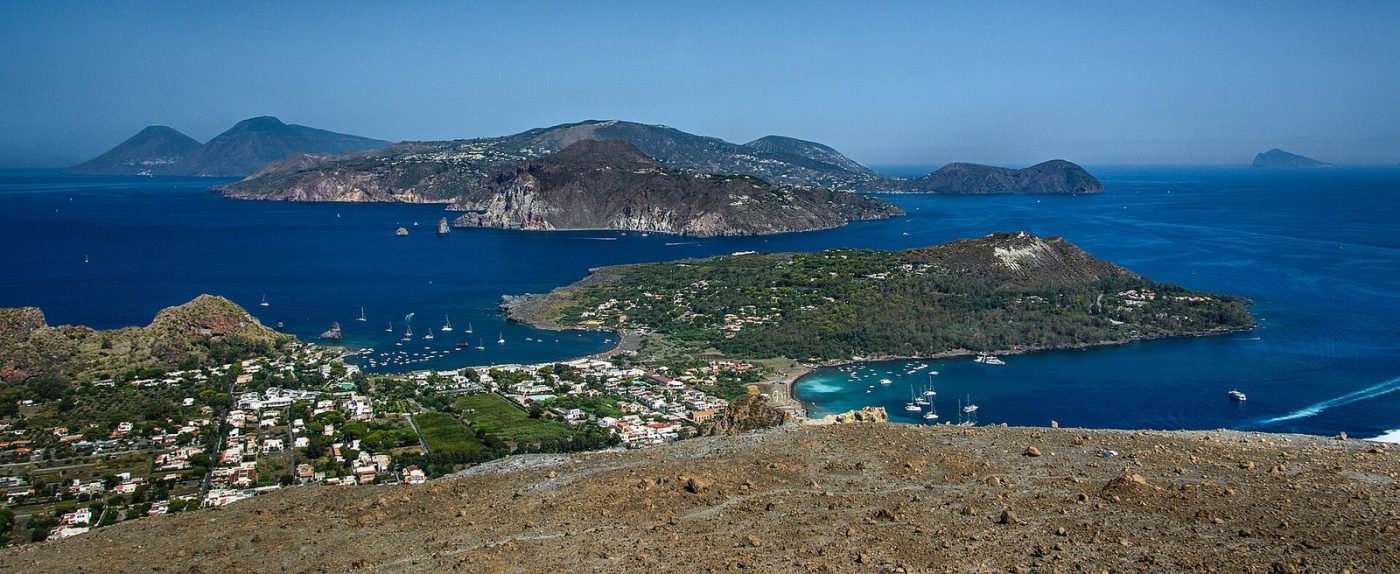
Photo: kuhnmi, CC BY 2.0
| Getting there | Hydrofoils from Milazzo to Vulcano in 45 min and Lipari in about 1 h; slower ferries; summer links from Naples |
|---|---|
| Gateway | Milazzo (Sicily) |
| Travel time | 45 min to 1 h by hydrofoil to Vulcano or Lipari |
| Days | A week or more |
| Best months | May–June and September; Jul–Aug crowded and dear; much closed Nov–Mar |
| Getting around | Hydrofoils between islands; buses and scooters on Lipari and Salina; no cars on Stromboli |
| Booking | Rooms and August hydrofoils well ahead; Stromboli guided hikes a few days ahead |
| Cost | Mid-range for Italy; Panarea expensive |
| Beaches | Mostly dark pebbles and rocks; black sand on Vulcano and Stromboli; Pollara on Salina for the view |
| Sea | Tyrrhenian Sea |
| Area | 115 km² |
| Population | 15,419 (2019) |
| Highest point | 962 m (Monte Fossa delle Felci) |
| Ferry | 45 min from Milazzo (Sicily) |
| Airport | No |
| Car-free | No |
| UNESCO | Isole Eolie (Aeolian Islands) |
| Checked | October 2026 |
Because the islands are spread out and each is different, boat tours are the core of what is sold.
From Milazzo, the most popular day trips go either to Lipari and Vulcano, the nearest pair, or to Panarea and Stromboli, a longer day that often ends after dark off Stromboli to watch the eruptions from the boat. Longer trips start from Taormina, Cefalu or Calabria and include coach transfers to the port, which means a very early start and a late return. Prices normally include the boat and a crew; lunch, island taxes and any guide are often extra.
Once you are based on Lipari, boats circle Lipari and Salina, visit sea caves and stacks, and run evening trips to Stromboli. Private boats and sailing day trips from Vulcano let you set your own stops, and snorkelling trips explore the volcanic seabed. On Stromboli itself, the only way up the volcano is a guided hike, booked with local guides.
Simple ferry tickets between Milazzo, Lipari and Vulcano are also sold online. The best plan is to stay several nights on Lipari or Salina, use hydrofoils, and book one evening Stromboli trip.
The most famous island is a near-perfect cone that throws out bursts of lava every few minutes. Watch from a boat below the Sciara del Fuoco after dark, or join a guided hike up the slopes; how high groups may go depends on current activity rules. The village has white houses, black-sand beaches and no cars.
The island closest to Sicily smells of sulphur from the moment you land. A path climbs about an hour to the rim of the Gran Cratere, with fumaroles and views over all seven islands, though access has been restricted when gas levels rise. Below, the black sand beach of Sabbie Nere faces a sunset bay.
The largest island is the transport hub. Its town spreads between two harbours below a fortified rock, where the castle walls enclose churches and an excellent archaeological museum, with Neolithic obsidian and Greek theatre masks. In the evening the main street and Marina Corta fill with people. Buses reach the pumice coast and the western viewpoints.
The greenest island has two extinct volcanoes, the higher reaching 962 metres, with terraces of capers and the vines that make sweet Malvasia. Hike up Fossa delle Felci through ferns and chestnut woods, visit a winery, then watch sunset at Pollara, a half-sunken crater with a rocky cove where a well-known film was shot.
The smallest inhabited island is the most fashionable, with whitewashed houses, electric carts and expensive bars. Walk along the coast to Capo Milazzese, where the foundations of a Bronze Age village overlook a turquoise cove, and swim at Cala Junco below. Day boats from Lipari stop here, so evenings are calmer.
The two western islands are for those who want silence. Filicudi has a few villages, walking paths and sea caves around its coast. Alicudi has no roads at all: everything is carried on mule paths and stone steps up the cone. Hydrofoils from Lipari take one to two hours, and services are less frequent.
Our pick for each kind of trip, with live dates and prices. Free cancellation on most.
Best for: First visit, a day from Milazzo
A boat day to chic little Panarea and to Stromboli, with time ashore on both, the easiest way to see the erupting volcano without staying overnight.
Milazzo, on the north coast of Sicily, is the main gateway. Hydrofoils run frequently all year, reaching Vulcano in about 45 minutes and Lipari in about an hour, and continuing to Salina, Panarea, Stromboli and the western islands. Slower car ferries take about two hours to Lipari and are cheaper.
The nearest airport is Catania, about two hours from Milazzo by bus or car; Palermo is a little further. In summer hydrofoils also run from Messina, Reggio Calabria, Cefalu and Palermo, and an overnight ferry links Naples with the islands. Buy hydrofoil tickets ahead in August, when boats sell out. Leave your car in a guarded car park in Milazzo, as non-resident cars are restricted in summer and not needed.
Hydrofoils and small ferries connect all seven islands several times a day in summer, less in winter, and the sea can cancel sailings. On Lipari, buses run round the island and scooters are easy to hire; Salina also has buses and rentals. Vulcano is small enough for a scooter or bike. Stromboli, Panarea, Filicudi and Alicudi have no cars for visitors: you walk, take electric carts, or hire a boat. Roads are narrow and steep everywhere.
May, June and September are ideal, with warm sea, flowering hillsides and comfortable hiking temperatures. July and August are hot and crowded, especially in the middle of August, when Italian holidaymakers fill every room, prices peak and hydrofoils sell out. Hiking on the volcanoes is best early in the morning or late afternoon in summer.
October is still warm, with water near 23 degrees, though some hotels and restaurants start to close. From November to March many businesses shut, hydrofoils run less often and winter storms can stop boats for days, but Lipari stays lived in.
Salina celebrates its capers and wines with local festivals in early summer. Volcanic activity can change rules on Stromboli and Vulcano at short notice, so check before you travel. A week allows three or four islands.
Lipari is the most practical base, with the most rooms, restaurants and hydrofoil connections to every island. Salina is calmer and greener, with good food, vineyards and small hotels in Santa Marina and Malfa, and suits couples and walkers. Stromboli is worth at least one night to see the eruptions after dark. Vulcano is close to Milazzo and has spa hotels, while Panarea is for those with big budgets. Filicudi and Alicudi suit people seeking quiet.
The islands were made by volcanoes, and two of them, Stromboli and Vulcano, are still active; two kinds of eruption, Vulcanian and Strombolian, are named after them. In prehistory Lipari was rich from trade in obsidian, the black volcanic glass used for tools across the Mediterranean. Greeks from Knidos founded a colony at Lipari, and the islands later passed through Roman, Arab, Norman and Spanish rule. In 1544 Barbarossa sacked Lipari and carried off most of its people. Poverty brought heavy emigration until tourism and the UNESCO listing in 2000 changed their fortunes.
Milazzo is about 40 minutes from Messina and two hours from Catania, so the islands fit well with Taormina and Mount Etna. Cefalu and Palermo are reachable along the north coast by train or car. In summer, the overnight ferry to Naples lets you continue to the Amalfi Coast, Capri or the Bay of Naples.
Hydrofoils from Milazzo to Vulcano in 45 min and Lipari in about 1 h; slower ferries; summer links from Naples.
From Milazzo (Sicily): 45 min to 1 h by hydrofoil to Vulcano or Lipari.
A week or more.
May–June and September; Jul–Aug crowded and dear; much closed Nov–Mar.
Hydrofoils between islands; buses and scooters on Lipari and Salina; no cars on Stromboli.
Go if you want active volcanoes, island hopping by hydrofoil, clear water and good food over a week or more. Skip it or choose Capri or the Amalfi Coast if you want sandy beaches, easy day trips from a big city or polished resort comfort. With about 45 min each way from Milazzo (Sicily), a day trip is easy to do.
Mid-range for Italy; Panarea expensive.
Mostly dark pebbles and rocks; black sand on Vulcano and Stromboli; Pollara on Salina for the view.
Rooms and August hydrofoils well ahead; Stromboli guided hikes a few days ahead.
Yes. Boat trips, guided tours and day trips for Aeolian Islands can be booked online; live prices and free cancellation on most are shown on this page.
Italy
Capri is a limestone island of just 10 square kilometres at the southern edge of the Bay of Naples, 20 minutes by fast…
513 tours & trips
Italy
Sicily is the largest island in the Mediterranean, a whole region of Italy separated from the mainland by the narrow…
227 tours & trips
Phlegraean Islands, Italy
Ischia is the largest island in the Bay of Naples, a green volcanic island about 30 km from the city, crowned by Mount…
193 tours & trips
Italy
The La Maddalena Archipelago is a national park of seven main granite islands and dozens of islets in the Strait of…
162 tours & trips
Venetian Lagoon, Italy
Murano is a cluster of small islands joined by bridges in the Venetian Lagoon, about 1.5 km north of Venice, and the…
120 tours & trips
Aegadian Islands, Italy
Favignana is the largest of the Egadi Islands, a flat butterfly-shaped island of 20 square kilometres about half an…
87 tours & trips