Ballestas Islands
Peru
The Ballestas Islands are a cluster of bare rocks, arches and caves off the desert coast of southern Peru, about 4…
152 tours & trips
Peru · Lakes & rivers · Historic island
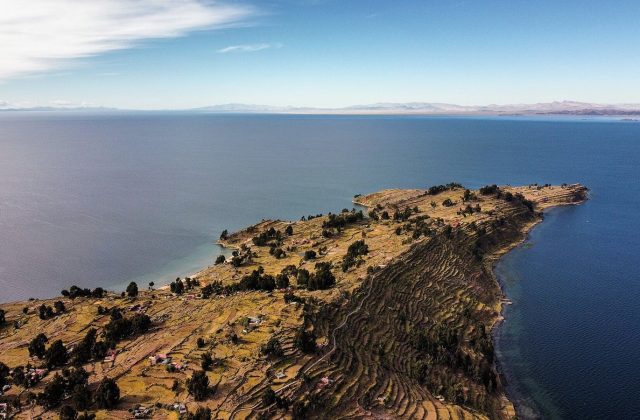
Amantani is a small, round farming island on the Peruvian side of Lake Titicaca, about three hours by boat from Puno, where some 3,500 Quechua-speaking people live without cars or hotels. Visitors sleep in family homes, climb to hilltop temples above 4,000 metres and watch the sun set over the highest large navigable lake in the world.
| Getting there | Slow boat from Puno port in about 3 h, usually via the Uros floating islands; no cars, no airport |
|---|---|
| Gateway | Puno (Lake Titicaca port) |
| Travel time | About 3 h by boat |
| Days | 1 to 2 nights |
| Best months | May–Oct dry and sunny but freezing at night; Dec–Mar rainy; cold nights all year |
| Getting around | Car-free: walk on steep stone paths; at 3,800 metres and above, go slowly |
| Booking | Two-day tours a day or two ahead in Puno; in Jun–Aug book a week ahead |
| Cost | Cheap, even by Peruvian standards |
| Beaches | No beaches; the lake is cold, around 10 to 14 degrees, and few people swim |
| Sea | Lakes & rivers |
| Area | 15 km² |
| Population | 3,557 (2017) |
| Ferry | 3 h from Puno (Lake Titicaca port) |
| Airport | No |
| Car-free | Yes |
| Checked | October 2026 |
Almost everyone comes to Amantani on an organised trip from Puno, and the format is nearly always the same.
The standard two-day tour leaves Puno by boat in the morning, stops for half an hour at the Uros floating islands, and reaches Amantani at lunchtime. Each visitor is assigned to a local family, eats meals in their house, climbs one of the hilltop temples for the sunset and joins an evening dance in borrowed traditional clothes. Next morning the boat crosses to Taquile for a walk and lunch before returning to Puno in the afternoon. The price usually includes the boat, a guide, the homestay and all meals; entry fees to the islands are paid in cash on arrival.
Variations include kayaking at the Uros, a longer stay of two nights, combined trips with the Llachon peninsula, and packages from Cusco that add the bus to Puno. One-day tours exist but are rushed and miss the evening.
Prices vary little between agencies, so choose one that pays families fairly and uses smaller groups. For a first visit, take the two-day tour with one night on Amantani.
Homestays are shared out in rotation among the island's communities, so the money is spread. Rooms are simple, with thick blankets, little heating and often no hot water. Meals are quinoa soup, potatoes, local cheese and muna herb tea. Bring a small gift of fruit, rice or school supplies, a torch, and some basic Spanish phrases.
The island's two summits carry pre-Inca temples to Father Earth and Mother Earth. Most groups climb to one of them in the late afternoon, about 45 minutes uphill on stone paths, to watch the sun set over the lake with the Bolivian mountains behind. The temple enclosures stay closed except at the January feast, but the views are free.
After dinner, your hosts dress you in local clothing, a wide skirt and embroidered blouse for women, a poncho and woolly hat for men, and take you to the community hall. Local musicians play panpipes and drums while families and visitors dance. It is staged for tourists, but it is also an evening out for the island.
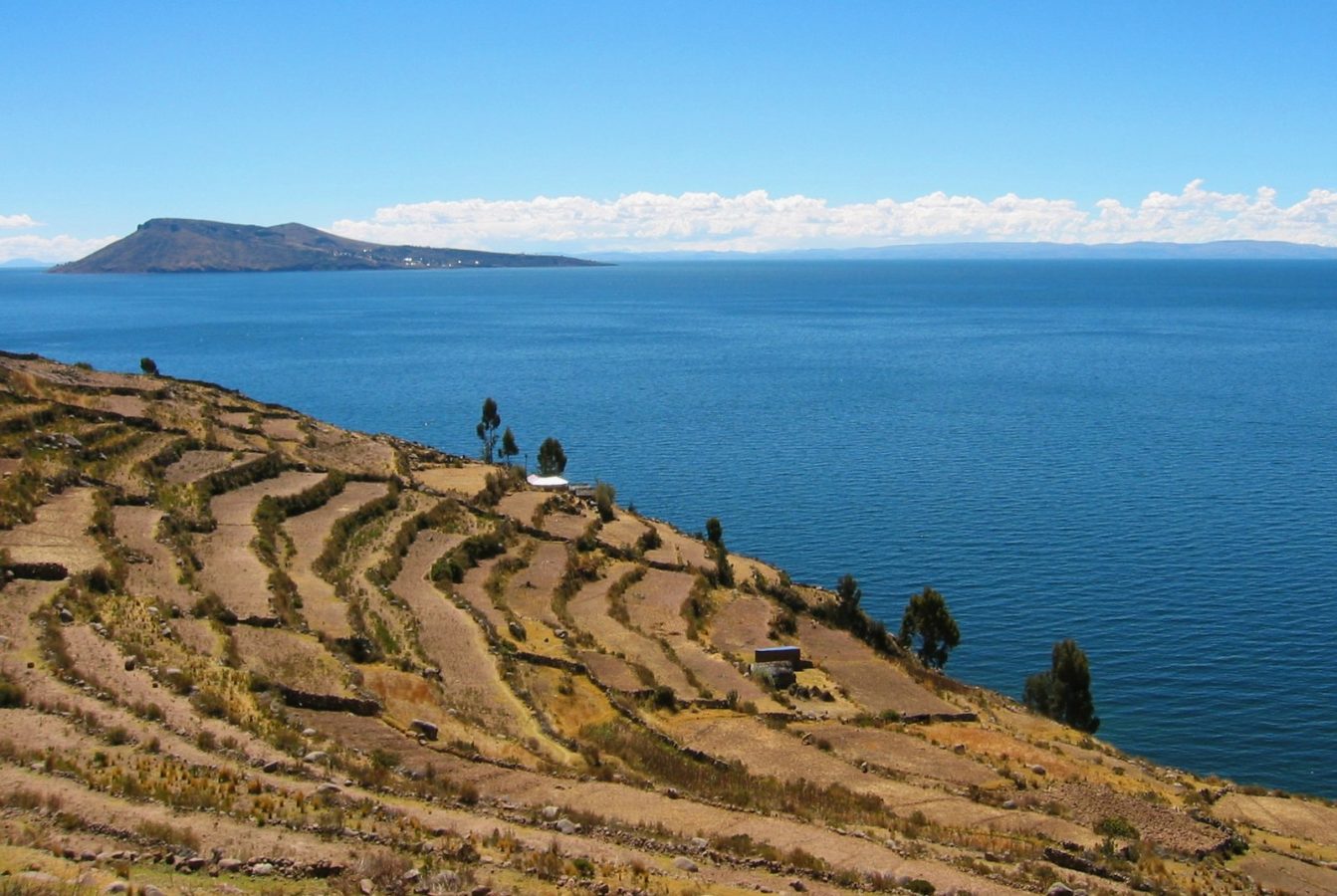
The hillsides are cut into terraces worked by hand and planted with potatoes, quinoa, broad beans and barley, with sheep grazing the upper slopes. Paths of stone link the island's villages, and the kantuta, the red national flower, grows along the walls. A morning walk before the boat leaves shows daily life without groups.
Most tours stop on the neighbouring island, about an hour away, on the return journey. Taquile is known for its textiles, knitted by the men, which UNESCO lists as intangible heritage. You walk up from the jetty to the main square, buy weaving at the cooperative, and eat trout for lunch before boarding again.
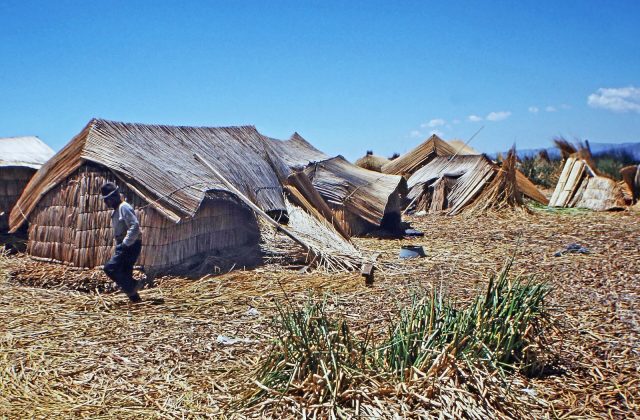
On the way out from Puno, boats stop at the floating islands made of layered totora reeds, about 30 minutes from the port. Families explain how the islands are built and replaced, then offer short rides in reed boats and sell crafts. It is touristy but quick, and the reed beds themselves are worth seeing.
Our pick for each kind of trip, with live dates and prices. Free cancellation on most.
Best for: First visit, two days with a homestay
The standard way to see the island: the floating reed islands on the way out, a night with a local family and Taquile on the way back to Puno.
First reach Puno. The nearest airport is at Juliaca, about an hour by road, with daily flights from Lima. Buses from Cusco take about seven hours and from Arequipa about six, and a scenic train runs from Cusco a few times a week.
Boats to Amantani leave the Puno port every morning, usually around 7 to 8 am, and take about three hours, including a stop at the Uros. Most people come on a tour booked in Puno or Cusco, but community boats from the port also take independent travellers; ask at the port the day before, and expect to be assigned a family on arrival. Leave heavy luggage at your Puno hotel. Boats return around midday, often via Taquile.
There are no cars or roads, only stone footpaths and steps between the villages, the jetties and the summits. Everything is reached on foot, and nothing is more than about an hour away. The challenge is altitude: the lake is at about 3,800 metres and the temples above 4,000, so even short climbs leave you breathless. Spend at least two nights in Cusco or Puno first, walk slowly, drink coca tea, and carry water and a warm layer.
The dry season, May to October, brings clear skies, strong sun and the best views of the lake and the Bolivian mountains. It is also the coldest time: nights fall below freezing in June and July, and homes are unheated, so bring warm clothes and a hat. June to August is the busiest period, with the most groups.
From December to March the rainy season brings afternoon storms, muddy paths and choppy crossings, though mornings are often fine and the terraces are green. April and November are good shoulder months. The island's main feast falls around 20 January, when the two halves of the island gather at the temples and race between them. Puno's Candelaria festival in February is one of Peru's largest. One night on Amantani is the norm; two let you walk more and rest.
There are no hotels: you stay with a family, assigned by the community or your tour, in one of the island's villages. Houses near the main jetty are handy for the boat; those higher up have better views but more climbing. A few families run simple lodges with private rooms and shared bathrooms. Back on land, Puno is the base for the lake, while the Llachon peninsula offers a similar homestay without the long crossing.
People have farmed Amantani for thousands of years, and the temples on its peaks go back to the Tiwanaku culture, long before the Incas brought the lake under their rule. The terraces still in use today are part of that long history. After the Spanish conquest the lake islands were drawn into the hacienda system, which the land reform of the late 1960s ended. When travellers began to arrive in the late twentieth century, the communities chose to share them between families, and that system still runs.
Amantani is usually part of a Puno trip combined with the Uros floating islands and Taquile. Cusco is seven hours away by bus, and Arequipa and the Colca Canyon about six. Many travellers continue across the border to Copacabana and the Isla del Sol in Bolivia, about three hours by road from Puno.
Slow boat from Puno port in about 3 h, usually via the Uros floating islands; no cars, no airport.
From Puno (Lake Titicaca port): about 3 h by boat.
1 to 2 nights.
May–Oct dry and sunny but freezing at night; Dec–Mar rainy; cold nights all year.
No. Amantani is car-free. Car-free: walk on steep stone paths; at 3,800 metres and above, go slowly.
Go if you want a night with a Quechua family, terraced fields, simple food and big views over Lake Titicaca. Skip it or visit only Uros and Taquile on a day trip if you need comfort, hot showers or are struggling with altitude. At about 3 h each way from Puno (Lake Titicaca port), it is worth staying at least one night.
Cheap, even by Peruvian standards.
No beaches; the lake is cold, around 10 to 14 degrees, and few people swim.
Two-day tours a day or two ahead in Puno; in Jun–Aug book a week ahead.
Yes. Boat trips, guided tours and day trips for Amantani can be booked online; live prices and free cancellation on most are shown on this page.
Peru
The Ballestas Islands are a cluster of bare rocks, arches and caves off the desert coast of southern Peru, about 4…
152 tours & trips
Peru
Taquile is a small island of terraced hills on the Peruvian side of Lake Titicaca, about 45 km by boat from Puno, with…
77 tours & trips
Peru
The Palomino Islands are a cluster of four rocky islets about 10 kilometres off the port of Callao, the coastal city…
25 tours & trips
Peru
The Uros Floating Islands are man-made platforms of totora reed anchored in the bay of Puno on Lake Titicaca, at about…
22 tours & trips