Ballestas Islands
Peru
The Ballestas Islands are a cluster of bare rocks, arches and caves off the desert coast of southern Peru, about 4…
152 tours & trips
Peru · Lakes & rivers · Historic island
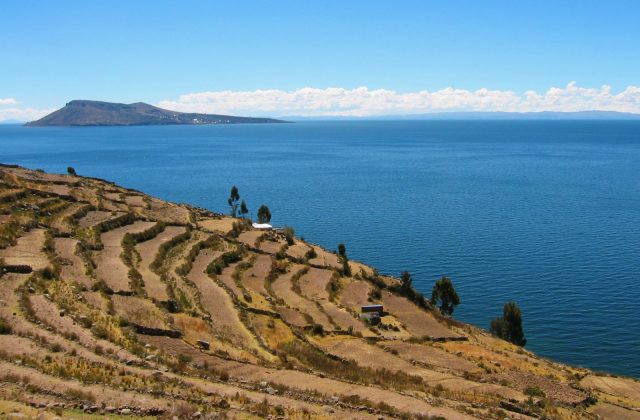
Taquile is a small island of terraced hills on the Peruvian side of Lake Titicaca, about 45 km by boat from Puno, with its main village at 3,950 metres. Its Quechua-speaking community is known for handwoven textiles recognised by UNESCO, for running its own tourism, and for long views across the lake to the snow peaks of Bolivia.
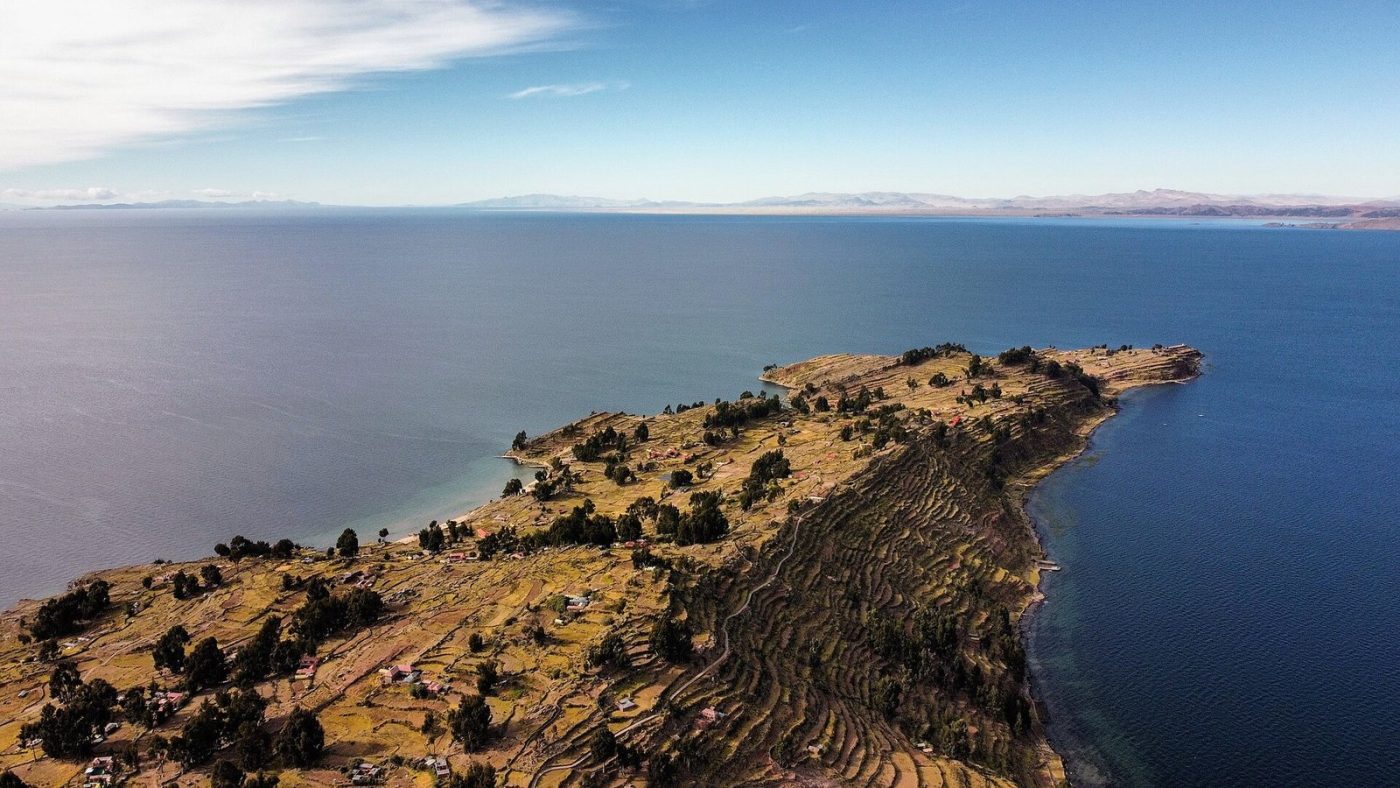
Photo: H.dav.are, CC BY-SA 4.0
| Getting there | Boat from Puno port: about 3 h by slow tourist boat or 1 to 1.5 h by speedboat, usually via the Uros islands |
|---|---|
| Gateway | Puno (via Juliaca airport) |
| Travel time | 1 to 3 h by boat, depending on the boat |
| Days | A day trip; one night with Amantani |
| Best months | May–Oct dry and sunny but cold at night; rainy Dec–Mar |
| Getting around | On foot only: steep stone paths and steps from the harbour to the village |
| Booking | A day ahead in Puno is enough; homestays and two-day trips a few days ahead in July |
| Cost | Cheap, even by Peruvian standards |
| Beaches | No real beaches; small coves of rock and pebbles, and the lake is too cold for most to swim |
| Sea | Lakes & rivers |
| Area | 5.7 km² |
| Population | 1,700 |
| Highest point | 4,050 m |
| Airport | No |
| Car-free | Yes |
| Checked | October 2026 |
Almost every visitor comes on a tour from Puno, and the options differ mainly in boat speed and length.
The classic is the full-day trip on a slow tourist boat: a short stop at the floating reed islands of the Uros, then about two and a half hours more to Taquile, a walk up to the village, lunch with a local family, time at the cooperative shop and the walk down to a different harbour for the return. Speedboat and catamaran versions halve the boat time and give you longer on the island, often with a performance of traditional dances. Lunch, usually lake trout or soup, is normally included; the island entry fee and any purchases are paid in cash.
Two-day trips add a night with a family on Amantani, the larger island nearby, with a simple dinner and sometimes a village dance in borrowed traditional clothes. There are also kayaking trips among the Uros, private speedboats and long day trips from Cusco that include the road transfer.
Choose a speedboat day if you are short of time, but if you are acclimatised and have two days, the Amantani overnight gives a far better sense of island life.
From the harbour a climb of several hundred stone steps leads up to the plaza, an arch-framed square with a small church at about 3,950 metres. Walk slowly: the air is thin. Here you will see the men in their knitted caps, whose colours show whether they are married, and women in layered skirts and black shawls.
On the square, the community's cooperative shop sells belts, bags, caps and ponchos made by island families, with prices fixed by the community rather than haggled. Look at the calendar belts with woven symbols for each month. Men knit, even while walking, and women spin, dye and weave; what you buy here goes to the makers.
Above the village, paths climb to the island's high ridge, where pre-Inca stone ruins stand on the hilltops at around 4,000 metres. On a clear day the view takes in the whole blue sweep of the lake and the white peaks of the Cordillera Real in Bolivia. The walk is about an hour from the plaza and back.
The island is covered in ancient farming terraces planted with potatoes, beans and barley, crossed by stone walls and arches. Most tours walk from one end to the other, taking 1.5 to 2 hours with stops, down to a second harbour for the boat home. Bring sun protection: the sun at this altitude burns quickly.
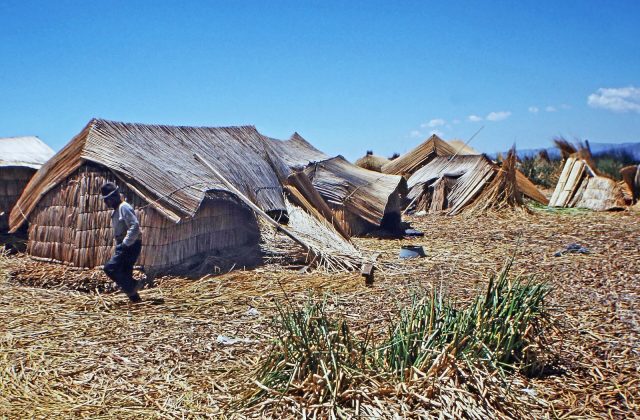
Most boats stop on the way from Puno at the Uros, islands built of layers of totora reed and anchored in the shallows near the city. The visit lasts about an hour: a demonstration of how the islands are made, a look inside reed houses and an optional ride on a reed boat. It is touristy but genuinely unusual.
Our pick for each kind of trip, with live dates and prices. Free cancellation on most.
Best for: First visit, a day from Puno
The standard way to see Taquile in one day: a fast boat from Puno with a stop on the reed islands of the Uros, more time on Taquile itself and a return before dark.
Puno, on the western shore of Lake Titicaca, is the gateway. The nearest airport is at Juliaca, about an hour away by road, with flights from Lima and Cusco. From Cusco there are day and night buses of about six to seven hours, and a scenic train through the high plains runs on certain days.
Boats leave from the port of Puno each morning. Slow tourist boats take about three hours to Taquile, usually with a stop at the Uros; speedboats and catamarans take one to one and a half hours. There is also a local boat used mainly by islanders, though departure times are not fixed for visitors. Tours and boat tickets are sold at the port and by agencies in town. A boat also runs from Amantani for those staying overnight. Leave any car in Puno.
Taquile has no cars or roads: everything moves on foot along stone paths, or on the backs of people and donkeys. The island is about 5.5 km long, and walking between the two harbours via the plaza takes around two hours. The paths are steep and uneven, and at nearly 4,000 metres even fit visitors get breathless, so take it slowly, drink water and wear good shoes. Porters can sometimes carry bags for overnight guests.
Taquile can be visited all year, but the dry season from May to October is the most reliable, with sunny days, clear views of the Bolivian mountains and calm water in the mornings. Nights are bitterly cold, often below freezing in June and July, so overnight guests need warm layers. July and August are the busiest months with foreign visitors.
From December to March the rainy season brings afternoon storms and choppy water, though mornings are often fine and the terraces are green. The lake itself stays cold all year, around 10 to 14 degrees.
Festivals are colourful: the main island fiesta around Santiago's day in late July brings days of dancing in full costume, and early May and the new year also see celebrations. Most people come for a day; add a night on Amantani or Taquile if you want to see village life after the boats leave.
Most people sleep in Puno, where hotels range from simple to lakeside resorts and tours pick up in the morning. Staying on the islands means a family homestay: on Amantani, where most two-day tours stop, or on Taquile itself, which offers a few rooms arranged through the community. Rooms are basic, with shared toilets, limited electricity and cold nights, but meals with the family and the silence after dark make it memorable.
Taquile has been farmed since long before the Incas, whose terraces and walls it still carries. Under Spanish rule it became private property, and its name is said to come from an owner called Taquila; in the 20th century it served for a time as a place of confinement for prisoners. The islanders regained control of their land and from the 1970s began running tourism themselves, through community boats, restaurants and homestays. In 2005 UNESCO recognised Taquile and its textile art as intangible heritage.
Taquile usually forms one day with the Uros floating islands, and two days with Amantani. Puno is also the base for the funerary towers of Sillustani, about 45 minutes away. Cusco, Machu Picchu and Arequipa are the natural next stops by road, and the Bolivian side of the lake, with Copacabana and the Isla del Sol, is a few hours by bus.
Boat from Puno port: about 3 h by slow tourist boat or 1 to 1.5 h by speedboat, usually via the Uros islands.
From Puno (via Juliaca airport): 1 to 3 h by boat, depending on the boat.
A day trip; one night with Amantani.
May–Oct dry and sunny but cold at night; rainy Dec–Mar.
No. Taquile is car-free. On foot only: steep stone paths and steps from the harbour to the village.
Go if you want a day of high-altitude walking, Quechua culture and remarkable weaving on a lake with no cars. Skip it or choose a short trip to the Uros floating islands if you are not acclimatised or cannot face a long boat ride.
Cheap, even by Peruvian standards.
No real beaches; small coves of rock and pebbles, and the lake is too cold for most to swim.
A day ahead in Puno is enough; homestays and two-day trips a few days ahead in July.
Yes. Boat trips, guided tours and day trips for Taquile can be booked online; live prices and free cancellation on most are shown on this page.
Peru
The Ballestas Islands are a cluster of bare rocks, arches and caves off the desert coast of southern Peru, about 4…
152 tours & trips
Peru
Amantani is a small, round farming island on the Peruvian side of Lake Titicaca, about three hours by boat from Puno,…
34 tours & trips
Peru
The Palomino Islands are a cluster of four rocky islets about 10 kilometres off the port of Callao, the coastal city…
25 tours & trips
Peru
The Uros Floating Islands are man-made platforms of totora reed anchored in the bay of Puno on Lake Titicaca, at about…
22 tours & trips