Ballestas Islands
Peru
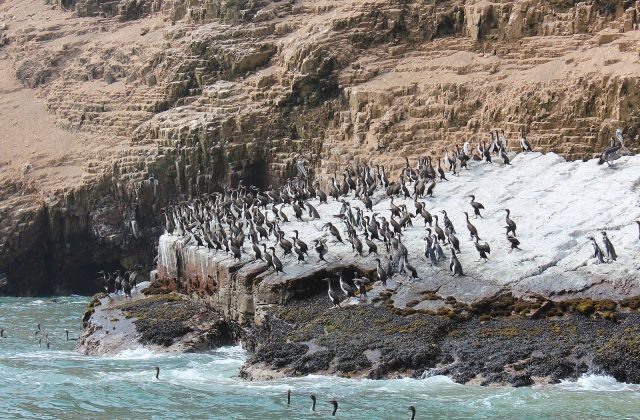
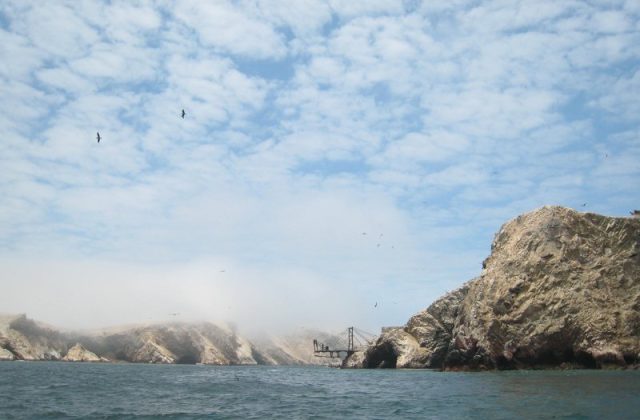
The Ballestas Islands are a cluster of bare rocks, arches and caves off the desert coast of southern Peru, about 4…
152 tours & trips
Peru · Lakes & rivers · Historic island
The Uros Floating Islands are man-made platforms of totora reed anchored in the bay of Puno on Lake Titicaca, at about 3,800 metres above sea level. Families live on them in reed houses and fish, hunt birds and now host visitors, and a half-day boat trip from Puno shows how the islands are built and kept afloat.
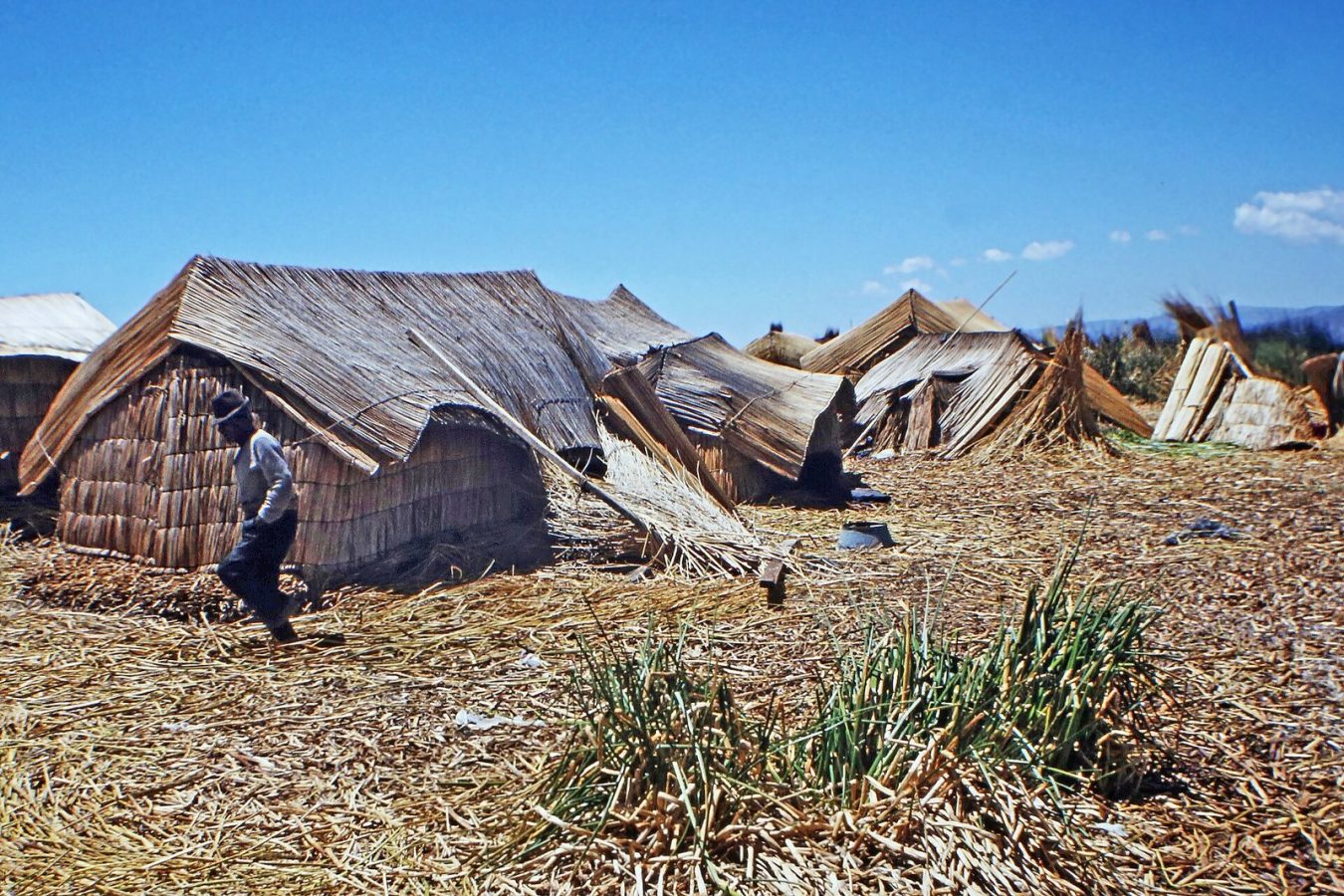
Photo: W. Bulach, CC BY-SA 4.0
| Getting there | Boat from the port of Puno, 20 to 30 min; Puno is reached by bus or train from Cusco or by air via Juliaca |
|---|---|
| Gateway | Puno |
| Travel time | 20 to 30 min by boat from Puno |
| Days | A half-day trip is enough |
| Best months | May–Oct dry and sunny; cold nights Jun–Aug; rain Dec–Mar |
| Getting around | Only by boat; reed boats carry visitors between islands |
| Booking | Nothing far ahead; book the day before in Puno, earlier around Candelaria in February |
| Cost | Cheap for Peru; reed-boat rides and crafts extra |
| Beaches | No beaches; the islands are reed platforms and the lake is cold for swimming |
| Sea | Lakes & rivers |
| Airport | No |
| Car-free | Yes |
| Checked | October 2026 |
Almost every visit to the Uros is a group boat trip from Puno, and the choice comes down to length and style.
The short version lasts about three hours. A motorboat with a guide leaves Puno harbour, crosses the reed beds and stops at one or two islands, where a family shows how the platforms are built, sells textiles and offers a ride in a reed boat for a small extra fee. Hotel pickup is usually included; the entry fee to the islands may not be.
Full-day trips add Taquile, known for its weaving and terraced hills, or Amantani, where two-day versions include a night with a local family. These take most of the day because the boats are slow, and lunch on Taquile is normally included. Kayak tours paddle through the reed channels of the reserve, often with a fishing demonstration or folklore show on an island. A few operators sell stays in lodges on the islands themselves, and some trips start from Cusco or La Paz with transport added.
The plain recommendation: if you have one free morning in Puno, the three-hour trip is enough. With a full day, combine the Uros with Taquile, and if you want a deeper encounter, spend a night on Amantani or in a reed-island lodge.
Boats land on a family island where the president of the community explains, with a small model, how blocks of reed roots are cut, tied together and covered with fresh layers of reed. The ground is soft and springy underfoot. You can step inside a reed house, see the cooking fires set on stone, and buy embroidery directly from the women who made it.
The large decorated boats with puma-head prows are built of bundled totora and rowed between islands by islanders. The ride lasts about 15 minutes and costs a few soles extra, paid on the spot. It is the best way to see the cluster from water level, with reed houses, watchtowers and small fish farms in the shallow lagoons.
Between Puno and the islands, boats follow channels cut through dense beds of totora within the Titicaca National Reserve. Look for coots, grebes, ibis and the endemic Titicaca flightless grebe in the open water. Kayakers see much more of this part than motorboat passengers, and early morning is calmest and best for birds before the afternoon wind rises.
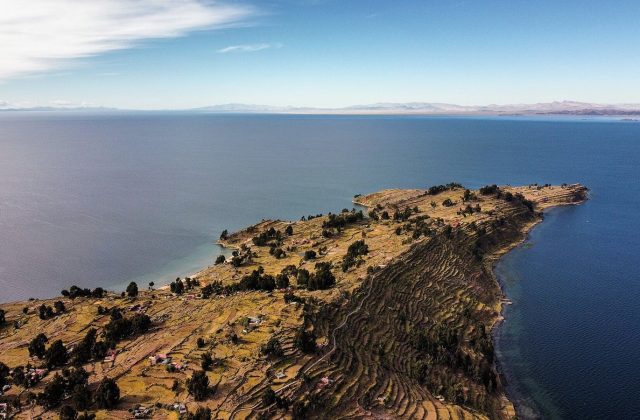
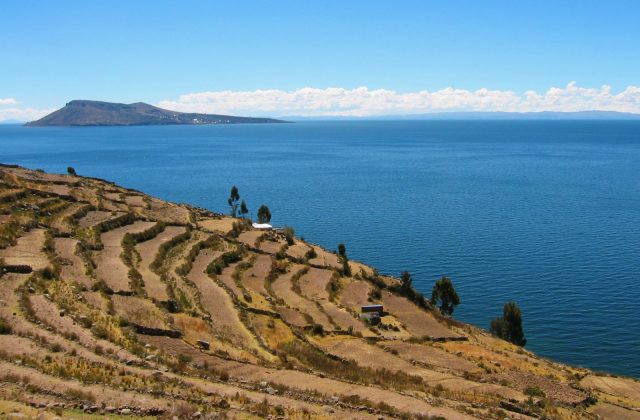
A natural island of stone terraces about two to three hours beyond the Uros by slow boat, Taquile is home to Quechua-speaking farmers known for fine textiles, many knitted by the men. Climb from the jetty to the main square, eat trout or quinoa soup with a view across the lake to Bolivia, and descend to the other harbour. The climb is hard at this altitude.
Further out, Amantani has two hilltop temples, terraced fields and no hotels, only homestays organised by the families. Two-day tours combine the Uros on the way out, a night in a simple home with dinner and sometimes a local dance, and Taquile on the way back. Bring warm clothes and a torch, because nights are freezing and electricity is limited.
Our pick for each kind of trip, with live dates and prices. Free cancellation on most.
Best for: First visit, a short morning from Puno
The standard three-hour outing with hotel pickup, a guide and a stop on one or two islands, ideal if you have only a morning or are still adjusting to the altitude.
The islands lie in the bay of Puno, about 5 km from the town's port, and boats take 20 to 30 minutes. Most visitors join a tour, but you can also go to the port in the morning and buy a seat on a community boat that leaves when full. Puno itself is the gateway. Buses from Cusco take about six to seven hours, and a slower scenic train runs on some days. The nearest airport is Juliaca, roughly an hour by road, with daily flights from Lima and some from Cusco and Arequipa. Buses also run from Arequipa and from La Paz via Copacabana in Bolivia. Arrive with a day to adjust: Puno and the lake sit at about 3,800 metres, and altitude sickness is common.
There is nothing to get around: each island is a few dozen metres across and you walk on the reed surface, which is soft and uneven but safe. Boats decide which island you visit, on a rotation agreed by the communities. Moving between islands means a reed boat or your tour's motorboat. Wear shoes that can get damp, and take sun cream and a hat, as the light is fierce on the water.
The dry season from May to October is the best time: clear skies, intense sunshine and calm mornings on the lake. Days are pleasant, around 15 degrees, but nights from June to August drop below freezing, so an overnight stay needs warm layers. This is also the busiest period, though boats rarely sell out.
From December to March the rainy season brings afternoon storms, cloud and choppier water; mornings are usually still fine for the short trip, and prices drop. In early February Puno fills for the Fiesta de la Virgen de la Candelaria, with weeks of costumed dancing and bands, when rooms and buses must be booked ahead. Whatever the month, go in the morning before the wind picks up. Half a day covers the Uros; a full day adds Taquile, and two days Amantani.
Most people sleep in Puno, where the centre around the Plaza de Armas and the pedestrian Jiron Lima has the most choice and restaurants, a short taxi ride from the port. Lakeside hotels north of town have views but feel remote. For something different, several Uros families run simple lodges on their islands with private reed huts, solar lighting and meals, a quiet and very cold night under bright stars.
The Uros were among the oldest peoples around the lake, and tradition holds that they began building floating islands long ago to keep away from more powerful neighbours on shore. Their own language died out in the twentieth century, and today the islanders speak Aymara and Spanish. Each island is made of buoyant blocks of reed roots topped with cut reeds that rot from below, so new layers are added every few weeks. Tourism since the late twentieth century has reshaped the islands, bringing solar panels, schools and craft stalls, while many families still fish and harvest reeds.
Pair the Uros with Taquile or Amantani for a full or two-day lake trip, and with the pre-Inca burial towers of Sillustani, about 45 minutes from Puno. Copacabana and the Isla del Sol on the Bolivian side are three to four hours away by bus, and Cusco makes the natural next stop, either by bus or on the scenic train across the altiplano.
Boat from the port of Puno, 20 to 30 min; Puno is reached by bus or train from Cusco or by air via Juliaca.
From Puno: 20 to 30 min by boat from Puno.
A half-day trip is enough.
May–Oct dry and sunny; cold nights Jun–Aug; rain Dec–Mar.
No. Uros Floating Islands is car-free. Only by boat; reed boats carry visitors between islands.
Go if you are in Puno and want to see a way of life built entirely from lake reeds. Skip the short trip and choose an overnight stay on Amantani or Taquile if you dislike staged visits and souvenir stalls.
Cheap for Peru; reed-boat rides and crafts extra.
No beaches; the islands are reed platforms and the lake is cold for swimming.
Nothing far ahead; book the day before in Puno, earlier around Candelaria in February.
Yes. Boat trips, guided tours and day trips for Uros Floating Islands can be booked online; live prices and free cancellation on most are shown on this page.
Peru
The Ballestas Islands are a cluster of bare rocks, arches and caves off the desert coast of southern Peru, about 4…
152 tours & trips
Peru
Taquile is a small island of terraced hills on the Peruvian side of Lake Titicaca, about 45 km by boat from Puno, with…
77 tours & trips
Peru
Amantani is a small, round farming island on the Peruvian side of Lake Titicaca, about three hours by boat from Puno,…
34 tours & trips
Peru
The Palomino Islands are a cluster of four rocky islets about 10 kilometres off the port of Callao, the coastal city…
25 tours & trips