Taquile
Peru
Taquile is a small island of terraced hills on the Peruvian side of Lake Titicaca, about 45 km by boat from Puno, with…
77 tours & trips
Peru · Pacific Ocean · Nature & wildlife island
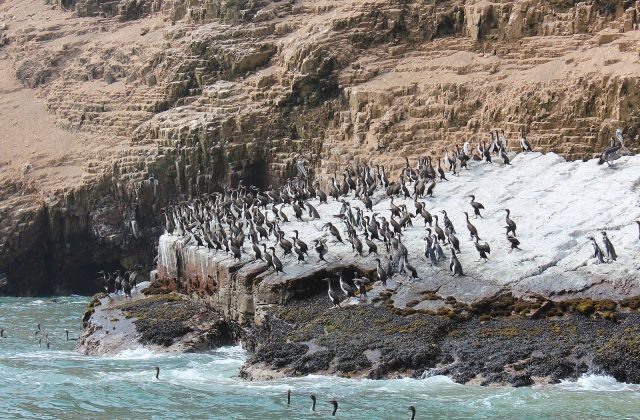
The Ballestas Islands are a cluster of bare rocks, arches and caves off the desert coast of southern Peru, about 4 hours south of Lima, where hundreds of thousands of seabirds, sea lions and Humboldt penguins live. Nobody may land; you see them on a two-hour boat trip from Paracas.
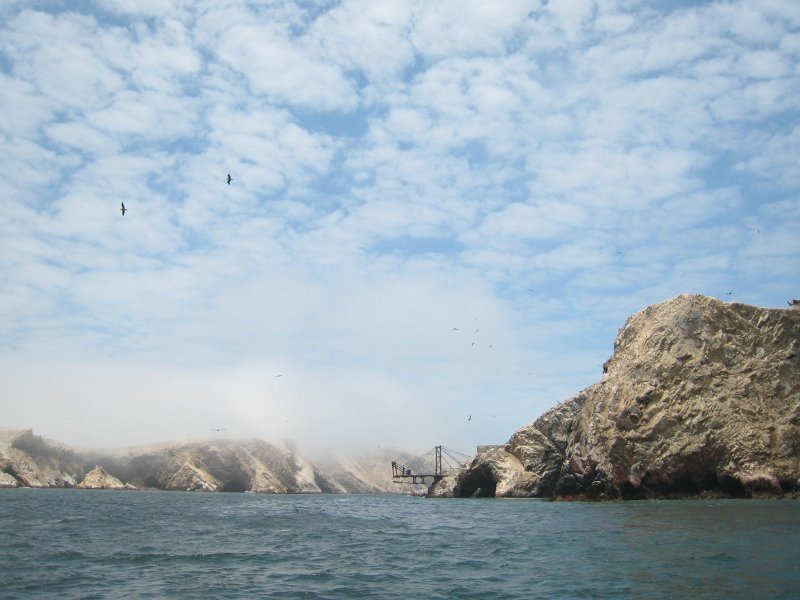
Photo: Lumerle, CC BY-SA 2.0 fr
| Getting there | Speedboat tours from El Chaco pier in Paracas, 2 h return; Paracas is 3.5 to 4 h by bus or car from Lima |
|---|---|
| Gateway | Paracas (El Chaco pier), reached from Lima |
| Travel time | About 30 min by speedboat each way |
| Days | Half a day; 1 night in Paracas |
| Best months | Year-round; Dec–Mar sunniest; mornings calmer as wind rises after midday |
| Getting around | Boats circle the islands without landing; walk, cycle or take a taxi in Paracas |
| Booking | Boat seats a day ahead; book a few days ahead for Peruvian holidays and Easter |
| Cost | Cheap by Peruvian standards |
| Beaches | No landing on the islands; on the Paracas peninsula swim at La Mina and view Playa Roja |
| Sea | Pacific Ocean |
| Population | Uninhabited |
| Airport | No |
| Checked | October 2026 |
There is really one product here, sold in many wrappings: the speedboat trip from El Chaco pier in Paracas. Boats of 30 to 50 seats leave in the morning, cross the bay past the Candelabra geoglyph and spend about an hour slowly circling the islands with a guide pointing out the wildlife, returning after about two hours. The reserve and pier fees are usually paid separately at the dock in cash. Small private boats and more comfortable yachts cost more but carry fewer people.
In Paracas, the boat trip is often paired with an afternoon tour of the Paracas National Reserve by minibus, bicycle, buggy or quad, or with paddleboarding in the bay.
From Lima, full-day trips leave around 4 am, catch a morning boat, and continue to the Huacachina oasis near Ica for dune buggies and sandboarding, sometimes with a pisco winery; some add a flight over the Nazca Lines from Pisco. These days are long, with eight or more hours on the road. Two-day versions with a night in Paracas or Huacachina are more relaxed. Cruise passengers docking at the port of San Martin can join short boat tours from there.
The best plan is to sleep in Paracas, take the first boat and spend the afternoon in the reserve.
Thousands of South American sea lions haul out on the rocks and small beaches of the islands, and the boats drift close enough to hear the bulls roaring and watch pups tumbling into the water. Many animals also lie in caves eroded under the arches. Fur seals are seen less often. The boat stops several times; keep your camera ready and your hat on.
The cold, rich Humboldt Current feeds vast colonies of guanay cormorants, Peruvian boobies, pelicans and elegant grey Inca terns, which cover entire slopes and swirl overhead. Look for the small groups of Humboldt penguins standing on low ledges near the water. The smell of guano is strong, and the walls and jetties built for guano collectors still cling to the cliffs.
On the way out, the boats pause off the north side of the Paracas peninsula to see a giant three-branched figure about 180 metres tall, dug into the sandy hillside facing the sea. Nobody knows for certain who made it or why. It is best seen from the water, and the morning light shows it most clearly.
South of town, the reserve protects a stretch of pure desert meeting the ocean. A loop by car or bike passes the visitor centre on the Paracas culture, cliff viewpoints, the dark red sand of Playa Roja and the fishing cove of Lagunillas with simple seafood restaurants. Flamingos sometimes feed in the shallow bay near the entrance.
The little harbour of Paracas is where everything starts: the pier, a promenade with seafood restaurants and souvenir stalls, and pelicans waiting for scraps from the fishing boats. It is a pleasant place for ceviche after the boat trip. Kitesurfers use the steady afternoon wind in the bay, and paddleboard and kayak rentals are on the beach.
Our pick for each kind of trip, with live dates and prices. Free cancellation on most.
Best for: First visit, the classic morning boat
The standard two-hour speedboat trip from Paracas, leaving early when the sea is calm, past the Candelabra to the bird and sea lion colonies.
Paracas lies about 250 km south of Lima along the Pan-American Highway. Comfortable long-distance buses run several times a day and take about three and a half to four hours, stopping at a terminal in Paracas itself; others stop in Pisco, 20 minutes away by taxi. Driving is straightforward, and tourist shuttle services along the southern route also stop here.
The small airport at Pisco has few scheduled flights and is used mainly for sightseeing flights over the Nazca Lines. Cruise ships dock at the port of San Martin nearby and run excursions to the islands. The boats leave from El Chaco pier, a short walk from most hotels; arrive 30 minutes early to pay the fees and board.
Paracas is small and walkable, with hotels strung along the bay and the pier in the middle. Taxis and tuk-tuks take you around town, and bicycles can be rented for the reserve, though distances are long, there is no shade and the afternoon wind is strong. For the reserve most people join a minibus tour or hire a taxi for a few hours. On the islands themselves there is no landing, so the boat is the whole visit.
The islands can be visited all year, and the wildlife is always there. The southern summer, from December to March, brings sunny, warm days and the busiest weeks, especially around New Year and the Peruvian holidays; sea lion pups are born early in the year. From June to September the coast is often grey and cool under low cloud, but the birds and animals do not mind, and the boats still run.
The sea is calmest in the morning, so the first departures are best. From midday the wind, sometimes strong enough to carry sand, makes the crossing rough, and the port authority can close the harbour, cancelling trips; keep a spare morning. Easter week, Fiestas Patrias in late July and long weekends fill the town with visitors from Lima. The water of the Humboldt Current is cold all year, so bring a jacket for the boat. Half a day is enough for the islands.
Most visitors sleep in Paracas itself. Hotels and hostels in the village around El Chaco are walking distance from the pier and the restaurants and suit an early boat. Larger resorts with pools and private beachfront line the bay to the south, closer to the reserve. Pisco, 20 minutes away, is cheaper but has little charm. Many travellers sleep in Huacachina or Ica instead and drive to the boats early, but that means a pre-dawn start.
For centuries the islands have been covered in guano, the droppings of the seabirds, built up in a desert climate where it almost never rains. In the 19th century this guano became the fertiliser of Europe and made Peru rich for a few decades, mined by thousands of labourers, many brought from China in harsh conditions. Collection still takes place every few years under strict control, using the old jetties and walls. Long before that, the Paracas culture flourished on the nearby peninsula, famous for its woven burial textiles.
The Ballestas are the first stop on the classic route south from Lima: the Huacachina oasis and the pisco wineries of Ica are about an hour away, the Nazca Lines about four hours, and Arequipa and Cusco lie beyond. Lima itself is an easy return the same day, or a night in Paracas splits the journey.
Speedboat tours from El Chaco pier in Paracas, 2 h return; Paracas is 3.5 to 4 h by bus or car from Lima.
From Paracas (El Chaco pier), reached from Lima: about 30 min by speedboat each way.
Half a day; 1 night in Paracas.
Year-round; Dec–Mar sunniest; mornings calmer as wind rises after midday.
Boats circle the islands without landing; walk, cycle or take a taxi in Paracas.
Go if you want close-up sea lions, penguins and huge seabird colonies on an easy morning boat trip. Skip it or choose the Galapagos if you want to walk among the animals, snorkel with them or spend more than two hours at sea.
Cheap by Peruvian standards.
No landing on the islands; on the Paracas peninsula swim at La Mina and view Playa Roja.
Boat seats a day ahead; book a few days ahead for Peruvian holidays and Easter.
Yes. Boat trips, guided tours and day trips for Ballestas Islands can be booked online; live prices and free cancellation on most are shown on this page.
Peru
Taquile is a small island of terraced hills on the Peruvian side of Lake Titicaca, about 45 km by boat from Puno, with…
77 tours & trips
Peru
Amantani is a small, round farming island on the Peruvian side of Lake Titicaca, about three hours by boat from Puno,…
34 tours & trips
Peru
The Palomino Islands are a cluster of four rocky islets about 10 kilometres off the port of Callao, the coastal city…
25 tours & trips
Peru
The Uros Floating Islands are man-made platforms of totora reed anchored in the bay of Puno on Lake Titicaca, at about…
22 tours & trips