Giglio
Tuscan Archipelago, Italy
Giglio is a granite island of the Tuscan Archipelago, about 16 km off the Monte Argentario peninsula and an hour by…
4 tours & trips
Italy · Tyrrhenian Sea · Beach island
Elba is the largest island of the Tuscan Archipelago and the third largest in Italy, lying only 10 km off the port of Piombino. It mixes granite mountains rising to 1,019 metres at Monte Capanne, more than a hundred beaches, old iron mines, hill villages and the houses where Napoleon spent his first exile.
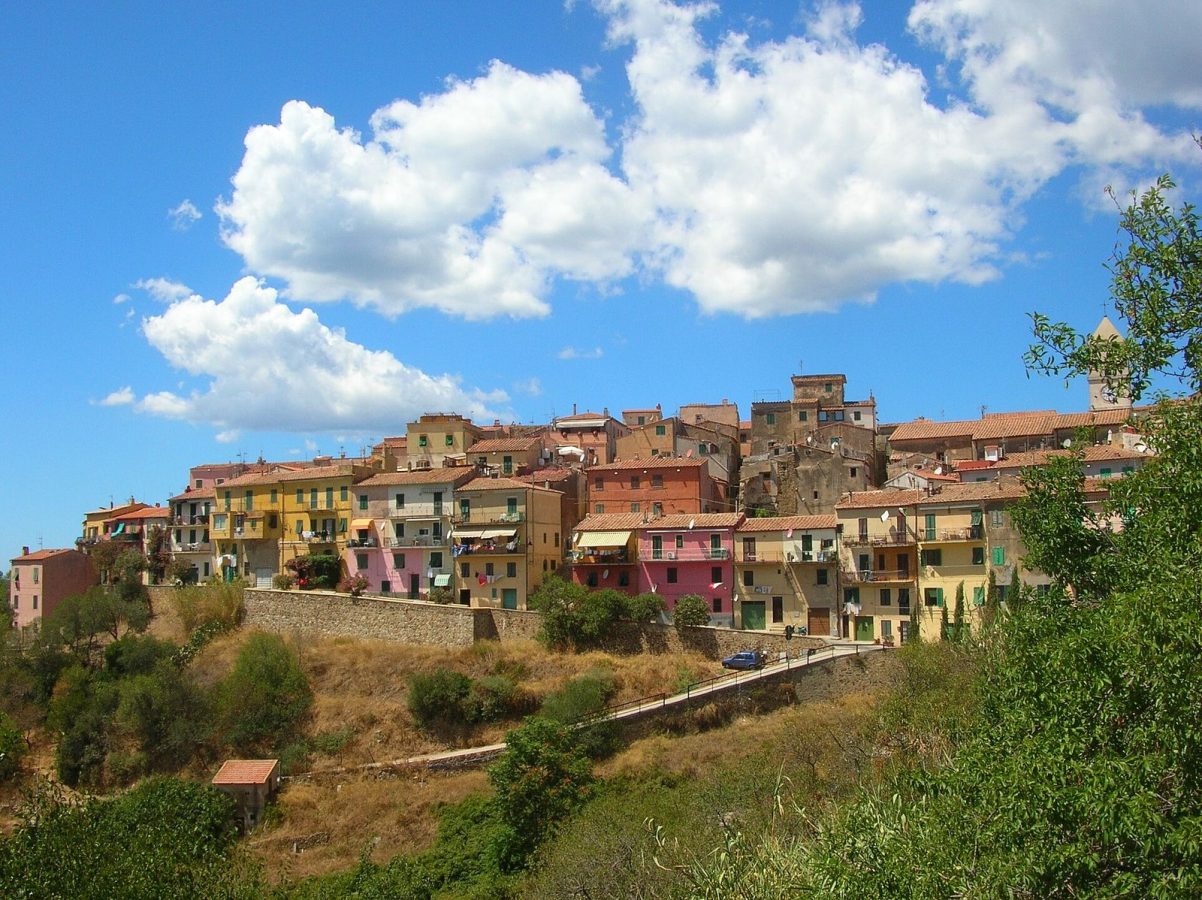
Photo: Gregory Zeier, CC BY 3.0
| Getting there | Ferry from Piombino to Portoferraio in about 1 h, frequent in summer; fast boats to Cavo; small seasonal airport |
|---|---|
| Gateway | Piombino |
| Travel time | About 1 h by ferry |
| Days | 3 to 5 nights |
| Best months | May–June and September; July–August crowded and expensive |
| Getting around | A car or scooter is best; buses link the main towns, slowly |
| Booking | Car ferries and rooms for July–August months ahead; boat trips a day or two ahead |
| Cost | Mid-range, high in August |
| Beaches | Sand at Marina di Campo, Fetovaia and Biodola; white pebbles at Sansone and Capo Bianco |
| Sea | Tyrrhenian Sea |
| Archipelago | Tuscan Archipelago |
| Area | 224 km² |
| Population | 31,362 |
| Highest point | 1,019 m (Monte Capanne) |
| Ferry | 1 h from Piombino |
| Airport | Yes, scheduled flights |
| Car-free | No |
| Checked | October 2026 |
Tours on Elba are sold on the island itself; there is little point in an organised day trip from the mainland, because the ferry is easy and the island deserves a few nights.
The most popular outings are on the water. Boats from Marina di Campo, Porto Azzurro, Portoferraio and Marciana Marina go out for half or full days along the granite coast, with swim stops at coves such as those near Fetovaia and the small sea caves of the south; catamaran and sailing trips usually include lunch and drinks, while larger excursion boats sell food on board. Glass-bottom boats and short trips to the small islands off the east coast suit families. Dive centres in Marina di Campo and Cavo offer try-dives, wreck dives and snorkelling outings by RIB.
On land, Elba is strong on cycling: guided e-bike tours run through the old iron mines of Monte Calamita and up to Capoliveri for sunset, and mountain-bike guides use the steep trails. There are also farm and winery tastings, a fishing day with a fisherman, kayak tours and a private walk on Napoleon's trail in Portoferraio.
For a first stay, book one full-day boat trip and rent a car or e-bike for the rest; the beaches are best found on your own.
The island's main port is a fortified Medici town of the sixteenth century, with walls, two forts and steep lanes above a horseshoe harbour. Napoleon lived at the Villa dei Mulini on the heights during his exile of 1814 and 1815; his summer house, the Villa San Martino, stands in the hills about 6 km inland. Allow half a day.
The granite peak in the west, at 1,019 metres, can be climbed on foot in about two hours or reached by an open cage cable car from below the medieval village of Marciana. On clear days you see Corsica, the Tuscan coast and the smaller islands. Afterwards walk the lanes of Marciana and the path to the hillside sanctuary of Madonna del Monte.
Below Monte Capanne the coast road passes a string of small sandy coves with very clear water: Cavoli, Seccheto and Fetovaia, the most famous, set in a sheltered bay of fine pale sand. They fill up by mid-morning in August, and parking is paid and limited, so arrive early or come by bus or boat.
On the south-eastern peninsula, the hill village of Capoliveri has lively squares and sunset views. Below it, the slopes of Monte Calamita are full of old iron mines, now explored on guided walks, 4x4 trips and e-bike tours, and the red and black earth colours the beaches. Nearby coves such as Innamorata and Morcone are good for swimming.
On the east coast, Porto Azzurro is a pretty harbour town under a Spanish fortress that is still a prison. Further north, Rio Marina was the island's mining port, and its mining museum and guided visits to the open-cast mines show the coloured minerals that made Elba famous since Etruscan times. The quiet coast continues to Cavo.
West of Portoferraio, a short path leads down to Sansone and Capo Bianco, beaches of brilliant white pebbles under white cliffs with turquoise water, among the most photographed on the island. Further west, Biodola and Procchio have longer stretches of sand, and Marciana Marina has a seafront promenade for an evening walk.
Our pick for each kind of trip, with live dates and prices. Free cancellation on most.
Best for: First visit, a day on a catamaran
A full day under sail from Porto Azzurro along the south-eastern coast, with swims in coves that are hard to reach by road and lunch on board.
Almost everyone comes by ferry from Piombino on the Tuscan coast. Car ferries run to Portoferraio in about an hour, every half hour or so in peak summer and less often in winter, with fewer services to Rio Marina; fast passenger boats reach Cavo in about 20 minutes and continue to Portoferraio. Moby, Toremar and Blu Navy operate the routes. Book car space ahead for weekends from June to August.
Piombino is about an hour and a half by car from Pisa airport and two from Florence. By train, change at Campiglia Marittima on the line from Rome and Pisa for Piombino Marittima station, next to the ferry terminal. A small airport at Marina di Campo has limited seasonal flights. Most visitors bring or rent a car; foot passengers can rely on the island's buses.
A car is the easiest way to explore, since the island is about 27 km long and its best beaches are spread out; roads are good but winding and narrow, and beach parking in August is hard. Scooters are popular and easy to park. Buses connect Portoferraio with Marina di Campo, Porto Azzurro, Capoliveri and Marciana, but are slow and less frequent outside summer. Cycling and e-bikes suit fit riders, as the island is hilly.
May, June and September are the best months: warm days, sea good for swimming from late May, and space on the beaches. Early October is still mild and good for walking and cycling, though some places begin to close. Spring brings flowers to the granite slopes and is ideal for hiking Monte Capanne.
July and especially August are crowded, as Italians take their holidays; ferries and hotels fill up, prices rise and beach parking becomes a contest. The week around the mid-August holiday is the busiest of the year. From November to March many hotels, campsites and restaurants close, ferries are fewer and the weather is changeable, but Portoferraio and Porto Azzurro keep living. Three to five nights covers the main sights; a week suits walkers and beach lovers.
Portoferraio is handy for the ferries and history, but lacks a big beach in town. Marina di Campo, on the south coast, has the longest sandy beach and suits families. Procchio and Biodola are good for beaches on the north side. Capoliveri and Porto Azzurro offer a lively village atmosphere in the south-east. The quieter west, around Marciana and Pomonte, suits walkers and those who want calm and sunsets.
Elba's history is written in iron. The Etruscans and then the Romans mined and smelted its ore, and the Greeks called it the smoky island after the fires of its furnaces. Pisa, Genoa and the Medici ruled it in turn; Cosimo I fortified Portoferraio in the sixteenth century, and Spain built the fortress at Porto Azzurro. In 1814 Napoleon was exiled here as ruler of the island, reorganising roads and mines before escaping back to France in 1815. Mining continued until the late twentieth century; tourism replaced it.
Elba pairs well with the Tuscan coast: Piombino, the Etruscan sites of Populonia and the beaches of the Maremma are close, and Pisa, Lucca and Florence are two hours away. The other islands of the national park, such as Giglio and Capraia, are reached from separate ports and make a longer island-hopping trip.
Ferry from Piombino to Portoferraio in about 1 h, frequent in summer; fast boats to Cavo; small seasonal airport.
From Piombino: about 1 h by ferry.
3 to 5 nights.
May–June and September; July–August crowded and expensive.
A car or scooter is best; buses link the main towns, slowly.
Go if you want varied beaches, coastal walks and good food on an Italian island an hour from the mainland. Skip it or choose Sardinia or Corsica if you want wilder coasts, emptier sand in August or a quick hop without a car ferry. With about 1 h each way from Piombino, a day trip is easy to do.
Mid-range, high in August.
Sand at Marina di Campo, Fetovaia and Biodola; white pebbles at Sansone and Capo Bianco.
Car ferries and rooms for July–August months ahead; boat trips a day or two ahead.
Yes. Boat trips, guided tours and day trips for Elba can be booked online; live prices and free cancellation on most are shown on this page.
Tuscan Archipelago, Italy
Giglio is a granite island of the Tuscan Archipelago, about 16 km off the Monte Argentario peninsula and an hour by…
4 tours & trips
Tuscan Archipelago, Italy
Giannutri is the southernmost island of the Tuscan Archipelago, a crescent of limestone just 2.6 square kilometres in…
3 tours & trips
Tuscan Archipelago, Italy
Capraia is the most north-westerly island of the Tuscan Archipelago, a volcanic ridge of 19 square kilometres lying 62…
1 tour