Elba
Tuscan Archipelago, Italy
Elba is the largest island of the Tuscan Archipelago and the third largest in Italy, lying only 10 km off the port of…
45 tours & trips
Italy · Tyrrhenian Sea · Nature & wildlife island
Giannutri is the southernmost island of the Tuscan Archipelago, a crescent of limestone just 2.6 square kilometres in size, about 18 km off Porto Ercole. It is car-free, almost uninhabited and protected by a national park, with clear water for snorkelling and diving, wild Mediterranean scrub and the ruins of a large Roman seaside villa.
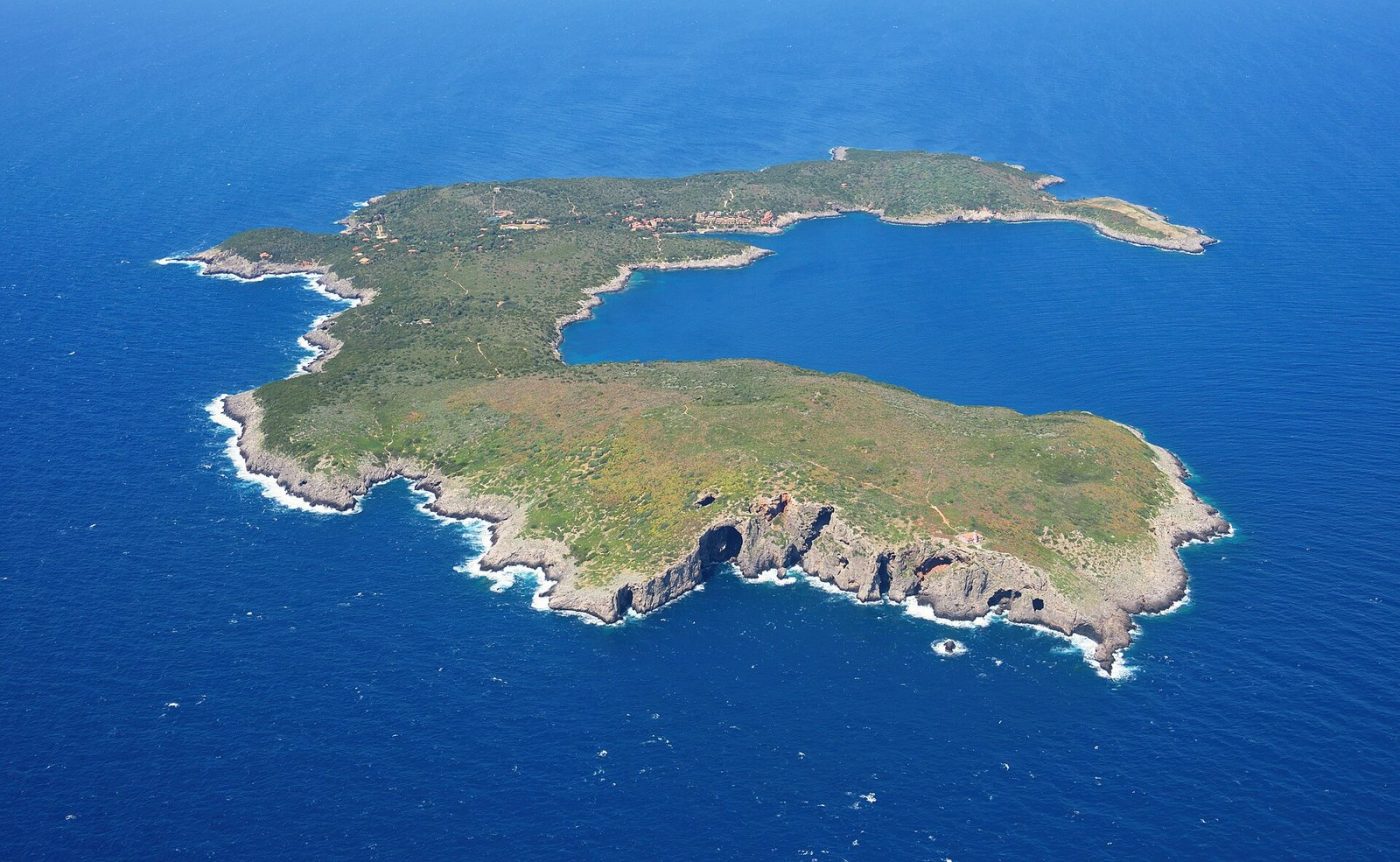
Photo: Carsten Steger, CC BY-SA 4.0
| Getting there | Summer ferry from Porto Santo Stefano, about 1 h; excursion boats from Porto Ercole and Giglio |
|---|---|
| Gateway | Porto Santo Stefano |
| Travel time | About 1 h by ferry |
| Days | A day trip is enough |
| Best months | Jun–Sep when boats run; Aug busiest; Jun and Sep best for diving |
| Getting around | Car-free: walk the few paths from the landings; no buses or taxis |
| Booking | Ferry or boat trip a few days ahead in August; landing numbers are limited |
| Cost | Mid-range; bring food, as there is little to buy |
| Beaches | No sand: two pebbly coves at Cala Spalmatoio and Cala Maestra, and swimming off the rocks |
| Sea | Tyrrhenian Sea |
| Archipelago | Tuscan Archipelago |
| Area | 2.6 km² |
| Population | 13 |
| Highest point | 93 m (Poggio Capel Rosso) |
| Airport | No |
| Car-free | Yes |
| Checked | October 2026 |
Giannutri is sold as a day out by sea, and the options are few and simple.
The most common is a day cruise from Porto Santo Stefano or the other harbours of the Argentario and the Maremma coast. Boats usually combine Giannutri with Giglio, stopping for a swim and a short walk on each island, and many serve a fish or pasta lunch on board. The ticket typically includes the boat, the lunch and a skipper who explains the coast; drinks and any guided visit ashore are extra.
Snorkelling trips from Porto Ercole spend more time on the water, anchoring in coves where the park protects fish and seagrass meadows. Gear is normally included. Diving is the island's special strength: dive centres on the mainland run full days with two dives on walls, gorgonian-covered rocks and wrecks, including a cargo ship that sank off the island in 1976.
Independent visitors can take the scheduled summer ferry, swim at the coves and join a guided walk to the Roman villa, which can only be visited with an authorised guide. Daily landing numbers are capped by the national park, so book ahead in August.
The plain recommendation: a day cruise combining Giglio and Giannutri for most visitors, and a dive day if you are certified.
On the west side, the cove of Cala Maestra was the landing of a large Roman villa of the 1st and 2nd centuries AD, built for a wealthy family from Rome. Columns, mosaics, baths and cisterns remain on the slope above the jetty. Visits are by guided walk only, about an hour and a half, and should be booked locally.
The main landing on the north-east side is a sheltered pebbly cove where ferries dock and most day visitors swim. The water is deep blue and very clear, with rocks to snorkel along both arms of the bay. There is a small bar in season, but bring water, shade and food for a long day.
The rocky southern shore is cut by caves and inlets and falls steeply into the sea. Divers find red gorgonians, groupers, moray eels and old wrecks, and snorkellers see sea bream and octopus in the shallows. Several zones of the park are off limits, so swim or dive only with a boat that knows the rules.
At the southern tip, the lighthouse stands near the highest hill, Poggio Capel Rosso at 93 metres, with views over open sea towards Giglio and Montecristo. The path crosses the island through dense maquis of juniper and lentisk. Walking here is restricted to marked routes, often with a guide, so check the rules on arrival.
Almost the whole island is covered in low Mediterranean scrub, alive with lizards and migrating birds in spring. Herring gulls and shearwaters nest on the cliffs, and peregrine falcons hunt along the coast. Watch from the paths in the early morning, before the day boats arrive and the heat builds.
Our pick for each kind of trip, with live dates and prices. Free cancellation on most.
Best for: First visit, Giglio and Giannutri
A day cruise from Porto Santo Stefano that combines both islands, with time ashore for a swim and lunch on board, so you see the southern archipelago without planning ferries.
Ferries from Porto Santo Stefano on Monte Argentario sail to Giannutri in summer, usually daily from June to September and only occasionally outside the season, taking about an hour. Excursion boats also run from Porto Ercole, Talamone, Castiglione della Pescaia and Giglio, mainly in July and August. Boats land at Cala Spalmatoio or Cala Maestra depending on the wind, and rough weather can cancel sailings.
Cars stay on the mainland; there is paid parking near the harbours of Porto Santo Stefano and Porto Ercole, which fill on August mornings. The nearest railway station is Orbetello-Monte Argentario on the Rome to Pisa line, with buses on to the ports. Rome is about two hours by road and Florence about two and a half. Private boats can anchor only in permitted areas of the park.
There are no roads in the usual sense, no cars and no public transport. From the landings you walk on dirt tracks and paths through the scrub; the island is under 3 km long, but much of the interior is private or protected, and visitors must keep to the routes the park allows. Wear proper shoes on the rocks and carry water, because there is almost no shade and very little to buy.
The season is short because the boats are. From June to September ferries and excursions run, the sea is warm, reaching about 25 degrees in August, and the weather is usually settled. August is the busiest month, with Italian holidays around the middle of the month, full boats and capped landing numbers. June and September are calmer, with clearer water for diving and fewer people.
In spring the island is green and good for walking and birds, but ferries are rare and the water cool. From October to May there is almost nothing open and few boats, and the mistral and scirocco winds can make the crossing rough.
A single day is enough for most visitors; divers often return for several days from a base on the mainland or on Giglio.
Overnight stays on the island are very limited, with only a few private holiday homes for rent and no proper village. Most visitors base themselves on the mainland: Porto Santo Stefano has the ferry and plenty of hotels and restaurants, while Porto Ercole is smaller and smarter, with the snorkelling and dive boats. Giglio, an hour away, suits those who want to combine island beaches and villages with a day trip here.
The Greeks called the island Artemisia and the Romans Dianium, both after the goddess of hunting. In the 1st and 2nd centuries AD a powerful Roman family built a vast villa with its own harbour, baths and cisterns to collect rainwater, as the island has no springs. After Rome fell it was left to pirates and passing fishermen. A lighthouse was added in the 19th century, holiday homes followed in the 20th, and since 1996 the island has been part of the Tuscan Archipelago National Park.
Giannutri is usually paired with Giglio, about 16 km to the north-west, either on a combined cruise or by spending a few nights there. On the mainland, Monte Argentario, the lagoon of Orbetello and the hill town of Capalbio are within half an hour, and the thermal baths of Saturnia are about an hour inland.
Summer ferry from Porto Santo Stefano, about 1 h; excursion boats from Porto Ercole and Giglio.
From Porto Santo Stefano: about 1 h by ferry.
A day trip is enough.
Jun–Sep when boats run; Aug busiest; Jun and Sep best for diving.
No. Giannutri is car-free. Car-free: walk the few paths from the landings; no buses or taxis.
Go if you want a calm day of swimming, snorkelling or diving in a protected sea, with a Roman villa thrown in. Skip it or choose Giglio if you want a village, sandy beaches, restaurants and somewhere to stay the night.
Mid-range; bring food, as there is little to buy.
No sand: two pebbly coves at Cala Spalmatoio and Cala Maestra, and swimming off the rocks.
Ferry or boat trip a few days ahead in August; landing numbers are limited.
Yes. Boat trips, guided tours and day trips for Giannutri can be booked online; live prices and free cancellation on most are shown on this page.
Tuscan Archipelago, Italy
Elba is the largest island of the Tuscan Archipelago and the third largest in Italy, lying only 10 km off the port of…
45 tours & trips
Tuscan Archipelago, Italy
Giglio is a granite island of the Tuscan Archipelago, about 16 km off the Monte Argentario peninsula and an hour by…
4 tours & trips
Tuscan Archipelago, Italy
Capraia is the most north-westerly island of the Tuscan Archipelago, a volcanic ridge of 19 square kilometres lying 62…
1 tour