Newfoundland
189 km away
Newfoundland is Canada's big Atlantic island, at about 108,900 square kilometres the fifteenth largest in the…
3 tours & trips
Canada · Atlantic Ocean · Nature & wildlife island
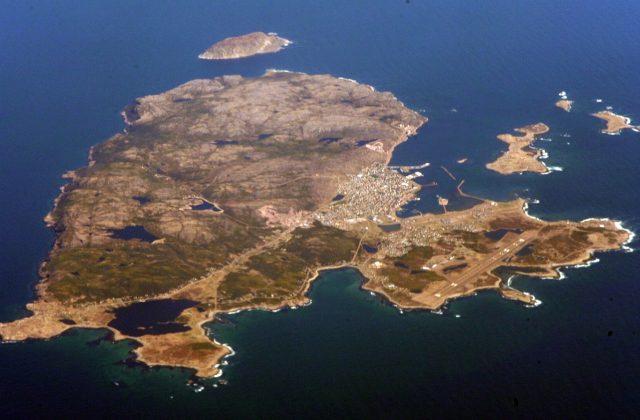
Fogo Island is the largest offshore island of Newfoundland, about 25 km long, reached by a 45-minute car ferry across Hamilton Sound. Its old fishing outports, Irish heritage, contemporary artists' studios on the rocks and coastal trails make it one of the most distinctive places in Atlantic Canada, with icebergs drifting past in late spring.
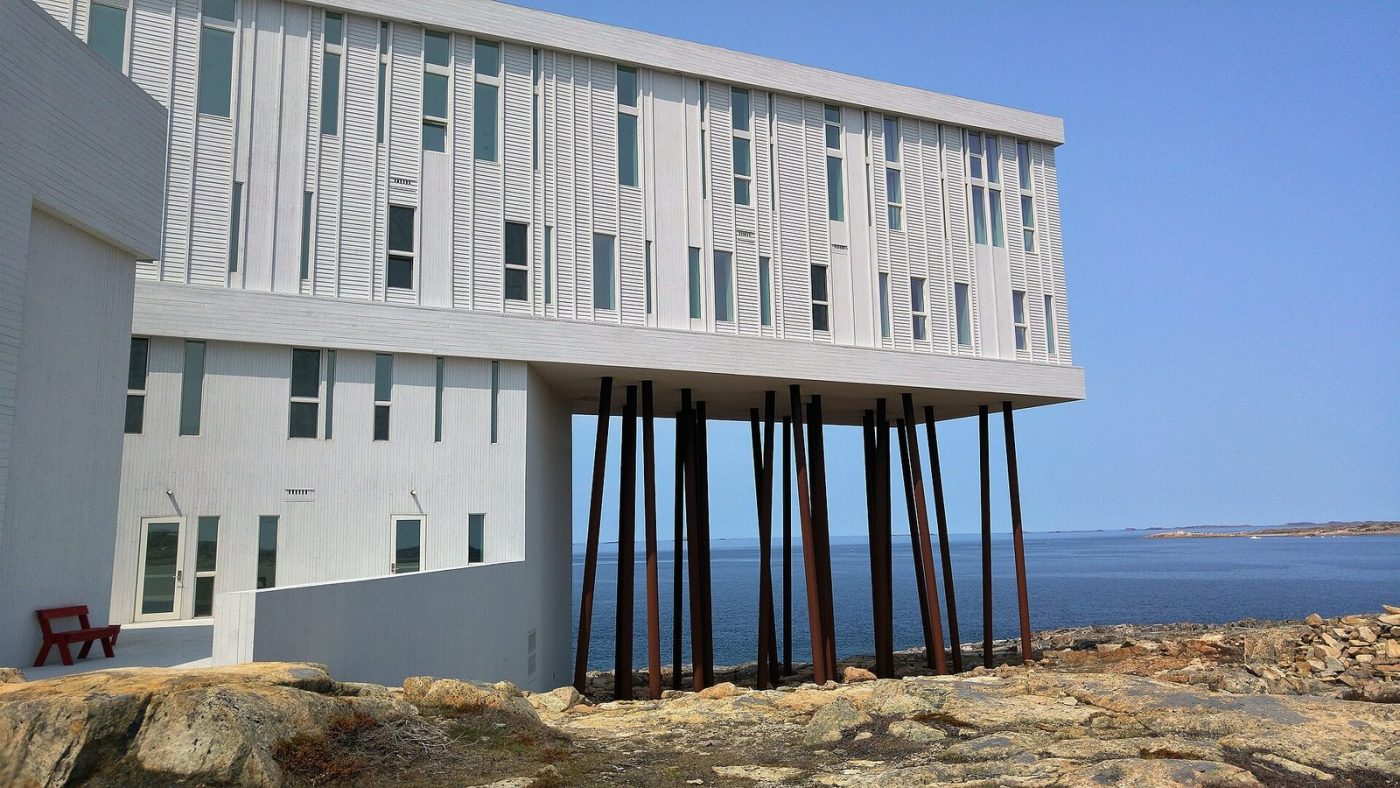
Photo: https://www.flickr.com/photos/72874821@N03/, CC BY 2.0
| Getting there | Car ferry from Farewell to Stag Harbour, about 45 min, some calls at Change Islands |
|---|---|
| Gateway | Farewell (ferry to Stag Harbour) |
| Travel time | About 45 min by car ferry |
| Days | 3 to 5 nights |
| Best months | Jun–Sep; icebergs May–Jun; whales Jun–Aug |
| Getting around | Bring a car on the ferry; roads link all the outports, no public transport |
| Booking | Ferry reservations and rooms several weeks ahead in July and August |
| Cost | Mid-range, with a very expensive top end |
| Beaches | Rocky coves and a few small sandy beaches; cold water, best for walking |
| Sea | Atlantic Ocean |
| Area | 238 km² |
| Population | 2,706 |
| Airport | No |
| Car-free | No |
| Checked | November 2026 |
Nothing is sold online for this Fogo Island. Visitors arrive on their own by car ferry from the Newfoundland mainland and arrange what they want on the island.
The main activities need little booking. The island's network of signed coastal trails can be walked independently, and the heritage sites in Tilting, Fogo and Joe Batt's Arm keep regular summer hours. What does need arranging locally are boat trips: in season, small operators take visitors out to see icebergs, whales and seabirds, and some offer trips to local fishing grounds where you can try jigging for cod in the traditional way. Prices cover the boat and a skipper, and warm, waterproof clothes are essential.
Cultural experiences are another option. Local guides, often from the outports themselves, lead walks around the communities and introduce the island's history and food. The artists' studios on the coast can be seen from outside, and an arts organisation runs residencies and occasional events. Some restaurants and the main inn offer foraging walks and tasting dinners.
The plain recommendation: reserve the ferry and a room, plan three days of walking and village visits, and book one boat trip locally when the weather is right.
At the eastern end, this outport settled by Irish fishing families keeps its old saltbox houses, fishing stages, root cellars and fences, and is a National Historic Site. Walk around the harbour, visit the restored house and fishing premises, and take the trail to Turpin's Rock, where cliffs and sea stacks face the open Atlantic.
In the north-west, the community of Fogo sits below Brimstone Head, a bare rock hill with stairs to the top and a view over the harbour and offshore islands. The Flat Earth Society once named it one of the corners of the earth. Combine it with the trail to Lion's Den and the town's museum.
The largest outport on the north shore has a working harbour, a cafe culture and the trail to Joe Batt's Point, an easy loop over rock and heath to a bronze statue of a great auk. From the headland, scan for whales and icebergs in season. The walk takes about an hour.
Six contemporary studios, angular wooden buildings designed by a local-born architect, perch on the rocks near different outports. They are used by visiting artists and are not usually open inside, but several trails pass close by. The Long Studio near Joe Batt's Arm and the Squish Studio near Tilting are the most photographed.
In late spring, icebergs from Greenland drift past the north and east coasts, sometimes grounding in the bays. From June, humpback and minke whales feed offshore, and puffins, gannets and murres pass by. Watch from the headlands, or book a small boat from one of the harbours on a calm day.
Near the ferry, the harbours of Seldom and Little Seldom keep old fishing stores and wharves, and short trails lead to quiet coves. It is a good first or last stop, about 15 minutes from Stag Harbour, when you are waiting for the ferry home.
The provincial car ferry runs from Farewell on the north coast of Newfoundland to Stag Harbour on Fogo, several times a day all year, taking about 45 minutes direct or longer when it calls at the Change Islands. Reservations are available and recommended in summer, when queues can mean waiting for a later sailing; in winter sea ice can delay crossings.
Farewell is about an hour's drive from Gander, which has the nearest airport with flights from Halifax, Toronto and St John's. Most visitors fly into Gander or drive across Newfoundland and take their car over, since there is little to do without one. There is a small airstrip on the island but no scheduled flights. From St John's, allow around five hours to Farewell by road.
A car is essential. There are no buses or regular taxis, and the ten or so communities are spread around the island, linked by a paved road network that takes about 30 to 40 minutes to cross. Rental cars on the island are very limited, so most visitors bring one from Gander or elsewhere in Newfoundland. Cycling is possible but the weather is changeable. Within each outport you walk, and many trailheads have small parking areas.
The season is short. Most cafes, restaurants, museums and boat trips open from June to September. Late May and June are best for icebergs, though the weather is cool and foggy and some places are still closed. July and August are the warmest months, with temperatures around 20 degrees on good days, whales offshore and the most events, but rooms and ferries are busiest. September brings berry picking, clearer weather and fewer visitors.
The sea is cold all year. Winter is long, with snow, sea ice and frequent storms; a few businesses stay open for winter visitors, but most close and ferries can be delayed. Allow three nights to walk the main trails and see the outports, and five if you want to slow down and wait for good weather for a boat trip.
Accommodation is limited and fills in summer: a few small inns, bed and breakfasts and holiday homes, plus one well-known luxury inn on the north shore. Joe Batt's Arm is the most convenient base, with cafes and the best-known trails. Tilting suits those who want quiet and heritage, and Fogo town in the north-west is good for Brimstone Head and its walks. Seldom, near the ferry, works for short stays and early departures.
Fogo Island has been fished by Europeans since the 16th century, when Portuguese crews probably gave it its name. English and Irish settlers built outports from the 1700s, living from the cod fishery and selling to merchants who controlled credit. In the 1960s, when the government pressed outports to resettle, islanders resisted, helped by a pioneering film project and a fishermen's cooperative. After the cod collapse of the 1990s, a local foundation invested in tourism and the arts, building studios and a luxury inn that put the island on the map.
Fogo pairs naturally with Twillingate, the iceberg capital of Newfoundland, about an hour and a half by road from Farewell, and with the tiny Change Islands, a stop on the same ferry. Gander and its aviation museum are on the way, and a longer road trip continues to Terra Nova National Park or St John's, about five hours away.
189 km away
Newfoundland is Canada's big Atlantic island, at about 108,900 square kilometres the fifteenth largest in the…
3 tours & trips
354 km away
Saint-Pierre is the main island of Saint Pierre and Miquelon, the last piece of France in North America, lying 25 km…
1 tour
Car ferry from Farewell to Stag Harbour, about 45 min, some calls at Change Islands.
From Farewell (ferry to Stag Harbour): about 45 min by car ferry.
3 to 5 nights.
Jun–Sep; icebergs May–Jun; whales Jun–Aug.
Bring a car on the ferry; roads link all the outports, no public transport.
Go if you want rugged coastal walks, icebergs and whales, traditional outports and a lively arts and food scene. Skip it or choose Twillingate if you have only a day, need sunshine or prefer a destination reached by a bridge.
Mid-range, with a very expensive top end.
Rocky coves and a few small sandy beaches; cold water, best for walking.
Ferry reservations and rooms several weeks ahead in July and August.
Canada
Vancouver Island is the largest island on the Pacific coast of the Americas, about 456 km long, with Victoria, the…
392 tours & trips
Canada
The Toronto Islands are a car-free chain of 15 small islands in Lake Ontario, a 15-minute ferry ride from downtown…
298 tours & trips
Canada
Prince Edward Island is Canada's smallest province, a gently rolling island of red soil, potato fields, fishing…
32 tours & trips
Canada
Cape Breton Island is the rugged north-eastern end of Nova Scotia, joined to the mainland by a causeway and crowned by…
19 tours & trips
Canada
The Thousand Islands are a group of 1,864 islands in the Saint Lawrence River, stretching about 80 km downstream from…
19 tours & trips
Canada
Île d'Orléans is a farming island in the St Lawrence River, about 5 km downstream from Quebec City and linked to…
11 tours & trips