Aegina
Saronic Islands, Greece
Aegina is the nearest large island to Athens, 27 km across the Saronic Gulf and about 40 minutes from Piraeus by fast…
49 tours & trips
Greece · Aegean Sea · Car-free island
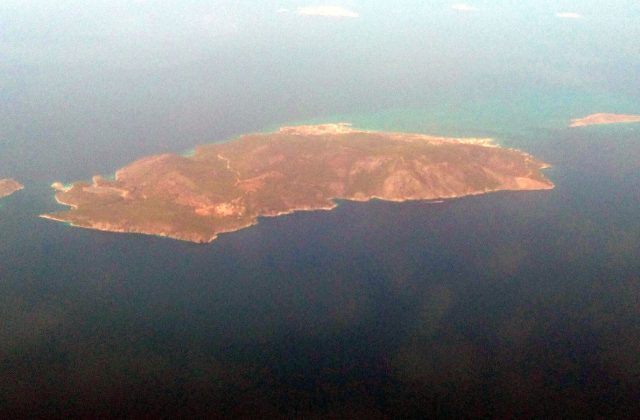
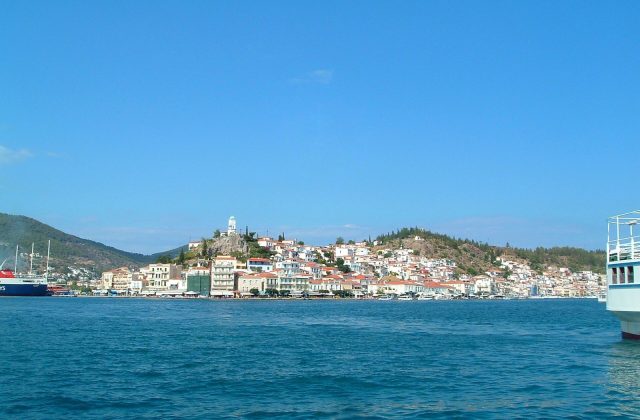
Hydra is a long, rocky island in the Saronic Gulf, about two hours by fast boat from Athens, where cars and scooters are banned and donkeys still carry goods up from the harbour. Its amphitheatre of stone mansions, built by eighteenth-century shipowners, makes it one of the most handsome ports in Greece.
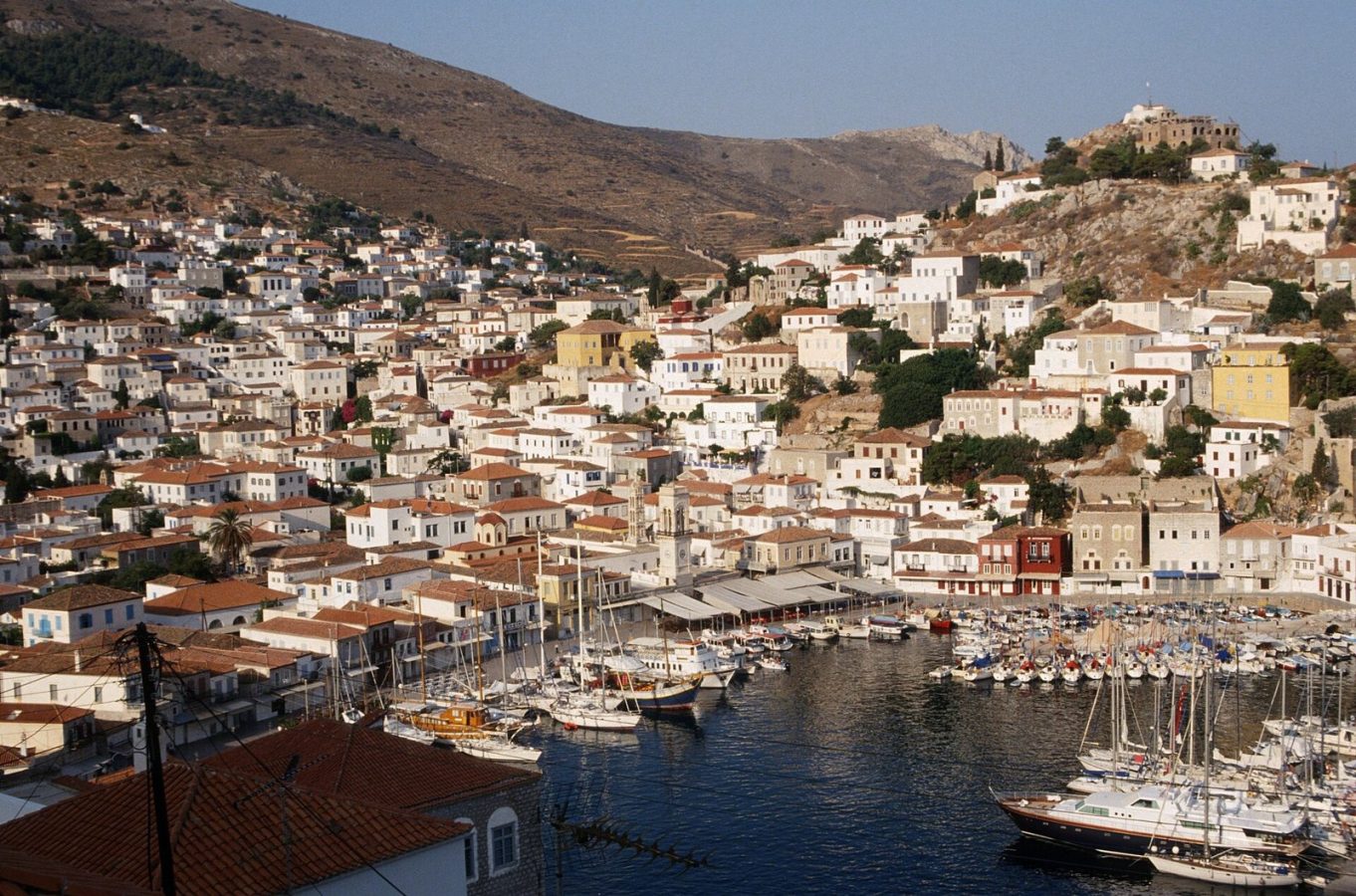
Photo: Herbert Ortner, Vienna, Austria, CC BY 3.0
| Getting there | Hydrofoils from Piraeus in about 1.5 to 2 h; small boats from Metochi on the Peloponnese in about 20 min |
|---|---|
| Gateway | Athens (Piraeus) |
| Travel time | About 1.5 to 2 h by hydrofoil |
| Days | 1 to 2 nights |
| Best months | May–June and Sep–Oct; Jul–Aug hot and crowded; quiet but open in winter |
| Getting around | Car-free: walk, ride a donkey or take a water taxi to the coves |
| Booking | Rooms and summer weekend hydrofoils weeks ahead; water taxis on the day |
| Cost | Expensive for Greece |
| Beaches | Few beaches; swim off rocks at Spilia and Hydronetta; pebble coves at Vlychos and Bisti |
| Sea | Aegean Sea |
| Archipelago | Saronic Islands |
| Area | 50 km² |
| Population | 1,966 (2011) |
| Highest point | 588 m (Mount Eros) |
| Ferry | 1 h 30 min from Athens (Piraeus) |
| Airport | No |
| Car-free | Yes |
| Checked | October 2026 |
Two kinds of product dominate for Hydra: day trips from Athens and boat outings from the island itself.
The best-known day trip is the cruise from Piraeus or the southern suburbs that visits Hydra, Poros and Aegina in one day, with lunch on board and about 90 minutes on each island. It is a pleasant day at sea, but you see Hydra only briefly, at the busiest hour. Better is a day trip by hydrofoil, with or without a private guide, which gives five or six hours ashore. Private cruises and speedboats from Athens marinas cost much more but let you swim in quiet coves.
Day trips also leave from Nafplio, crossing by road to Metochi and then by small boat, and multi-day tours pair Hydra with Spetses, Poros or the Peloponnese.
On the island, small boats offer snorkelling and swimming trips to the southern coves, fishing trips with lunch, and licence-free boats for hire. Art workshops and private helicopter transfers are niche extras. Most outings include the boat, fuel and snorkel gear; food and drinks vary.
Recommendation: skip the three-island cruise, take the hydrofoil, stay at least one night, and hire a water taxi or small boat for a day.
The horseshoe harbour is lined with cafes and the grey stone mansions of the old shipowners rise behind it. Walk the lanes up through the town, visit the Historical Archives Museum on the quay, and climb to the Koundouriotis mansion, now a museum of the island's naval past. In the evening the harbour fills with yachts and strollers.
From the western end of the harbour, past the cannons, a paved path follows the coast to Kamini, a small fishing harbour with tavernas, in about 20 minutes. Continue another 20 to 30 minutes to Vlychos, with a pebble beach, an old stone bridge and a taverna. Water taxis bring you back if the sun is too strong.
There are no sandy beaches in town, so people swim from the rocks just west of the harbour. At Spilia, ladders lead into deep, very clear water below a cafe terrace, and at Hydronetta, a little further on, a bar faces the sunset. Come early in July and August to find a place on the rocks.
A stepped path climbs about 500 metres above the town to the monastery of Profitis Ilias, still home to a few monks, with a convent nearby. The walk takes about 90 minutes up, steep and exposed, so start early with water. Above it rises Mount Eros, at 588 metres, with views across the Saronic Gulf to the Peloponnese.
Further west, Bisti and Agios Nikolaos are pine-backed pebble coves with clear water, reached only by water taxi or a long walk. On the eastern side, Mandraki has a small beach a 20-minute walk from town. A day on a hired boat lets you visit several, and the islet of Dokos lies close to the south-west tip.
Our pick for each kind of trip, with live dates and prices. Free cancellation on most.
Best for: First visit, a day from Athens
A full day built around the fast boat from Athens, with free time to walk the harbour and lanes and a swimming stop, for travellers without a night to spare.
Hydrofoils and fast catamarans leave Piraeus for Hydra several times a day in summer, taking about one and a half to two hours depending on stops at Poros or elsewhere; there are fewer in winter. They continue to Spetses and Ermioni. Book summer weekend crossings ahead, as they fill with Athenians. There are no slow car ferries to Hydra.
From the Peloponnese, drive to Metochi, opposite the island, leave your car in the paid car park and take the small passenger boat or a water taxi across in about 20 minutes. Metochi is roughly two and a half hours from Athens by road and about 90 minutes from Nafplio. Some day cruises from Athens also stop in the harbour.
Hydra has no private cars or scooters, only a couple of service vehicles. Everything in town is reached on foot, often by steep stepped lanes, so pack light or use the porters and donkeys waiting at the harbour for luggage. Water taxis leave from the harbour for Kamini, Vlychos and the far coves, and small boats can be hired without a licence. Paths cross the interior to the monasteries and the remote west.
May, June, September and early October are the best months: warm enough to swim, with the sea at 22 to 25 degrees by June, and walking is still comfortable. July and August are hot, the harbour is crowded with day cruises and yachts, and room prices peak. The Miaoulia festival in late June celebrates the island's admiral with the burning of a replica ship in the harbour.
Hydra stays alive in winter better than many islands, as Athenians keep weekend houses here, and Easter, with its procession into the sea at Kamini, is a special time. From November to March some hotels and tavernas close, the sea can cancel hydrofoils, and days are cool and quiet. A day trip shows the harbour; one or two nights let you walk, swim and enjoy the evening.
Most rooms are in Hydra town, in restored mansions and small guesthouses up the lanes. Staying near the harbour puts you close to restaurants and boats; higher up is quieter with better views, but more steps. Kamini, a 20-minute walk west, is a quieter village with a few rooms and good tavernas, suited to a slower stay. Vlychos has a handful of places by the sea. Prices are high and many places close in midwinter.
Rocky and short of water, Hydra was settled in the Ottoman period by Arvanites and other refugees who turned to the sea. By the late eighteenth century its merchant fleet was rich from trade and blockade-running, and the grand mansions on the hills date from then. In the War of Independence from 1821, Hydra's ships formed much of the Greek navy. Decline followed, until painters, writers and later films brought new visitors in the 1950s and 1960s; Leonard Cohen lived here for years. The ban on cars keeps the town much as it was.
Hydra sits on the Saronic hydrofoil line. Poros is about 30 minutes away, Spetses a similar trip, and Aegina within reach via Piraeus, so a week can cover three islands. By crossing to Metochi you can continue by car to Nafplio, Epidaurus and Mycenae in the Peloponnese, making a loop back to Athens.
Hydrofoils from Piraeus in about 1.5 to 2 h; small boats from Metochi on the Peloponnese in about 20 min.
From Athens (Piraeus): about 1.5 to 2 h by hydrofoil.
1 to 2 nights.
May–June and Sep–Oct; Jul–Aug hot and crowded; quiet but open in winter.
No. Hydra is car-free. Car-free: walk, ride a donkey or take a water taxi to the coves.
Go if you want a car-free harbour town of stone mansions, coastal walks and rock swimming within easy reach of Athens. Skip it or choose Spetses or Paros if you want sandy beaches, nightlife or lower prices. With about 1 h 30 min each way from Athens (Piraeus), a day trip is easy to do.
Expensive for Greece.
Few beaches; swim off rocks at Spilia and Hydronetta; pebble coves at Vlychos and Bisti.
Rooms and summer weekend hydrofoils weeks ahead; water taxis on the day.
Yes. Boat trips, guided tours and day trips for Hydra can be booked online; live prices and free cancellation on most are shown on this page.
Saronic Islands, Greece
Aegina is the nearest large island to Athens, 27 km across the Saronic Gulf and about 40 minutes from Piraeus by fast…
49 tours & trips
Saronic Islands, Greece
Agistri is a small, pine-covered island in the Saronic Gulf, about an hour by fast boat from Piraeus and ten minutes…
13 tours & trips
Saronic Islands, Greece
Poros is a pine-covered pair of islands in the Saronic Gulf, separated from the Peloponnese by a channel only about 200…
11 tours & trips
Saronic Islands, Greece
Spetses is a pine-covered island of about 27 square kilometres at the mouth of the Argolic Gulf, just off the…
7 tours & trips