San Cristobal (Galapagos)
Galapagos Islands, Ecuador
San Cristobal is the easternmost island of the Galapagos, about 1,000 km off mainland Ecuador, with the…
13 tours & trips
Ecuador · Pacific Ocean · Nature & wildlife island
Isabela is the largest of the Galápagos Islands, a seahorse-shaped chain of six volcanoes about 100 km long that straddles the equator. Its small town of Puerto Villamil, two hours by speedboat from Santa Cruz, is the base for snorkelling with turtles and sharks, walking on a huge active caldera and seeing penguins near the equator.
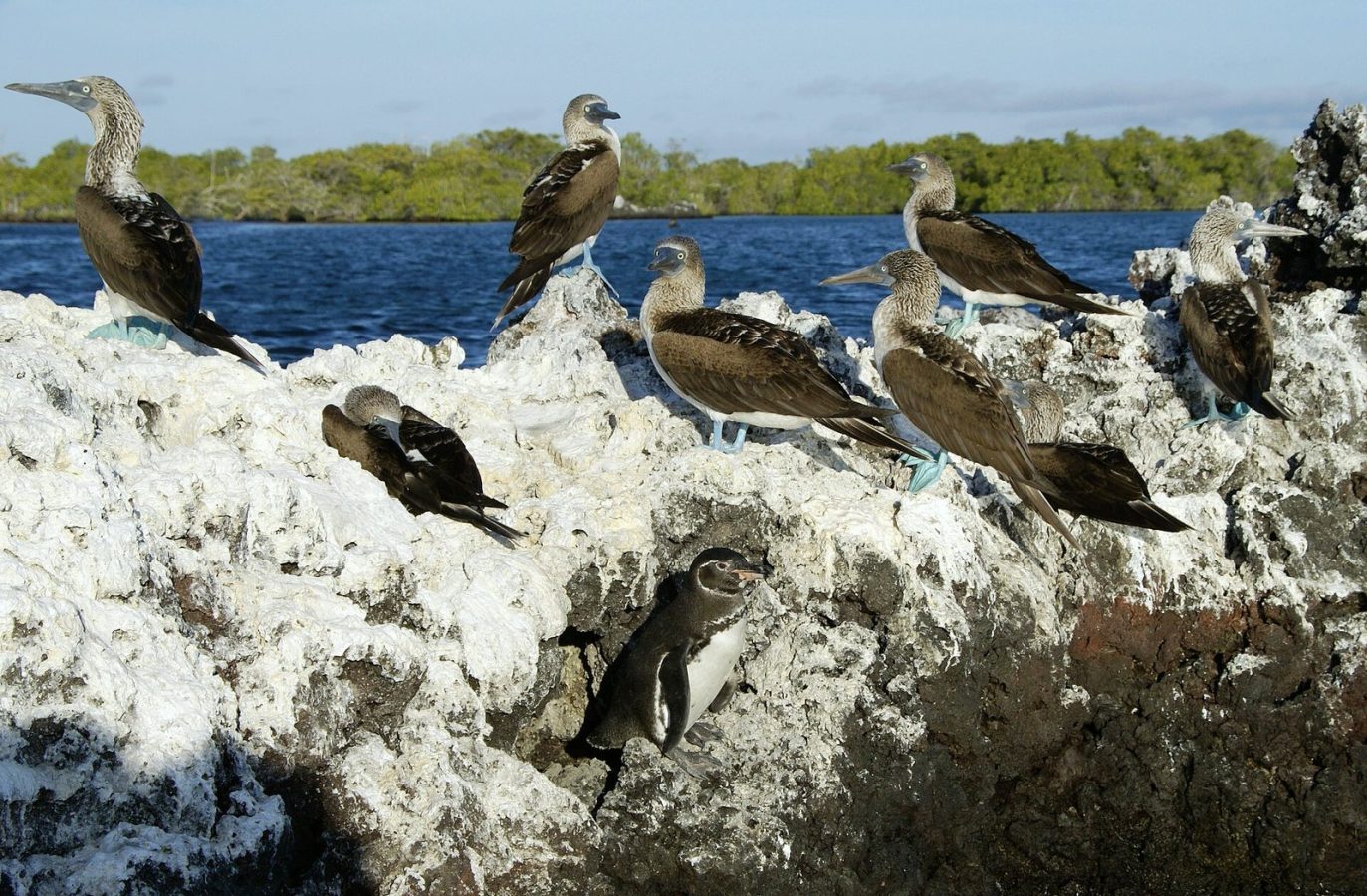
Photo: putneymark, CC BY-SA 2.0
| Getting there | Speedboat from Puerto Ayora on Santa Cruz, about 2 h, twice a day; small planes from Baltra |
|---|---|
| Gateway | Santa Cruz (Puerto Ayora) |
| Travel time | About 2 h by speedboat |
| Days | 1 to 2 nights |
| Best months | Dec–May warm sea and calm crossings; Jun–Nov cooler, rougher, richer marine life |
| Getting around | Walk or cycle in Puerto Villamil; taxis and tours for the volcano and tunnels |
| Booking | Speedboats and Los Tuneles trips a few days ahead; rooms in December and July–August |
| Cost | Expensive, like all of the Galápagos |
| Beaches | A long white-sand beach along Puerto Villamil, with marine iguanas; calm swimming at Concha de Perla |
| Sea | Pacific Ocean |
| Archipelago | Galapagos Islands |
| Area | 4,586 km² |
| Population | 3,000 |
| Highest point | 1,707 m (Wolf Volcano) |
| Ferry | 2 h from Santa Cruz (Puerto Ayora) |
| Airport | Yes, scheduled flights |
| Car-free | No |
| UNESCO | Galápagos Islands |
| Checked | October 2026 |
Tours on Isabela fall into three groups, and almost all are run by small local agencies with a national park guide, which is compulsory for most sites.
Day trips from Santa Cruz include the two-hour speedboat each way, a short guided visit to the lava islet of Las Tintoreras and the town, and lunch. They are possible but tiring and leave four or five hours on the island; seasickness is common.
From Puerto Villamil itself, the essential trips are the half-day boat tour to Las Tintoreras, the half-day trip to Los Tuneles at Cabo Rosa, the island's best snorkelling, and the guided hike on Sierra Negra and Volcan Chico. Boat trips include snorkel gear and a guide, and usually a snack; wetsuits may cost extra. Other options include sulphur-mine walks, rappelling in the collapsed craters known as the Triplets and cycling to the Wall of Tears.
Multi-day packages from Santa Cruz combine both islands with transfers and hotels.
Stay at least two nights: book Los Tuneles and Sierra Negra, and do Concha de Perla and the town sights on your own.
About 45 minutes by boat west of Puerto Villamil, old lava flows have formed arches and channels in shallow, clear water. Snorkelling here you can see green turtles, white-tip reef sharks resting in caves, seahorses and rays, and on the rocks blue-footed boobies nest. The entry through the surf can be rough, so it depends on sea conditions.
The road climbs from town into the green highlands to the start of a trail along the rim of Sierra Negra, a caldera up to 10 km across, among the largest in the world. The path continues across black lava to Volcan Chico, with fumaroles and views over the island. The walk takes about five hours; bring rain gear and water.
A small lava islet just off the harbour, a few minutes away by boat. A trail over the rough lava leads to a narrow channel where white-tip reef sharks rest, and marine iguanas lie everywhere. Galápagos penguins and sea lions are often seen around the bay. Snorkelling is allowed in the bay, not in the shark channel.
The town has sandy streets, a long white beach with marine iguanas and a relaxed pace. Behind it, boardwalks cross brackish lagoons where flamingos feed, and lead to the giant tortoise breeding centre, about a 20-minute walk. At the harbour, the sheltered Concha de Perla inlet has free, easy snorkelling with sea lions and fish.
About 5 km west of town, a straight road and cycle path lead past beaches, mangroves and tortoise-viewing points to a long stone wall built by prisoners of the penal colony that operated here until 1959. It is an easy bike ride, with viewpoints and short trails on the way. Leave early before the heat.
Our pick for each kind of trip, with live dates and prices. Free cancellation on most.
Best for: A day from Santa Cruz
Return speedboat from Puerto Ayora with a guided visit to the lava islet of Las Tintoreras and the town, for visitors who cannot stay overnight.
Most visitors fly from mainland Ecuador to Baltra or San Cristóbal, pay the national park fee and transit charges, and continue by sea. Speedboats run from Puerto Ayora on Santa Cruz to Puerto Villamil twice a day, morning and afternoon, taking about two hours; the crossing is often rough, so sit at the back and take seasickness tablets. Tickets are sold by agencies and at the Puerto Ayora pier, and you are transferred by water taxi to the boat; a small fee is charged on landing in Isabela.
Small planes fly to the airstrip near Puerto Villamil from Baltra and San Cristóbal, faster but more expensive. Many cruise ships visit the remote western coast, which cannot be reached from the town.
Puerto Villamil is small: the beach, lagoons, harbour and restaurants are all within walking distance. Bikes are rented in town and are the best way to reach the Wall of Tears along the flat coastal road. Pickup taxis take you to the harbour or into the highlands, and tour agencies provide transport for Sierra Negra. There is no car rental, and most of the island, including the northern volcanoes, is roadless national park.
The Galápagos have two seasons. From December to May the warm season brings sunshine, short showers, sea temperatures around 25 degrees and calmer crossings from Santa Cruz; it is the better time for snorkelling comfort and for the green highlands after rain.
From June to November the cool Humboldt current brings the garua mist, grey skies, cooler water around 20 degrees and rougher seas, but also more nutrients, more fish and active penguins and sea lions; a wetsuit is useful. Peak visitor periods are December to January and July to August, when rooms and speedboat seats fill. Sierra Negra is often misty in the cool season, so keep a spare day. Two nights allow the tunnels and the volcano; three add a slow day by bike.
Puerto Villamil is the only town, and everyone stays there. Places on the beach road have sea views and the sound of waves, and suit couples and those who want to swim at sunrise. Rooms a few streets back are cheaper and still five minutes from the sand. A few lodges in the highlands near the start of the Sierra Negra trail offer cooler nights and birdlife but need taxis to reach town.
Isabela was formed by six shield volcanoes that merged into one island, and several, including Sierra Negra and Wolf, have erupted in recent years. English buccaneers named it Albemarle in the seventeenth century, and whalers later hunted giant tortoises along its coast for food. Settlers founded Puerto Villamil at the end of the nineteenth century to burn lime and farm the highlands, and Ecuador ran a harsh penal colony here until 1959. Today the island lies within the Galápagos national park and World Heritage Site.
Isabela is almost always combined with Santa Cruz, two hours away by speedboat, the hub of the islands with Puerto Ayora, the Charles Darwin Research Station and tortoise reserves. A typical land-based itinerary spends two nights on Isabela, three on Santa Cruz and two on San Cristóbal, linked by boats via Puerto Ayora.
Speedboat from Puerto Ayora on Santa Cruz, about 2 h, twice a day; small planes from Baltra.
From Santa Cruz (Puerto Ayora): about 2 h by speedboat.
1 to 2 nights.
Dec–May warm sea and calm crossings; Jun–Nov cooler, rougher, richer marine life.
Walk or cycle in Puerto Villamil; taxis and tours for the volcano and tunnels.
Go if you want Galápagos wildlife, volcano hikes and snorkelling from a relaxed sandy-street town. Skip it or stay on Santa Cruz if you have only a day or two in the islands, or if rough boat rides upset you. At about 2 h each way from Santa Cruz (Puerto Ayora), it is worth staying at least one night.
Expensive, like all of the Galápagos.
A long white-sand beach along Puerto Villamil, with marine iguanas; calm swimming at Concha de Perla.
Speedboats and Los Tuneles trips a few days ahead; rooms in December and July–August.
Yes. Boat trips, guided tours and day trips for Isabela can be booked online; live prices and free cancellation on most are shown on this page.
Galapagos Islands, Ecuador
San Cristobal is the easternmost island of the Galapagos, about 1,000 km off mainland Ecuador, with the…
13 tours & trips
Galapagos Islands, Ecuador
Floreana is a small volcanic island in the south of the Galapagos, home to about 100 people and reached by speedboat…
4 tours & trips
Galapagos Islands, Ecuador
Bartolome is a tiny volcanic islet of 1.2 square kilometres off Santiago in the central Galapagos, uninhabited and…
2 tours & trips
Galapagos Islands, Ecuador
Santa Cruz is the central and most populous island of the Galápagos, a shield volcano of about 986 square kilometres…
2 tours & trips