Isabela
Galapagos Islands, Ecuador
Isabela is the largest of the Galápagos Islands, a seahorse-shaped chain of six volcanoes about 100 km long that…
28 tours & trips
Ecuador · Pacific Ocean · Nature & wildlife island
Santa Cruz is the central and most populous island of the Galápagos, a shield volcano of about 986 square kilometres rising to 864 metres, with Puerto Ayora, the archipelago's main town, on its south coast. It is the practical base for land-based trips: giant tortoises in the highlands, the Darwin research station and daily boats to the smaller islands.
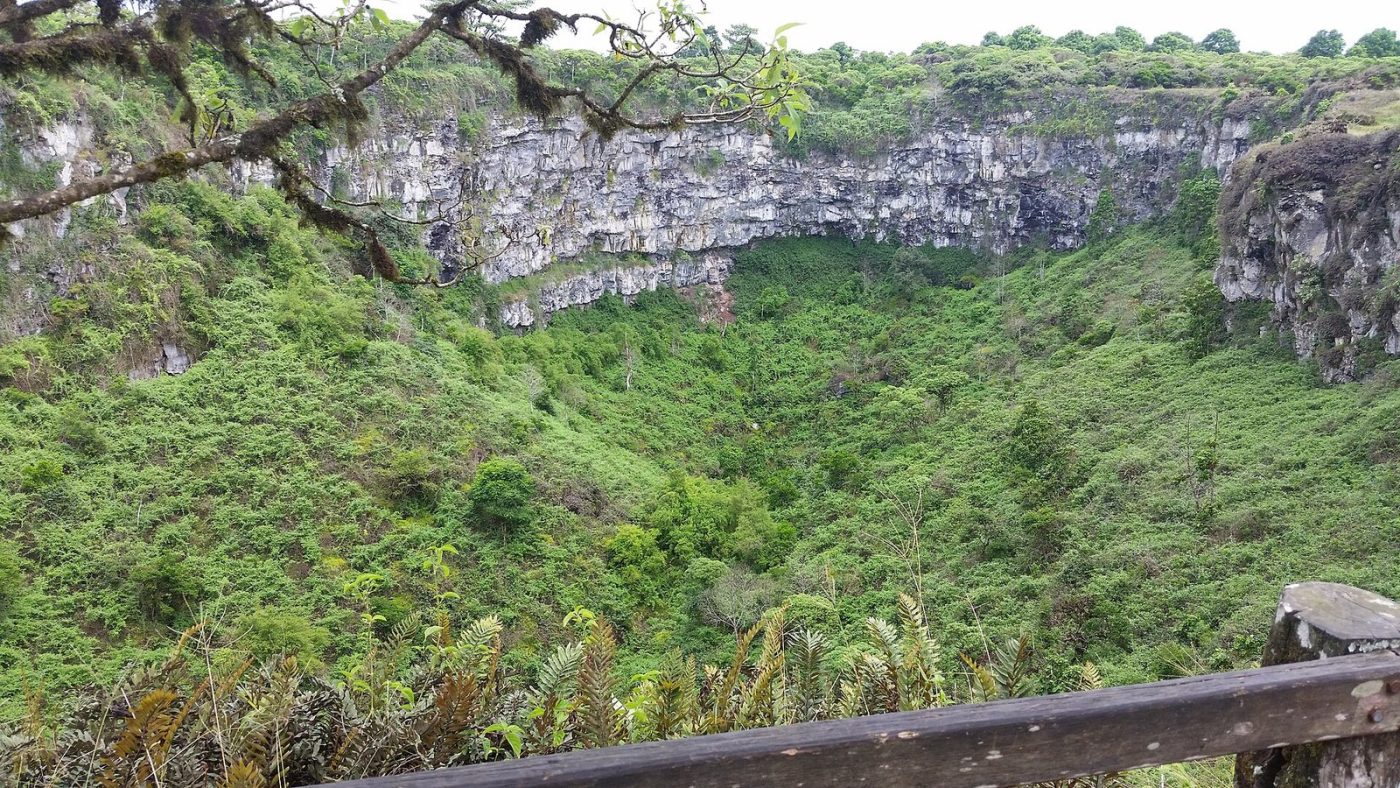
Photo: Pi3.124, CC BY-SA 4.0
| Getting there | Fly from Guayaquil or Quito to Baltra, then bus, a 5-min channel ferry and 40 min by road to Puerto Ayora |
|---|---|
| Gateway | Guayaquil or Quito (flight to Baltra) |
| Travel time | About 2 h flight from Guayaquil, then 1 h overland |
| Days | 3 to 5 nights |
| Best months | Dec–May warm with calmer seas; Jun–Nov cooler and misty, richer sea life |
| Getting around | Walk in Puerto Ayora; taxis (white pick-ups) and bikes for the highlands; water taxis in the bay |
| Booking | Flights and day boats weeks ahead; months ahead for Christmas, Easter and Jul–Aug |
| Cost | Expensive, even by Ecuadorian standards |
| Beaches | White sand: Tortuga Bay with marine iguanas, El Garrapatero in the east; Las Grietas crevice swim |
| Sea | Pacific Ocean |
| Archipelago | Galapagos Islands |
| Area | 986 km² |
| Population | 15,701 |
| Highest point | 864 m (Cerro Crocker) |
| Airport | No |
| Car-free | No |
| UNESCO | Galápagos Islands |
| Checked | October 2026 |
Only a couple of local tours for Santa Cruz are sold online, but on the island itself there is a long list of options, and most are booked in Puerto Ayora a day or two ahead or as part of a package.
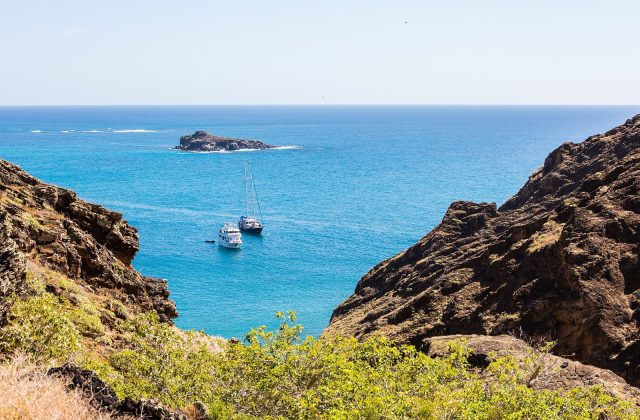
The first kind is the bay tour: a small boat leaves the town pier for a couple of hours, stopping at a sea lion colony, a channel where white-tip reef sharks rest, a rocky inlet with marine iguanas and the landing for Las Grietas. Snorkel gear is normally included.
The second is the highland tour by minibus, combining a tortoise reserve, the lava tunnels and the twin craters, often with a farm or a beach. Entry fees to private farms are usually included, lunch sometimes.
The third is the day boat to another island. Licensed boats run guided trips to North Seymour, South Plaza, Bartolomé, Santa Fe or Floreana with a naturalist guide, lunch and snorkelling. Places are limited by park rules and sell out.
Finally there are multi-day land-based packages that hop between Santa Cruz, Isabela and San Cristóbal, and live-aboard cruises that start at Baltra.
For a first visit, spend at least three nights and book two different day boats.
About 20 km from Puerto Ayora, past the village of Santa Rosa, private farms and the El Chato reserve let you walk among wild giant tortoises grazing in muddy pools. Wear the rubber boots offered at the entrance. Nearby are walkable lava tunnels, and on the road, Los Gemelos, two collapsed craters in a forest of scalesia trees.
A paved path of about 2.5 km leads from the edge of Puerto Ayora through cactus forest to one of the finest beaches in the islands. The first long beach has strong currents and is for walking, watching marine iguanas and surfers. At its far end a sheltered lagoon with mangroves is safe for swimming and kayaking.
On the eastern edge of town, a 20-minute walk from the harbour, the scientific station and the park's breeding centre raise young tortoises and land iguanas for release. You see hatchlings, adults of several island species and the preserved body of Lonesome George, the last tortoise of Pinta. Go early, before it gets hot.
Take a water taxi across Academy Bay and walk about 15 minutes over lava and past a salt lagoon to a deep crack in the rock filled with clear, cool water, a mix of sea and fresh water. Swimming is allowed in the first section, with fish visible below. Arrive early: it gets crowded by late morning.
A beach of white sand on the east coast, about 30 minutes by taxi from town and a short walk from the road, quieter than Tortuga Bay. It has a lagoon where flamingos sometimes feed, calm water for kayaks and good snorkelling around the rocks. Bring food and water, as there are no services.
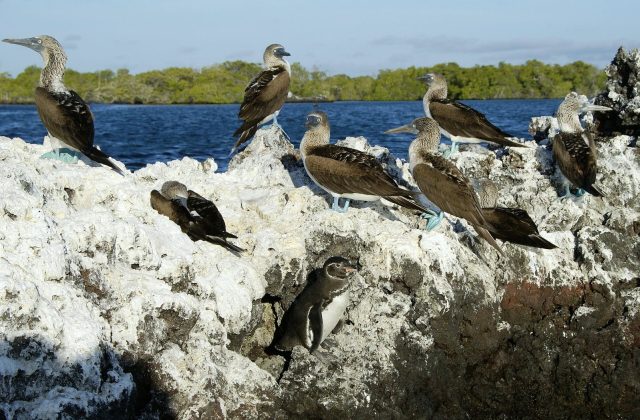
The most popular day trip from Santa Cruz lands on a low island north of Baltra, with a loop trail past nesting blue-footed boobies, magnificent frigatebirds with red throat pouches, sea lions and land iguanas. Trips leave early, include a guide and lunch, and add a snorkel stop.
Our pick for each kind of trip, with live dates and prices. Free cancellation on most.
Best for: Highlands, a farm and a quiet beach
A half-day by road to the green interior, with a traditional sugar cane and coffee farm and the calm white beach of El Garrapatero, good if you have no car.
There is no airport on Santa Cruz itself. Flights from Guayaquil, about two hours, and from Quito, usually via Guayaquil, land on Baltra, the small island just to the north. Before flying you pay for a transit control card at the airport in mainland Ecuador, and on arrival you pay the national park entry fee in cash.
From the Baltra terminal a free bus takes you to the Itabaca Channel, where a small ferry crosses in about five minutes. On the Santa Cruz side, take a public bus or a taxi pick-up across the highlands to Puerto Ayora, 40 to 45 minutes away.
Public speedboats link Puerto Ayora with Isabela and San Cristóbal, roughly twice a day, in about two hours each; the ride can be rough. You cannot bring a car.
Puerto Ayora is compact and walkable, from the research station to the harbour and the Tortuga Bay path. For the highlands and the beaches of the east, hire one of the white pick-up taxis for a half-day at an agreed rate, take a tour, or rent a bike.
Water taxis cross the bay to Las Grietas and to boats at anchor for a small fare, day and night. Buses run between town and the Itabaca Channel for flights.
Santa Cruz can be visited all year, and the two seasons differ more in the sea than on land.
From December to May the warm season brings air temperatures around 30 degrees, sea temperatures of 24 to 26 degrees, calmer water and sudden showers that turn the highlands green. Green turtles nest on the beaches early in the year, and snorkelling is at its most comfortable.
From June to November the cool Humboldt current brings mist to the highlands, water of 19 to 22 degrees and choppier crossings, but also more plankton, fish and sea lions; a wetsuit is useful. Rain is rare on the coast.
Christmas and New Year, Easter and July to August are the busiest and most expensive times, when day boats and flights fill up. Plan three to five nights to fit two or three day trips.
Almost everyone stays in Puerto Ayora. The streets around the harbour and Avenida Charles Darwin have the most choice, from simple guesthouses to small hotels, and put you within walking distance of everything. Quieter places lie towards Tortuga Bay or across the bay at Punta Estrada, reached by water taxi. A handful of lodges in the highlands near Santa Rosa suit people who want cool nights, tortoises nearby and a car.
The pirate William Cowley named Santa Cruz the Duke of Norfolk's Island in 1684, and the British later called it Indefatigable after a naval ship. It took its present name in 1892. Norwegian settlers arrived in the 1920s and founded Puerto Ayora around Academy Bay, followed by farmers in the highlands. The Charles Darwin Research Station opened in 1964, and as tourism grew from the 1970s the town became the hub of the islands. Fishing, farming and cattle continue inland.
Most land-based visitors combine Santa Cruz with Isabela, two hours west by speedboat, for flamingo lagoons and the Sierra Negra volcano, and with San Cristóbal, two hours east, for sea lions in town and a second airport. A week covers all three. Guayaquil makes an easy stopover before or after the flights.
Fly from Guayaquil or Quito to Baltra, then bus, a 5-min channel ferry and 40 min by road to Puerto Ayora.
From Guayaquil or Quito (flight to Baltra): about 2 h flight from Guayaquil, then 1 h overland.
3 to 5 nights.
Dec–May warm with calmer seas; Jun–Nov cooler and misty, richer sea life.
Walk in Puerto Ayora; taxis (white pick-ups) and bikes for the highlands; water taxis in the bay.
Go if you want to see the Galápagos from a comfortable town base, with tortoises, beaches and day boats close by. Choose a live-aboard cruise instead if your dream is the remote western and northern islands, which day trips from here cannot reach.
Expensive, even by Ecuadorian standards.
White sand: Tortuga Bay with marine iguanas, El Garrapatero in the east; Las Grietas crevice swim.
Flights and day boats weeks ahead; months ahead for Christmas, Easter and Jul–Aug.
Yes. Boat trips, guided tours and day trips for Santa Cruz (Galápagos) can be booked online; live prices and free cancellation on most are shown on this page.
Galapagos Islands, Ecuador
Isabela is the largest of the Galápagos Islands, a seahorse-shaped chain of six volcanoes about 100 km long that…
28 tours & trips
Galapagos Islands, Ecuador
San Cristobal is the easternmost island of the Galapagos, about 1,000 km off mainland Ecuador, with the…
13 tours & trips
Galapagos Islands, Ecuador
Floreana is a small volcanic island in the south of the Galapagos, home to about 100 people and reached by speedboat…
4 tours & trips
Galapagos Islands, Ecuador
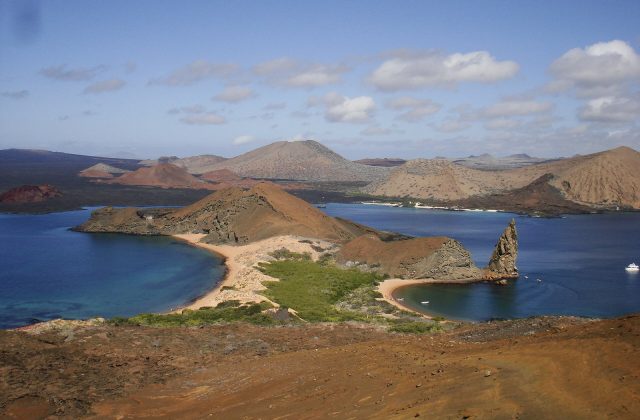
Bartolome is a tiny volcanic islet of 1.2 square kilometres off Santiago in the central Galapagos, uninhabited and…
2 tours & trips