Curaçao
ABC Islands, Dutch Caribbean
Curaçao is the largest of the Dutch ABC islands, a dry, rocky island of 444 square kilometres about 65 km off the coast…
112 tours & trips
Dutch Caribbean · Caribbean Sea · Beach island
Klein Bonaire is a flat, uninhabited islet of about 6 square kilometres lying less than a kilometre off Kralendijk, the capital of Bonaire in the Dutch Caribbean. Ringed by coral reefs in a protected marine park, with a white-sand beach and no buildings beyond a small shelter, it is one of the best snorkelling and diving trips in the region.
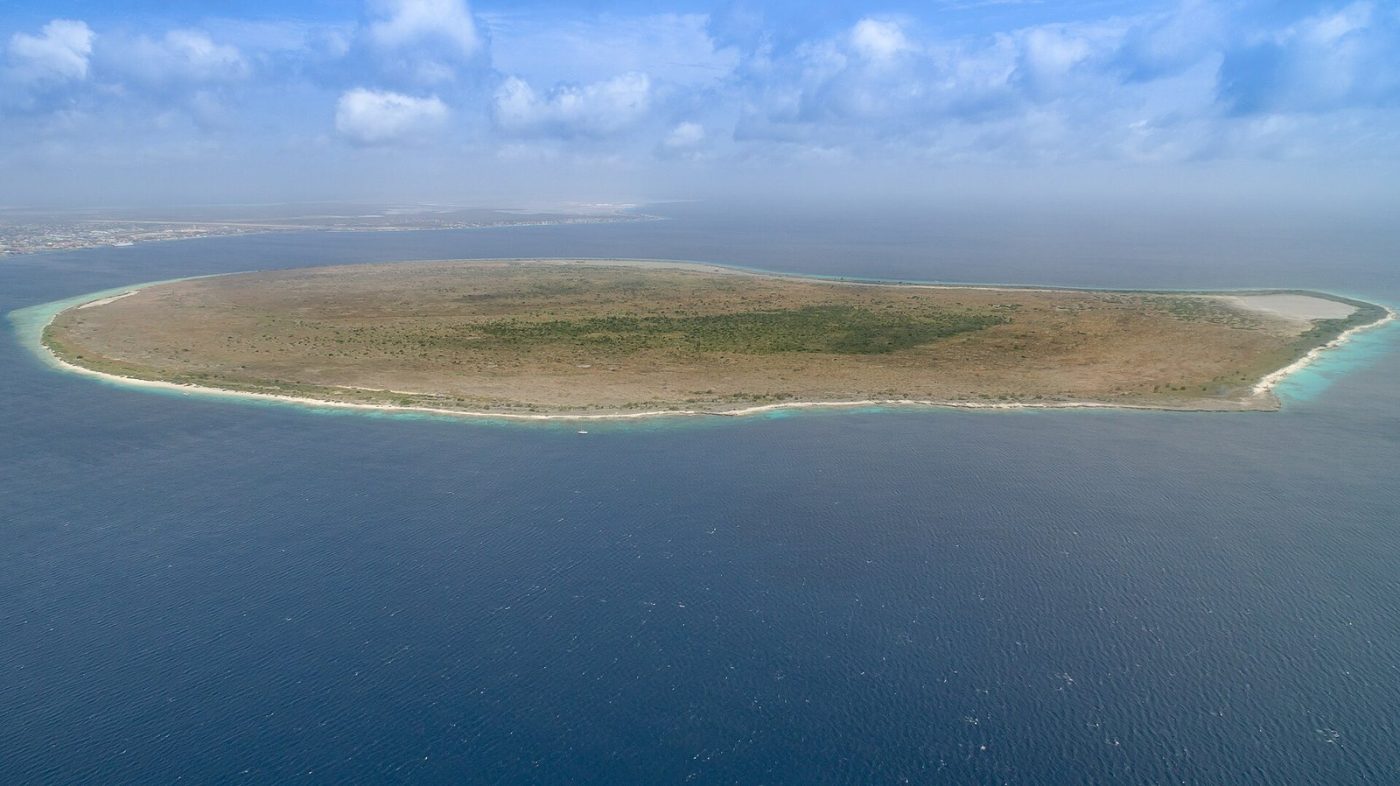
Photo: dronepicr, CC BY 2.0
| Getting there | Water taxi from Kralendijk in about 15 min, several times a day; or by kayak, dive boat or catamaran |
|---|---|
| Gateway | Kralendijk (Bonaire) |
| Travel time | 15 min by water taxi |
| Days | A day trip is enough |
| Best months | Year-round; driest Feb–Sep; outside the main hurricane belt |
| Getting around | On foot along the beach; no roads, vehicles or facilities |
| Booking | Water taxi or snorkel trip a day ahead in high season and on cruise days |
| Cost | Mid-range for the Caribbean |
| Beaches | No Name Beach, white coral sand with a reef drop-off a few metres out; no shade |
| Sea | Caribbean Sea |
| Archipelago | ABC Islands |
| Area | 6 km² |
| Population | Uninhabited |
| Highest point | 2 m |
| Ferry | 15 min from Kralendijk (Bonaire) |
| Airport | No |
| Car-free | Yes |
| Checked | October 2026 |
Klein Bonaire is visited almost entirely for what lies under the water, and the products reflect that.
The simplest option is not a tour at all: a water taxi from Kralendijk drops you at No Name Beach and picks you up at an agreed time, leaving you to snorkel and swim on your own. It is the cheapest choice and suits confident swimmers who bring their own gear.
Catamaran trips sail out with snorkelling equipment, a guide and drinks, stopping at one or two reef sites around the islet; some include drift snorkelling, where you float with the current while the boat follows. These are the best choice for families and first-time snorkellers. Evening trips go out after sunset to see bioluminescence, a short show of light produced by tiny sea creatures.
Divers book boat dives through any dive shop in town; more than twenty sites ring the islet. Everyone using the water must pay the Bonaire nature fee, which is not normally included. The plain recommendation: take the water taxi for a self-guided day if you swim well, or a catamaran snorkel trip if you want guidance and gear.
The water taxis land at the islet's main beach, a long strip of white coral sand facing Kralendijk. A few metres offshore the seabed drops away into a reef wall with parrotfish, angelfish and the occasional turtle. There is no shade apart from a small shelter, so bring a beach umbrella, plenty of water and reef-safe sunscreen.
Klein Bonaire is encircled by fringing reefs in the Bonaire National Marine Park, with more than twenty named dive sites. Hard and soft corals, sponges, schools of fish and sea turtles are common. Snorkellers find the best coral along the drop-off near the beach; divers explore walls and coral gardens on all sides, usually on two-tank boat trips from town.
Hawksbill, loggerhead and green turtles nest on the islet's beaches, mostly between spring and late autumn. During that season parts of the shore are marked off to protect the nests; keep out of these areas and never use lights on the beach at night. In the water, turtles are often seen grazing on seagrass or resting near the reef.
Behind the beach the island is low, dry scrub with cactus and salt ponds, rising barely two metres above the sea. A few ruined stone huts recall the period of slavery and the island's past as a private estate. There are no marked trails, the ground is hot and thorny, and most visitors stay on the shore.
On calm mornings, sea kayaks hired in Kralendijk can be paddled across the channel of less than a kilometre to the islet, with snorkelling stops along the way. Boat traffic and wind make it unsuitable for beginners in the afternoon. Some outfitters offer guided paddles with transparent kayaks for looking down at the reef.
Our pick for each kind of trip, with live dates and prices. Free cancellation on most.
Best for: First visit, snorkelling by catamaran
A relaxed sail out with snorkelling gear and guided drift swims over the reefs, a good mix of time on deck and in the water for first-timers.
Klein Bonaire is reached only by boat from Kralendijk, the capital of Bonaire. Water taxis leave from the waterfront in town several times a day, with the crossing taking about 15 minutes, and return at fixed times in the afternoon; buy tickets at the dock or the day before. Snorkelling catamarans, dive boats and kayaks also make the trip.
Bonaire itself has an international airport just south of Kralendijk, with direct flights from Amsterdam, several cities in the United States and short hops from Curaçao and Aruba. Cruise ships dock right in Kralendijk, and on busy cruise days the water taxis and catamarans fill quickly. The local currency is the US dollar, and taxis or rental cars from the airport reach the waterfront in about ten minutes.
There is nothing on the islet to get around in: no roads, vehicles, shops, toilets or drinking water. You walk along the beach and swim. Bring everything you need for the day, including food, plenty of water, a hat and shade, and take all your rubbish back. On Bonaire itself, rent a car or a pickup to reach the shore snorkelling sites and the national park.
Klein Bonaire can be visited all year. The climate is dry and sunny, with temperatures around 28 to 32 degrees and sea temperatures of about 26 to 29 degrees, and steady trade winds keep the heat bearable. Bonaire lies south of the main hurricane belt, so serious storms are rare, though the period from September to November can bring occasional rain and calmer, more humid weather.
The busiest months are from December to April, when North Americans and Europeans escape winter and cruise ships call most often; water taxis then fill and booking a day ahead is wise. Visibility for snorkelling and diving is excellent year-round. Turtles nest from spring to autumn. Bioluminescence displays are best a few days after the full moon, shortly after sunset. One day on the islet is plenty.
Nobody stays on Klein Bonaire, which is a protected reserve with no accommodation and no overnight camping. Visitors base themselves on Bonaire. Kralendijk is the most convenient, with restaurants, the water-taxi dock and dive shops, and many waterfront resorts along the coast north and south of town have their own house reefs. Those focused on diving often choose a dive resort with easy shore access.
Klein Bonaire has never had a permanent population, and the only buildings it ever held were a few small stone huts, now ruined, linked to the era of slavery on Bonaire. From 1868 it was privately owned, its native trees were cut, and several plans for resort development were proposed. Local campaigners fought these, and in 1999 the islet was bought for the public with support from conservation groups. It has since been protected, and its beaches are again an important nesting place for sea turtles.
A day on Klein Bonaire fits naturally into a week on Bonaire, where shore diving, the flamingos of the salt pans in the south and the Washington Slagbaai National Park in the north fill the rest of your time. Curaçao is a 20-minute flight away, and Aruba is a short hop beyond, making an easy ABC islands trip.
Water taxi from Kralendijk in about 15 min, several times a day; or by kayak, dive boat or catamaran.
From Kralendijk (Bonaire): 15 min by water taxi.
A day trip is enough.
Year-round; driest Feb–Sep; outside the main hurricane belt.
No. Klein Bonaire is car-free. On foot along the beach; no roads, vehicles or facilities.
Go if you want easy snorkelling over healthy reefs, a quiet white beach and turtles, a short water-taxi ride from town. Skip it if you need shade, toilets or food on hand; stay on the main island's shore sites instead. With about 15 min each way from Kralendijk (Bonaire), a day trip is easy to do.
Mid-range for the Caribbean.
No Name Beach, white coral sand with a reef drop-off a few metres out; no shade.
Water taxi or snorkel trip a day ahead in high season and on cruise days.
Yes. Boat trips, guided tours and day trips for Klein Bonaire can be booked online; live prices and free cancellation on most are shown on this page.
ABC Islands, Dutch Caribbean
Curaçao is the largest of the Dutch ABC islands, a dry, rocky island of 444 square kilometres about 65 km off the coast…
112 tours & trips
ABC Islands, Dutch Caribbean
Aruba is a dry, windswept Dutch Caribbean island of 179 square kilometres, only 29 km off the coast of Venezuela and…
75 tours & trips
ABC Islands, Dutch Caribbean
Bonaire is the quietest of the ABC islands, a dry, flat island of 288 square kilometres off the coast of Venezuela,…
35 tours & trips