Curaçao
ABC Islands, Dutch Caribbean
Curaçao is the largest of the Dutch ABC islands, a dry, rocky island of 444 square kilometres about 65 km off the coast…
112 tours & trips
Dutch Caribbean · Caribbean Sea · Beach island
Aruba is a dry, windswept Dutch Caribbean island of 179 square kilometres, only 29 km off the coast of Venezuela and south of the main hurricane belt. Its draw is reliable sunshine and long white beaches on the calm west coast, with a rugged desert-like national park, caves and rough surf on the windward side.
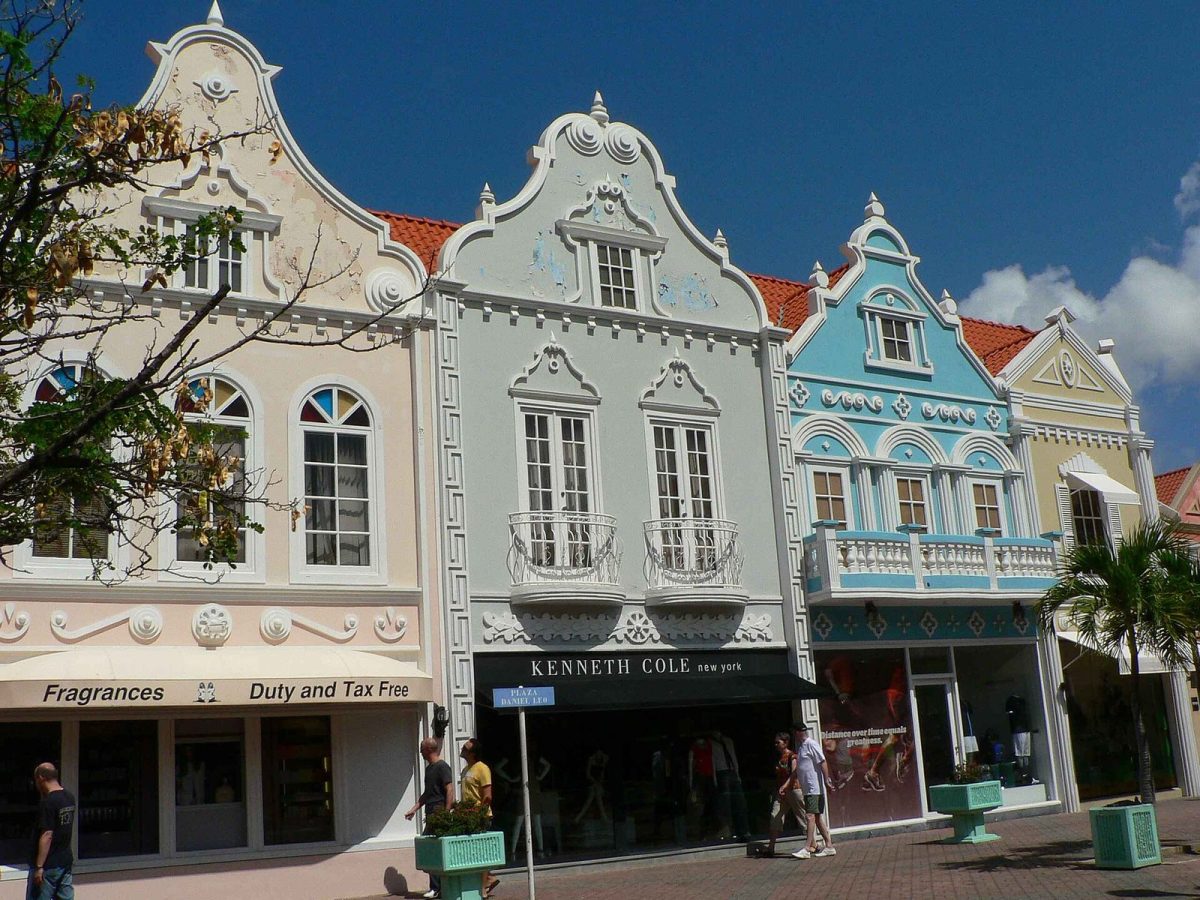
Photo: David Stanley from Nanaimo, Canada, CC BY 2.0
| Getting there | Direct flights to Queen Beatrix airport from the US East Coast, Canada, Amsterdam and South America |
|---|---|
| Gateway | Oranjestad (Queen Beatrix airport) |
| Travel time | About 2.5 h by air from Miami, 4.5 h from New York |
| Days | A week or more |
| Best months | All year; driest Feb–Sep; short showers Oct–Dec; peak prices mid-Dec–Apr |
| Getting around | Buses along the hotel coast; rent a car or jeep for the rest of the island |
| Booking | Hotels and flights months ahead for Christmas to Easter; boat trips a few days ahead |
| Cost | Expensive, among the pricier Caribbean islands |
| Beaches | Powder-white sand on the calm west coast: Eagle, Palm, Arashi and Baby Beach |
| Sea | Caribbean Sea |
| Archipelago | ABC Islands |
| Area | 179 km² |
| Population | 106,739 (2022) |
| Highest point | 188 m (Mount Jamanota) |
| Airport | Yes, scheduled flights |
| Car-free | No |
| Checked | October 2026 |
Aruba sells two kinds of day: on the calm west-coast water and on the rough off-road east side.
On the water, catamarans and sailing boats leave from the piers of Palm Beach and Oranjestad for half-day trips with two or three snorkelling stops, usually the wreck of the wartime freighter Antilla, Boca Catalina and the reefs near Malmok, with an open bar. Sunset and dinner cruises run every evening. Glass-bottom boats, clear kayaks, parasailing, jet skis and diving complete the list. A day pass to De Palm Island, a small resort island off the south coast, includes food, drinks and water sports.
On land, the classic is a four-wheel-drive or UTV tour through Arikok National Park to the Natural Pool, a rock basin on the wild north coast, combined with the caves, the gold-mill ruins and Baby Beach. Guided coach tours cover the lighthouse, the rock formations and the chapel in three or four hours. Horseback rides to hidden coves on the north coast are popular in the morning.
Hotel pickup, snorkel gear and drinks are usually included; park entry is sometimes extra. Book one snorkelling sail and one off-road day.
The west coast has the beaches that made Aruba famous. Eagle Beach is wide and uncrowded, with low-rise hotels and the much-photographed bent fofoti trees. A little north, Palm Beach is lined with high-rise resorts, piers and beach bars, and the water is calm and shallow. Sea turtles nest on these beaches from spring to autumn.
About a fifth of the island is protected in this park of cactus, rock and windswept coast in the east. Trails climb Jamanota, the highest point at 188 metres; Fontein and Quadirikiri caves hold old Arawak drawings and rooms lit by holes in the roof. The Natural Pool needs a four-wheel-drive vehicle or a hot hike.
At the northern tip, the stone lighthouse stands above sand dunes and a golf course, with views along the whole coast. Just south, Arashi Beach and Boca Catalina are calm, shallow and good for snorkelling straight from the sand. The Antilla wreck lies offshore here, one of the largest wrecks in the Caribbean.
The capital's waterfront has pastel Dutch-style buildings, shopping streets and the marina. Fort Zoutman, the oldest building on the island, houses a small historical museum beside the Willem III tower. A small tram links the cruise terminal with the main street. It is about 15 minutes by bus from the hotel zone.
At the south-east end, the former refinery town of San Nicolas has been reborn with large street murals. A few minutes further, Baby Beach is a shallow lagoon protected by a breakwater, ideal for children and beginner snorkellers. It is about 40 minutes by car from Oranjestad; go on a weekday morning.
The windward coast is wild and rocky, with waves breaking against limestone and ruins of a 19th-century gold mill at Bushiribana. Inland, the giant boulders of Casibari and Ayo can be climbed for views, and the small yellow Alto Vista chapel stands alone in the scrub. Swimming here is dangerous.
Our pick for each kind of trip, with live dates and prices. Free cancellation on most.
Best for: First visit, a day on the water
A sailing trip along the calm west coast with stops to snorkel over the reef and the wartime wreck off the northern beaches, with drinks on board.
Queen Beatrix International Airport is just outside Oranjestad, about 15 minutes from the hotel strip. There are direct flights from many US cities, roughly two and a half hours from Miami and four and a half from New York, as well as from Canada, Amsterdam, Colombia and other South American countries, and short hops to Curacao and Bonaire. Flights to the United States clear US immigration at Aruba airport, which saves time on arrival at home.
There is no regular passenger ferry to the other islands. Cruise ships dock at the terminal in central Oranjestad, often several a day in winter, and passengers can walk into town or take a taxi to the beaches. Aruba's hotels and car rentals are the same price whether you arrive by air or sea.
Public buses run frequently along the main road from Oranjestad to the Palm Beach and Eagle Beach hotels and are the cheapest way to move along the coast. Taxis have fixed fares by zone. A rental car opens up the rest of the island, and roads are good and well marked; driving is on the right. Standard rental cars are not allowed on the rough tracks to the Natural Pool, so hire a jeep or join a tour. Cycling is pleasant along the coastal path.
Aruba is warm, dry and windy all year, with air temperatures around 28 to 32 degrees and sea temperatures of about 26 to 28 degrees. Steady trade winds make the heat comfortable and suit windsurfing and kitesurfing. The island lies south of the main hurricane track, so storms are rare, though not impossible.
The short rainy season from October to December brings brief showers, rarely enough to spoil a day. The high season runs from mid-December to April, when North American and European winter visitors fill hotels and prices are highest; the summer months are quieter and often cheaper, with the same weather.
Carnival, from January to the days before Lent, is the island's biggest celebration, with night parades and a grand parade through Oranjestad and San Nicolas. A week is the usual stay, mostly on the beach, with a day for the national park and one for a boat trip.
Most visitors stay on the west coast. Palm Beach has the high-rise resorts, casinos, restaurants and nightlife, with calm water in front. Eagle Beach has low-rise hotels and a quieter, wider beach. Oranjestad suits budget travellers and those who want shops and the marina. Apartments around Noord and Malmok are good for longer stays and snorkelling, while Savaneta and the south-east are quieter and closer to Baby Beach.
The first inhabitants were Caquetio people related to the Arawaks, whose drawings survive in the caves of Arikok. The Spanish arrived in 1499, found no gold or water and called it a useless island; the Dutch took control in 1636. Gold was found in the 19th century, and in 1924 an oil refinery at San Nicolas brought jobs and migrants from across the Caribbean. When refining slowed, tourism took over. In 1986 Aruba left the Netherlands Antilles to become a separate country within the Kingdom of the Netherlands. People speak Papiamento, Dutch, English and Spanish.
Aruba is the western of the ABC islands. Curacao, with its colourful capital and many coves, is about 25 minutes away by plane, and Bonaire, a famous diving island, a little further. There are no regular ferries, so island hopping means short flights. From the United States, Aruba is often a single-destination beach holiday.
Direct flights to Queen Beatrix airport from the US East Coast, Canada, Amsterdam and South America.
From Oranjestad (Queen Beatrix airport): about 2.5 h by air from Miami, 4.5 h from New York.
A week or more.
All year; driest Feb–Sep; short showers Oct–Dec; peak prices mid-Dec–Apr.
Buses along the hotel coast; rent a car or jeep for the rest of the island.
Go if you want guaranteed sun, calm white-sand beaches, easy snorkelling and polished hotels with almost no weather risk. Skip it or choose Dominica or St Lucia if you want rainforest, mountains and a less built-up, more traditional Caribbean.
Expensive, among the pricier Caribbean islands.
Powder-white sand on the calm west coast: Eagle, Palm, Arashi and Baby Beach.
Hotels and flights months ahead for Christmas to Easter; boat trips a few days ahead.
Yes. Boat trips, guided tours and day trips for Aruba can be booked online; live prices and free cancellation on most are shown on this page.
ABC Islands, Dutch Caribbean
Curaçao is the largest of the Dutch ABC islands, a dry, rocky island of 444 square kilometres about 65 km off the coast…
112 tours & trips
ABC Islands, Dutch Caribbean
Bonaire is the quietest of the ABC islands, a dry, flat island of 288 square kilometres off the coast of Venezuela,…
35 tours & trips
ABC Islands, Dutch Caribbean
Klein Bonaire is a flat, uninhabited islet of about 6 square kilometres lying less than a kilometre off Kralendijk, the…
3 tours & trips