Hvar
Dalmatian Islands, Croatia
Hvar is a long, narrow island off the Dalmatian coast, about 68 km from end to end, known for the Venetian harbour of…
170 tours & trips
Croatia · Adriatic Sea · Nature & wildlife island
The Kornati are a maze of 89 bare limestone islands, islets and reefs off the coast between Zadar and Šibenik, the densest archipelago in the Mediterranean. Most of them form a national park with no permanent villages, only dry-stone walls, sheep pastures and white cliffs dropping into very clear water, best seen from a boat.
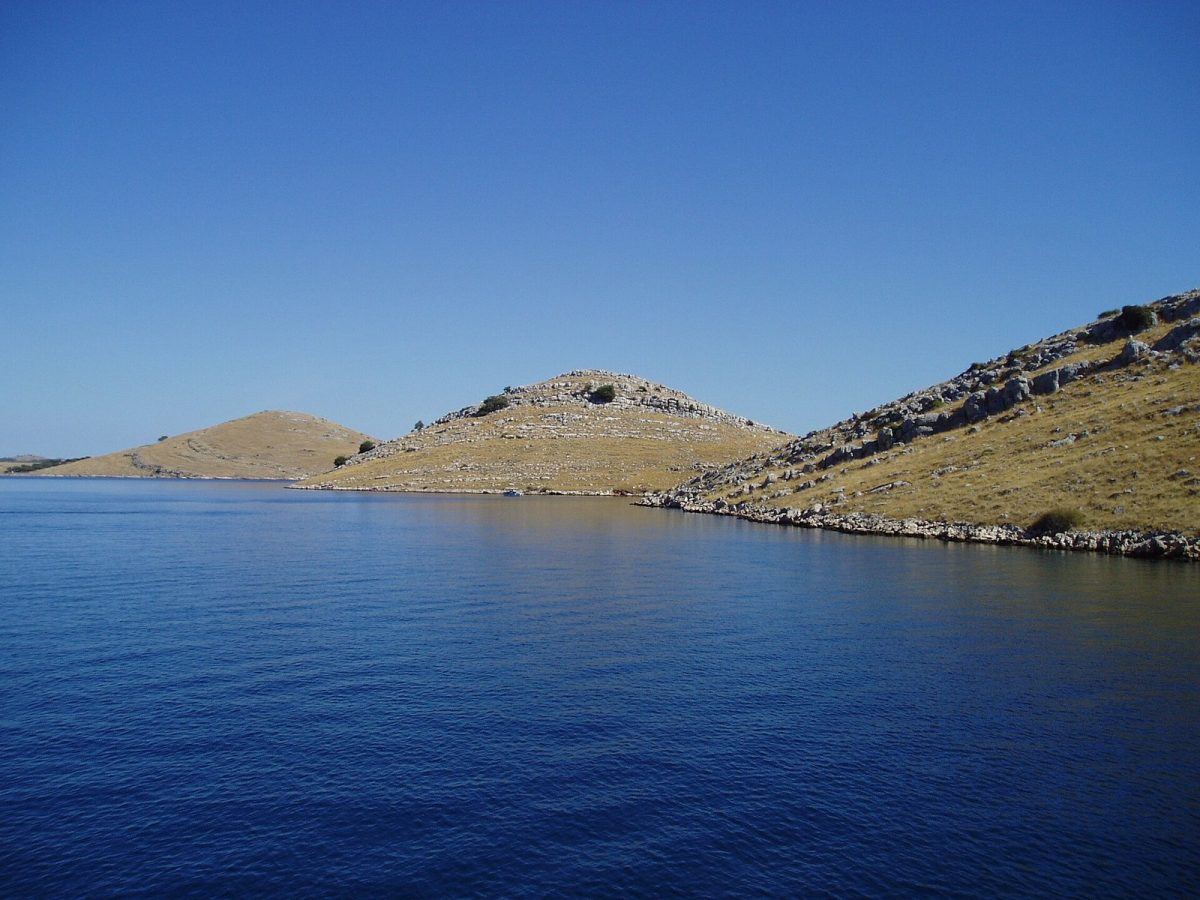
Photo: Ivana, CC BY-SA 3.0
| Getting there | No public ferry: day boats from Zadar, Biograd, Murter and Šibenik, or your own yacht |
|---|---|
| Gateway | Zadar / Murter / Biograd (boat tours) |
| Travel time | 1 to 2.5 h by tour boat, shortest from Murter |
| Days | A day trip; sailors give it 2 to 3 days |
| Best months | May–June and September; July–August busiest; few boats run Nov–Mar |
| Getting around | Only by boat; on the islands you walk on rough paths |
| Booking | Day tours a few days ahead in summer; yacht charters months ahead |
| Cost | Mid-range; park fee and cove restaurants add up |
| Beaches | Rocky shores and pebble coves; Lojena on Levrnaka is the rare sandy beach |
| Sea | Adriatic Sea |
| Area | 320 km² |
| Population | Uninhabited |
| Airport | No |
| Car-free | Yes |
| Checked | October 2026 |
Nobody lives on the Kornati all year and there is no public ferry, so almost every visitor comes on an organised boat or on a chartered yacht.
The most common product is a full-day group trip from Zadar on a large wooden boat or excursion ship. The crossing takes a couple of hours, and the day usually combines the northern Kornati with Telašćica Nature Park on the tip of Dugi Otok, where you walk to the high cliffs and the salt lake. Breakfast, a simple fish or meat lunch and drinks are often included, and some tours include the park entrance fee; check, as it is otherwise paid on the boat.
Shorter crossings start from Biograd na Moru, Murter and Šibenik, closer to the park. Speedboats, both shared and private, reach the outer islands and the sandy cove of Lojena more quickly, and some trips add snorkelling or scuba diving. Scenic flights from the coast show the pattern of islands from the air.
For most people a full-day group trip from the nearest town is the right choice. If you sail, plan two or three days, mooring in the park's coves and marinas.
Most trips start or end at Telašćica, a deep bay on Dugi Otok just north of the Kornati. From the landing, a short walk leads to cliffs rising about 160 metres from the open sea, and to Lake Mir, a salt lake warmer than the sea where you can swim. Donkeys graze near the path.
On the seaward side, islands such as Mana, Klobučar and Rašip end in steep white cliffs, known locally as crowns, cut by waves from the open Adriatic. Boats pass close beneath them on calm days. On Mana, a path climbs to the edge and to the stone ruins of a film set from the last century.
Kornat, the largest island, is about 25 km long and gave the archipelago its name. Above the bay of Tarac stand the remains of a Byzantine watchtower and a small church, reached on a steep path in about 20 minutes. From the top you see the long chain of islands and the walled fields below.
Lojena, on the island of Levrnaka, is one of the very few sandy beaches in the park, with shallow, bright water. Elsewhere you swim from rocks and pebble coves with visibility of many metres. Snorkellers find sea urchins, small fish and sea grass meadows; there is little shade anywhere, so bring a hat.
Families from Murter and Dugi Otok still own the islands and keep summer houses and a few seasonal restaurants in the coves, serving grilled fish and lamb to sailors. Look for the dry-stone walls that cross the bare hills, built to mark land and keep sheep; there are hundreds of kilometres of them.
Our pick for each kind of trip, with live dates and prices. Free cancellation on most.
Best for: First visit, a day from Zadar
The standard full day out of Zadar that sails through the national park and stops at the cliffs and salt lake of Telašćica, with time to swim.
There is no scheduled ferry into the national park. Day boats leave from Zadar in the morning and return in the late afternoon or evening, with a crossing of about two to two and a half hours each way; from Biograd na Moru it is shorter, and from Murter, the island linked to the mainland by a small bridge, the park is closest. Šibenik and the resorts of Tribunj and Vodice also run trips.
Zadar airport is the nearest, with seasonal flights from much of Europe; Split is about two hours by road from Šibenik. Sailors pay the park fee on entry or at a ranger boat, and can moor at marinas on Piškera and Žut or at buoys in the coves.
Movement between the islands is by boat only, whether on a tour, a chartered yacht with or without a skipper, or a small motorboat rented in Murter. On land there are no roads, only rough footpaths over sharp limestone, so wear proper shoes rather than sandals for the cliff walks and Tureta. Carry water and sun protection, as there are few shops; the seasonal restaurants and marinas sell basics.
The season runs from April to October, with most day boats from May to September. May, June and September are ideal: warm, clear weather, sea warm enough to swim from late May, and fewer boats in the coves. July and August are hot, the bare islands offer no shade, and the popular stops fill with excursion ships, though the open sea stays clean and cool.
Wind matters. The bora from the north-east and the jugo from the south-east can stop small boats or make crossings rough; in summer an afternoon sea breeze is common, ideal for sailing. In winter there are almost no tours, and many restaurants and marinas close. A single day shows the highlights; sailors should allow two or three.
You cannot stay in the park except on a boat or in a few rented fishermen's cottages. Zadar is the best base for culture and the widest choice of day trips, with a lively old town. Murter, Betina and Jezera are small, relaxed places closest to the park and popular with sailors. Biograd na Moru suits families, with beaches and charter marinas. Sali on Dugi Otok is quiet and close to Telašćica.
The Kornati were grazed and farmed long before records begin, and Illyrians and Romans left traces in the coves. In the Middle Ages the islands were used by nobles from Zadar, then bought by farmers from Murter and Dugi Otok, who cleared the woods for sheep and olives and built the stone walls. Fishing brought them back each season. The national park was declared in 1980. In 2007 a wildfire on Kornat killed twelve firefighters, and a memorial now stands on the island.
Krka National Park and its waterfalls are about an hour inland from Šibenik, and Zadar's old town and sea organ make a good half day. Dugi Otok, with Sakarun beach and Telašćica, is linked to Zadar by ferry. Sailors often continue south to Šibenik and Primošten or north through the Zadar islands.
No public ferry: day boats from Zadar, Biograd, Murter and Šibenik, or your own yacht.
From Zadar / Murter / Biograd (boat tours): 1 to 2.5 h by tour boat, shortest from Murter.
A day trip; sailors give it 2 to 3 days.
May–June and September; July–August busiest; few boats run Nov–Mar.
No. Kornati is car-free. Only by boat; on the islands you walk on rough paths.
Go if you love sailing, clear water and stark, empty landscapes and are happy to spend a long day on a boat. Skip it or choose the Elaphiti Islands or Brač if you want villages, sandy beaches, shade or a short crossing.
Mid-range; park fee and cove restaurants add up.
Rocky shores and pebble coves; Lojena on Levrnaka is the rare sandy beach.
Day tours a few days ahead in summer; yacht charters months ahead.
Yes. Boat trips, guided tours and day trips for Kornati can be booked online; live prices and free cancellation on most are shown on this page.
Dalmatian Islands, Croatia
Hvar is a long, narrow island off the Dalmatian coast, about 68 km from end to end, known for the Venetian harbour of…
170 tours & trips
Dalmatian Islands, Croatia
Korcula is a long, wooded island in southern Dalmatia, 47 km from end to end and separated from the Peljesac peninsula…
66 tours & trips
Dalmatian Islands, Croatia
Brač is the largest island in Dalmatia, 396 square kilometres of olive groves and white limestone just off Split, with…
52 tours & trips
Croatia
The Elaphiti Islands are a chain of small green islands just north-west of Dubrovnik, of which three, Koločep, Lopud…
49 tours & trips
Dalmatian Islands, Croatia
Šolta is a small, low island of olive groves, vineyards and stone villages just south of Split, about an hour away by…
28 tours & trips
Dalmatian Islands, Croatia
Vis is the most distant inhabited island of central Dalmatia, about 90 square kilometres of vineyards, pine woods and…
23 tours & trips