Rhodes
Dodecanese, Greece
Rhodes is the largest of the Dodecanese islands, about 1,400 square kilometres close to the Turkish coast, with a…
371 tours & trips
Greece · Aegean Sea · Historic island
Leros is a small, deeply indented island of the Dodecanese, about 54 square kilometres, lying between Patmos and Kalymnos and around 32 km from the Turkish coast. It is quiet, Greek and little touched by mass tourism, with a hilltop castle, windmills, sheltered bays and an unusual town of Italian 1930s architecture built for a naval base.
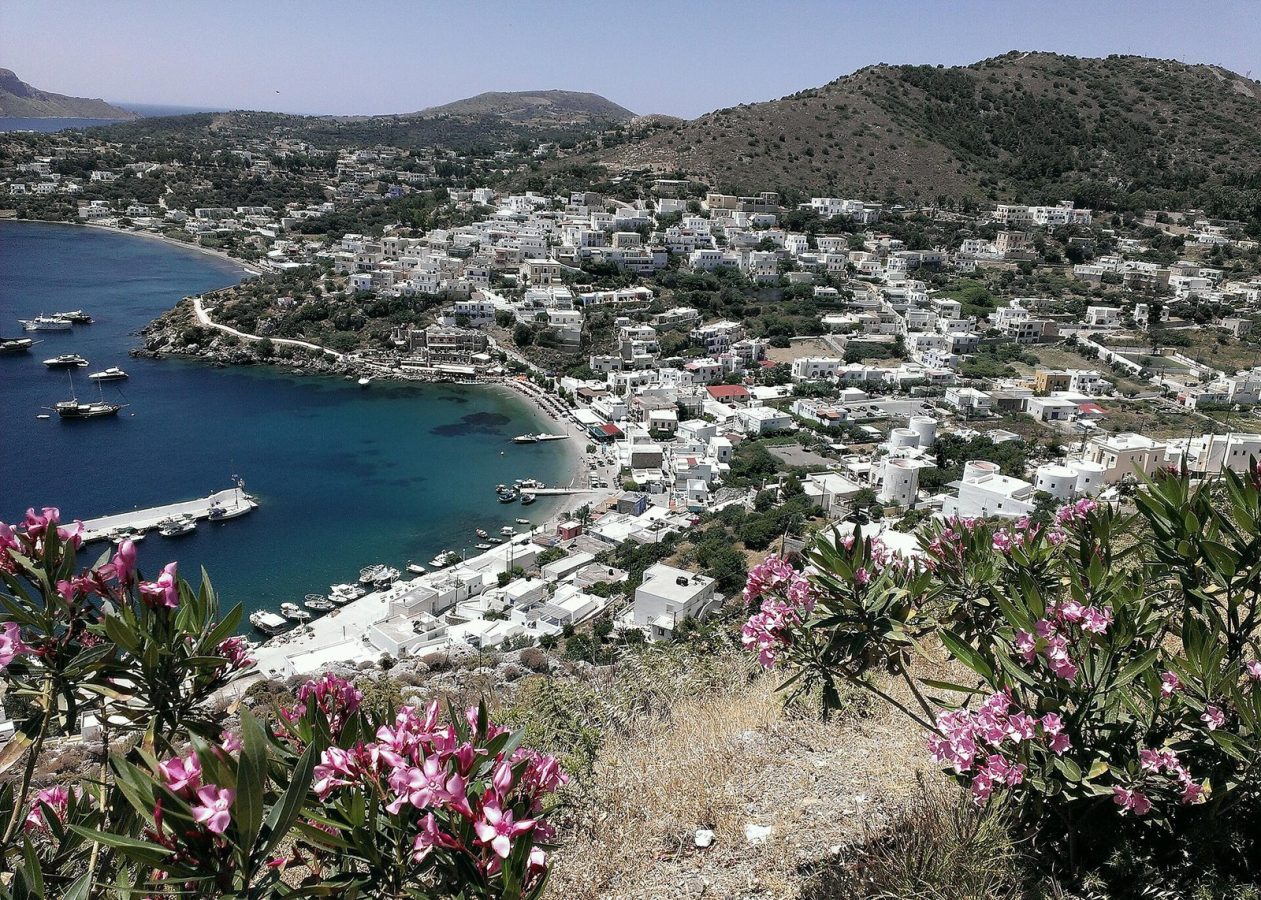
Photo: Robert Powell, CC BY-SA 3.0
| Getting there | Ferry from Piraeus about 8 to 9 h or 45-min flight from Athens; catamarans from Kos, Kalymnos and Patmos |
|---|---|
| Gateway | Athens (Piraeus) or Kos |
| Travel time | 45 min by air or 8 to 9 h by ferry |
| Days | 3 to 5 nights |
| Best months | May–Jun and Sep–Oct; Jul–Aug warm and windy, busy with Greek families |
| Getting around | Rent a car or scooter; buses are limited; taxis in the main villages |
| Booking | Rooms and ferries for August; the rest of the year a week or two ahead |
| Cost | Mid-range for Greece, cheaper than Patmos |
| Beaches | Small bays of sand and pebble: Alinda, Blefouti, Dio Liskaria and Xirokampos |
| Sea | Aegean Sea |
| Archipelago | Dodecanese |
| Area | 54 km² |
| Airport | Yes, scheduled flights |
| Car-free | No |
| Checked | October 2026 |
Leros has very little sold online, and most visitors simply arrive by ferry and organise their days on the spot. The one regular online product is a fast catamaran ticket from Bodrum in Turkey, which makes Leros an easy first stop for travellers coming from the Turkish coast; remember your passport and the border formalities.
On the island, the main paid experiences are boat trips. Local caiques leave from Agia Marina and Pandeli in summer for day trips to the small islands nearby, such as the beaches of Arki, Marathi or Lipsi, with lunch at a taverna and stops for swimming; tickets are sold on the quay the day before. A caique from Xirokampos also crosses to Myrties on Kalymnos, which makes a good day out.
Diving centres visit some of the wartime wrecks around the coast, including ships and aircraft lost in 1943, and offer courses. Guided visits to the war tunnels and the castle can be arranged locally, and some guesthouses organise walks and cooking evenings.
Recommendation: book only your ferry or flight and your room, rent a scooter for a couple of days, and take one caique trip to the nearby islands.
The island's capital climbs a ridge between two bays, and above it stands the castle of the Knights of Saint John, built on Byzantine foundations, with the church of the Panagia inside its walls. Climb the steps or drive to the top for a view over Pandeli, Agia Marina and the indented coast. A small museum shows church treasures.
Below the castle, the fishing village of Pandeli has a small beach, fish tavernas right on the water and a row of restored windmills on the ridge above. It is the liveliest place on the island in the evening. Walk down from Platanos in about 15 minutes, swim in the morning and come back for dinner at sunset.
The main ferry port was built by the Italians in the 1930s as a model town for their naval base, with wide avenues, a round market hall, a cinema and a clock tower in a streamlined modernist style. It is unlike anything else in Greece. Walk the seafront early in the morning, then visit the war museum in the tunnels nearby.
In November 1943 German paratroopers and landing forces captured Leros from the British and Italian garrison after five days of fighting. The War Museum at Merikia, near Lakki, set in a wartime tunnel, displays weapons, uniforms and photographs. The Allied War Cemetery at Alinda, kept by the Commonwealth War Graves Commission, holds those who died.
The long bay of Alinda has the island's busiest beach, with shallow water, tavernas and rooms behind it, and the Bellenis tower, a nineteenth-century mansion now home to a folk museum. Further north, Blefouti is a quiet sandy bay with a taverna, and Partheni has the scant ruins of a temple to Artemis near the airport.
The southern bay of Xirokampos is a quiet village with a pebble beach, a campsite and the caique to Kalymnos. Above it stand the walls of Paleokastro, an ancient fortress, and a small chapel. A short walk east leads to more secluded coves. It is a good half-day trip from Lakki, about fifteen minutes by scooter.
Live dates and prices. Free cancellation on most tours.
Large ferries from Piraeus call at Lakki several times a week, taking around eight to nine hours, usually overnight, and continue to Kos and Rhodes. Fast catamarans call at Agia Marina, linking Leros with Patmos, Lipsi, Kalymnos, Kos and Rhodes almost daily in summer and less often in winter.
The small airport at Partheni in the north has short flights from Athens of about 45 minutes on small propeller planes; seats are few, so book early. Many visitors fly to Kos, which has international flights in summer, and take a catamaran onwards. A small caique also links Xirokampos with Myrties on Kalymnos. From Turkey, fast boats run from Bodrum in season. Cars can come on the big ferries from Piraeus, but renting one on arrival is simpler. Buy tickets online or at the port agencies.
Leros is small, roughly 15 km from end to end, but hilly and indented, so a rented car or scooter is the best way to explore; rental offices are in Lakki, Agia Marina and Alinda. A limited bus service links the main villages, mostly in summer, and taxis wait at the ports and in Platanos. Pandeli, Platanos and Agia Marina are within walking distance of each other. Roads are narrow and winding.
May, June, September and early October are the best months: warm, mostly sunny and quiet, with sea warm enough for swimming from June. July and August are hot and busy with Greek families and returning islanders, prices rise and the meltemi wind blows strongly, sometimes disrupting small boats. Mid-August, with the feast of the Assumption on the 15th, is the peak.
From November to April most rooms and many tavernas close, ferries run less often and the weather is windy and wet, though the island stays lived in thanks to its sizeable year-round population. Spring brings wild flowers and is good for walking. Leros needs at least three nights to see the castle, the war sites and a few beaches; five allow a caique trip to the small islands and lazy days.
Alinda is the main beach resort, with the most rooms, a long beach and tavernas, and suits families. Pandeli and Platanos are central and atmospheric, close to the castle and the best dinner spots. Agia Marina is handy for the catamarans. Lakki, the ferry port, is quieter and practical. Xirokampos in the south suits those who want peace and the caique to Kalymnos. Accommodation is mostly small hotels, studios and apartments.
Leros was settled in antiquity and later held by Byzantium and the Knights of Saint John, who strengthened the castle above Platanos. Under Ottoman rule it kept a degree of self-government. Italy took the Dodecanese in 1912 and made Lakki a major naval base, which led to fierce fighting in 1943. After union with Greece in 1948, the island became known for large state institutions, including a psychiatric hospital and a political prison camp under the junta of 1967 to 1974. Today it is recovering its reputation through quiet tourism.
Leros sits in the middle of the northern Dodecanese, and catamarans make it easy to combine with Patmos, under an hour away, for the monastery and the Cave of the Apocalypse, with Lipsi for quiet beaches, and with Kalymnos for climbing. Kos, with its international airport, is under two hours. A week could cover Kos, Kalymnos, Leros and Patmos.
Ferry from Piraeus about 8 to 9 h or 45-min flight from Athens; catamarans from Kos, Kalymnos and Patmos.
From Athens (Piraeus) or Kos: 45 min by air or 8 to 9 h by ferry.
3 to 5 nights.
May–Jun and Sep–Oct; Jul–Aug warm and windy, busy with Greek families.
Rent a car or scooter; buses are limited; taxis in the main villages.
Go if you want a calm, lived-in Greek island with good tavernas, history and easy small beaches. Skip it or choose Patmos or Kos if you want famous sights, long sandy beaches or lively nightlife.
Mid-range for Greece, cheaper than Patmos.
Small bays of sand and pebble: Alinda, Blefouti, Dio Liskaria and Xirokampos.
Rooms and ferries for August; the rest of the year a week or two ahead.
Yes. Boat trips, guided tours and day trips for Leros can be booked online; live prices and free cancellation on most are shown on this page.
Dodecanese, Greece
Rhodes is the largest of the Dodecanese islands, about 1,400 square kilometres close to the Turkish coast, with a…
371 tours & trips
Dodecanese, Greece
Kos is the long, low island of the Dodecanese closest to the Turkish coast, about 42 km from end to end, with sandy…
48 tours & trips
Dodecanese, Greece
Symi is a small, mountainous island in the Dodecanese, about 24 km north of Rhodes, whose harbour town is a steep…
47 tours & trips
Dodecanese, Greece
Karpathos is the second largest of the Dodecanese islands, a long mountainous strip between Crete and Rhodes that rises…
17 tours & trips
Dodecanese, Greece
Nisyros is a round volcanic island of about 42 square kilometres in the Dodecanese, between Kos and Tilos.
9 tours & trips
Dodecanese, Greece
Kalymnos is a rugged Dodecanese island of about 110 square kilometres, just 12 km north of Kos, famous first for its…
7 tours & trips