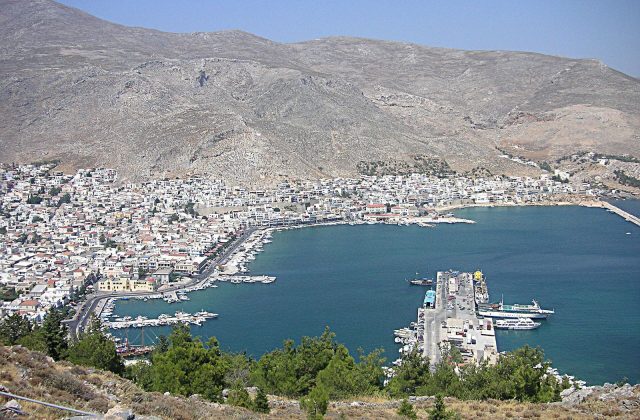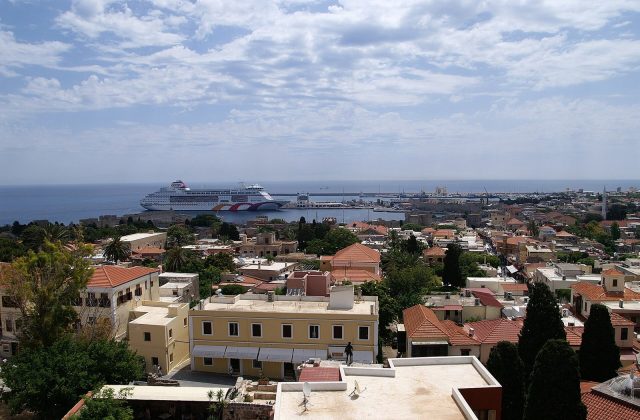
Rhodes
Dodecanese, Greece
Rhodes is the largest of the Dodecanese islands, about 1,400 square kilometres close to the Turkish coast, with a…
371 tours & trips
Greece · Aegean Sea · Historic island
Patmos is a small island in the northern Dodecanese, 34 square kilometres, where according to Christian tradition St John wrote the Book of Revelation. The fortified Monastery of St John, the Cave of the Apocalypse and the white hill town of Chora form a UNESCO site above quiet bays.
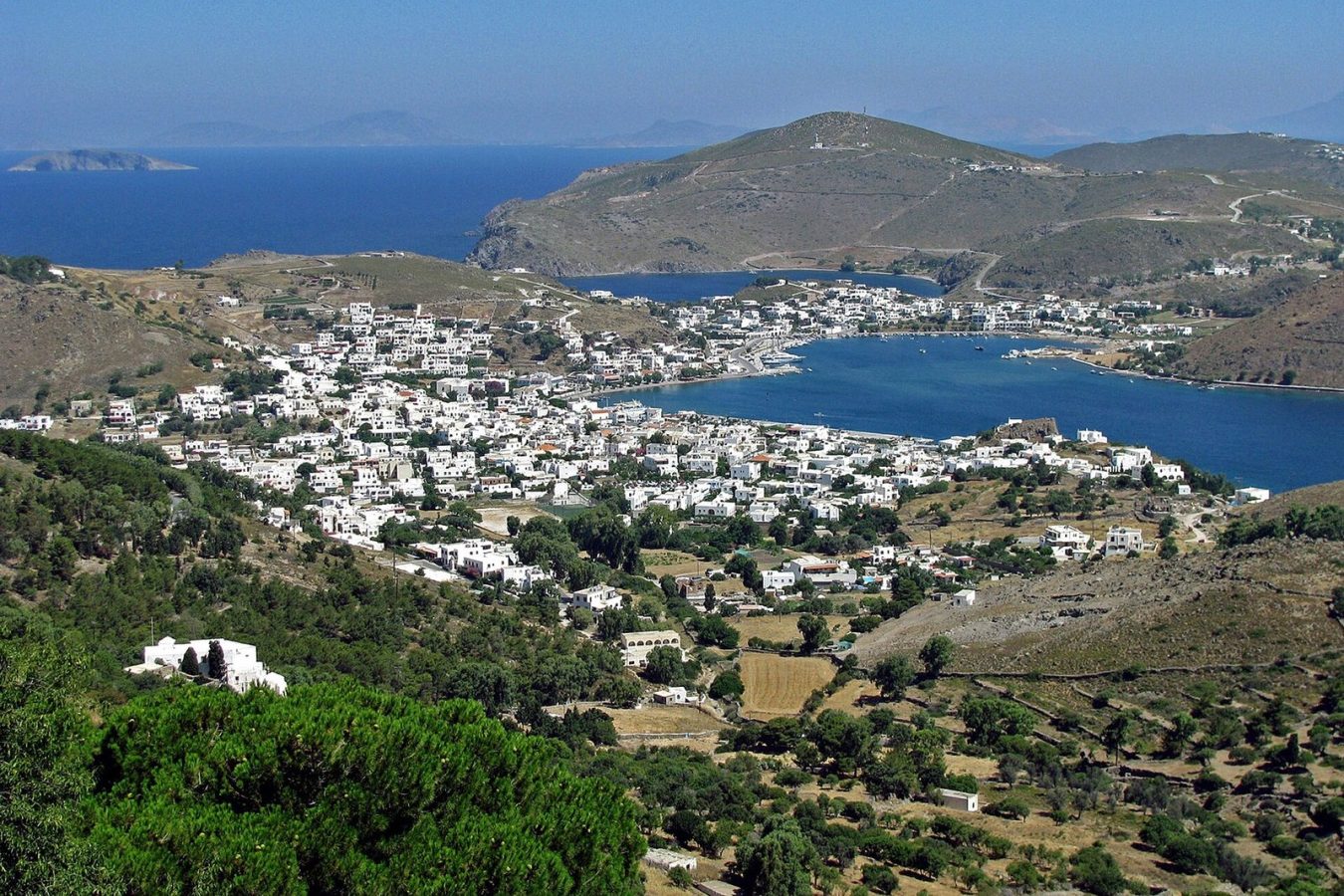
Photo: EntaXoyas, CC BY-SA 3.0
| Getting there | Ferry from Piraeus about 7 to 8 h; fast boats from Samos, Kos, Leros and Rhodes |
|---|---|
| Gateway | Athens (Piraeus), Samos or Kos |
| Travel time | 7 to 8 h by ferry from Piraeus; 1 to 2 h from Samos |
| Days | 3 to 5 nights |
| Best months | May–June and Sep–Oct; Orthodox Easter busy with pilgrims; quiet Nov–Mar |
| Getting around | Buses from Skala to Chora and some beaches; rent a scooter or car, or use beach boats |
| Booking | Rooms in Chora and for Easter months ahead; summer ferries a few weeks ahead |
| Cost | Expensive for Greece, especially in Chora |
| Beaches | Mostly pebbly calm bays; sandy Psili Ammos, coloured pebbles at Lambi, Kambos for families |
| Sea | Aegean Sea |
| Archipelago | Dodecanese |
| Area | 34 km² |
| Population | 3,283 (2021) |
| Highest point | 269 m (Profitis Ilias) |
| Airport | No |
| Car-free | No |
| UNESCO | Historic Centre (Chora) with the Monastery of Saint John the Theologian and the Cave of the Apocalypse |
| Checked | October 2026 |
What is sold on Patmos is mainly guided visits to its religious sites, plus day trips from neighbouring islands.
The core product is a guided tour of the Monastery of St John and the Cave of the Apocalypse, sometimes extended to churches and mansions in Chora. A guide is worth having: the cave is small and dim, the icons and frescoes need explaining, and a tour sorts out transport up the hill. Entry fees may or may not be included, and modest dress is required, with shoulders and knees covered.
Day trips from Samos, and in summer from Kos and Leros, cross by fast boat, take you up to Chora and leave a few hours for lunch in Skala. They suit people staying elsewhere but give little time for the beaches.
Locally, caiques from Skala run to Psili Ammos and to the tiny islands of Arki and Marathi, and some boats circle the island with swimming stops; these are booked at the harbour a day ahead. Our advice: stay at least three nights, book a guided morning at the monastery and cave, and spend the rest on boats and beaches.
Founded in 1088, the monastery crowns the hill above Skala like a castle, with battlements, a cobbled courtyard, frescoed chapels and a treasury of icons and manuscripts. Around it, the white mansions and lanes of Chora are among the best preserved in the Aegean. Come early, before day-trippers, and check opening hours, which are short and vary by day.
Halfway down the hill to Skala, a small church is built around the grotto where St John is said to have received his vision. Pilgrims are shown the rock niche where he rested and a cleft in the ceiling. The visit is short; walk down to Skala afterwards on the old stone path through pine trees.
The port is the island's centre, with ferries, cafes, shops and most tavernas around the harbour. Walk up to the small hill of Kastelli for remains of the ancient acropolis and a view across the bay. In the evening Skala is lively but never loud, and caiques leave from the quay for beaches and nearby islands.
The island's only long sandy beach lies in the south, reached by caique from Skala in about 30 minutes or on foot from the end of the road in roughly 25 minutes over the hill. Tamarisk trees give shade and a simple taverna serves lunch. In season it gets busy when the boats arrive, so come early.
On the north coast, Lambi is famous for its smooth pebbles in red, green and purple. Nearby Agriolivado and Kambos have calm, shallow water and tavernas, good for families, and Kambos offers watersports. The Livadi Geranou bay, with a tiny chapel on an islet, is quieter. All are within about 20 minutes of Skala by road.
Our pick for each kind of trip, with live dates and prices. Free cancellation on most.
Best for: First visit, monastery and cave
A guided visit to the two sites that make Patmos famous, with the history and icons explained, which helps a lot in the dim cave and the monastery treasury.
Patmos has no airport, so everyone arrives by sea at Skala. Conventional ferries from Piraeus take about seven to eight hours and run several times a week, more often in summer; they continue to Leros, Kos and Rhodes. Fast boats link Patmos with Samos, Ikaria, Leros, Lipsi, Kalymnos, Kos and Rhodes in season, typically in one to two hours to nearby islands, with fewer services in winter.
The nearest airports are on Leros, Kos and Samos, all a short boat ride away; flying to one of them and continuing by boat is quicker than the long ferry from Athens. Book summer and Easter crossings in advance. Cruise ships anchor off Skala and send passengers ashore by tender, and coach groups head straight for Chora.
Patmos is small: Skala to Chora is about 4 km up a winding road, or a climb of about 45 minutes on the old path. Buses run from Skala to Chora, Grikos and Kambos several times a day in season. Taxis wait at the port. Renting a scooter, quad or small car for a day or two is the easiest way to reach the beaches, and caiques serve the beaches without good roads.
The best months are May, June, September and early October, with warm days, a swimmable sea from June, open tavernas and fewer people. July and August are hot and busy, and the meltemi wind can make the north coast rough and cancel small boats. Rooms in Chora are pricey all summer.
Orthodox Easter is the island's great event. Pilgrims fill Patmos, and on Holy Thursday the abbot re-enacts the Washing of the Feet in the square of Chora; book months ahead if you want to be there. From November to March most hotels and many tavernas close, ferries thin out, and the weather turns windy and wet, though the monastery stays open and the island is very quiet. Three to five nights is the right length.
Skala is practical, with the port, buses, shops and most tavernas, and suits those without a car. Chora, on the hill, is the most atmospheric and expensive choice, with restored mansions, sunset views and quiet nights. Grikos, south of Skala, has a calm bay and resort hotels. Kambos in the north suits families who want a beach on the doorstep.
In Roman times Patmos was a place of exile, which is how John came here late in the first century. Later, the island was largely empty until 1088, when the Byzantine emperor granted it to the monk Christodoulos, who built the fortified monastery. Under the monks, Patmos became a centre of learning and its captains grew rich through trade, building the mansions of Chora. Ottoman rule from the sixteenth century was followed by Italian occupation from 1912, and Patmos joined Greece with the rest of the Dodecanese in 1948.
Patmos sits on the main Dodecanese ferry line, so it combines easily. Lipsi is under an hour away, Leros about an hour, and Samos one to two hours by fast boat. Kos and Rhodes are further south, a few hours by fast boat. A good loop is Samos, Patmos, Lipsi and Leros, ending with a flight from Kos or Leros.
Ferry from Piraeus about 7 to 8 h; fast boats from Samos, Kos, Leros and Rhodes.
From Athens (Piraeus), Samos or Kos: 7 to 8 h by ferry from Piraeus; 1 to 2 h from Samos.
3 to 5 nights.
May–June and Sep–Oct; Orthodox Easter busy with pilgrims; quiet Nov–Mar.
Buses from Skala to Chora and some beaches; rent a scooter or car, or use beach boats.
Go if you want a calm, stylish Greek island with a great monastery, a fine hill town and clean, simple beaches. Skip it or choose Kos or Rhodes if you want an airport, long sandy beaches, nightlife or low prices.
Expensive for Greece, especially in Chora.
Mostly pebbly calm bays; sandy Psili Ammos, coloured pebbles at Lambi, Kambos for families.
Rooms in Chora and for Easter months ahead; summer ferries a few weeks ahead.
Yes. Boat trips, guided tours and day trips for Patmos can be booked online; live prices and free cancellation on most are shown on this page.
Dodecanese, Greece
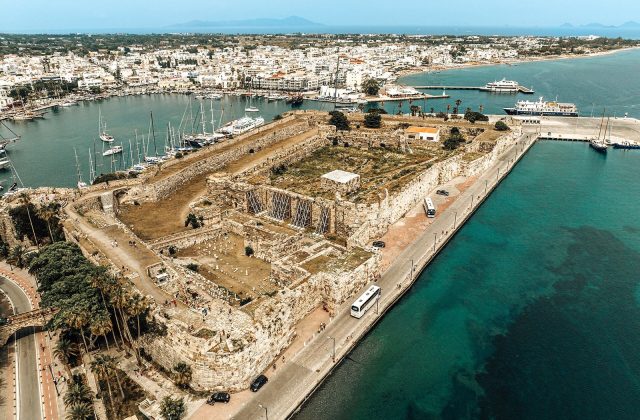
Rhodes is the largest of the Dodecanese islands, about 1,400 square kilometres close to the Turkish coast, with a…
371 tours & trips
Dodecanese, Greece
Kos is the long, low island of the Dodecanese closest to the Turkish coast, about 42 km from end to end, with sandy…
48 tours & trips
Dodecanese, Greece
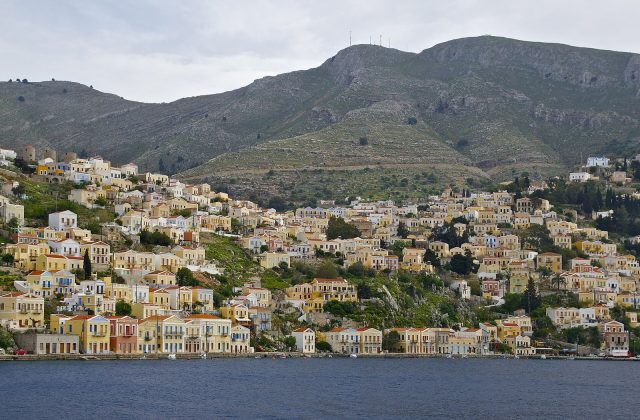
Symi is a small, mountainous island in the Dodecanese, about 24 km north of Rhodes, whose harbour town is a steep…
47 tours & trips
Dodecanese, Greece
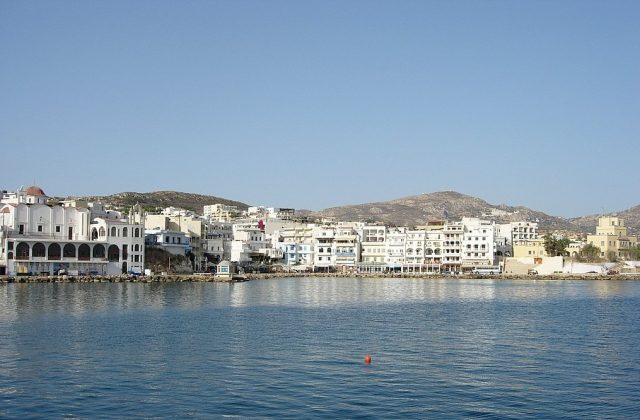
Karpathos is the second largest of the Dodecanese islands, a long mountainous strip between Crete and Rhodes that rises…
17 tours & trips
Dodecanese, Greece
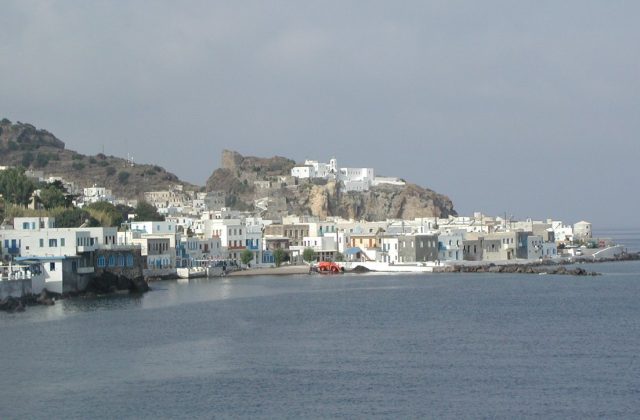
Nisyros is a round volcanic island of about 42 square kilometres in the Dodecanese, between Kos and Tilos.
9 tours & trips
Dodecanese, Greece
Kalymnos is a rugged Dodecanese island of about 110 square kilometres, just 12 km north of Kos, famous first for its…
7 tours & trips