China · Pacific Ocean · Historic island
Putuoshan
Putuoshan is a small island of 12.5 square kilometres in the Zhoushan archipelago off Zhejiang, one of the four sacred mountains of Chinese Buddhism and the home of the bodhisattva Guanyin. Pilgrims have crossed to it for more than a thousand years, and today its temples, sea caves and two long sandy beaches fill an easy overnight trip from Shanghai or Ningbo.
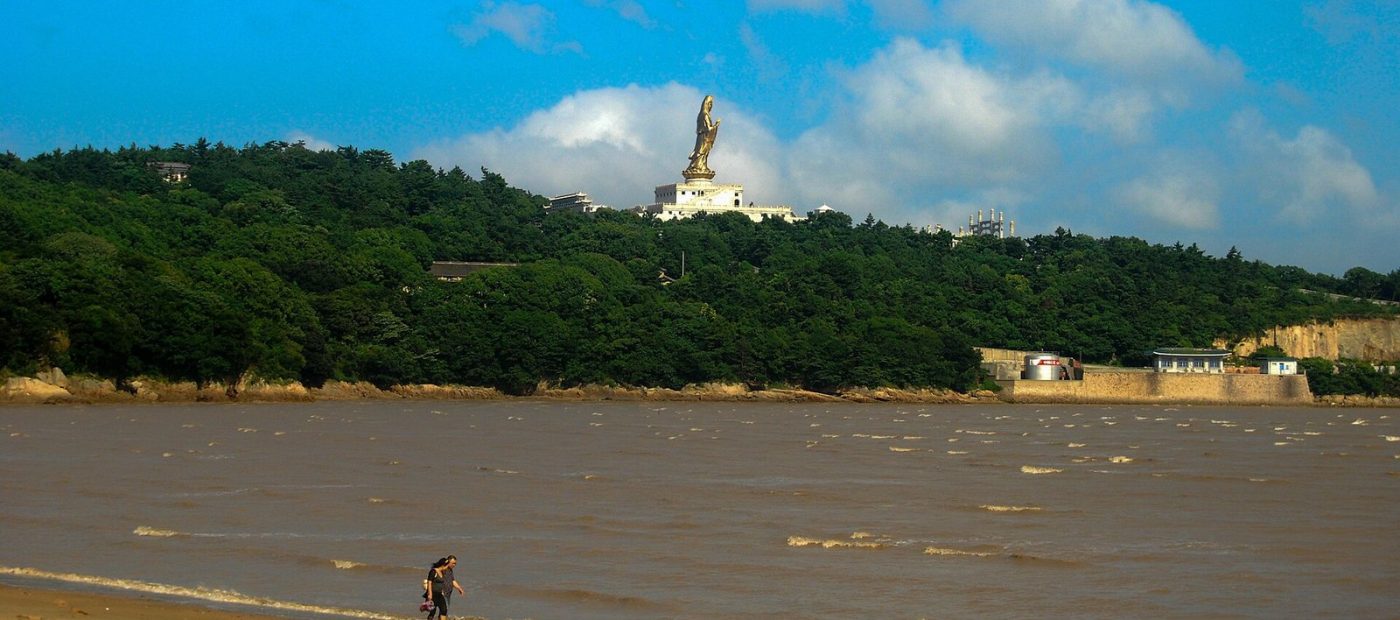
Photo: Shizhao, CC BY-SA 3.0
At a glance
| Getting there | Short boat from Zhujiajian or Shenjiamen on Zhoushan; buses from Shanghai or Ningbo to the piers, or a long ferry |
|---|---|
| Gateway | Zhoushan (Zhujiajian); ferries from Shanghai |
| Travel time | About 15 min by boat from Zhujiajian |
| Days | 1 to 2 nights |
| Best months | Apr–May and Sep–Oct; avoid Guanyin festival days and Golden Week |
| Getting around | Island minibuses between the pier, temples and beaches; walk the pilgrim paths |
| Booking | Rooms and boats well ahead for weekends, festival days and national holidays |
| Cost | Mid-range for China; entry fee and island rooms add up |
| Beaches | Two long sandy bays on the east coast: Thousand Step Beach and Hundred Step Beach |
| Sea | Pacific Ocean |
| Archipelago | Zhoushan Archipelago |
| Area | 13 km² |
| Airport | No |
| Checked | October 2026 |
Tours and day trips: what to book
Nothing is sold online for Putuoshan on its own, and the island does not need much organising. Most foreign visitors come independently: a bus or train to Ningbo or Zhoushan, a taxi or bus to the pier on Zhujiajian, and a short passenger boat across. Travel agencies in Shanghai and Hangzhou sell two-day packages with transport, a room and a Chinese-speaking guide, but they move fast and spend little time in each temple.
On the island everything is arranged on the spot. You pay a scenic-area entry fee on arrival, and separate small tickets at the main temples, the cable car and some viewpoints. Minibuses run a fixed network between the pier, the big temples and the beaches, and the paths between them are well marked. Monks and lay volunteers are used to visitors, but signs and menus outside the main sites are mostly in Chinese, so a translation app helps.
The plain recommendation is to go on your own and stay one night. That lets you see Puji Temple in the early morning before the day crowds arrive, walk the stepped pilgrim path up to Huiji Temple in the cool, and spend the afternoon on the sand or at the giant Guanyin statue at the southern tip. A day trip from Shanghai is possible but leaves most of the day on the road.
What to see and do on Putuoshan
Puji Temple
The oldest and largest of the island's great monasteries stands in the middle of the south, a short minibus ride from the pier. Come early to see the monks at morning prayers, the lotus pond and stone bridge in front, and the main hall with its seated Guanyin. Incense smoke fills the courtyards all day, and the vegetarian dining hall serves simple lunches.
Huiji Temple and Foding Shan
The highest hill on the island, the Buddha's Peak, is crowned by Huiji Temple with its coloured glazed roof tiles. Pilgrims climb the long stone stairway from Fayu Temple, some bowing every third step; others take the cable car. The views stretch over the scattered islands of the archipelago, and the walk down through the woods takes about an hour.
Fayu Temple
The second great monastery sits at the foot of the hill behind Thousand Step Beach, its halls climbing a slope in terraces under old camphor trees. It was founded in the late 16th century and is calmer than Puji, especially in the late afternoon. It is the usual starting point for the pilgrim stairway up to Huiji, so combine the two.
The South Sea Guanyin
A bronze statue of Guanyin about 33 metres high stands on a headland at the southern tip, looking out to sea, with a hall of smaller statues below. It is a 20-minute walk from the pier along the coast. Nearby are the Purple Bamboo Grove and the temple of the Guanyin who would not leave, tied to the founding legend.
Chaoyin and Fanyin caves
Two sea caves on the rocky coast are where Guanyin is said to have appeared. At Chaoyin Cave near the southern tip, waves boom into a cleft in the cliff; Fanyin Cave on the east coast has a small temple built across the gap above the water. Both are best at high tide and in rough weather, and both are short walks from a minibus stop.
Thousand Step Beach
The longer of two sandy bays on the east coast runs for well over a kilometre below Fayu Temple, with Hundred Step Beach just to the south. Swimming is allowed in marked zones in summer, with lifeguards. The water is greenish rather than clear because of the Yangtze silt, but the firm sand is good for a walk at sunset.
Tours and activities in China
How to get to Putuoshan
Putuoshan has no airport and no bridge. The nearest airport is Zhoushan Putuoshan on the neighbouring island of Zhujiajian, with domestic flights, but most people arrive overland: Zhoushan has been linked to Ningbo by a chain of bridges since 2009, and long-distance buses from Shanghai and Hangzhou cross them to the piers.
The main crossing is from Zhujiajian, where frequent passenger boats take about 15 minutes. Boats also run from Shenjiamen and Banshengdong on the main Zhoushan island, a little longer. From Shanghai there are fast boats from the coast south of the city and, on some schedules, a slow overnight ferry; check the current options locally, as routes change. Leave any car on Zhujiajian: visitors do not take vehicles across. Buy boat tickets at the pier with your passport, and allow for queues at weekends.
Getting around
You do not need a car. Small public buses run between the pier, Puji Temple, Fayu Temple, the beaches and the cable car station, frequently during the day and stopping in the early evening. Tickets are cheap and bought at each stop. The island is only about 8 km long, so the southern sights are within walking distance of each other along signposted coastal and temple paths. The stairway to Huiji Temple is steep but shaded. Taxis are few, and there is no bike or scooter rental to speak of.
When to go
The climate is subtropical and maritime. Spring, from April to May, and autumn, from late September to October, have mild weather, clear days and comfortable walking. Summer is hot and humid, with the beaches open and lifeguards on duty, but July to September is also typhoon season, when boats can be cancelled at short notice. Winter is grey, damp and cool, but very quiet.
The crowds follow the calendar more than the weather. On the 19th day of the second, sixth and ninth lunar months the island celebrates the birth, enlightenment and renunciation of Guanyin, and hundreds of thousands of pilgrims arrive; boats and rooms are full and the temples are packed. Avoid those days unless you want the spectacle, and avoid the national holidays around 1 May and the first week of October. One night is enough to see the main temples; two let you walk everything without hurrying.
Where to stay
Sleep on the island if you can, to be in the temples before the day visitors and after they leave. Most guesthouses and hotels are in the small village around Puji Temple, which is central for the minibuses and has the most places to eat. Rooms near Fayu Temple and the northern beach are quieter. Some monasteries offer simple pilgrim lodging, mainly for Chinese-speaking visitors. Prices rise sharply at weekends and on festival days, and Zhujiajian across the water has cheaper hotels.
History and character
The island takes its name from Potalaka, the mythical mountain home of Guanyin in Buddhist texts. The story goes that in 916 a Japanese monk sailing home with a statue of the bodhisattva was held back by storms off the island, took it as a sign and left the statue here; a shrine grew into a monastery. Under the Song, Ming and Qing dynasties Putuoshan grew to dozens of monasteries and hundreds of hermitages, was raided by pirates and rebuilt with imperial money. Many temples were damaged in the 1960s and restored from the 1980s, and today the island is again an active centre of pilgrimage.
Combine it with
Putuoshan fits a few days in the Yangtze delta. Ningbo is about two hours away by road, and Shanghai about four to five by bus across the bridges. On Zhujiajian next door there are long sandy beaches and the seafood restaurants of Shenjiamen fishing port. Further out, the quiet island of Taohua and the fishing islands of Shengsi are reached by boat from the Zhoushan piers.
Frequently asked questions
How do I get to Putuoshan?
Short boat from Zhujiajian or Shenjiamen on Zhoushan; buses from Shanghai or Ningbo to the piers, or a long ferry.
How long does it take to get to Putuoshan from Zhoushan (Zhujiajian); ferries from Shanghai?
From Zhoushan (Zhujiajian); ferries from Shanghai: about 15 min by boat from Zhujiajian.
How many days do you need on Putuoshan?
1 to 2 nights.
When is the best time to visit Putuoshan?
Apr–May and Sep–Oct; avoid Guanyin festival days and Golden Week.
Do I need a car on Putuoshan?
Island minibuses between the pier, temples and beaches; walk the pilgrim paths.
Is Putuoshan worth a day trip?
Go if you want living Buddhist temples, pilgrims, incense and sea views on a car-light island. Skip it or choose a quieter Zhoushan island if crowds bother you, and avoid festival days and national holidays.
Is Putuoshan expensive?
Mid-range for China; entry fee and island rooms add up.
What are the beaches like on Putuoshan?
Two long sandy bays on the east coast: Thousand Step Beach and Hundred Step Beach.
What should I book ahead for Putuoshan?
Rooms and boats well ahead for weekends, festival days and national holidays.