Lipari
Aeolian Islands, Italy
Lipari is the largest and busiest of the Aeolian Islands, a volcanic island of about 37 square kilometres off the north…
63 tours & trips
Italy · Tyrrhenian Sea · Nature & wildlife island
Salina is the greenest of the Aeolian Islands off northern Sicily, two extinct volcanoes joined by a saddle of vineyards and caper fields, rising to 962 metres at Monte Fossa delle Felci. It is a quieter, more grown-up alternative to Lipari, known for Malvasia wine, good food and the crater bay of Pollara.
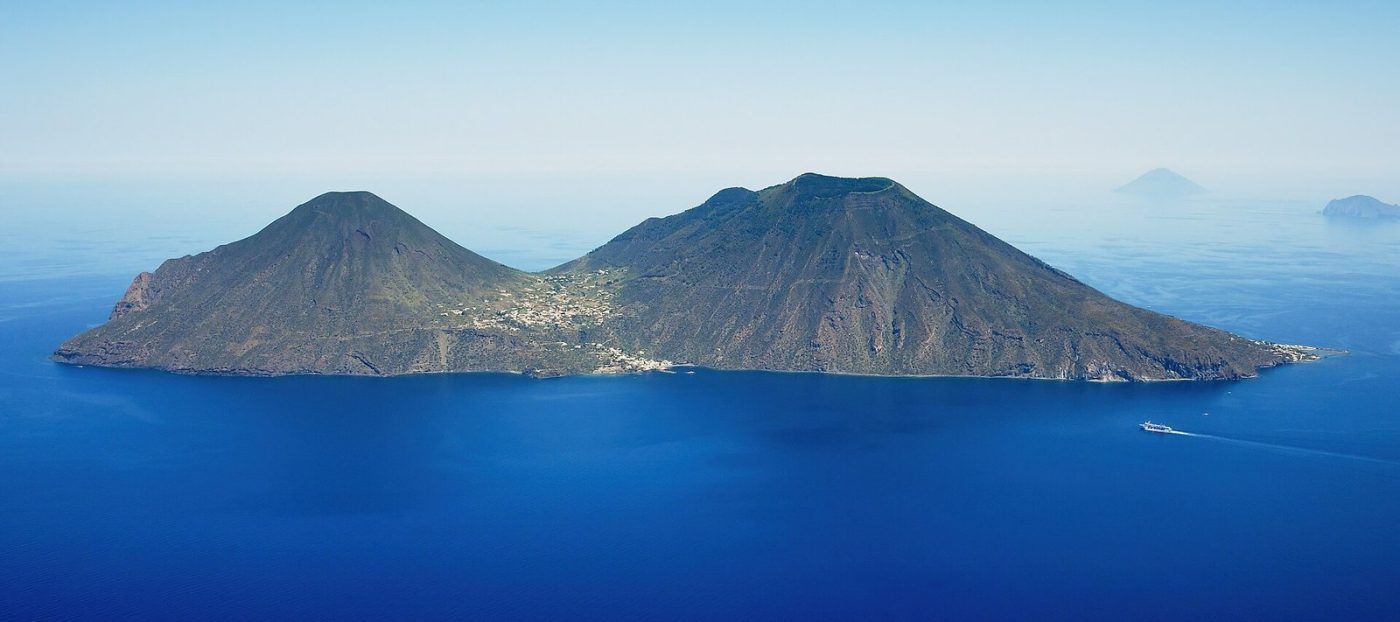
Photo: Carsten Steger, CC BY-SA 4.0
| Getting there | Hydrofoil from Milazzo in about 1.5 h, also from Messina in summer; Catania airport is 2 h from Milazzo |
|---|---|
| Gateway | Milazzo (Sicily) |
| Travel time | About 1.5 h by hydrofoil, longer by car ferry |
| Days | 3 to 5 nights |
| Best months | May–Jun and Sep–Oct; August crowded and expensive; much shuts Nov–Mar |
| Getting around | Buses link the villages; rent a scooter or small car for freedom |
| Booking | Rooms and August hydrofoils weeks ahead; boat trips and tastings a day or two ahead |
| Cost | Expensive for Sicily |
| Beaches | Pebbles and rocks; Rinella, Lingua and Scario for swimming; Pollara bay for the view |
| Sea | Tyrrhenian Sea |
| Archipelago | Aeolian Islands |
| Area | 27 km² |
| Population | 2,500 |
| Highest point | 962 m (Monte Fossa delle Felci) |
| Ferry | 1 h 30 min from Milazzo (Sicily) |
| Airport | No |
| Car-free | No |
| UNESCO | Isole Eolie (Aeolian Islands) |
| Checked | October 2026 |
What is sold for Salina falls into two groups: boat trips that bring you here from elsewhere, and food, wine and walking on the island itself.
Most boat trips start from Lipari, the main base of the archipelago. A day cruise usually circles Salina, stops below the crater wall of Pollara for a swim and lands at Santa Marina or Lingua for lunch and a walk, sometimes adding a snorkelling stop. Mini cruises from Capo d'Orlando and Cefalù on the Sicilian coast pair Salina with Lipari, Vulcano, Panarea or Stromboli in one long day, and the crossing takes a large share of it. Evening trips to watch Stromboli erupt also pass Salina.
On the island the products are smaller and more personal: a walk with a local guide through Santa Marina, a hike combined with tasting local food, a morning learning how capers are picked and preserved, wine and brunch on an estate near Malfa, and pizza or cooking classes in a home with children welcome.
Boat trips include the boat, the crew and usually a swim stop; lunch is often extra. Food experiences include what you taste but not transport to the farm.
If you have time, sleep on Salina and book a tasting or a caper morning; if not, the Lipari day cruise is the best sample.
On the west coast, the village of Pollara sits inside half of a volcanic crater whose other side has fallen into the sea. The bay below, with sheer cliffs and boathouses cut into the rock, is where scenes of the film Il Postino were shot. Watch the sunset from the road above; the path to the beach is often closed because of rockfalls, so most people see it by boat.
The highest point of the Aeolian Islands, at 962 metres, is a climb of about two hours from the sanctuary of the Madonna del Terzito at Valdichiesa, on paths through chestnut woods and ferns. On a clear day the summit shows all seven islands, with Stromboli smoking to the east. The mountain is a nature reserve; start early in summer and carry water.
At the south-east tip, about 3 km from Santa Marina, the fishing hamlet of Lingua has a small lagoon that was once a salt pan and gave the island its name. A promenade runs along the shore to the lighthouse, and the bars here are known for granita with brioche, eaten for breakfast or in the afternoon. Swim from the pebble beach or the rocks.
This village on the north coast is surrounded by terraces of Malvasia grapes and caper bushes. Several estates open for tastings of the sweet amber Malvasia delle Lipari, often served with capers, cheese and local bread. Below the village a steep road leads to the small harbour and the pebble cove of Scario, a good place for an afternoon swim.
The south coast village of Rinella has a small dark-sand beach, a ferry landing and fishermen's houses tight around the harbour, and small boats can be hired here for a trip along the cliffs. Up the hill, Leni is a quiet farming village looking out towards Filicudi and Alicudi. Together they make a peaceful base away from the main port.
Our pick for each kind of trip, with live dates and prices. Free cancellation on most.
Best for: From Lipari, a day on Salina
A full day by boat from Lipari that circles Salina, stops for a swim and leaves time ashore for lunch; the best choice if you are based on Lipari.
Salina has no airport and no bridge, so everyone arrives by sea. The usual route is to fly to Catania, take a bus of about two hours to the port of Milazzo and continue by hydrofoil, which takes about 1.5 hours with stops at Vulcano and Lipari. Hydrofoils run several times a day all year, more often in summer, and call at both Santa Marina and Rinella. Slower car ferries are useful only if you bring a vehicle.
In summer, hydrofoils also link Messina and Reggio Calabria, and seasonal services reach Palermo and Naples. Between the islands, the boat to Lipari takes under half an hour. Book August crossings in advance, and expect cancellations when the sea is rough, especially in winter.
Salina covers 26.8 square kilometres and is steep, so walking between villages means long climbs. Local buses connect Santa Marina, Lingua, Malfa, Leni, Rinella, Valdichiesa and Pollara several times a day in summer and less often in winter; check the timetable at the port. Scooters and small cars can be rented in Santa Marina and give the most freedom on the narrow, winding roads. Taxis wait at the harbours, and parking is easy except in August.
May, June, September and early October are the best months. The hills are green in spring and the capers flower; by June the sea is warm enough for long swims, and in September the grape harvest begins while the water is at its warmest. These months also suit hiking, which is hard work in the July and August heat.
August is the peak: Italian families fill the island, prices climb, and hydrofoils and rooms must be booked well ahead. A caper festival is held in Pollara in early June.
From November to March many hotels and restaurants close, boats run less often and storms can cut the island off for a day or two, though walkers find it peaceful. Three to five nights is the right length: a day for the summit, a day for a boat trip, and the rest for swimming, tasting and eating well.
Santa Marina, on the east coast, is the most practical base: the main port, the bus hub, the most shops and restaurants, and the shortest hop to Lipari. Lingua is quieter, with the lagoon and its granita bars on the doorstep. Malfa, on the north coast, has several of the island's best hotels among the vineyards and suits couples. Rinella and Leni on the south side are the calmest and often cheapest, with a second ferry landing and evening light over Filicudi.
The Greeks called the island Didyme, the twins, after its two volcanic cones, which have been quiet for thousands of years. People have farmed here since the Bronze Age, and a Greek and Roman settlement stood where Santa Marina is now. The modern name comes from the salt pan at Lingua. In the 19th century Salina prospered on Malvasia wine until phylloxera destroyed the vines, and many families emigrated to Australia and the Americas. Today capers and wine have returned, building is low-rise, and the two mountains are protected as a nature reserve.
Salina sits in the middle of the Aeolian chain, which makes it a good hub. Lipari is under half an hour away by hydrofoil and Vulcano a little further; Panarea and Stromboli take roughly one to one and a half hours, and the remote western islands of Filicudi and Alicudi are a short hop from Rinella. Back on Sicily, Cefalù and Taormina pair well with a week in the islands.
Hydrofoil from Milazzo in about 1.5 h, also from Messina in summer; Catania airport is 2 h from Milazzo.
From Milazzo (Sicily): about 1.5 h by hydrofoil, longer by car ferry.
3 to 5 nights.
May–Jun and Sep–Oct; August crowded and expensive; much shuts Nov–Mar.
Buses link the villages; rent a scooter or small car for freedom.
Go if you want hiking, wine, capers and slow days in small villages on a green volcanic island. Skip it or choose Lipari or Stromboli if you want nightlife, cheaper rooms, a real town or an erupting volcano. With about 1 h 30 min each way from Milazzo (Sicily), a day trip is easy to do.
Expensive for Sicily.
Pebbles and rocks; Rinella, Lingua and Scario for swimming; Pollara bay for the view.
Rooms and August hydrofoils weeks ahead; boat trips and tastings a day or two ahead.
Yes. Boat trips, guided tours and day trips for Salina can be booked online; live prices and free cancellation on most are shown on this page.
Aeolian Islands, Italy
Lipari is the largest and busiest of the Aeolian Islands, a volcanic island of about 37 square kilometres off the north…
63 tours & trips
Aeolian Islands, Italy
Stromboli is the most active volcano in Europe that you can easily visit, a cone rising 926 metres straight out of the…
41 tours & trips
Aeolian Islands, Italy
Panarea is the smallest of the seven inhabited Aeolian Islands north of Sicily, just 3.4 square kilometres of white…
32 tours & trips
Aeolian Islands, Italy
Vulcano is the southernmost of the Aeolian Islands, about 20 kilometres north of Sicily, an island of 21 square…
27 tours & trips