Sao Vicente
79 km away
Sao Vicente is a dry, windswept volcanic island in the northern Cape Verde archipelago, home to Mindelo, the…
37 tours & trips
Cape Verde · Atlantic Ocean · Nature & wildlife island
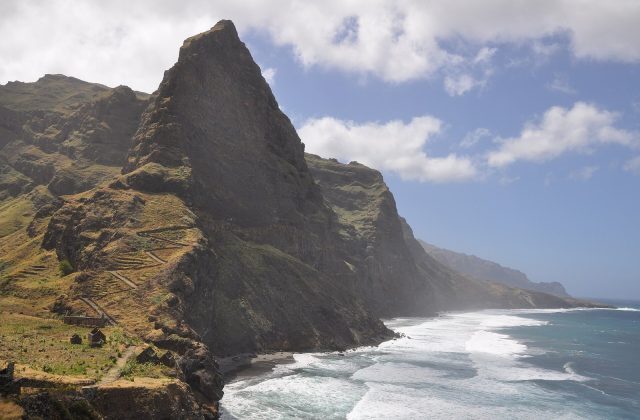
Sao Nicolau is a mountainous island of about 343 square kilometres in the northern, windward group of Cape Verde, with only around 12,000 people. It is a place for walkers: Monte Gordo rises to 1,312 metres above terraced valleys, dragon trees and a colonial old town, with black-sand beaches on the coast.
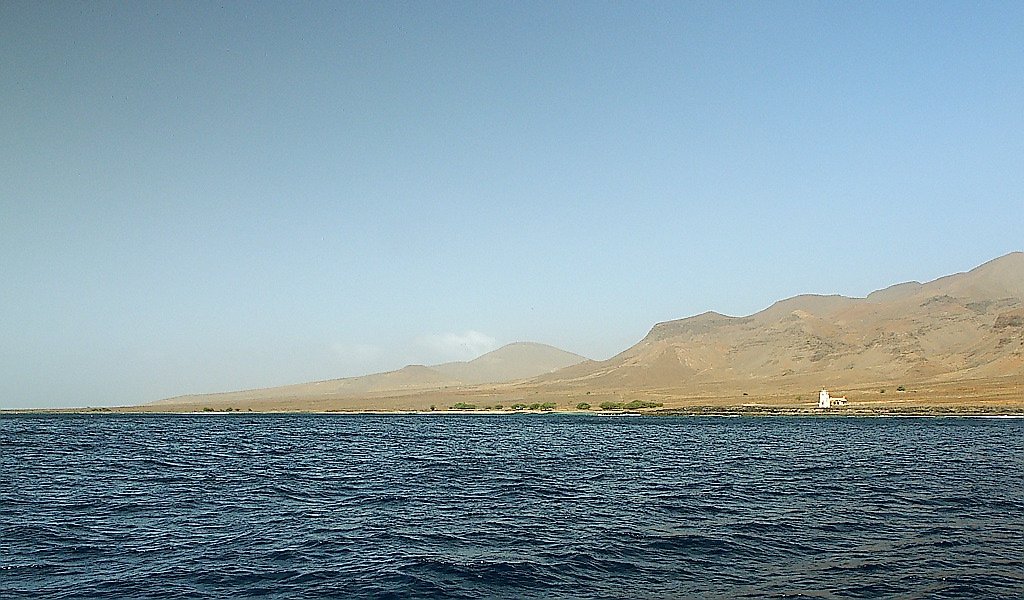
Photo: Fanny Schertzer, CC BY 2.0
| Getting there | Short flights from Sal or Praia to Preguica airport; ferries from Mindelo (Sao Vicente) a few times a week |
|---|---|
| Gateway | Sal or Praia (flights); Mindelo (ferry) |
| Travel time | Under an hour by air; several hours by ferry |
| Days | 3 to 5 nights |
| Best months | Nov–Jun dry and sunny; showers possible Aug–Oct |
| Getting around | Shared minibuses (aluguers) between Ribeira Brava and Tarrafal; hire a driver for the trails |
| Booking | Inter-island flights or ferries ahead; rooms are few, so book them too |
| Cost | Cheap, even by Cape Verde standards |
| Beaches | Black volcanic sand near Tarrafal; Praia da Luz and Baixo Rocha for swimming; rough north coast |
| Sea | Atlantic Ocean |
| Area | 343 km² |
| Population | 12,424 (2015) |
| Highest point | 1,312 m (Monte Gordo) |
| Airport | Yes, scheduled flights |
| Car-free | No |
| Checked | October 2026 |
Nothing is sold online for Sao Nicolau on its own. The island sees few foreign visitors, and almost everyone arranges things after arrival, through a guesthouse, a local guide or a driver met in Ribeira Brava or Tarrafal.
The main thing people book is a guided hike. Local guides lead walks in the Monte Gordo natural park, from the forest station at Cachaco up to the summit or along the ridge, and on the old mule paths between villages such as Fragata, Ribeira Prata and Caleijao. A guide is worth it: trails are poorly marked, cloud comes down quickly and transport back has to be organised. The usual arrangement covers the guide and a driver to drop you off and collect you; food and water are your own.
Fishermen in Tarrafal take visitors out on their boats for fishing or to visit isolated beaches along the west coast, agreed on the quay the day before. A driver hired for a day will also loop the island by road, taking in the dragon trees of Faja, the wind-carved rocks of Carberinho and the natural pools of the east.
Recommendation: plan two days of guided walking and one day with a driver, and keep the rest flexible around flights.
The highest mountain on the island, at 1,312 metres, sits inside a protected park of pine, cypress and native plants. The usual climb starts at Cachaco and takes about three hours return, ending at a summit with views on a clear day to Santo Antao, Sao Vicente and Santa Luzia. Start early, before cloud forms.
The old capital fills a narrow green valley inland, with cobbled streets, pastel houses, a central square and a large church that served as the cathedral of Cape Verde for more than 150 years. The former seminary here educated many of the country's writers and leaders. Its Carnival is one of the liveliest in the islands.
The fertile valley of Faja, over the pass from Ribeira Brava, grows bananas, sugar cane and vegetables on terraces, and is one of the last places where the umbrella-shaped dragon tree survives in the wild. A path from Faja to Tarrafal descends through dramatic scenery and makes a fine day walk.
The island's largest town is a working fishing port on the sheltered west coast, with a small tuna cannery and simple places to eat fresh fish. South of town, black-sand beaches such as Praia da Luz and Baixo Rocha are good for swimming and are locally believed to ease aching joints. Sunsets here are excellent.
North of Tarrafal, a rough track leads to a stretch of coast where wind and waves have carved the pale volcanic rock into ridges, arches and pools. It takes about half an hour by four-wheel drive from town, and the sea crashes hard here, so keep away from the edge. Go with a driver who knows the track.
The drier eastern end of the island is much quieter, with small villages, cactus slopes and the natural rock pools of Juncalinho, where you can swim in calm water while the ocean breaks outside. Nearby Carrical is a fishing village at the end of the road. Combine both in half a day from Ribeira Brava.
The small airport at Preguica, a short drive from Ribeira Brava, has domestic flights from Sal and Praia, and sometimes via Sao Vicente, a few times a week; the hop takes under an hour. Schedules change often and flights can be cancelled at short notice, so do not plan a tight connection to an international flight.
Inter-island ferries call at Tarrafal de Sao Nicolau and Preguica, linking the island with Mindelo on Sao Vicente and with Sal several times a week. The crossings take several hours, the sea between the islands is often rough, and timetables are published only a short time ahead, so check them locally and buy tickets at the port office a day or two before. There is no point bringing a hired car; arrange transport on the island.
Shared minibuses called aluguers run along the main road between Ribeira Brava, Faja and Tarrafal, mostly in the morning and early afternoon, and to the eastern villages less often. They are cheap but irregular. For hikes and remote coast, hire a pickup with a driver for the day through your guesthouse. A few cars can be rented. Roads are cobbled and winding, with steep drops.
The dry season, from November to June, is the best time to visit, with warm days in the mid twenties on the coast, cooler air in the mountains and almost no rain; the trade winds blow steadily, especially from December to April, and the sea can be rough on exposed shores. From December to February the harmattan sometimes brings Saharan dust that hazes the views.
From August to October rain is possible but irregular. When it falls, the valleys turn green and walking is beautiful, but trails can be slippery. There is no real tourist season and prices hardly change. Carnival in February brings the island to life, especially in Ribeira Brava, and is the one time to book rooms well ahead. Three to five nights allows two or three walks and time on the coast.
Ribeira Brava is the base for hikers, close to the Monte Gordo trailheads and the old town, with a handful of guesthouses and simple restaurants. Tarrafal suits those who want the sea, sunsets and fresh fish, and has the most choice of rooms on the island. Many visitors split their stay between the two. A few rural guesthouses in the valleys around Faja offer the quietest nights.
The island was sighted by Portuguese navigators in the early 1460s but settled only in the seventeenth century. Pirate raids forced people away from the coast, and Ribeira Brava was founded inland, out of sight from the sea. From the late eighteenth century to the early twentieth it was the seat of the bishop, and its seminary made it the intellectual centre of Cape Verde. In the nineteenth century whaling ships anchored off Tarrafal. Droughts and emigration shaped modern life, and many families have relatives abroad.
Sao Nicolau fits a route through the windward islands. Sao Vicente, with the lively port town of Mindelo, is a ferry ride away, and from there a short boat crosses to the hiking island of Santo Antao. Sal, with its beaches and international flights, is the easiest place to start or finish.
79 km away
Sao Vicente is a dry, windswept volcanic island in the northern Cape Verde archipelago, home to Mindelo, the…
37 tours & trips
108 km away
Santo Antão is the mountain island of Cape Verde, the westernmost of the chain and its second largest, with peaks near…
29 tours & trips
143 km away
Sal is a flat, dry island of 215 square kilometres in the Cape Verde archipelago, about 560 km off the coast of West…
24 tours & trips
Short flights from Sal or Praia to Preguica airport; ferries from Mindelo (Sao Vicente) a few times a week.
From Sal or Praia (flights); Mindelo (ferry): under an hour by air; several hours by ferry.
3 to 5 nights.
Nov–Jun dry and sunny; showers possible Aug–Oct.
Shared minibuses (aluguers) between Ribeira Brava and Tarrafal; hire a driver for the trails.
Go if you want quiet mountain hiking, village life and a Cape Verde almost untouched by package tourism. Skip it or choose Sal or Boa Vista if you want white beaches, resort hotels and easy, frequent connections.
Cheap, even by Cape Verde standards.
Black volcanic sand near Tarrafal; Praia da Luz and Baixo Rocha for swimming; rough north coast.
Inter-island flights or ferries ahead; rooms are few, so book them too.
Cape Verde Islands, Cape Verde
Boa Vista is the easternmost island of Cape Verde, a flat, desert-like island of about 630 square kilometres only 450…
82 tours & trips
Cape Verde
Sao Vicente is a dry, windswept volcanic island in the northern Cape Verde archipelago, home to Mindelo, the…
37 tours & trips
Cape Verde
Santo Antão is the mountain island of Cape Verde, the westernmost of the chain and its second largest, with peaks near…
29 tours & trips
Cape Verde
Cape Verde is an archipelago of ten volcanic islands in the Atlantic, between 600 and 850 km off the coast of Senegal,…
25 tours & trips
Cape Verde
Sal is a flat, dry island of 215 square kilometres in the Cape Verde archipelago, about 560 km off the coast of West…
24 tours & trips
Cape Verde Islands, Cape Verde
Maio is a flat, dry island of about 275 square kilometres in the south-east of Cape Verde, a short hop from the…
9 tours & trips