Boa Vista
Cape Verde Islands, Cape Verde
Boa Vista is the easternmost island of Cape Verde, a flat, desert-like island of about 630 square kilometres only 450…
82 tours & trips
Cape Verde · Atlantic Ocean · Beach island
Sal is a flat, dry island of 215 square kilometres in the Cape Verde archipelago, about 560 km off the coast of West Africa. It has the country's busiest international airport, long white beaches around the resort town of Santa Maria and steady trade winds that make it one of the best places in the Atlantic to kitesurf.
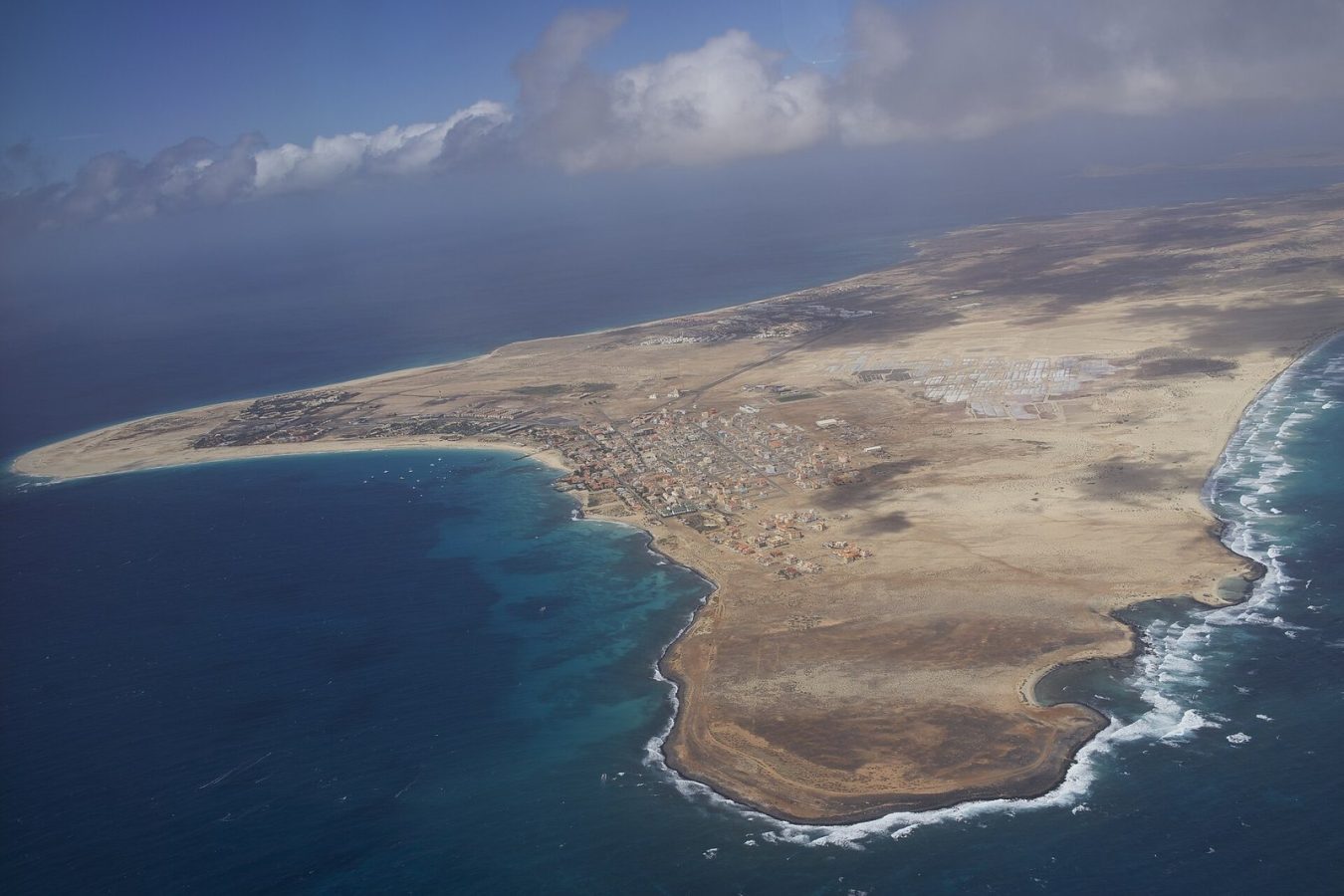
Photo: Martikkk, CC BY-SA 3.0
| Getting there | Direct flights from Europe to Amílcar Cabral airport, about 4 h from Lisbon; domestic flights from Praia |
|---|---|
| Gateway | Sal airport (Amílcar Cabral International) |
| Travel time | 15 to 20 min by road to Santa Maria |
| Days | A week or more |
| Best months | Nov–Jun dry, sunny and windy; Jul–Oct hotter and calmer, turtles nest |
| Getting around | Aluguer minibuses link Santa Maria and Espargos; taxis, quads or a hire car for the rest |
| Booking | Flights and hotels for Christmas, Easter and school holidays; tours a day or two ahead |
| Cost | Mid-range; pricier than the rest of Cape Verde |
| Beaches | White sand and clear water at Santa Maria and Ponta Preta; Kite Beach in the east for wind |
| Sea | Atlantic Ocean |
| Area | 215 km² |
| Population | 35,267 (2018) |
| Highest point | 406 m (Monte Grande) |
| Airport | Yes, scheduled flights |
| Car-free | No |
| Checked | October 2026 |
Almost everything sold on Sal starts from the hotels of Santa Maria, with pickup included, and the island is small enough that no trip lasts more than a day.
The standard purchase is the island tour, as a half or full day in a minibus or open truck. It strings together the same stops: the salt crater of Pedra de Lume, where you float in brine, the Buracona pool and its Blue Eye cave, the mirage plain of Terra Boa, and Shark Bay, where you wade among small lemon sharks. Entry to the salt lake is usually extra, and full-day versions add lunch in Palmeira or Espargos. Private versions with a local guide cost more but let you time Buracona for the midday light.
On the water, catamaran cruises along the west coast run for half a day with drinks, snacks and a snorkel stop. There are also turtle snorkelling trips, guided night walks to watch loggerheads nesting from July to October, jet skis, and quad or buggy rides across the stony interior. Cooking classes teach cachupa, the national stew of maize and beans.
For a first visit, book the half-day island tour early in your stay and add a catamaran afternoon; in summer, add a turtle walk. Kite and dive lessons are arranged directly at the beach schools in Santa Maria.
On the east coast, about 20 minutes from Santa Maria, salt pans fill the floor of an old volcanic crater reached through a tunnel in its wall. The brine is so dense that you float without effort; there are showers to rinse off, a small cafe and a fee at the gate. Look for the rusting pylons of the cableway that once carried the salt to the harbour.
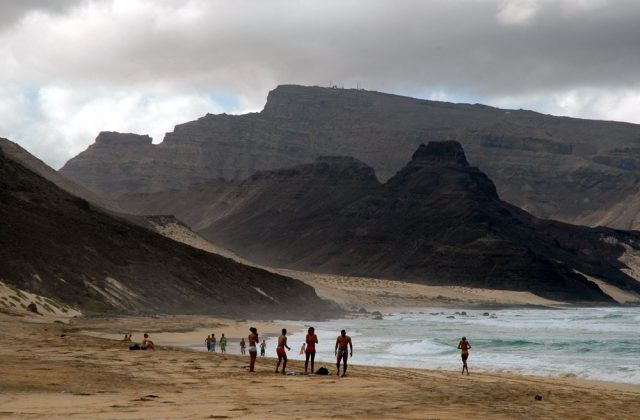
The resort town at the southern tip has the island's main beach: several kilometres of white sand and calm, clear water on the sheltered side. The old wooden pier is the place to watch fishermen land tuna and wahoo in the morning. Behind it the pedestrian streets fill with bars playing morna and funana at night.
On the rocky north-west coast near Palmeira, waves break over black lava into a sheltered natural pool where you can swim when the sea is calm. A few steps away is the Blue Eye, a hole in the rock where sunlight turns the water inside a vivid blue, best around midday on sunny days. There is a small entry fee and a cafe.
Shark Bay, near Parda on the east coast, is a shallow lagoon where young lemon sharks circle in knee-deep water; local guides lend plastic shoes and ask you to stand still. On the way, the flat plain of Terra Boa produces a mirage on hot days, a shimmering lake that disappears as you approach. Both are on every island tour.
East of Santa Maria the trade winds blow almost without pause from November to May across Kite Beach, where schools rent equipment and teach beginners in the shallows. Experts head west to Ponta Preta, a wave spot that has hosted world tour kite events. Swimming is harder on these windy beaches, but the long walk on the sand is good at sunset.
Our pick for each kind of trip, with live dates and prices. Free cancellation on most.
Best for: First visit, the island in half a day
Covers the four classic stops in one outing, the salt crater, the Blue Eye pool, the mirage plain and the lemon sharks, with hotel pickup in Santa Maria.
Sal is the main gateway to Cape Verde. Amílcar Cabral International Airport, just outside the island capital Espargos and about 18 km from Santa Maria, receives direct flights from Lisbon in around four hours and, especially in winter, scheduled and charter flights from several European countries, most of them five to six hours. Many visitors come on package holidays with transfers included; otherwise a taxi to Santa Maria takes about 20 minutes.
Domestic flights link Sal with Praia on Santiago, São Vicente and Boa Vista. Inter-island ferries from the port of Palmeira reach Boa Vista and other islands, but they are infrequent, slow and depend on the sea, so fly if your time is short. There is no reason to bring a car.
Sal is small, and most visitors stay in Santa Maria and walk between the beach, bars and restaurants. Shared minibuses called aluguers run along the main road between Santa Maria, Espargos and Palmeira, cheap and frequent by day but without a timetable; flag them down at the roadside. Taxis wait outside the hotels, and the fare should be agreed before you set off. A hire car for a day or two is easy, with one good road down the middle of the island, but the dirt tracks to the east coast suit a quad or a tour.
Sal is dry and sunny all year, with very little rain and air temperatures in the high 20s, so the real questions are wind and sea. From November to June the north-east trade winds blow hard, perfect for kitesurfing and windsurfing and keeping the heat comfortable, but they can whip sand across the beach and the sea cools to around 22 degrees in February and March. Dust haze from the Sahara sometimes dims the sky in winter.
July to October is hotter, calmer and more humid, with the warmest water, around 26 or 27 degrees, and the short rainy season, which here means a few showers in August and September. It is also when loggerhead turtles come ashore to nest, with hatchlings appearing from late summer. Christmas, New Year and European school holidays are the busiest and dearest weeks. A week suits most people; add days if you are learning to kite.
Santa Maria is where nearly everyone stays, and it offers two styles. Large all-inclusive resorts line the coast east and west of town, with their own stretch of beach and big pools, which suits families. In the town itself, smaller hotels and apartments put you within walking distance of the pier, restaurants and kite schools. Espargos, near the airport, is cheaper and more Cape Verdean but has no beach; Palmeira suits those who want a quiet fishing port and a simple guesthouse.
Sal was uninhabited when Portuguese sailors sighted it in 1460, and for three centuries it held little more than goats and a few fishermen, because it has almost no fresh water. Its fortunes came from salt: from the late 18th century the crater at Pedra de Lume and the pans at Santa Maria, founded in 1830, were worked for export, much of it to Brazil, until the trade faded in the 20th century. The second life of the island began with the airport, built by Italy in 1939 as a refuelling stop for flights to South America, and from the 1990s with tourism, which now drives the economy.
Boa Vista, the next island south, has even emptier dunes and beaches and is a short flight away. For contrast, fly to São Vicente for the music and cafes of Mindelo, then take the ferry of about an hour to Santo Antão for mountain hiking. Santiago, with the capital Praia and the UNESCO-listed old town of Cidade Velha, is under an hour by air.
Direct flights from Europe to Amílcar Cabral airport, about 4 h from Lisbon; domestic flights from Praia.
From Sal airport (Amílcar Cabral International): 15 to 20 min by road to Santa Maria.
A week or more.
Nov–Jun dry, sunny and windy; Jul–Oct hotter and calmer, turtles nest.
Aluguer minibuses link Santa Maria and Espargos; taxis, quads or a hire car for the rest.
Go if you want winter sun, warm sea, kitesurfing and an easy beach week close to Europe. Skip it or choose Santo Antão or São Vicente if you want mountains, green valleys, hiking and a stronger taste of Cape Verdean town life.
Mid-range; pricier than the rest of Cape Verde.
White sand and clear water at Santa Maria and Ponta Preta; Kite Beach in the east for wind.
Flights and hotels for Christmas, Easter and school holidays; tours a day or two ahead.
Yes. Boat trips, guided tours and day trips for Sal can be booked online; live prices and free cancellation on most are shown on this page.
Cape Verde Islands, Cape Verde
Boa Vista is the easternmost island of Cape Verde, a flat, desert-like island of about 630 square kilometres only 450…
82 tours & trips
Cape Verde
Sao Vicente is a dry, windswept volcanic island in the northern Cape Verde archipelago, home to Mindelo, the…
37 tours & trips
Cape Verde
Santo Antão is the mountain island of Cape Verde, the westernmost of the chain and its second largest, with peaks near…
29 tours & trips
Cape Verde
Cape Verde is an archipelago of ten volcanic islands in the Atlantic, between 600 and 850 km off the coast of Senegal,…
25 tours & trips
Cape Verde Islands, Cape Verde
Maio is a flat, dry island of about 275 square kilometres in the south-east of Cape Verde, a short hop from the…
9 tours & trips
Cape Verde Islands, Cape Verde
Fogo is a single volcano rising from the Atlantic in southern Cape Verde, its summit cone reaching 2,829 metres, the…
3 tours & trips