Lofoten
Norway
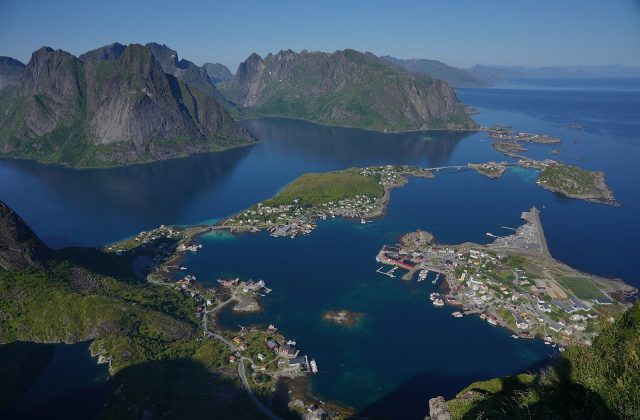
Lofoten is a chain of mountainous islands in northern Norway, about 170 km north of the Arctic Circle, where granite…
83 tours & trips
Norway · Polar seas · Remote island
Svalbard is a Norwegian archipelago of glaciers and bare mountains halfway between mainland Norway and the North Pole, covering about 61,000 square kilometres. Its small capital, Longyearbyen, is reached by direct flights and is the base for snowmobile trips, boat cruises, glacier hikes and the chance of seeing polar bears, walrus and the northern lights.
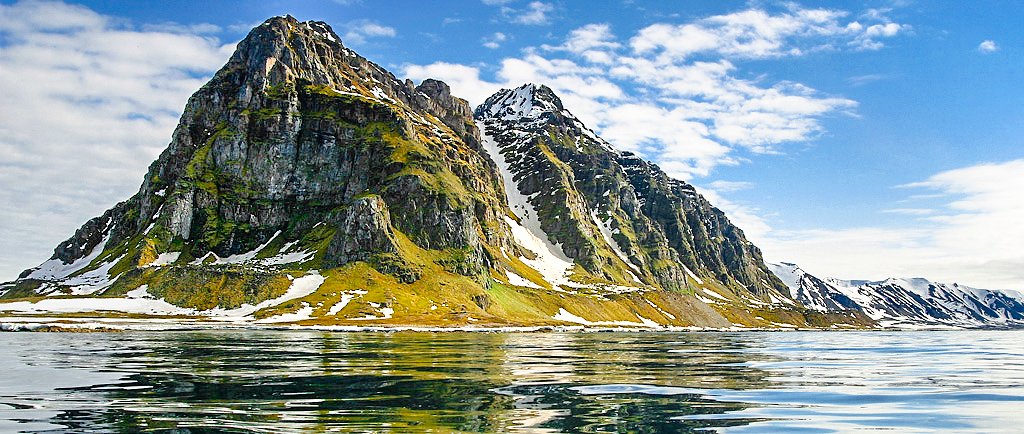
Photo: Per Harald Olsen – User Perhols on no.wikipedia, CC BY 2.5
| Getting there | Direct flights to Longyearbyen from Oslo in about 3 h and from Tromso in about 1.5 h; expedition cruises |
|---|---|
| Gateway | Oslo or Tromso (flights to Longyearbyen) |
| Travel time | About 3 h by air from Oslo, 1.5 h from Tromso |
| Days | 3 to 5 nights |
| Best months | Mar–May for snow and light; Jun–Aug midnight sun and boats; Nov–Jan dark |
| Getting around | No roads between settlements: guided snowmobile, boat or dog sled; walk or taxi in town |
| Booking | Flights, rooms and tours months ahead for Mar–Apr and summer; cruises a year ahead |
| Cost | Very expensive, even by Norwegian standards |
| Beaches | No swimming beaches; gravel shores, icy water and glacier fronts |
| Sea | Polar seas |
| Area | 61,022 km² |
| Population | 2,668 |
| Highest point | 1,713 m (Newtontoppen) |
| Airport | Yes, scheduled flights |
| Car-free | No |
| Checked | October 2026 |
Almost everything outside Longyearbyen must be done with a guide, because polar bears roam the whole archipelago and only armed, trained guides take visitors into the wilderness.
In winter and spring, from about December to May, the classic trip is by snowmobile. Day trips cross the valleys to glaciers and ice caves or to the east coast, and two-day expeditions reach the abandoned Soviet mining town of Pyramiden. Suits, boots, helmets and fuel are included; you need a driving licence to drive a snowmobile yourself. Dog sledding, snowshoe walks and northern lights trips fill the dark months.
In summer, from June to September, boat trips sail along Isfjorden to glacier fronts, bird cliffs, Pyramiden and the Russian settlement of Barentsburg, and guided hikes climb peaks and glaciers around town. Expedition cruises of a week or more circle Spitsbergen looking for polar bears and walrus, and are the best way to see the remote north.
Short walks to the outside of the Global Seed Vault and photo tours by car suit people with little time. First visitors in spring should book a snowmobile day; in summer, a boat trip along the fjord.
The world's northernmost town of any size is a colourful row of wooden houses in a valley, with old coal-mining gear on the slopes. Visit the Svalbard Museum for wildlife and history, and the North Pole expedition museum. It has good restaurants, a brewery and shops; remember that you take your shoes off in many buildings.
In late winter and spring, guided snowmobile trips race across frozen valleys and glaciers. Inside some glaciers, meltwater has carved blue tunnels you can crawl through with a guide. Longer routes reach the east coast, where polar bears are often seen on the sea ice. Dress for minus 20 degrees and wind.
An abandoned Soviet coal-mining town at the head of a fjord, left almost intact in 1998, with a Lenin bust, a cultural palace and empty apartment blocks. It is reached by boat in summer and by snowmobile in spring, a full day from Longyearbyen. A guide shows you around, and a small hotel has reopened.
The Russian mining settlement on Isfjorden still has a few hundred residents, Soviet-era buildings, a museum and a statue of Lenin. Boat trips in summer and snowmobile trips in spring stop here for a guided visit and sometimes a meal. The contrast with Longyearbyen, two hours away by boat, is striking.
Summer cruises from Longyearbyen sail to the faces of glaciers such as Nordenskioldbreen, where ice calves into the sea. Watch for seals on floes, bird cliffs packed with guillemots and kittiwakes, and the occasional walrus. Dress warmly even in July, as the wind on deck is cold.
Near the airport, a concrete entrance juts out of the mountainside: behind it, tunnels store seeds from crops all over the world. You cannot go inside, but the entrance, lit at night with a light installation, is a short drive or a guided walk from town, and a visitor centre in Longyearbyen explains the project.
Our pick for each kind of trip, with live dates and prices. Free cancellation on most.
Best for: First visit, winter and spring
A guided snowmobile ride out of Longyearbyen across the valleys to a glacier, where you climb inside a natural ice cave; warm suits and boots are provided.
Longyearbyen airport has direct flights from Oslo, taking about three hours, and from Tromso in about an hour and a half, with more flights in the spring and summer peaks. Svalbard lies outside the Schengen area, so you show your passport on the way in and out, even from Oslo. Treaty rules let most visitors stay without a special visa, but check before travelling. The airport is about 5 km from town, served by an airport bus and taxis. Many visitors arrive on expedition ships or cruise ships in summer; rules on where ships may land and how close they may go to wildlife have tightened, which limits large cruise visits. There are no ferries from mainland Norway.
There are no roads between the settlements, only a few kilometres around Longyearbyen. In town you can walk, take a taxi or rent a car, though there is little to drive to. Beyond town, travel is by snowmobile in winter and spring and by boat in summer, almost always with a guide, as you must be able to deal with polar bears. Never walk outside the signed settlement limits alone.
Svalbard has three distinct seasons. From about late October to mid-February the polar night brings constant darkness, the best time for northern lights, dog sledding and a quiet, magical town. From March to May the light returns, snow is deep, skies are often clear and snowmobile trips are at their best; this is the most popular time, with temperatures well below zero.
From about late April to late August the midnight sun never sets. June to August is the season for boats, hiking and cruises, with temperatures of around 5 degrees, wet ground and swarms of seabirds. September brings autumn colours and the first snow. Prices are high all year; book months ahead for March, April and summer. Three to five nights allow two or three full-day trips, with spare time for weather.
Almost every visitor stays in Longyearbyen, the only place with a choice of hotels, guesthouses and a campsite near the airport. Rooms in the centre are close to restaurants and tour pickups; those up the valley are quieter, with views. A few lodges and wilderness cabins outside town, in Pyramiden, Barentsburg or on the fjords, offer one or two nights on organised trips. Expedition cruisers sleep on board.
The archipelago was found by Dutch explorer Willem Barentsz in 1596, and for two centuries whalers from several countries hunted here, leaving graves and blubber ovens on the shores. Trappers followed, then coal mining from the early 20th century: American John Munro Longyear founded the town that bears his name in 1906. The Svalbard Treaty of 1920 gave Norway sovereignty while allowing other signatory countries to work here, which is why Russia still mines at Barentsburg. Today research, tourism and the seed vault have largely replaced coal.
Most visitors fly in via Tromso or Oslo, so pair Svalbard with a few days in Tromso for whale watching and the northern lights, or with the Lofoten Islands, a short flight from Tromso. In summer, an expedition cruise around Spitsbergen of a week or more adds the remote north and east coasts.
Direct flights to Longyearbyen from Oslo in about 3 h and from Tromso in about 1.5 h; expedition cruises.
From Oslo or Tromso (flights to Longyearbyen): about 3 h by air from Oslo, 1.5 h from Tromso.
3 to 5 nights.
Mar–May for snow and light; Jun–Aug midnight sun and boats; Nov–Jan dark.
No roads between settlements: guided snowmobile, boat or dog sled; walk or taxi in town.
Go if you want true Arctic wilderness, polar bears and midnight sun, and can afford it. Skip it or choose Tromso or Lofoten if you want northern lights on a smaller budget, easier access and milder weather.
Very expensive, even by Norwegian standards.
No swimming beaches; gravel shores, icy water and glacier fronts.
Flights, rooms and tours months ahead for Mar–Apr and summer; cruises a year ahead.
Yes. Boat trips, guided tours and day trips for Svalbard can be booked online; live prices and free cancellation on most are shown on this page.
Norway
Lofoten is a chain of mountainous islands in northern Norway, about 170 km north of the Arctic Circle, where granite…
83 tours & trips
Norway
Senja is Norway's second-largest island outside Svalbard, about 1,590 square kilometres of jagged peaks, fjords…
22 tours & trips
Norway
Vesterålen is a group of mountainous Arctic islands in northern Norway, just north of Lofoten, linked to each other and…
3 tours & trips
Norway
The Vega Archipelago is a scatter of around 6,500 low islands and skerries off the coast of Nordland, just south of the…
No tours listed