Santorini
Cyclades, Greece
Santorini is the ring of a drowned volcano in the southern Cyclades: white villages along a 300-metre cliff, black-sand…
772 tours & trips
Greece · Aegean Sea · Historic island
Tinos is a mountainous Cycladic island of about 194 square kilometres between Andros and Mykonos, best known in Greece for the pilgrimage church of Panagia Evangelistria. Beyond the port it hides some 50 working villages, around a thousand carved dovecotes and a living tradition of marble carving, with good food and few foreign crowds.
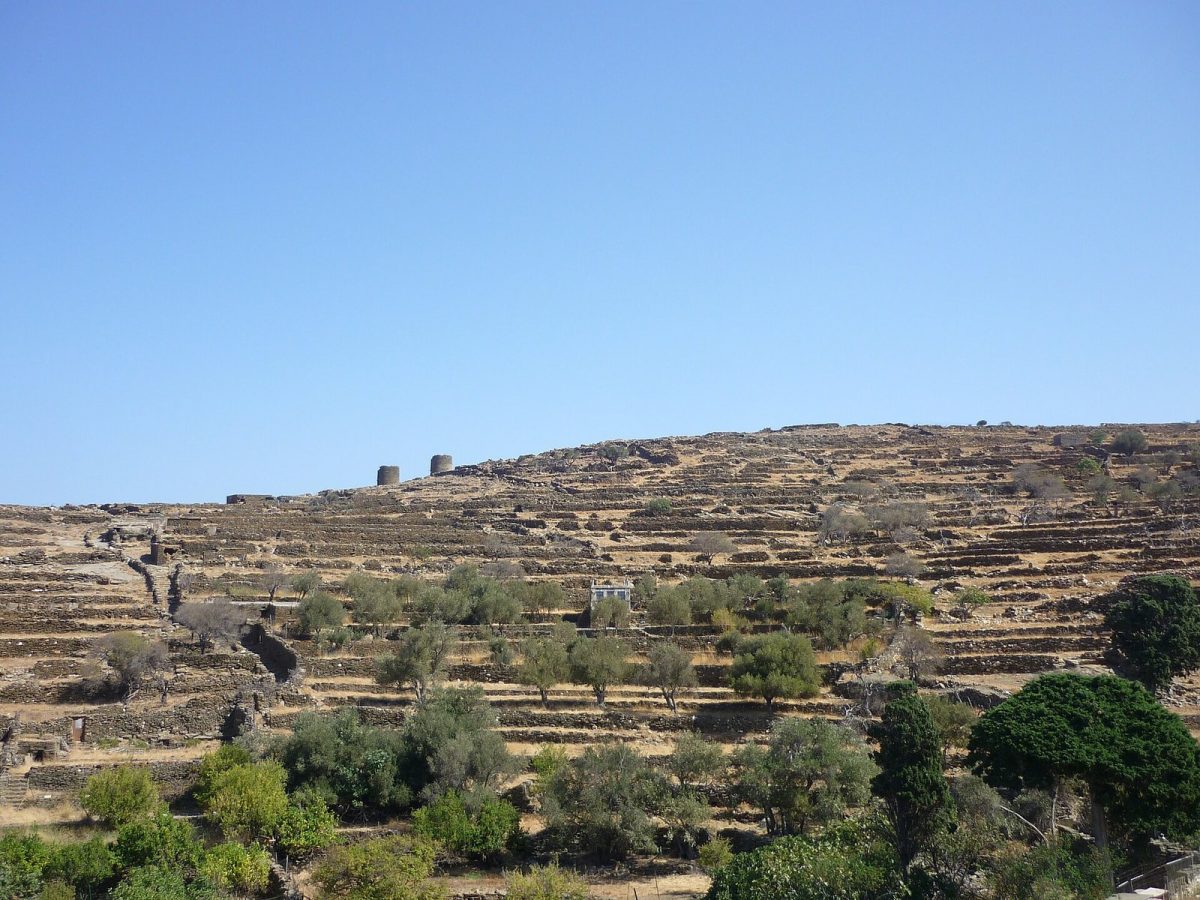
Photo: Elene, Attribution
| Getting there | Ferry from Rafina in 2 to 4 h or Piraeus in 3 to 5 h; fast boats from Mykonos in about 20 to 30 min |
|---|---|
| Gateway | Athens (Rafina or Piraeus) |
| Travel time | 2 to 4 h by ferry from Rafina |
| Days | 3 to 5 nights |
| Best months | May–Jun and Sep–Oct; 15 Aug pilgrimage very busy; often windy in summer |
| Getting around | Rent a car or scooter; buses link Tinos Town with the main villages and beaches |
| Booking | Rooms and ferries months ahead for Easter, 25 Mar and 15 Aug; otherwise a few weeks |
| Cost | Mid-range for Greece; much cheaper than Mykonos |
| Beaches | Sand and pebble bays; Kolymbithra for surf, Agios Sostis and Agios Ioannis near town |
| Sea | Aegean Sea |
| Archipelago | Cyclades |
| Area | 194 km² |
| Population | 8,934 (2021) |
| Highest point | 729 m (Tsiknias) |
| Airport | No |
| Car-free | No |
| Checked | October 2026 |
Tinos sells very little in the way of mass tourism, and most products are small, local and focused on culture, walking and food.
The most useful for a first visit are cultural tours of the villages, run by small van in four or five hours or on foot around Tinos Town, covering the church, the marble villages of Pyrgos and Isternia, the dovecotes and viewpoints; one includes the museums. Entry fees and drinks are usually extra. Guided hikes follow the old paved paths between villages, and there is a via ferrata and rock climbing on the granite of Exomvourgo, with equipment and a guide included.
Food and craft are the island's speciality: winery visits with tastings, a marble carving session with a local sculptor, art workshops and outdoor yoga among the boulders of Volax. On the water, private boats and sunset cruises with a meal explore the coast, and some private trips sail to Delos and Rineia. Fast ferry tickets from Mykonos and Piraeus are also sold separately.
The plain recommendation: rent a car for at least two days and explore the villages yourself, then add one guided hike or a marble workshop for depth; day trips from Mykonos are possible, but Tinos deserves a few nights.
The great white church stands at the top of a broad avenue rising about 800 metres from the harbour of Tinos Town. Pilgrims walk or crawl up the carpeted strip at the side to venerate the icon of the Virgin found in 1823. Inside, hundreds of silver votive offerings hang from the ceiling. Dress modestly; the complex also houses small art museums.
The largest village, in the northwest, is the centre of the island's marble carving, with carved lintels, fountains and doorways everywhere. Visit the Museum of Marble Crafts and the house of the sculptor Chalepas, then sit under the plane tree in the square. Nearby Isternia and Kardiani cling to slopes above the sea, about 30 minutes from Tinos Town.
In the centre of the island, Volax sits in a strange landscape of huge round granite boulders, with a small outdoor theatre and basket weavers. Above it, the rocky granite hill of Exomvourgo carries the ruins of the Venetian fortress that held out until 1715. The climb takes about 40 minutes from the nearby villages, with views over the whole Cyclades.
Tinos has around a thousand dovecotes, two-storey stone towers decorated with geometric patterns in slate, built mainly by Venetian-era landowners. The densest clusters are in the valleys around Tarampados and Kampos, where a short walk on old paths leads between them. Late afternoon light shows the patterns best; please stay on paths, as most stand on private land.
On the windy north coast, Kolymbithra is a double bay: the larger beach is popular with surfers when the meltemi blows, the smaller one sheltered with a taverna. The drive takes about 30 minutes from Tinos Town through Komi. Nearby, the harbour of Panormos below Pyrgos has fish tavernas on the quay and small coves within walking distance.
Close to town, the walled convent of Kechrovouni is almost a village in itself, with lanes and cells where Saint Pelagia had the vision that led to the finding of the icon. A short drive west, Ktikados and Tripotamos are picture-perfect villages with tavernas looking over the valley towards the sea and Syros.
Our pick for each kind of trip, with live dates and prices. Free cancellation on most.
Best for: First visit, the villages in half a day
A small-group drive through the marble villages, dovecote valleys and viewpoints of the interior, a good introduction before you explore on your own.
There is no airport, so Tinos is reached by sea. Ferries leave Rafina, the closest port to Athens airport, several times a day in summer; fast boats take about two hours and conventional ones up to four. From Piraeus the trip takes three to five hours. Tinos lies on the main northern Cyclades line, so boats continue to Mykonos, about 20 to 30 minutes away, and connect with Andros and Syros. Winter services are fewer but run most days. Tinos Town has an old and a new harbour a few hundred metres apart; check which one your boat uses. The island is often windy, and summer meltemi gales can delay or cancel the faster boats. Bringing a car on the ferry is easy and useful, and visitors from Mykonos often come just for the day.
Tinos is large, with villages spread across the hills, so a car or scooter is the best way to see it. Rental agencies cluster around the port. Buses run from Tinos Town to Pyrgos, Panormos, Kardiani, Volax and the main beaches several times a day in summer, less often in winter. Roads are good but winding, and village lanes are pedestrian only, with parking at the entrances. Walkers can follow a well-marked network of old stone paths between villages.
The best months are May, June, September and early October, with warm sea, mild walking weather and open tavernas. July and August are hot and busy with Greek visitors, and Tinos is one of the windiest Cyclades, so the meltemi can blow hard for days, sending you to sheltered southern beaches.
Religious dates shape the calendar. On 15 August, the feast of the Dormition, tens of thousands of pilgrims arrive for the procession of the icon, and rooms and ferries are booked months ahead; 25 March, the Annunciation, and Easter are also very busy. In winter many hotels close, but the villages stay inhabited and the island is green and calm. Spring brings wild flowers and the artichoke festival in May at Komi. Three nights covers the main sights; five lets you hike and eat well.
Tinos Town is the most practical base, with ferries, buses, rental agencies, restaurants and the church, and lively evenings on the waterfront. For a village atmosphere, stay in Pyrgos, Isternia or Ktikados, where old houses have been converted into rooms with views. Agios Ioannis and Agios Sostis on the south coast suit beach holidays, while Panormos in the north is quiet and fishing-focused.
Tinos was home to a sanctuary of Poseidon and Amphitrite in antiquity, and its excavated remains lie at Kionia, west of town. The Venetians ruled the island for five centuries, longer than any other in the Cyclades, holding out on Exomvourgo until 1715, which is why a strong Catholic community still lives alongside the Orthodox majority. The finding of the icon in 1823, during the War of Independence, made Tinos the spiritual centre of modern Greece. The island also produced many of Greece's leading sculptors and painters, and the marble workshops of Pyrgos still operate.
Tinos fits easily into a northern Cyclades trip. Mykonos is 20 to 30 minutes away by fast boat, and from there boats go to Delos. Syros, with its neoclassical capital of Ermoupoli, is about 30 minutes away, and Andros, green and good for hiking, about an hour. A sensible route is Andros, Tinos, then Mykonos or Syros.
Ferry from Rafina in 2 to 4 h or Piraeus in 3 to 5 h; fast boats from Mykonos in about 20 to 30 min.
From Athens (Rafina or Piraeus): 2 to 4 h by ferry from Rafina.
3 to 5 nights.
May–Jun and Sep–Oct; 15 Aug pilgrimage very busy; often windy in summer.
Rent a car or scooter; buses link Tinos Town with the main villages and beaches.
Go if you want real Cycladic villages, marble craft, hiking and excellent local food close to Mykonos. Skip it or choose Naxos or Paros if you want long sandy beaches and nightlife, or avoid it around 15 August unless you come for the pilgrimage.
Mid-range for Greece; much cheaper than Mykonos.
Sand and pebble bays; Kolymbithra for surf, Agios Sostis and Agios Ioannis near town.
Rooms and ferries months ahead for Easter, 25 Mar and 15 Aug; otherwise a few weeks.
Yes. Boat trips, guided tours and day trips for Tinos can be booked online; live prices and free cancellation on most are shown on this page.
Cyclades, Greece
Santorini is the ring of a drowned volcano in the southern Cyclades: white villages along a 300-metre cliff, black-sand…
772 tours & trips
Cyclades, Greece
Mykonos is a small, dry and windy island in the central Cyclades, about 85 square kilometres of brown hills ringed by…
294 tours & trips
Cyclades, Greece
Naxos is the largest and greenest of the Cyclades, 428 square kilometres of long sandy beaches, marble villages and…
208 tours & trips
Cyclades, Greece
Paros sits at the heart of the Cyclades, about 150 km south-east of Piraeus and a short hop from Naxos and Mykonos, a…
138 tours & trips
Cyclades, Greece
Milos is a volcanic island at the south-western edge of the Cyclades, wrapped round a large flooded caldera that forms…
122 tours & trips
Cyclades, Greece
Antiparos is a small, relaxed island in the Cyclades, separated from Paros by a channel less than two kilometres wide…
38 tours & trips