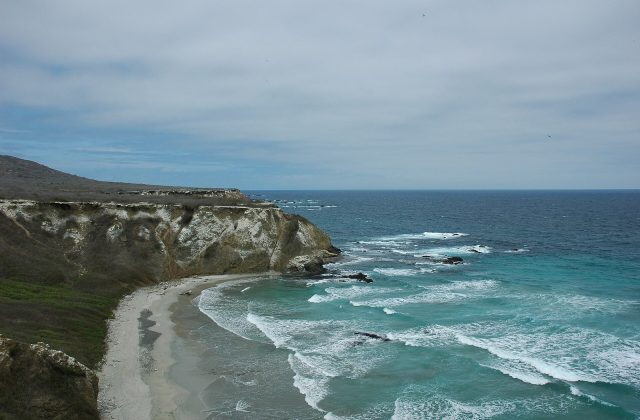
Isabela
Galapagos Islands, Ecuador
Isabela is the largest of the Galápagos Islands, a seahorse-shaped chain of six volcanoes about 100 km long that…
28 tours & trips
Ecuador · Pacific Ocean · Nature & wildlife island
The Galapagos Islands are a volcanic archipelago on the equator, about 900 km off the coast of Ecuador, where sea lions, marine iguanas and giant tortoises show almost no fear of people. Nearly all of the land and the sea around it is national park, and the wildlife that shaped Darwin's thinking is still the reason to make the long, costly trip.
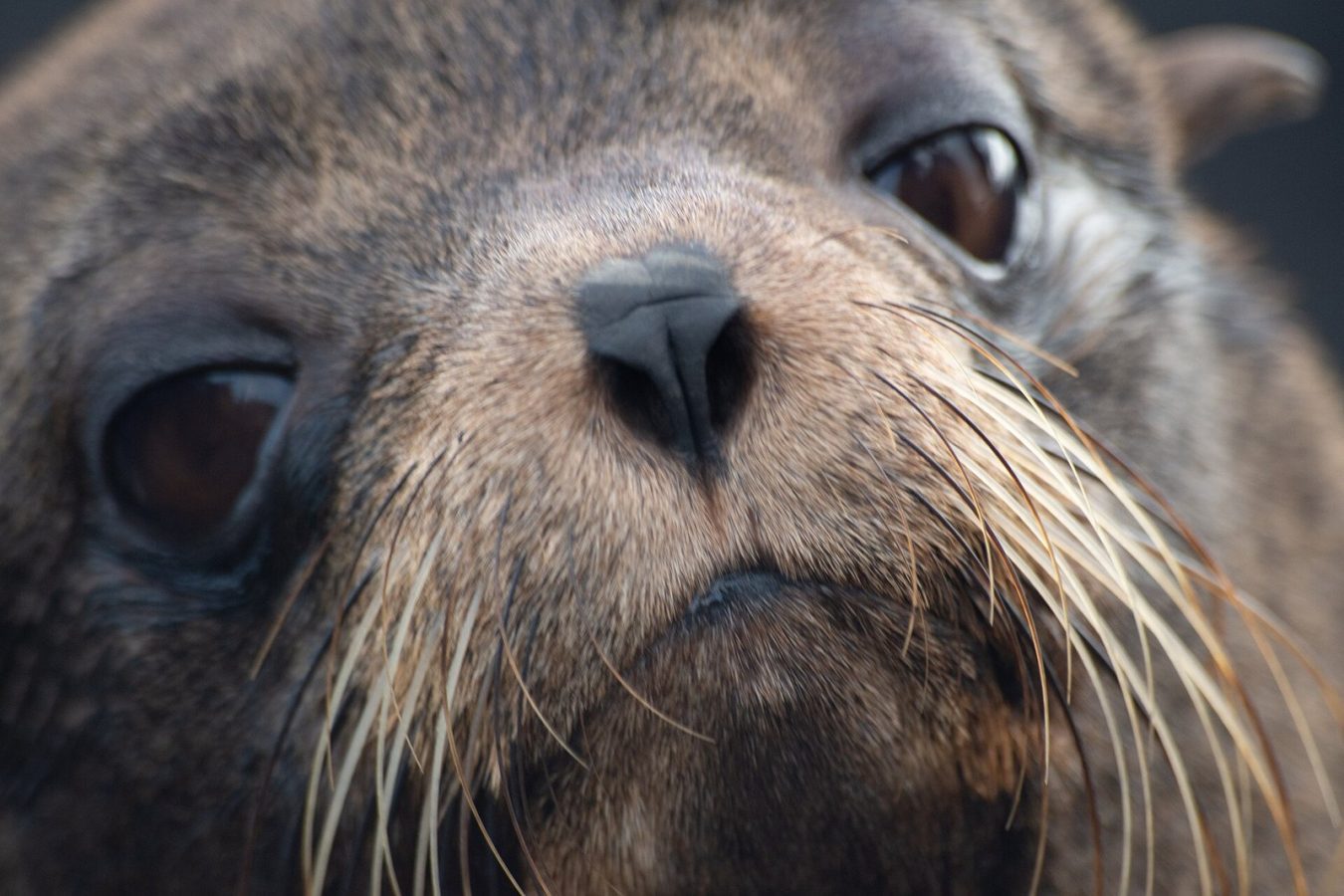
Photo: © Nicolas Völcker, CC BY-SA 4.0
| Getting there | Flights from Quito or Guayaquil to Baltra or San Cristobal; no passenger ferries from the mainland |
|---|---|
| Gateway | Guayaquil or Quito (flights to Baltra) |
| Travel time | About 2 h by air from Guayaquil |
| Days | A week or more |
| Best months | Dec–May warm and calm; Jun–Nov cooler water, rougher seas, richer sea life |
| Getting around | Live-aboard cruise, or speedboats between Santa Cruz, Isabela and San Cristobal |
| Booking | Cruises and flights months ahead; land-based day boats a few days ahead |
| Cost | Expensive, even by Ecuadorian standards |
| Beaches | White sand at Tortuga Bay, Puerto Villamil and Playa Mann; sea lions on many beaches |
| Sea | Pacific Ocean |
| Area | 7,880 km² |
| Population | 28,583 (2022) |
| Highest point | 1,707 m (Volcan Wolf) |
| Airport | Yes, scheduled flights |
| Car-free | No |
| Visitors | 271,238 a year (2019) |
| UNESCO | Galapagos Islands |
| Checked | October 2026 |
There are two ways to see the Galapagos, and the choice shapes the whole trip.
A live-aboard cruise of four to eight days on a small yacht or catamaran is the classic option. The park sets the itineraries, a certified naturalist guide comes with every boat, and meals, landings and snorkelling are included. Cruises reach the remote western and northern islands that day boats cannot, but they cost the most and sell out early.
The cheaper alternative is to stay on land in Puerto Ayora, Puerto Villamil or Puerto Baquerizo Moreno and take day trips. Packages of four to eight nights bundle hotels, transfers, the speedboat between islands and a guided excursion each day. You can also book on the spot: guided day boats to North Seymour, Plazas, Santa Fe, Bartolome or Pinzon include a guide, snorkel gear and a simple lunch, while diving days to Gordon Rocks or Kicker Rock are for certified divers.
Shorter outings sold locally include the tortoise reserves in the highlands of Santa Cruz with the lava tunnels, bike rides, kayaking in Tortuga Bay and the tunnels snorkel off Isabela. Park fees, flights and tips are almost never included.
For a first visit of a week, a land-based package on two or three islands gives the best value; choose a cruise if seeing more species matters more than cost.
The busiest town of the islands sits on Academy Bay, with the fish market where sea lions and pelicans wait for scraps. Walk to the Charles Darwin Research Station to see young tortoises being raised, then drive up to the misty highlands, where wild giant tortoises graze in pastures and you can walk through long lava tubes.
A paved path of about 2.5 km leads from the edge of Puerto Ayora through cactus forest to Tortuga Bay, a long white beach where marine iguanas sun themselves; swim only in the sheltered lagoon at its end. On the other side of town, a short water taxi and a walk bring you to Las Grietas, a deep crack of clear brackish water.
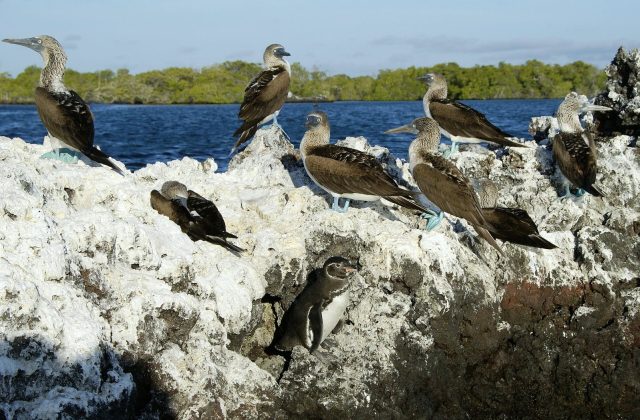
These small islands, a short boat ride from the north and east of Santa Cruz, are the easiest place to see seabird colonies at close range. On North Seymour blue-footed boobies dance and frigatebirds inflate red throat pouches; on South Plaza yellow land iguanas sit under prickly pear cactus and sea lions crowd the rocks.
The largest island is a seahorse-shaped chain of volcanoes, two hours by speedboat from Santa Cruz. Puerto Villamil has a long sandy beach and lagoons with flamingos. A guided hike crosses the rim of Sierra Negra, one of the widest calderas in the world, and boats run to Los Tuneles, lava arches where turtles and sharks rest.
The provincial capital, Puerto Baquerizo Moreno, has sea lions sleeping on its benches and beaches, and a good interpretation centre on the islands' history. Day boats go to Kicker Rock, a split volcanic rock rising from the sea off the north coast, where snorkellers and divers often see hammerhead and Galapagos sharks, rays and turtles in the channel.
Our pick for each kind of trip, with live dates and prices. Free cancellation on most.
Best for: First visit, based on land
Five days split between Santa Cruz and Isabela, with hotels, guides and the inter-island boat arranged, a sensible introduction for travellers who prefer land beds to a cabin.
There are no passenger ferries from the mainland, so everyone flies. Several Ecuadorian airlines fly daily from Guayaquil, and from Quito with a stop in Guayaquil, to Seymour airport on Baltra, just north of Santa Cruz, and to San Cristobal. The flight from Guayaquil takes about two hours.
Before check-in you must buy a transit control card at the airport in Ecuador, and your bags are inspected for seeds and food. On landing you pay the national park entrance fee in cash, so carry dollars.
From Baltra a free bus takes you to the Itabaca Channel, a small ferry crosses to Santa Cruz, and a bus or taxi climbs over the highlands to Puerto Ayora, about an hour in all. Cruise passengers are met at the airport by their guide.
Public speedboats link Puerto Ayora with Puerto Villamil on Isabela and Puerto Baquerizo Moreno on San Cristobal, usually twice a day. The crossing takes about two hours and the sea can be rough, so take seasickness tablets. Small planes also fly between the islands. Within the towns you walk or take cheap white pickup taxis; on Santa Cruz taxis also reach the highlands. Most visitor sites can only be visited with a licensed guide.
The islands are worth visiting all year, but the seasons differ. From December to May the warm season brings calm seas, sunny days with short showers and water warm enough to snorkel without a wetsuit; it is the best time for flat crossings and land birds nesting.
From June to November the cold Humboldt current brings cooler air, grey skies and drizzle in the highlands, rougher seas and colder water, but also more plankton, more fish and the best diving, with whale sharks in the far north. A wetsuit is useful.
The busiest and most expensive periods are Christmas and New Year, Easter, and July and August, when cruises fill early. September and October are quieter and often discounted. Plan at least a week: the flights alone take a day each way, and a shorter stay leaves too little time for the islands beyond Santa Cruz.
Land-based visitors usually split their nights between islands. Santa Cruz, with Puerto Ayora, is the most practical base: most day boats leave from here, and it has the widest range of rooms and restaurants. Isabela, around Puerto Villamil, is smaller, slower and sandier, good for two or three nights. San Cristobal suits those who want sea lions on the doorstep and an airport for flying out. Floreana has only a handful of rooms.
The islands were found by chance in 1535, when a Spanish bishop drifted off course on his way to Peru. With little fresh water they stayed empty, used only by pirates and later by whalers who took thousands of tortoises for food. Ecuador claimed them in 1832, and Charles Darwin spent five weeks here in 1835 on the Beagle. Settlers, penal colonies and a wartime American base on Baltra followed. The national park came in 1959 and the islands were among the first World Heritage Sites in 1978.
Most visitors pair the islands with mainland Ecuador. Quito, with its colonial centre, and the Andean markets and volcanoes nearby are worth three or four days, while Guayaquil works as a one-night stop before the flight. A popular route is Quito, a week on the islands, then the Amazon lowlands or the hot springs of Banos, each a short internal flight or bus journey away.
Flights from Quito or Guayaquil to Baltra or San Cristobal; no passenger ferries from the mainland.
From Guayaquil or Quito (flights to Baltra): about 2 h by air from Guayaquil.
A week or more.
Dec–May warm and calm; Jun–Nov cooler water, rougher seas, richer sea life.
Live-aboard cruise, or speedboats between Santa Cruz, Isabela and San Cristobal.
Go if you want to snorkel with sea lions and walk among nesting seabirds and giant tortoises. Skip it if your budget or time is tight, or you mainly want beach holidays and nightlife.
Expensive, even by Ecuadorian standards.
White sand at Tortuga Bay, Puerto Villamil and Playa Mann; sea lions on many beaches.
Cruises and flights months ahead; land-based day boats a few days ahead.
Yes. Boat trips, guided tours and day trips for Galapagos Islands can be booked online; live prices and free cancellation on most are shown on this page.
Galapagos Islands, Ecuador
Isabela is the largest of the Galápagos Islands, a seahorse-shaped chain of six volcanoes about 100 km long that…
28 tours & trips
Galapagos Islands, Ecuador
San Cristobal is the easternmost island of the Galapagos, about 1,000 km off mainland Ecuador, with the…
13 tours & trips
Galapagos Islands, Ecuador
Floreana is a small volcanic island in the south of the Galapagos, home to about 100 people and reached by speedboat…
4 tours & trips
Galapagos Islands, Ecuador
Bartolome is a tiny volcanic islet of 1.2 square kilometres off Santiago in the central Galapagos, uninhabited and…
2 tours & trips
Galapagos Islands, Ecuador
Santa Cruz is the central and most populous island of the Galápagos, a shield volcano of about 986 square kilometres…
2 tours & trips
Ecuador
Isla de la Plata is a small, uninhabited island of about 6 square kilometres in Machalilla National Park, roughly 40 km…
1 tour