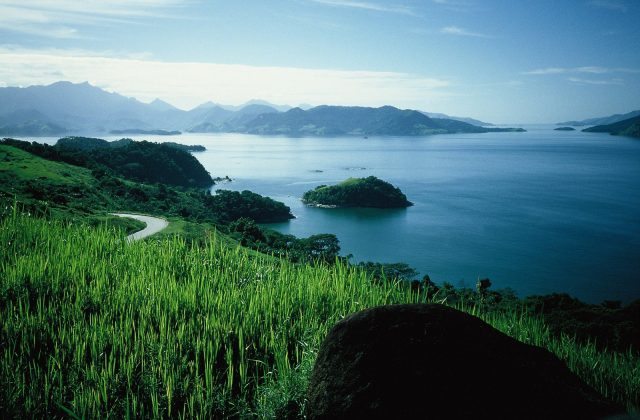
Ilha Grande
144 km away
Ilha Grande is a mountainous, rainforest-covered island off the coast of Angra dos Reis, about 150 km west of Rio de…
197 tours & trips
Brazil · Atlantic Ocean · Nature & wildlife island
Ilhabela is a mountainous, forested island just off the coast of São Paulo state, a 15-minute ferry ride from São Sebastião and about 205 km from São Paulo city. Most of it is a state park rising to 1,379 metres, with waterfalls, rainforest trails, wreck dives and beaches that are reached only by boat or on foot.
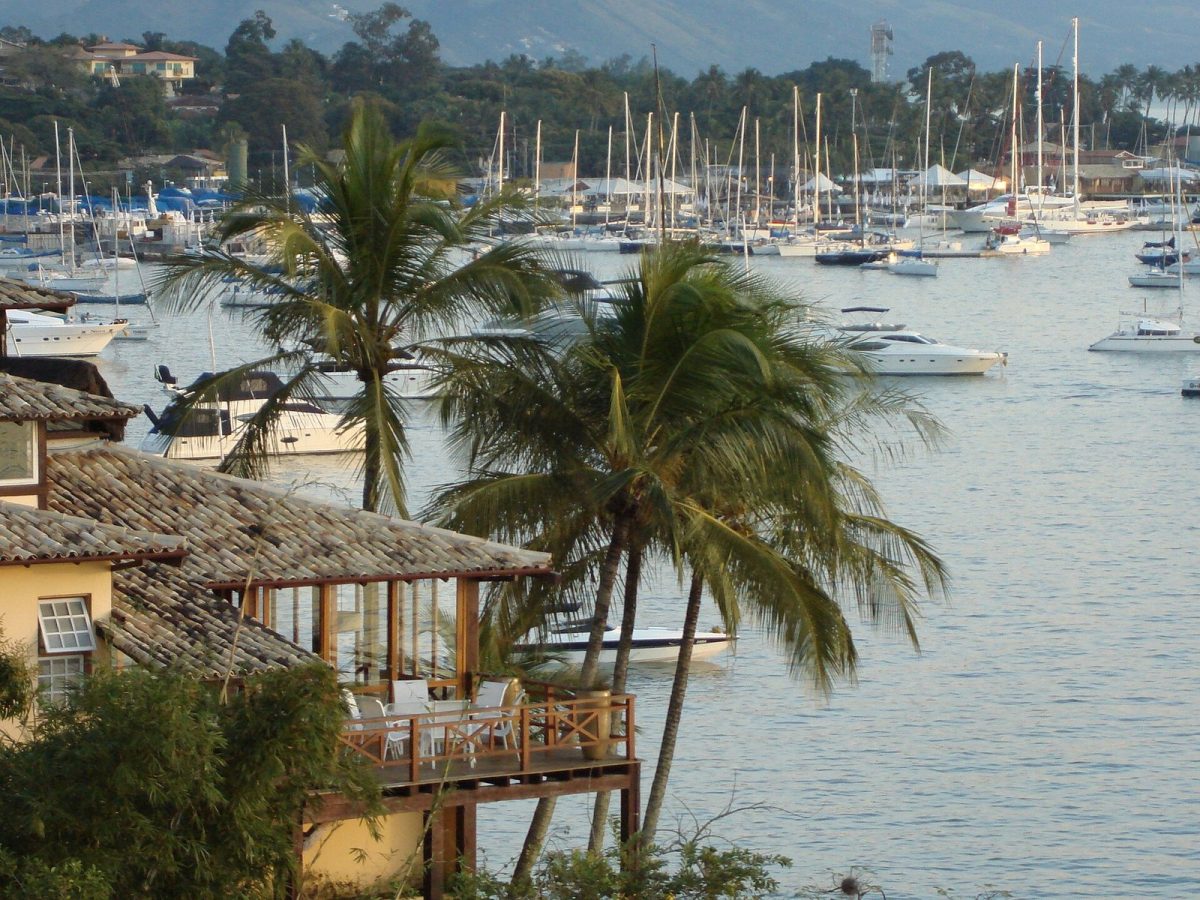
Photo: Jurema Oliveira, CC BY-SA 3.0
| Getting there | Car ferry from São Sebastião in about 15 min; São Paulo is about 205 km by road |
|---|---|
| Gateway | São Sebastião (ferry); São Paulo 205 km |
| Travel time | 15 min by ferry; about 3 to 4 h by road from São Paulo |
| Days | 3 to 5 nights |
| Best months | Apr–May and Sep–Nov; Dec–Feb rainy and crowded |
| Getting around | A car or bus along the west-coast road; 4x4 or boat for the east-coast beaches |
| Booking | Rooms and ferry car slots ahead for holidays and summer weekends |
| Cost | Mid-range to expensive for Brazil |
| Beaches | Sandy coves along the sheltered west coast; wild Castelhanos and Bonete by 4x4, boat or trail |
| Sea | Atlantic Ocean |
| Area | 348 km² |
| Population | 36,559 (2025) |
| Highest point | 1,379 m (Pico de Sao Sebastiao) |
| Ferry | 15 min from São Sebastião (ferry); São Paulo 205 km |
| Airport | No |
| Car-free | No |
| Checked | October 2026 |
Nothing is sold online for Ilhabela alone, so most visitors drive over and organise outings locally, where a wide choice of agencies works from the main villages and the ferry area. Day trips from São Paulo exist but mean a long road journey and ferry queue each way; the island needs at least three nights.
The most popular trip is the 4x4 excursion across the mountains to Castelhanos Bay on the wild east coast, a rough dirt road through the park that ordinary cars should not attempt. Boat tours are the other staple: schooners and speedboats sail round to beaches and islets with no road access, such as Ilha das Cabras for snorkelling, Bonete and Castelhanos, with swimming stops. Dive centres run trips to the many shipwrecks around the island and to the islands of Búzios and Vitória. Guided hikes to waterfalls and the long trail to Bonete are worth taking with a local guide, who knows the paths and the tides. Sailing schools and yacht charters reflect the island's reputation as a sailing centre.
Prices usually include transport and a guide; lunch is mostly extra. A good plan is one 4x4 day, one boat day and one waterfall hike.
The historic centre, known simply as the Vila, has a small colonial church, a pedestrian street of shops and restaurants and a seafront promenade facing the mainland. Along the paved road north and south lie small beaches with calm water and beach bars; Curral, in the south, is the liveliest, while the northern coves are quieter. Sunsets over the channel are spectacular.
A wide curve of sand on the east coast, backed by rainforest, reached by a 4x4 track of about 20 km over the mountains or by boat. The ride itself, through the state park with viewpoints and waterfalls, is half the experience. There is a small fishing community and simple food. The road becomes impassable after heavy rain, so trips can be cancelled.
The forested slopes hold dozens of waterfalls. The most visited, near the south of the island, has natural pools and slides and is well organised for families, while others are reached by short trails from the coast road. Bring strong insect repellent: the small biting flies called borrachudos are the island's best-known nuisance, especially near fresh water.
A trail of about 15 km from the southern end of the road crosses forest, streams and waterfalls to Bonete, a fishing village on a long surf beach on the south-east coast. Walking takes four to five hours each way, so most people stay the night or return by boat. Go with a guide if you are unsure of the route, and start early.
Strong currents and fog have sunk many ships around Ilhabela, among them the Spanish liner Príncipe de Asturias in 1916, and several wrecks are dived from local centres. For beginners and snorkellers, the small island of Ilha das Cabras, just off the west coast, is a marine protected area with clear water, rocks and plenty of fish.
There is no bridge and there are no scheduled flights. Car ferries cross the channel from São Sebastião in about 15 minutes, running day and night, roughly every half hour and more often at busy times; foot passengers can also use small passenger boats. In summer and on holiday weekends the car queue can stretch to several hours, so travel midweek or reserve a car slot in advance.
São Sebastião is about 205 km from São Paulo, roughly three to four hours by car via the mountain highway to Caraguatatuba, and long-distance buses run from São Paulo to the town. São Paulo's airports are the nearest for international and domestic flights. Small cruise ships call in season, anchoring off the Vila.
One paved road runs along the sheltered west coast from north to south, and most hotels, villages and beaches lie along it. A local bus runs its length, but a car gives much more freedom and is what most visitors use; bring one on the ferry or hire one on the island. The east coast has no paved road, so Castelhanos, Bonete and other beaches are reached by 4x4 tour, boat or on foot. Traffic is heavy on holiday weekends.
The best months are April and May and September to November, when days are warm and drier, the forest is green and roads and ferries are calm. December to February is hot and humid with frequent heavy rain, which can close the road to Castelhanos, and it is also the busiest period, with São Paulo families, high prices and long ferry queues, especially over Christmas, New Year and Carnival.
Winter, from June to August, is the driest and coolest season, with clear days around 20 degrees, few insects and good hiking, though the sea is cool for swimming. The big sailing week in July brings regattas and fills the hotels.
Weekends are always busier than weekdays. Three to five nights allows a 4x4 day, a boat trip, a waterfall hike and time on the beaches.
Most visitors stay along the west coast road. The Vila and the area around it offer the most restaurants and some evening life, and suit people without a car. Perequê, near the ferry, is practical and has supermarkets and sailing clubs. The south, around Curral and Veloso, has beach bars and inns close to the sand, while the north is quieter and more residential. For a real escape, simple guesthouses in Bonete or Castelhanos can be booked locally.
Indigenous Tupinambá people lived along this coast before the Portuguese arrived in the early 16th century and named the main island after Saint Sebastian. Its sheltered channel and forests made it a refuge for pirates and privateers in colonial times, and later the slopes were cleared for sugar cane and coffee worked by enslaved Africans. The town was founded in the early 19th century. Shipwrecks around the island are a large part of local lore. In the 20th century tourism and the state park, which protects most of the island, shaped the place visitors see.
São Sebastião, on the mainland, has a small colonial centre worth an hour. The beaches of the north coast of São Paulo, such as Maresias, are within an hour's drive, Ubatuba about two hours north, and Paraty around three hours away across the state line. São Paulo itself, about four hours by road, is where most trips begin and end.
144 km away
Ilha Grande is a mountainous, rainforest-covered island off the coast of Angra dos Reis, about 150 km west of Rio de…
197 tours & trips
Car ferry from São Sebastião in about 15 min; São Paulo is about 205 km by road.
From São Sebastião (ferry); São Paulo 205 km: 15 min by ferry; about 3 to 4 h by road from São Paulo.
3 to 5 nights.
Apr–May and Sep–Nov; Dec–Feb rainy and crowded.
A car or bus along the west-coast road; 4x4 or boat for the east-coast beaches.
Go if you want rainforest hikes, waterfalls, sailing and wild beaches within a few hours of São Paulo. Skip it or choose Ilha Grande if you want a car-free island, or avoid holiday weekends if you hate queues and crowds. With about 15 min each way from São Sebastião (ferry); São Paulo 205 km, a day trip is easy to do.
Mid-range to expensive for Brazil.
Sandy coves along the sheltered west coast; wild Castelhanos and Bonete by 4x4, boat or trail.
Rooms and ferry car slots ahead for holidays and summer weekends.
Brazil
Ilha Grande is a mountainous, rainforest-covered island off the coast of Angra dos Reis, about 150 km west of Rio de…
197 tours & trips
Marajó Archipelago, Brazil
Marajó is the vast island at the mouth of the Amazon, about 40,000 square kilometres of savannah, mangrove and…
6 tours & trips
Brazil
Fernando de Noronha is a volcanic archipelago of 21 islands 354 km off the coast of north-east Brazil, protected as a…
3 tours & trips
Brazil
Santa Catarina Island is the 424-square-kilometre island off southern Brazil that holds Florianopolis, the capital of…
No tours listed
Brazil
Ilha do Mel is a car-free island 4 km off the coast of Paraná in southern Brazil, where sandy paths link two fishing…
No tours listed