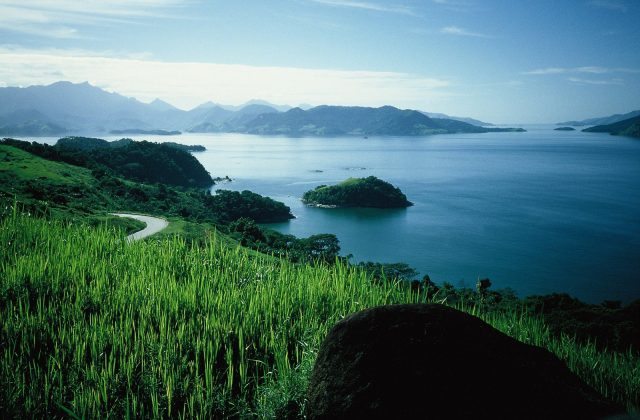
Ilha Grande
Brazil
Ilha Grande is a mountainous, rainforest-covered island off the coast of Angra dos Reis, about 150 km west of Rio de…
197 tours & trips
Brazil · Atlantic Ocean · Beach island
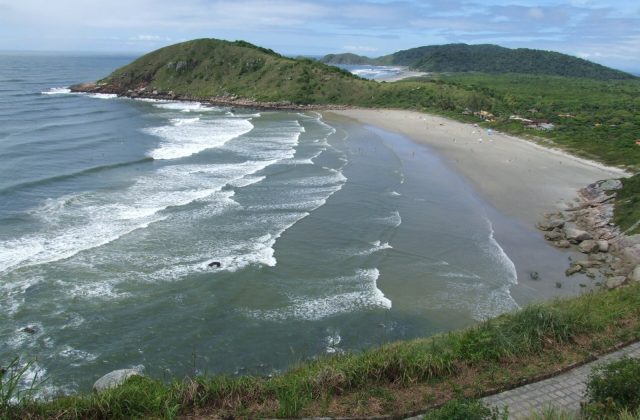
Santa Catarina Island is the 424-square-kilometre island off southern Brazil that holds Florianopolis, the capital of Santa Catarina state, joined to the mainland by bridges. Around 54 km long, it packs surf beaches, dunes, a big lagoon, Azorean fishing villages and forested hills into a place you can drive across in an hour.
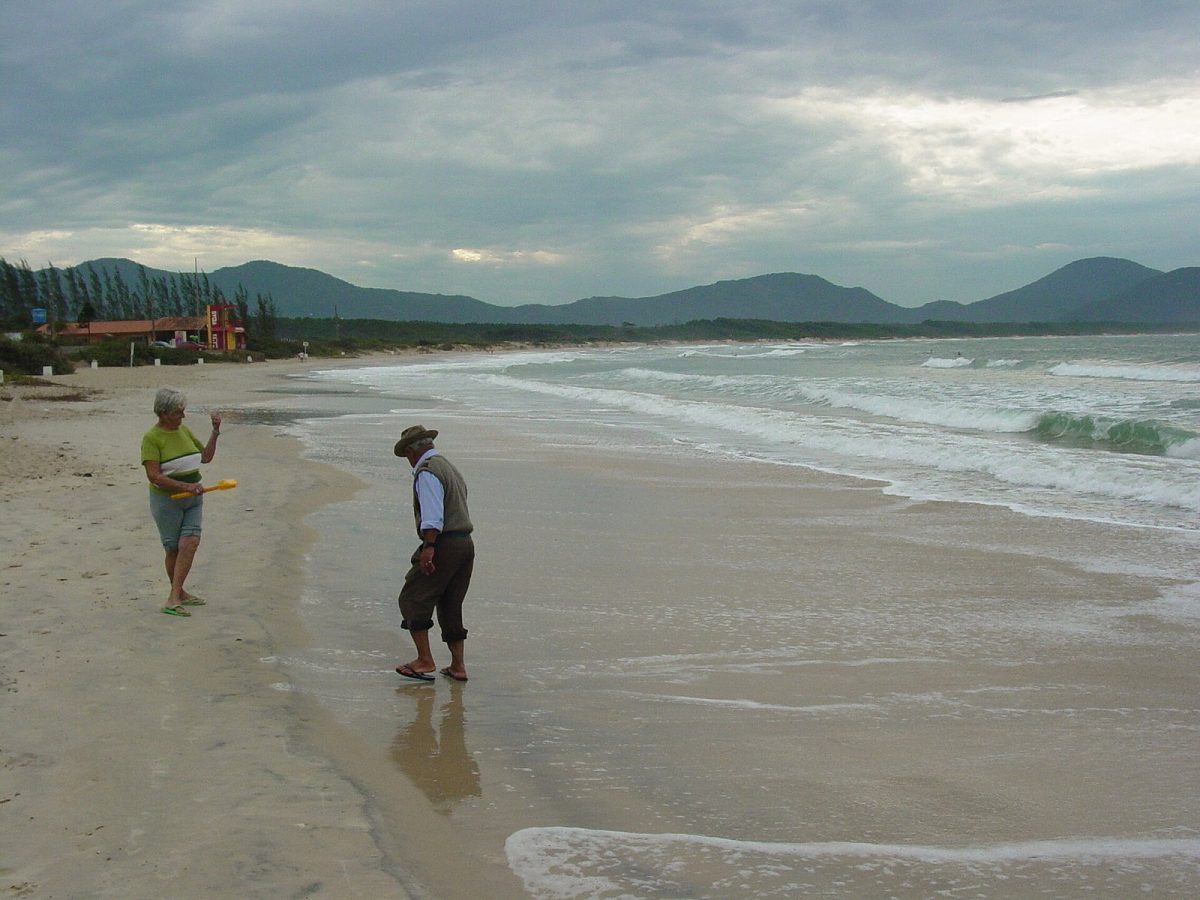
Photo: Adam Jones Adam63, CC BY-SA 3.0
| Getting there | Flights to Hercilio Luz airport from Sao Paulo, Rio and Buenos Aires; or drive or bus in over the bridges |
|---|---|
| Gateway | Florianopolis (Hercilio Luz airport) |
| Travel time | About 1 h flight from Sao Paulo; on the island already |
| Days | 3 to 5 nights |
| Best months | Dec–Mar summer, hot and busy; Apr–May and Nov quieter and still warm |
| Getting around | Rent a car, or use city buses through the terminals and app taxis; traffic is heavy in summer |
| Booking | Rooms and rental cars for Christmas to Carnival well ahead; boat trips a day ahead |
| Cost | Mid-range for Brazil; pricier in January and February |
| Beaches | Over 40 beaches: calm Jurere in the north, surf at Joaquina and Mole, wild Lagoinha do Leste |
| Sea | Atlantic Ocean |
| Area | 424 km² |
| Highest point | 523 m (Q3324430) |
| Airport | Yes, scheduled flights |
| Car-free | No |
| Bridge | Road bridge or causeway to the mainland |
| Checked | October 2026 |
Almost nothing is sold online for the island as a single product, and most visitors do not need it: Florianopolis is a city with an airport and bridges, so you arrive on your own and arrange outings once you are there.
The main things booked locally are boat trips. Schooners from Canasvieiras and the northern beaches sail to the island of Anhatomirim to visit its eighteenth-century fortress, usually with a swim stop and sometimes dolphins in the bay; they take most of a day and lunch is extra. Small boats from Armacao and Pantano do Sul cross to Ilha do Campeche, a protected islet with rock carvings and clear water, where visitor numbers are limited in summer, so go early. On the lagoon, public boats link Lagoa da Conceicao village with Costa da Lagoa, a fishing settlement with no road.
Surf schools at Joaquina, Mole and Barra da Lagoa rent boards and teach beginners, and sandboarding on the Joaquina dunes is done by the hour. Walkers can hire a local guide for trails to Lagoinha do Leste, though the path is easy to follow on your own in dry weather.
Recommendation: rent a car for a few days, base yourself in one area, and book a boat trip to Campeche or Anhatomirim on a calm, sunny day.
The large lagoon in the centre of the island is its social heart, with a village of bars and seafood restaurants on the water and windsurfers and kitesurfers on the lagoon. Take the public boat to Costa da Lagoa for lunch, or walk the old path along the shore. The Joaquina dunes and surf beach are ten minutes away by car.
This small protected island off the east coast has white sand, very clear water and prehistoric rock engravings on its granite, seen on short guided trails. Boats cross in about 20 minutes from Armacao, longer from Barra da Lagoa, and only a set number of visitors may land each day in summer. Bring food and water, as facilities are basic.
On the sheltered west coast, this village of the Azorean settlers keeps whitewashed colonial houses, a church square and a row of restaurants serving oysters from the farms in the bay at sunset. The island is Brazil's leading oyster producer. Ribeirao da Ilha, further south on the same coast, is similar and even quieter.
Jurere Internacional, Canasvieiras and Ingleses have calm, warm water and full services, which suits families, but they are crowded and traffic-bound in January. From here boats sail to the fortress on Anhatomirim island, built in the 1740s to guard the northern bay. The fort of Sao Jose da Ponta Grossa stands on a headland nearby.
The most beautiful beach on the island has no road. A trail of about 4 km climbs from Pantano do Sul over a forested ridge and drops to a long empty beach backed by a small lagoon, with a short scramble up the rocks for the view. Allow two hours each way, carry water and avoid it after heavy rain.
Downtown Florianopolis has the Public Market with its seafood stalls, the old cathedral on Praca XV de Novembro with a huge fig tree, and the Cruz e Sousa Palace museum. The restored Hercilio Luz suspension bridge, reopened in 2019, is lit at night and can be crossed on foot. Half a day is enough here.
Hercilio Luz International Airport sits in the south of the island, about 15 km from downtown. Flights from Sao Paulo take about an hour and run many times a day, and there are direct services from Rio de Janeiro, Brasilia, Porto Alegre and other Brazilian cities, plus Buenos Aires, Santiago and Montevideo, especially in summer when many Argentine visitors come.
By road, the BR-101 highway runs along the mainland coast and the island is reached over the Colombo Salles and Pedro Ivo Campos bridges; long-distance buses from Sao Paulo (about 11 hours), Curitiba and Porto Alegre arrive at the bus station by the bridges. Cruise ships call in summer and anchor off Canasvieiras, landing passengers by tender.
The island is bigger than it looks and the beaches are spread out, so a rental car is the easiest choice; pick it up at the airport. Roads are good but narrow in places, and in January and February traffic to the northern beaches and the lagoon can be very slow. City buses run through integration terminals in the centre, the lagoon, Canasvieiras and the south, cheaply but with changes. App taxis work well everywhere.
Summer, from December to March, brings hot days, sea around 23 to 25 degrees and the busiest season, with Brazilian and Argentine holidaymakers filling the north between Christmas and Carnival; prices are highest and traffic is at its worst then. Afternoon storms are common.
April, May and November are the best balance: warm, calmer and cheaper, with most restaurants open. Winter, from June to August, is cool by Brazilian standards, with days around 18 degrees, cold water and some beach businesses closed, but it is the main surf season and the time of the mullet fishing on the southern beaches. Southern right whales pass along this coast between July and November. The island is also a working city, so it never shuts down. Plan three to five nights to see both the north and the wilder south.
The north, around Jurere, Canasvieiras and Ingleses, has the most hotels and the calmest water, and suits families, but it is far from the rest of the island. Lagoa da Conceicao is the most central base, with restaurants and nightlife, and is close to the eastern surf beaches. Campeche and Barra da Lagoa are relaxed surf neighbourhoods. The south, around Pantano do Sul and Ribeirao da Ilha, is the quietest and most rural. Downtown is practical but not a beach base.
The Carijo people lived on the island for thousands of years and left shell mounds and the rock carvings still seen on Campeche. The Portuguese founded the settlement of Nossa Senhora do Desterro in the seventeenth century, and from 1748 settlers from the Azores arrived to farm and fish, bringing the lace-making, boat building and architecture still visible in Santo Antonio and Ribeirao. Forts were built to defend the bay. The town was renamed Florianopolis in 1894 after President Floriano Peixoto, and from the 1970s beach tourism and universities turned it into a busy, prosperous city.
Driving south on the BR-101, Guarda do Embau is about an hour away and Garopaba and Praia do Rosa about 90 minutes, with whale watching in winter. North, Balneario Camboriu is roughly 90 minutes by car. Curitiba and the Ilha do Mel ferry are about five hours by road, and Sao Paulo is a short flight.
Flights to Hercilio Luz airport from Sao Paulo, Rio and Buenos Aires; or drive or bus in over the bridges.
From Florianopolis (Hercilio Luz airport): about 1 h flight from Sao Paulo; on the island already.
3 to 5 nights.
Dec–Mar summer, hot and busy; Apr–May and Nov quieter and still warm.
Rent a car, or use city buses through the terminals and app taxis; traffic is heavy in summer.
Go if you want dozens of different beaches, surf, fresh oysters and lively summer nights on one island. Skip it or choose a smaller island such as Ilha do Mel if you want car-free calm or reliable warm sea in winter.
Mid-range for Brazil; pricier in January and February.
Over 40 beaches: calm Jurere in the north, surf at Joaquina and Mole, wild Lagoinha do Leste.
Rooms and rental cars for Christmas to Carnival well ahead; boat trips a day ahead.
Brazil
Ilha Grande is a mountainous, rainforest-covered island off the coast of Angra dos Reis, about 150 km west of Rio de…
197 tours & trips
Marajó Archipelago, Brazil
Marajó is the vast island at the mouth of the Amazon, about 40,000 square kilometres of savannah, mangrove and…
6 tours & trips
Brazil
Fernando de Noronha is a volcanic archipelago of 21 islands 354 km off the coast of north-east Brazil, protected as a…
3 tours & trips
Brazil
Ilha do Mel is a car-free island 4 km off the coast of Paraná in southern Brazil, where sandy paths link two fishing…
No tours listed
Brazil
Ilhabela is a mountainous, forested island just off the coast of São Paulo state, a 15-minute ferry ride from São…
No tours listed