Hvar
Dalmatian Islands, Croatia
Hvar is a long, narrow island off the Dalmatian coast, about 68 km from end to end, known for the Venetian harbour of…
170 tours & trips
Croatia · Adriatic Sea · Nature & wildlife island
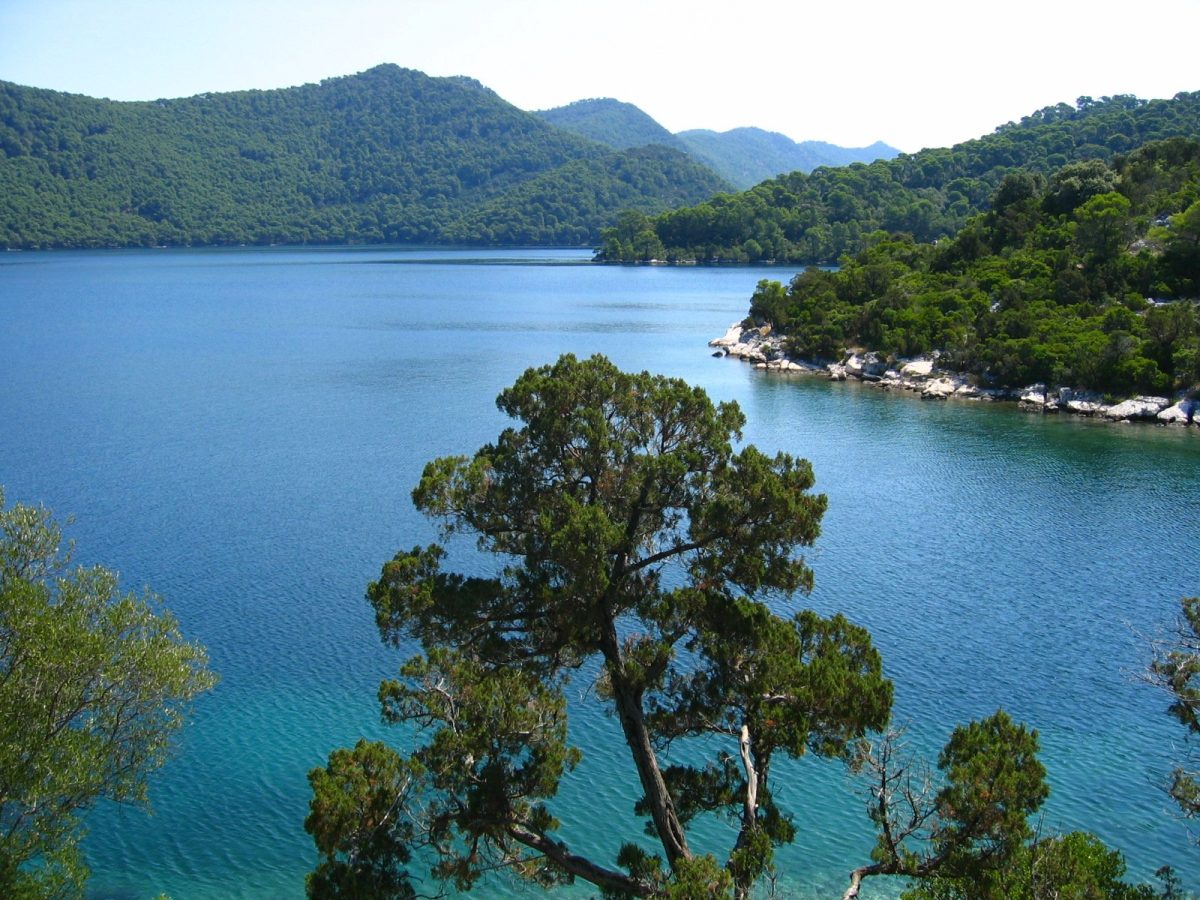
Mljet is a long, wooded island south of Pelješac and north-west of Dubrovnik, whose western third is a national park around two saltwater lakes with a medieval monastery on an islet. With about a thousand people on 98 square kilometres, it is one of the greenest and quietest islands in Croatia.
| Getting there | Catamaran from Dubrovnik to Sobra or Polace in 1.5 to 2 h; car ferry from Prapratno on Peljesac |
|---|---|
| Gateway | Dubrovnik (catamaran to Sobra or Polace) |
| Travel time | 1.5 to 2 h by catamaran |
| Days | 1 to 2 nights |
| Best months | May–Jun and Sep; Jul–Aug busy with day trippers; many places close Nov–Mar |
| Getting around | Rent a car or scooter for the whole island; bikes and boats inside the park |
| Booking | Summer catamaran seats and car ferry places; rooms in Pomena and Polace for August |
| Cost | Mid-range for Croatia |
| Beaches | Sandy coves at Saplunara and Blace in the east; rocky shores and lake swimming in the park |
| Sea | Adriatic Sea |
| Area | 98 km² |
| Population | 1,062 (2021) |
| Highest point | 514 m |
| Airport | No |
| Car-free | No |
| Checked | October 2026 |
Most of what is sold for Mljet is a day trip from Dubrovnik, and the choice is between a shared group outing and a private boat.
The standard group day uses the morning catamaran or a tour boat to Polace, then a bus or minivan into the national park, the park entry ticket, the little boat across the lake to St Mary's islet and free time to swim, cycle or walk; lunch is usually extra. Some versions include bike hire around the lakes, and some add the Odysseus Cave on the south coast, a sea cave where the light turns the water bright blue. Days are long, around ten to eleven hours, with two hours or more at sea.
Private speedboats from Dubrovnik are the expensive option but take under an hour and a half and let you add stops in the Elaphiti Islands. On the island itself you can rent a private boat from Saplunara to the cave, or join a quad-bike tour through the villages and back roads.
Park tickets and the lake boat are part of most tours; check before buying. If you have the time, skip the tour, take the catamaran yourself and stay a night, which is cheaper and less rushed.
At the heart of the national park, two saltwater lakes are joined to the sea by a narrow channel. A small park boat takes you from Pristanište across Veliko Jezero to the islet of St Mary, with its twelfth-century Benedictine monastery and church. Swim from the shore of the smaller lake, Malo Jezero, which warms quickly.
A flat path of about 9 km circles the big lake through pine and oak forest, and a bridge at Mali Most crosses the channel between the two. Bikes and kayaks are rented in Pomena and Polace. Loop around in the morning before the day trippers arrive, and climb to the Montokuc viewpoint for the view over both lakes.
The main harbour of the park lies in a sheltered bay filled with yachts in summer. Beside the road stand the walls of a late Roman palace from the fifth century, one of the largest Roman buildings on the Croatian islands, and the remains of an early Christian church. It takes twenty minutes to look around.
On the south coast near Babino Polje a path drops down the cliff to a large cave open to the sea. In the middle of the day light enters through an underwater passage, colouring the water. Strong swimmers jump in from the rocks; others see it by boat. Local legend links it with the nymph Calypso and Odysseus.
The eastern tip of Mljet has the only real sandy beaches on the island, shallow coves backed by pine trees and dunes at Saplunara and nearby Blace. The water is clear and good for children. It is about an hour's drive from the park, and quiet even in summer, with a few restaurants and rooms.
Our pick for each kind of trip, with live dates and prices. Free cancellation on most.
Best for: First visit, the national park
A full day from Dubrovnik with the boat crossing, park tickets and a bike ride around the lakes, plus time to swim and visit the monastery islet.
There is no airport or bridge; you come by sea. From Dubrovnik's port at Gruž, fast catamarans run daily in summer to Sobra in the middle of the island and to Polace in the national park, taking about 1.5 to 2 hours, with fewer sailings outside the season. Tickets sell out in July and August, so buy them early online or at the port.
Car ferries cross several times a day all year from Prapratno on the Pelješac peninsula to Sobra in about 45 minutes, convenient if you are driving the coast between Split and Dubrovnik. Some summer catamarans between Split and Dubrovnik also call at Mljet via Korčula. Day boats and private speedboats from Dubrovnik land in Polace.
The island is about 37 km long, and a single main road runs along the spine from Pomena to Saplunara, winding and narrow. A car or scooter, rented in Sobra, Polace or Pomena, is the best way to see the whole of it. Local buses meet some ferries but are infrequent. Inside the park bikes are ideal and the lake boat is included in the ticket; outside it, walking between villages takes a long time.
May, June and September are the best months, with sea temperatures above 20 degrees, open restaurants and space on the catamarans and lake paths. July and August are hot and busy, mostly in the middle of the day when tour groups from Dubrovnik arrive; staying overnight lets you enjoy the lakes before and after them. Yachts fill Polace and Pomena in summer.
October is still warm for walking and cycling, but boats run less often. From November to March most rooms, restaurants and bike rentals close, ferries run on a reduced timetable and the island is very quiet. The bura wind in winter and the jugo from the south can make crossings rough and occasionally cancel them. One or two nights is ideal.
Pomena and Polace, inside the national park, are the best bases for the lakes, with apartments, guesthouses, a large hotel at Pomena and restaurants on the water; Polace also has the catamaran stop. Sobra is practical for the car ferry but has little character. In the east, Saplunara suits families who want sandy beaches and quiet, though it is far from the park, so a car is needed.
Ancient writers called the island Melita, and some argue it was Ogygia, where Calypso held Odysseus; others link its name with the Maltese lapdog. The Romans built a palace at Polace, and from the twelfth century Benedictine monks from Italy ran the island from the monastery on St Mary's islet. Mljet later belonged to the Republic of Ragusa for centuries. Mongooses were brought in 1910 to kill snakes and still run wild. The western part became a national park in 1960.
Mljet pairs well with Dubrovnik, under two hours away, and with Korčula, linked by catamaran in about an hour in summer. The Pelješac peninsula, with its wineries and the walls of Ston, is a short car ferry from Sobra. The Elaphiti Islands, Lopud and Šipan, make an easy island-hopping route back towards Dubrovnik.
Catamaran from Dubrovnik to Sobra or Polace in 1.5 to 2 h; car ferry from Prapratno on Peljesac.
From Dubrovnik (catamaran to Sobra or Polace): 1.5 to 2 h by catamaran.
1 to 2 nights.
May–Jun and Sep; Jul–Aug busy with day trippers; many places close Nov–Mar.
Rent a car or scooter for the whole island; bikes and boats inside the park.
Go if you want forest, swimming in sheltered lakes, cycling and kayaking, and a quiet island with one of the few sandy beaches in Dalmatia. Skip it or choose Korcula if you want an old town, nightlife and lots of restaurants.
Mid-range for Croatia.
Sandy coves at Saplunara and Blace in the east; rocky shores and lake swimming in the park.
Summer catamaran seats and car ferry places; rooms in Pomena and Polace for August.
Yes. Boat trips, guided tours and day trips for Mljet can be booked online; live prices and free cancellation on most are shown on this page.
Dalmatian Islands, Croatia
Hvar is a long, narrow island off the Dalmatian coast, about 68 km from end to end, known for the Venetian harbour of…
170 tours & trips
Dalmatian Islands, Croatia
Korcula is a long, wooded island in southern Dalmatia, 47 km from end to end and separated from the Peljesac peninsula…
66 tours & trips
Dalmatian Islands, Croatia
Brač is the largest island in Dalmatia, 396 square kilometres of olive groves and white limestone just off Split, with…
52 tours & trips
Croatia
The Kornati are a maze of 89 bare limestone islands, islets and reefs off the coast between Zadar and Šibenik, the…
50 tours & trips
Croatia
The Elaphiti Islands are a chain of small green islands just north-west of Dubrovnik, of which three, Koločep, Lopud…
49 tours & trips
Dalmatian Islands, Croatia
Šolta is a small, low island of olive groves, vineyards and stone villages just south of Split, about an hour away by…
28 tours & trips