Cape Verde
26 km away
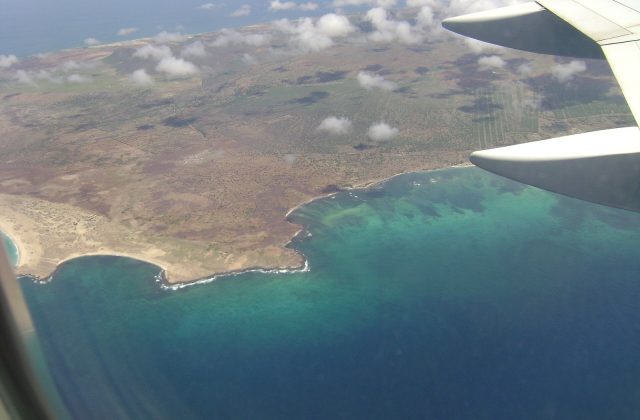
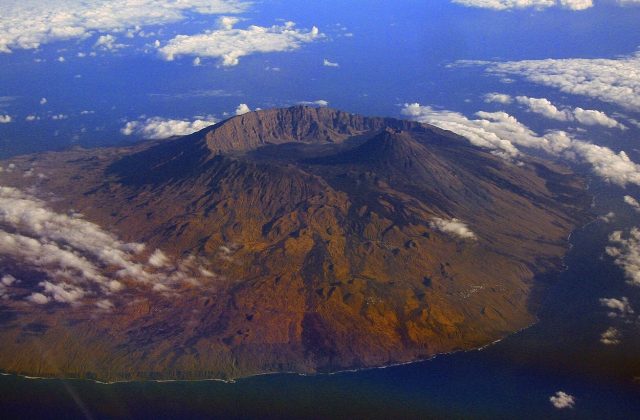
Cape Verde is an archipelago of ten volcanic islands in the Atlantic, between 600 and 850 km off the coast of Senegal,…
25 tours & trips
Cape Verde · Atlantic Ocean · Historic island
Santiago is the largest island of Cape Verde, about 992 square kilometres, home to the capital Praia and to roughly half the country's people. It was the first island settled, in 1462, and mixes the UNESCO-listed old town of Cidade Velha, green mountain valleys rising to 1,394 metres and a sandy bay at Tarrafal.
| Getting there | Flights to Praia from Lisbon and other West African and European cities; inter-island flights and ferries |
|---|---|
| Gateway | Praia (Nelson Mandela airport) |
| Travel time | About 4 h flight from Lisbon |
| Days | 3 to 5 nights |
| Best months | Nov–Jun dry and sunny; Aug–Oct rainy season, green but humid |
| Getting around | Shared minibuses (aluguers) between towns; taxis in Praia; rent a car or hire a driver |
| Booking | Flights and Fogo ferry ahead; guides and drivers a day or two ahead |
| Cost | Mid-range; cheaper than Sal or Boa Vista |
| Beaches | Few good beaches: Tarrafal's sandy bay is the best; Prainha and Quebra Canela in Praia |
| Sea | Atlantic Ocean |
| Area | 992 km² |
| Population | 290,000 |
| Highest point | 1,394 m (Pico da Antonia) |
| Airport | Yes, scheduled flights |
| Car-free | No |
| UNESCO | Cidade Velha, Historic Centre of Ribeira Grande |
| Checked | October 2026 |
Nothing is sold online for Santiago as a packaged tour, so visitors arrange things themselves or through their hotel once they arrive in Praia.
The most common outing is a day or half-day with a driver and guide to Cidade Velha, about 15 km west of the capital, to see the fortress, the old street and the ruined cathedral; you can also reach it cheaply by shared minibus and hire a local guide at the square. The second classic is a full-day island loop by car: up through the interior to the botanical garden at Sao Jorge dos Orgaos, the market town of Assomada and the Serra Malagueta park, then down to Tarrafal for a swim, returning along the east coast. Hiring a car with a driver for the day is usual, with lunch and entry fees paid separately.
Hikers should take a local guide for the mountain trails of Serra Malagueta and Pico da Antonia, where paths are poorly marked and clouds come down fast. Evening live music in Praia, from funana to morna, needs no booking.
Recommendation: spend one day on Cidade Velha and Praia, one on the interior and Tarrafal with a driver, and add a ferry to Fogo if you have time.
The first European town in the tropics, founded as Ribeira Grande in 1462, is now a quiet village 15 km west of Praia and a World Heritage Site. See the marble pillory in the square, Rua Banana with its stone houses, the church of Nossa Senhora do Rosario and the ruined cathedral, then climb to the Fortaleza Real de Sao Filipe above.
The capital's old core stands on a flat-topped hill above the harbour, with colonial streets, the presidential palace, a busy fruit market and the ethnographic museum. Below it, the Sucupira market is chaotic and lively. In the evening, bars and small venues in the Plateau and Achada Santo Antonio host live Cape Verdean music.
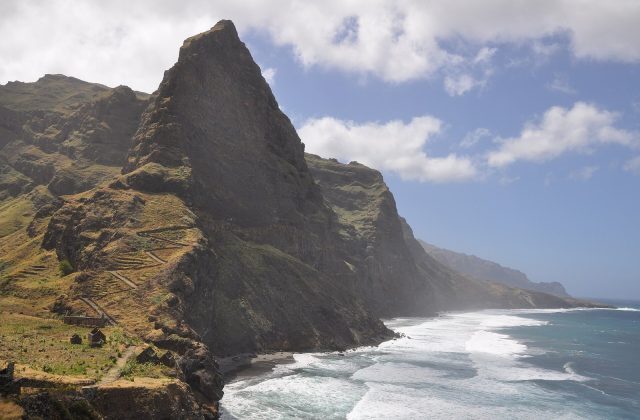
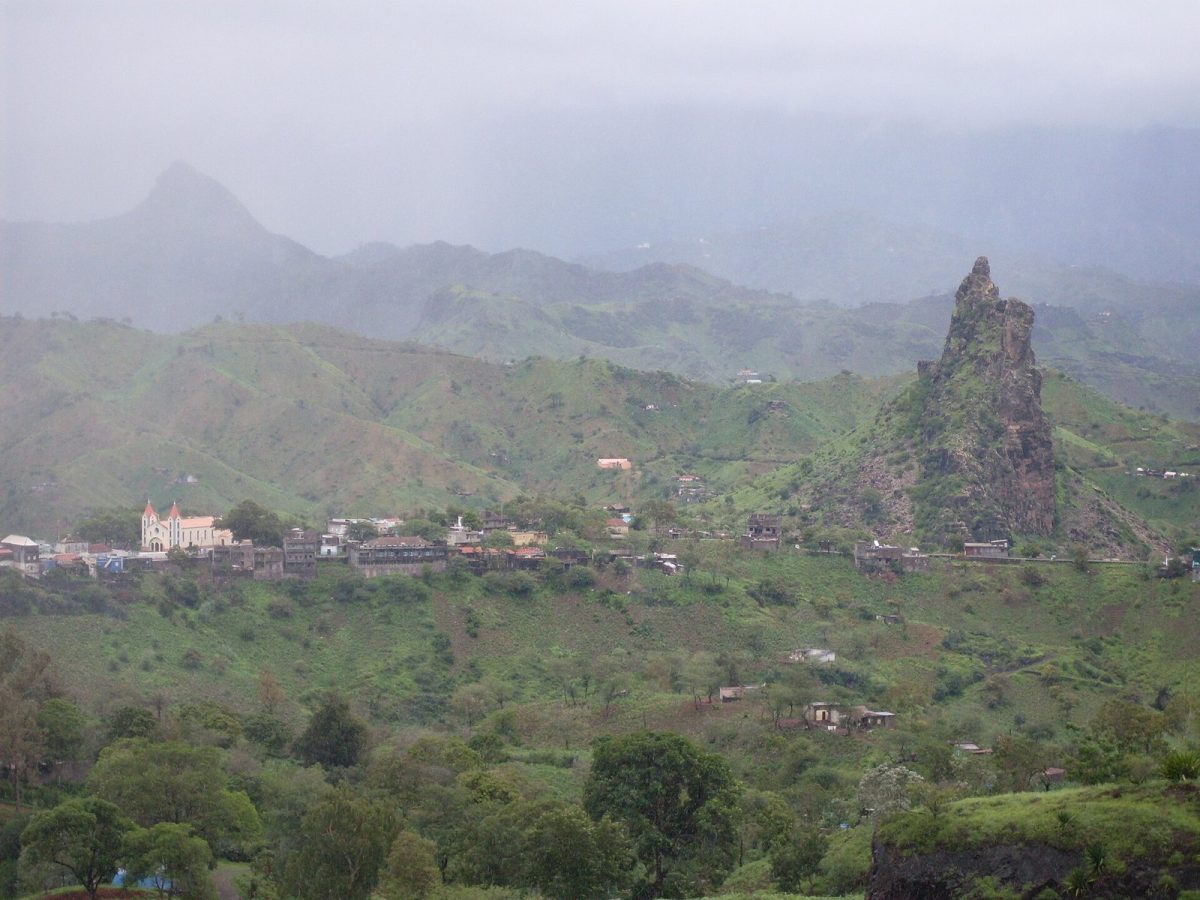
The green spine of the island rises to Pico da Antonia, the highest point at 1,394 metres. The Serra Malagueta natural park in the north has trails through forest and terraced valleys with wide views. On the way, stop at the botanical garden of Sao Jorge dos Orgaos and the market in Assomada, the main inland town.
At the northern tip, about two hours from Praia by road, Tarrafal has the island's best beach: a curve of pale sand with calm water, fishing boats and simple guesthouses. Just outside town, the former political prison camp of the Portuguese dictatorship is now a museum, a sobering visit that explains much of the country's twentieth-century history.
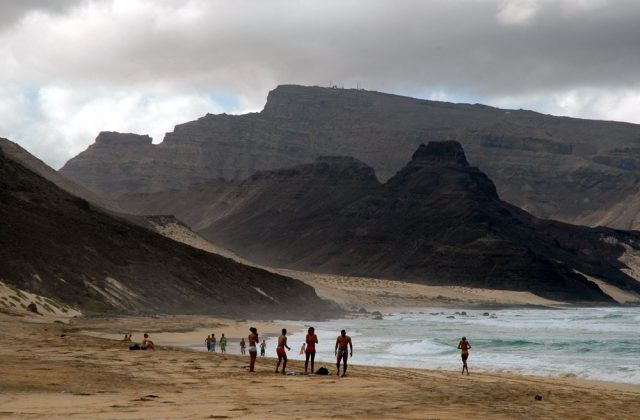
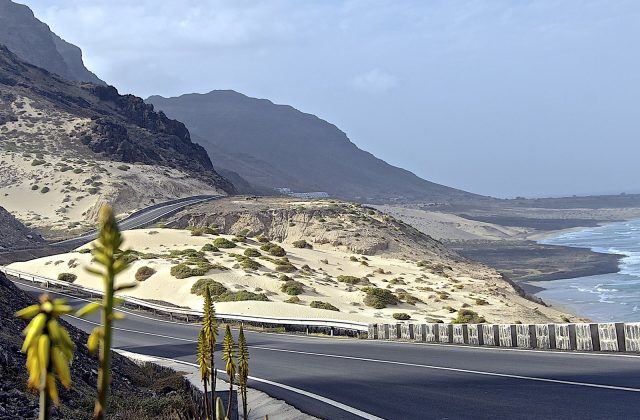
South of Tarrafal, the road and tracks along the dry western coast pass black-sand coves, sea cliffs and small villages where fishermen land tuna. The coast is wilder and has few services, so carry water. It is best seen with a driver who knows the tracks, combined with the Tarrafal day.
Nelson Mandela International Airport lies just outside Praia, a short taxi ride from the centre. The main international link is with Lisbon, about four hours away, with several flights a week; there are also flights from other European cities, Dakar and Brazil depending on the season. Domestic flights connect Praia with Sal, Sao Vicente, Boa Vista and other islands, though schedules change often and delays are common, so leave slack in your plans.
Ferries leave Praia harbour for Fogo, a crossing of a few hours, with onward boats to Brava, and for Maio, the flat island to the east. Sailings are not daily on every route and can be cancelled in rough seas, so check the current timetable and buy tickets a day or two ahead.
Shared minibuses called aluguers link Praia with Cidade Velha, Assomada, Tarrafal and most villages; they leave when full from the Sucupira area and are very cheap but slow. Taxis are plentiful in Praia and can be hired by the day for island tours. Renting a car is possible, but mountain roads are steep and winding and signs are sparse, so many visitors prefer a local driver.
Santiago has a warm, dry climate for most of the year. From November to June there is almost no rain, temperatures stay in the mid to high twenties, and the sea is warm enough for swimming, around 22 to 24 degrees in winter and warmer later. From December to February the harmattan can bring dusty haze from the Sahara that hides the mountain views.
The rainy season runs from August to October. Showers are irregular but can be heavy, the hills turn green, humidity rises and some mountain tracks become muddy. There is no strong peak season for tourism here, unlike Sal, so prices change little; flights from Europe fill around Christmas and Easter. Carnival in February and the music festival at Gamboa beach in Praia in May are lively times. Three to five nights covers the island well.
Praia is the practical base, with the widest choice of hotels and restaurants, the ferry port and the airport; the Plateau puts you in the old centre, while Prainha and Quebra Canela are near the city beaches. Tarrafal suits two or three relaxed nights by the sea in the north. Cidade Velha has a few small guesthouses for a quiet night, and the interior around Assomada and Serra Malagueta has simple lodges for walkers.
Santiago was uninhabited when Portuguese navigators arrived around 1460. Ribeira Grande, founded in 1462, grew rich as a hub of the Atlantic slave trade, where enslaved Africans were held before being shipped to the Americas; that wealth drew pirates, including Francis Drake in 1585, and the town declined after a French raid in 1712. The capital moved to Praia. The mixed African and Portuguese culture of the island, known locally as badiu, gave Cape Verde the batuko and funana styles of music, and Santiago led the movement towards independence in 1975.
Fogo, with its active volcano and wine villages, is the obvious pair, a few hours by ferry or a short flight from Praia; tiny Brava lies beyond it. Maio, flat and sandy, is reachable by ferry. For beaches, finish with a flight to Sal or Boa Vista, or go to Sao Vicente for Mindelo and the hiking island of Santo Antao.
26 km away
Cape Verde is an archipelago of ten volcanic islands in the Atlantic, between 600 and 850 km off the coast of Senegal,…
25 tours & trips
53 km away
Maio is a flat, dry island of about 275 square kilometres in the south-east of Cape Verde, a short hop from the…
9 tours & trips
79 km away
Fogo is a single volcano rising from the Atlantic in southern Cape Verde, its summit cone reaching 2,829 metres, the…
3 tours & trips
Flights to Praia from Lisbon and other West African and European cities; inter-island flights and ferries.
From Praia (Nelson Mandela airport): about 4 h flight from Lisbon.
3 to 5 nights.
Nov–Jun dry and sunny; Aug–Oct rainy season, green but humid.
Shared minibuses (aluguers) between towns; taxis in Praia; rent a car or hire a driver.
Go if you want the real Cape Verde: history, markets, music and mountain walks rather than an all-inclusive beach. Skip it or choose Sal or Boa Vista if you mainly want long white beaches and easy resort hotels.
Mid-range; cheaper than Sal or Boa Vista.
Few good beaches: Tarrafal's sandy bay is the best; Prainha and Quebra Canela in Praia.
Flights and Fogo ferry ahead; guides and drivers a day or two ahead.
Yes. Santiago (Cape Verde) is part of the World Heritage property Cidade Velha, Historic Centre of Ribeira Grande.
Cape Verde Islands, Cape Verde
Boa Vista is the easternmost island of Cape Verde, a flat, desert-like island of about 630 square kilometres only 450…
82 tours & trips
Cape Verde
Sao Vicente is a dry, windswept volcanic island in the northern Cape Verde archipelago, home to Mindelo, the…
37 tours & trips
Cape Verde
Santo Antão is the mountain island of Cape Verde, the westernmost of the chain and its second largest, with peaks near…
29 tours & trips
Cape Verde
Cape Verde is an archipelago of ten volcanic islands in the Atlantic, between 600 and 850 km off the coast of Senegal,…
25 tours & trips
Cape Verde
Sal is a flat, dry island of 215 square kilometres in the Cape Verde archipelago, about 560 km off the coast of West…
24 tours & trips
Cape Verde Islands, Cape Verde
Maio is a flat, dry island of about 275 square kilometres in the south-east of Cape Verde, a short hop from the…
9 tours & trips