Okinawa
Ryukyu Islands, Japan
Okinawa is the main island of Japan's subtropical Ryukyu chain, about 106 km long and some 640 km south of Kyushu.
199 tours & trips
Japan · Seas of Japan & Korea · Historic island
Hashima, nicknamed Gunkanjima or Battleship Island, is a tiny abandoned coal-mining island about 15 km off Nagasaki, only 6.3 hectares but once crowded with over 5,000 people. Its sea wall and concrete apartment blocks, empty since 1974, make it one of the most striking industrial ruins in the world, visited on boat tours with a short landing.
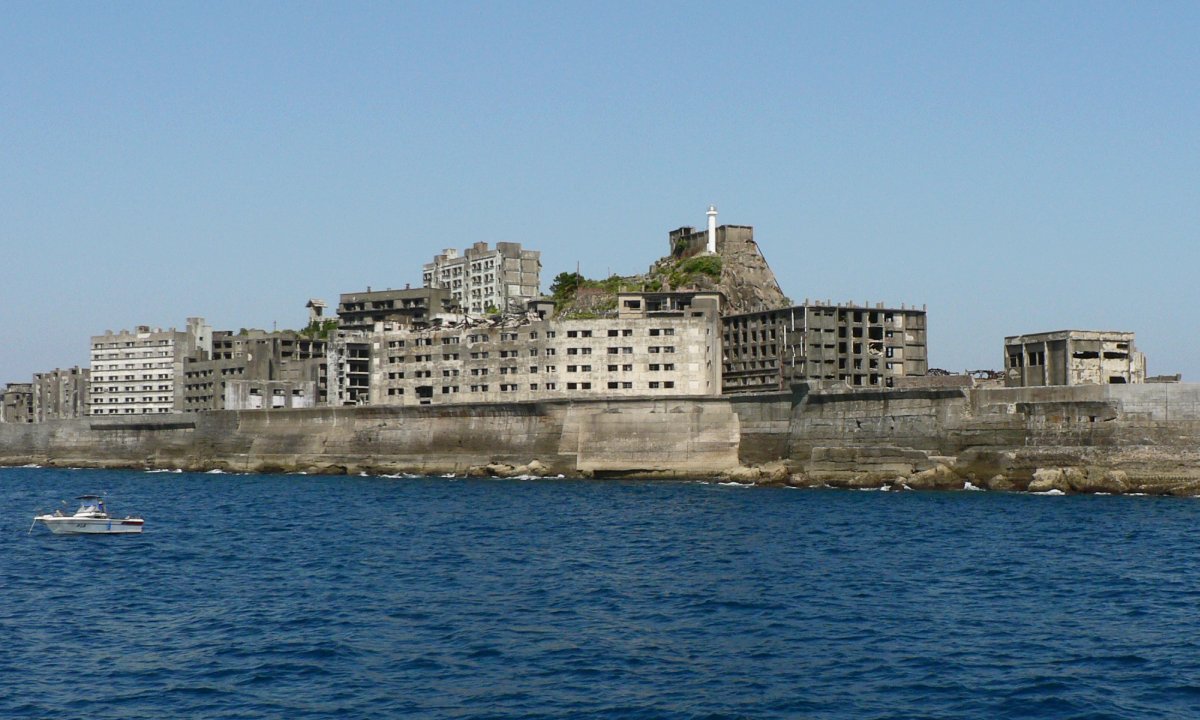
Photo: Hisagi (氷鷺), CC BY-SA 3.0
| Getting there | Boat tour from Nagasaki port in about 40 to 50 min, with a landing when the sea allows |
|---|---|
| Gateway | Nagasaki |
| Travel time | About 40 to 50 min by boat |
| Days | A half-day trip is enough |
| Best months | Mar–May and Oct–Nov; landings cancelled in rough seas, often in typhoon season |
| Getting around | Visitors walk only on fixed paths with a guide; no free access |
| Booking | Cruises a few days ahead, more in spring and autumn holidays; check sailings on the day |
| Cost | Mid-range for Japan |
| Beaches | No beaches; the island is ringed by a concrete sea wall |
| Sea | Seas of Japan & Korea |
| Area | 6 ha |
| Population | Uninhabited |
| Airport | No |
| Car-free | Yes |
| UNESCO | Sites of Japan's Meiji Industrial Revolution: Iron and Steel, Shipbuilding and Coal Mining |
| Checked | October 2026 |
Hashima can be visited only on an organised boat tour from Nagasaki, run by a handful of licensed operators. The standard trip lasts about three hours: a boat from the port, a cruise past the shipyards and bridges of Nagasaki bay, a landing of about an hour with a guide on the island's walkways, and a slow circuit of the island for photographs. Commentary is mainly in Japanese, with English audio or printed guides on some boats. The island's landing fee is usually paid separately at the terminal.
The product listed online is a full-day guided tour that combines the Hashima cruise with Mount Inasa, the viewpoint over Nagasaki. It suits visitors who want transport and an English-speaking guide for the whole day; check whether the cable car and meals are included.
When the waves are too high to land, which happens often, the boat circles the island instead and part of the fare may be refunded, depending on the operator.
The plain recommendation is to book a morning cruise directly, visit the small digital museum near the port beforehand, and keep a second day free in case of cancellation.
Landings take place on the south-east side, where three viewing platforms are linked by a short path along the sea wall. From them the guide points out the mine buildings, the pithead staircase and the ruined school and housing blocks. You cannot enter buildings or leave the path, as much of the concrete is crumbling.
The island's residential towers, built from 1916 onwards, include what is often described as the oldest reinforced concrete apartment block in Japan. Up to nine storeys high, they housed miners and their families in tiny rooms around a school, a hospital, shops and a cinema. They are best seen from the boat on the western side.
After the landing, or instead of it, the boat circles the island slowly. This is when the battleship profile appears: the sea wall like a hull and the towers like a superstructure. Sit on the side facing the island on the way back, and be ready for spray in a lively sea.
The cruise passes the shipyards of Nagasaki, where giant cranes still build ships, the Megami bridge across the harbour mouth and coastal villages. Several sites in the bay belong to the same UNESCO listing of Meiji industrial heritage as Hashima. The outward run takes about 40 to 50 minutes.
Near the port, a short walk from the departure terminals, this small museum uses projections and virtual reality to show life on the island at its peak and the inside of buildings that visitors cannot enter. An hour here before the cruise makes the landing far more meaningful.
Live dates and prices. Free cancellation on most tours.
Tours leave from Nagasaki port, from terminals around the Ohato and Tokiwa piers, a few minutes on foot or by tram from the city centre. Each operator runs one or two departures a day, morning and afternoon, and the crossing takes about 40 to 50 minutes. Arrive 30 minutes early to check in and pay the landing fee; you may be asked to sign a form agreeing to the safety rules.
Nagasaki is reached by the Nishi Kyushu Shinkansen, with a change at Takeo-Onsen from trains from Fukuoka, about an hour and a half in total. Nagasaki Airport, with flights from Tokyo and Osaka, is about 45 minutes by bus from the city. There is no other way onto the island, and private landings are not allowed.
There is no getting around on your own. Visitors stay together in groups with guides on the fixed walkway at the southern end, a few hundred metres in total, and the rest of the island is closed for safety. In Nagasaki, trams cover the centre and run close to the ferry terminals, and buses and the cable car serve Mount Inasa.
Spring, from March to May, and autumn, from October to November, are the best seasons, with mild weather and calmer seas, though Japanese holidays in late April and early May fill the boats. Winter is cool and clear, and northerly winds often stop landings.
June and July bring the rainy season, and August and September are hot and humid, with typhoons that can cancel tours for days at a time. Even in good weather, landings depend on the wave height at the island's jetty and are decided on the day, so a good share of trips sail round the island without landing.
The tour itself takes three hours, so a morning on Hashima leaves the afternoon for the Peace Park, Dejima or Glover Garden. Two nights in Nagasaki give a safety margin.
Stay in Nagasaki. The area around Nagasaki station has the most hotels and quick access to trains and the port. The Dejima and harbour district is close to the ferry terminals and the waterfront, while Shianbashi and Chinatown are the liveliest areas in the evening for food and bars. There is nowhere to stay on the island or near it.
Coal was found on the reef in the 19th century, and from 1890 Mitsubishi developed an undersea mine, reclaiming land and building sea walls until the island tripled in size. By 1959 more than 5,000 people lived here, one of the highest population densities ever recorded. Before and during the Second World War, Korean and Chinese labourers were forced to work in the mine under harsh conditions, a history now acknowledged at the site. The mine closed in 1974, and everyone left within months. Tourist landings began in 2009, and UNESCO listed it in 2015.
Combine Hashima with Nagasaki itself: the Atomic Bomb Museum and Peace Park, Glover Garden, Dejima and the night view from Mount Inasa. Fukuoka is about an hour and a half away by train, and Huis Ten Bosch and the Unzen volcano region are each about an hour from Nagasaki.
Boat tour from Nagasaki port in about 40 to 50 min, with a landing when the sea allows.
From Nagasaki: about 40 to 50 min by boat.
A half-day trip is enough.
Mar–May and Oct–Nov; landings cancelled in rough seas, often in typhoon season.
No. Hashima (Gunkanjima) is car-free. Visitors walk only on fixed paths with a guide; no free access.
Go if you are interested in industrial history, ruins and photography and have half a day in Nagasaki. Skip it if you expect to explore freely, as visitors stay on fixed walkways and landings are often cancelled.
Mid-range for Japan.
No beaches; the island is ringed by a concrete sea wall.
Cruises a few days ahead, more in spring and autumn holidays; check sailings on the day.
Yes. Boat trips, guided tours and day trips for Hashima (Gunkanjima) can be booked online; live prices and free cancellation on most are shown on this page.
Ryukyu Islands, Japan
Okinawa is the main island of Japan's subtropical Ryukyu chain, about 106 km long and some 640 km south of Kyushu.
199 tours & trips
Japan
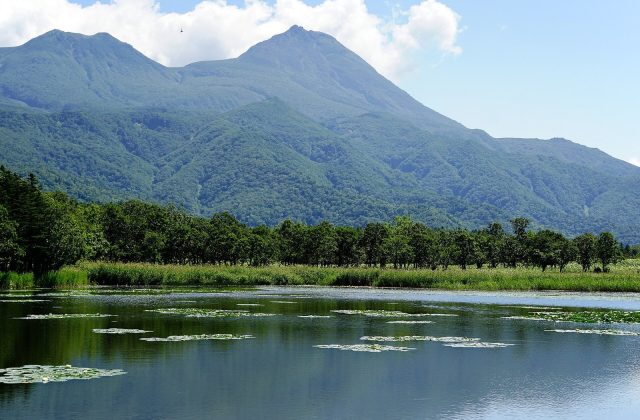
Hokkaido is the northernmost and second-largest of Japan's main islands, almost 78,000 square kilometres of…
84 tours & trips
Japan
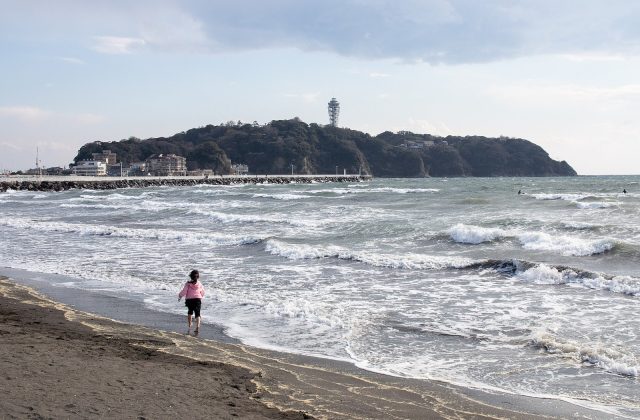
Enoshima is a small, wooded island about 4 km round in Sagami Bay, joined by a bridge to the beach town of Katase,…
61 tours & trips
Yaeyama Islands, Japan
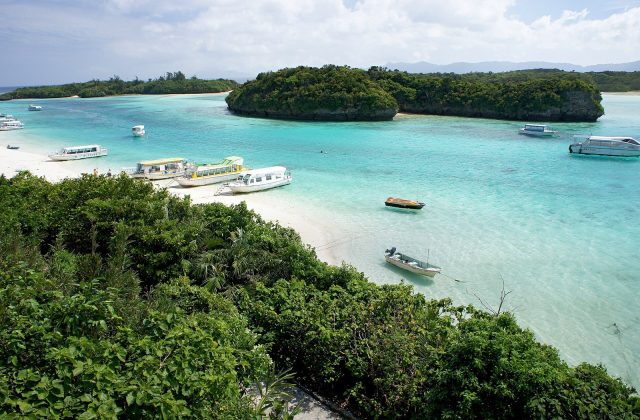
Ishigaki is a subtropical island in the far south of Japan, about 400 km south-west of Okinawa's main island and…
55 tours & trips
Miyako Islands, Japan
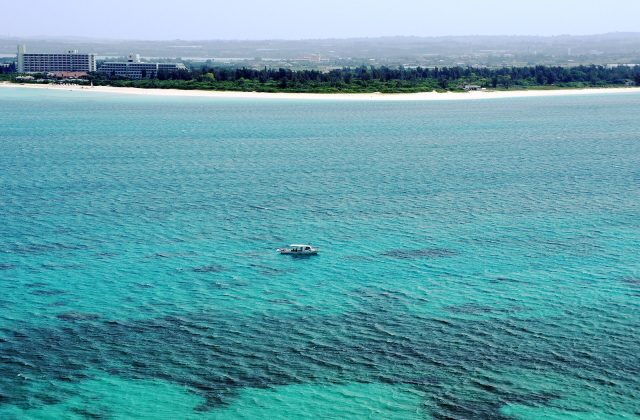
Miyakojima is a flat limestone island of about 159 square kilometres in Okinawa, some 300 km south-west of the main…
38 tours & trips
Japan
Awaji Island is the largest island in the Seto Inland Sea, about 592 square kilometres of farmland, coast and low hills…
22 tours & trips