Waiheke Island
New Zealand
Waiheke Island lies in the Hauraki Gulf, about 40 minutes by fast ferry from downtown Auckland, and is the city's…
39 tours & trips
New Zealand · Pacific Ocean · Nature & wildlife island
Kapiti Island is a predator-free nature reserve 5.6 km off the Kapiti Coast, an hour north of Wellington. The forested ridge, 10 km long and rising to 521 metres, is one of the best places in New Zealand to see rare native birds such as takahe, kokako and stitchbirds close up, and to hear little spotted kiwi at night.
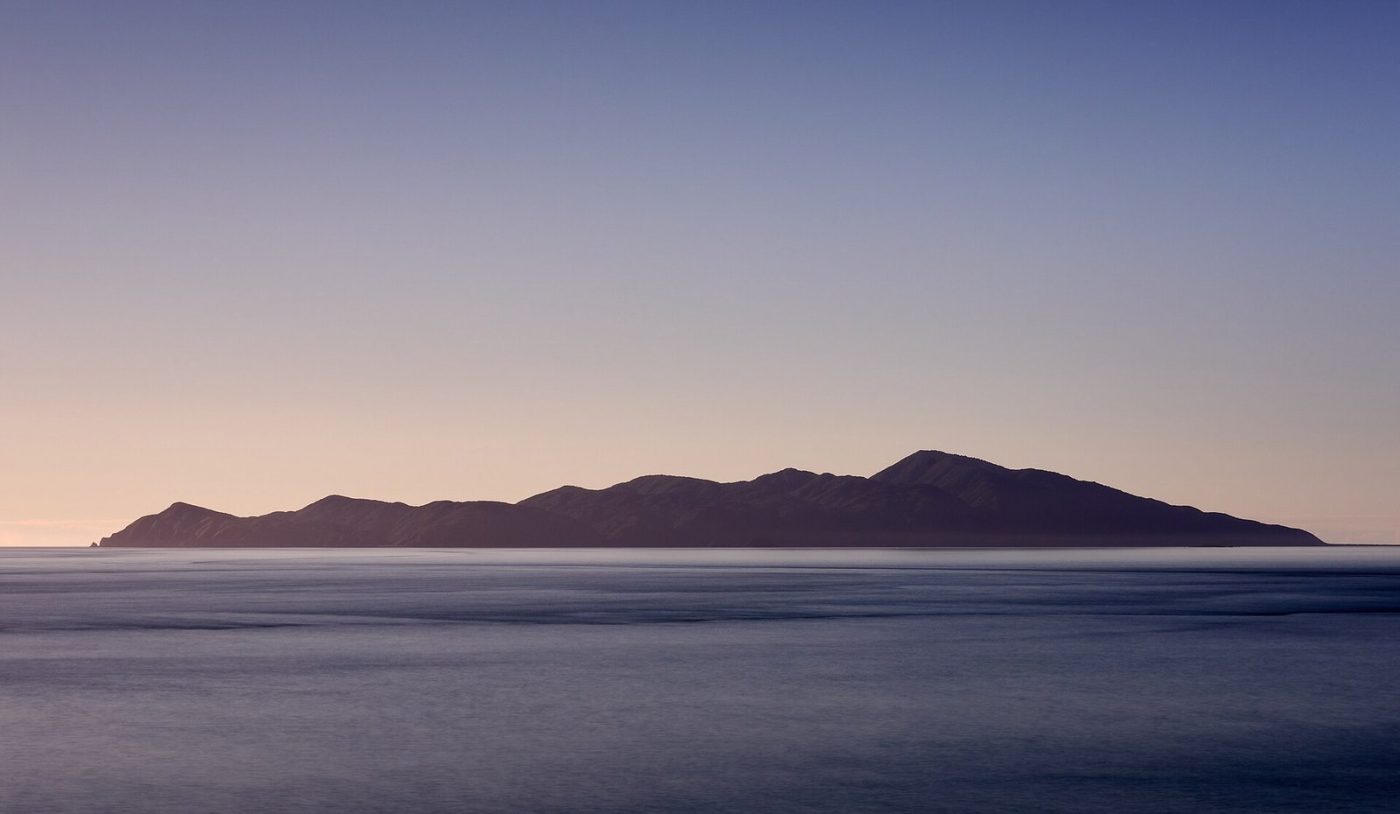
Photo: Geoff McKay from Palmerston North, New Zealand, CC BY 2.0
| Getting there | Licensed boat from Paraparaumu Beach in 20 minutes, permit needed; an hour by road or train from Wellington |
|---|---|
| Gateway | Paraparaumu Beach (Wellington) |
| Travel time | About 20 minutes by boat |
| Days | A day trip; one night for kiwi |
| Best months | Oct–Apr; boats are weather-dependent all year |
| Getting around | On foot only, on marked tracks from the landing areas |
| Booking | Boat and visitor permit days or weeks ahead; overnight stays well ahead |
| Cost | Mid-range for New Zealand |
| Beaches | Stony beaches at the landings; this is not a swimming or sunbathing island |
| Sea | Pacific Ocean |
| Area | 20 km² |
| Highest point | 521 m (Tuteremoana) |
| Airport | No |
| Car-free | Yes |
| Checked | November 2026 |
Visits to Kapiti are controlled, because the island is a sanctuary, and the number of people landing each day is capped. That shapes what you can buy.
The core product is the guided day trip from Paraparaumu Beach. It includes the boat crossing, a biosecurity check before boarding, a briefing on landing and a guided walk where the guide helps you find and identify birds; the rest of the day is free for walking. Lunch is not usually included and there is nothing to buy on the island, so bring food and water. A version with transport from Wellington adds a road transfer of about an hour each way.
The other option is an overnight stay at the lodge on private land at the northern end, which adds a guided night walk to look for little spotted kiwi and the dawn chorus the next morning. It is the island's most rewarding experience and books out early.
The highest point, Tūteremoana, reaches 521 metres. Recommendation: book the classic guided day from Paraparaumu Beach, and if birds are your passion, stay the night for the kiwi walk.
Within minutes of stepping ashore, inquisitive weka come to inspect your bags, kaka parrots call from the trees, and the blue-green takahe, once thought extinct, often graze the open ground. Look for stitchbirds and saddlebacks at the feeding stations. Keep your food zipped up and stay a few metres from the birds.
From the Rangatira landing, two tracks climb through regenerating forest to Tuteremoana, the highest point at 521 metres. The climb takes about one and a half hours up and is steep in places. From the top you look down the sheer western cliffs to the Tasman Sea and across to the South Island on a clear day.
Near the landing stands an old wooden farmhouse, a reminder of the decades when much of the island was farmed. Displays around it tell the story of the reserve, the pest eradication that cleared rats and possums, and the birds that have since returned. It is the meeting point for the guided walks and a good shelter in rain.
At Waiorua Bay in the north, land owned by descendants of the island's Maori families holds the lodge and a short loop to a lagoon where shags, oystercatchers and other shore birds feed. Day visitors land here or at Rangatira, not both, so choose when you book; the north is flatter and suits easy walkers.
Overnight guests head into the bush after dark with a guide and a red torch to look for little spotted kiwi, the smallest kiwi species, which survives in large numbers here. You will hear their shrill calls, and with patience and luck see one foraging on the track. Expect a walk of one to two hours.
Our pick for each kind of trip, with live dates and prices. Free cancellation on most.
Best for: First visit, the classic day
The standard guided day from Paraparaumu Beach covers the boat, a walk with a guide who knows the birds, and time to explore on your own before the return.
Boats leave from the boat club at Paraparaumu Beach, on the Kapiti Coast about 55 km north of Wellington. The crossing of the channel takes about 20 minutes. Only licensed operators may land visitors, and every visitor needs a permit from the conservation department, which the boat operators normally arrange as part of the booking. Before boarding, bags are checked for rats, seeds and soil; clean your boots and pack food in sealed containers.
Boats run in the morning and return in the afternoon, but trips are cancelled in strong winds or swell, which are common here; operators confirm on the morning of the trip. From Wellington, drive about an hour or take the commuter train to Paraparaumu, then a short taxi or bus to the beach. Leave your car in the parking at the beach.
You walk. There are no roads or vehicles for visitors, and you must stay on the marked tracks. From the Rangatira landing, short loops near the shore take under an hour, while the summit tracks need three to four hours return with stops. The northern end has easier, flatter paths around the lagoon. Tracks can be steep, muddy and slippery after rain, so wear walking boots and carry a rain jacket even on a fine morning.
October to April, the spring and summer months, is the best time to visit. Days are long and the weather is at its most settled, birds are breeding and singing, and the bush is full of flowering trees that feed tui and bellbirds. Temperatures reach the low twenties. January and February are the busiest months, as New Zealanders take their summer holidays, so book ahead.
Winter, from June to August, brings more cancellations from wind and swell, cooler, wetter days and short daylight, but the birds are still there and the island is quieter. Whatever the season, the Kapiti Coast is exposed to westerly winds: keep a spare day in your plans in case your boat is cancelled.
One day is enough for the landing area and the summit. Stay one night only if you want the kiwi walk and the dawn chorus.
Day visitors stay on the mainland. Paraparaumu Beach is the practical base, with motels, holiday homes and restaurants a few minutes' walk from the boat club. Waikanae, just north, is quieter and has a long sandy beach. Wellington is an hour away and suits those combining the island with the capital's museums and food. The only beds on the island are at the lodge at the northern end, with cabins and simple rooms, meals included.
Kapiti was a stronghold of the chief Te Rauparaha, who led his Ngati Toa people south in the 1820s and used the island as a base from which he controlled the coast and the trade with European ships. Whaling stations followed in the 1830s and 1840s, then farming that cleared much of the forest. The island was made a reserve in 1897, and over the following century rare birds were moved here for safety. Possums and rats were eradicated by the 1990s, and the forest and birds have been recovering since.
Kapiti is an easy day out from Wellington, where Zealandia, the fenced urban sanctuary, makes a good bird-watching companion and Te Papa tells the wider story. On the coast, the reserve near Waikanae shows kiwi in a nocturnal house. Heading north, the drive to Lake Taupo and Tongariro takes about four to five hours, and the ferry to the South Island leaves from Wellington.
Licensed boat from Paraparaumu Beach in 20 minutes, permit needed; an hour by road or train from Wellington.
From Paraparaumu Beach (Wellington): about 20 minutes by boat.
A day trip; one night for kiwi.
Oct–Apr; boats are weather-dependent all year.
No. Kapiti Island is car-free. On foot only, on marked tracks from the landing areas.
Go if you love birds, bush walks and New Zealand's conservation story, and do not mind a strict, simple day out. Skip it if you want beaches, cafes or a relaxed island break; try Waiheke or the Bay of Islands instead.
Mid-range for New Zealand.
Stony beaches at the landings; this is not a swimming or sunbathing island.
Boat and visitor permit days or weeks ahead; overnight stays well ahead.
Yes. Boat trips, guided tours and day trips for Kapiti Island can be booked online; live prices and free cancellation on most are shown on this page.
New Zealand
Waiheke Island lies in the Hauraki Gulf, about 40 minutes by fast ferry from downtown Auckland, and is the city's…
39 tours & trips
New Zealand
The South Island is the larger of New Zealand's two main islands, about 150,000 square kilometres with only around…
6 tours & trips
New Zealand
Rangitoto Island is the youngest volcano in the Auckland volcanic field, a symmetrical cone that rose from the Hauraki…
5 tours & trips
New Zealand
The North Island is the smaller but busier of New Zealand's two main islands, home to three quarters of the…
3 tours & trips
New Zealand
Tiritiri Matangi is a 2.2-square-kilometre open bird sanctuary in the Hauraki Gulf, 3.4 km off the Whangaparāoa…
2 tours & trips
New Zealand
Stewart Island, or Rakiura, is New Zealand's third-largest island, lying 30 km across Foveaux Strait from the…
No tours listed