Santorini
Cyclades, Greece
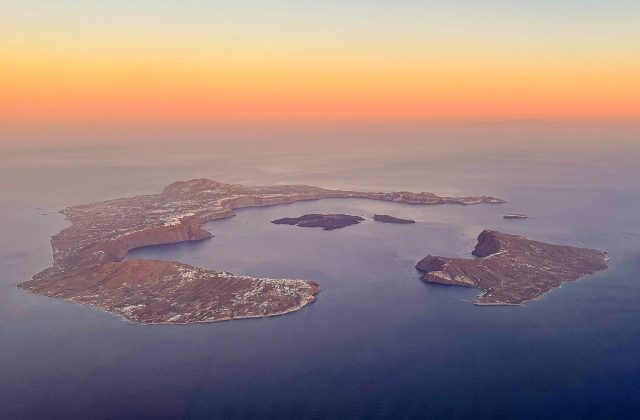
Santorini is the ring of a drowned volcano in the southern Cyclades: white villages along a 300-metre cliff, black-sand…
772 tours & trips
Greece · Aegean Sea · Beach island
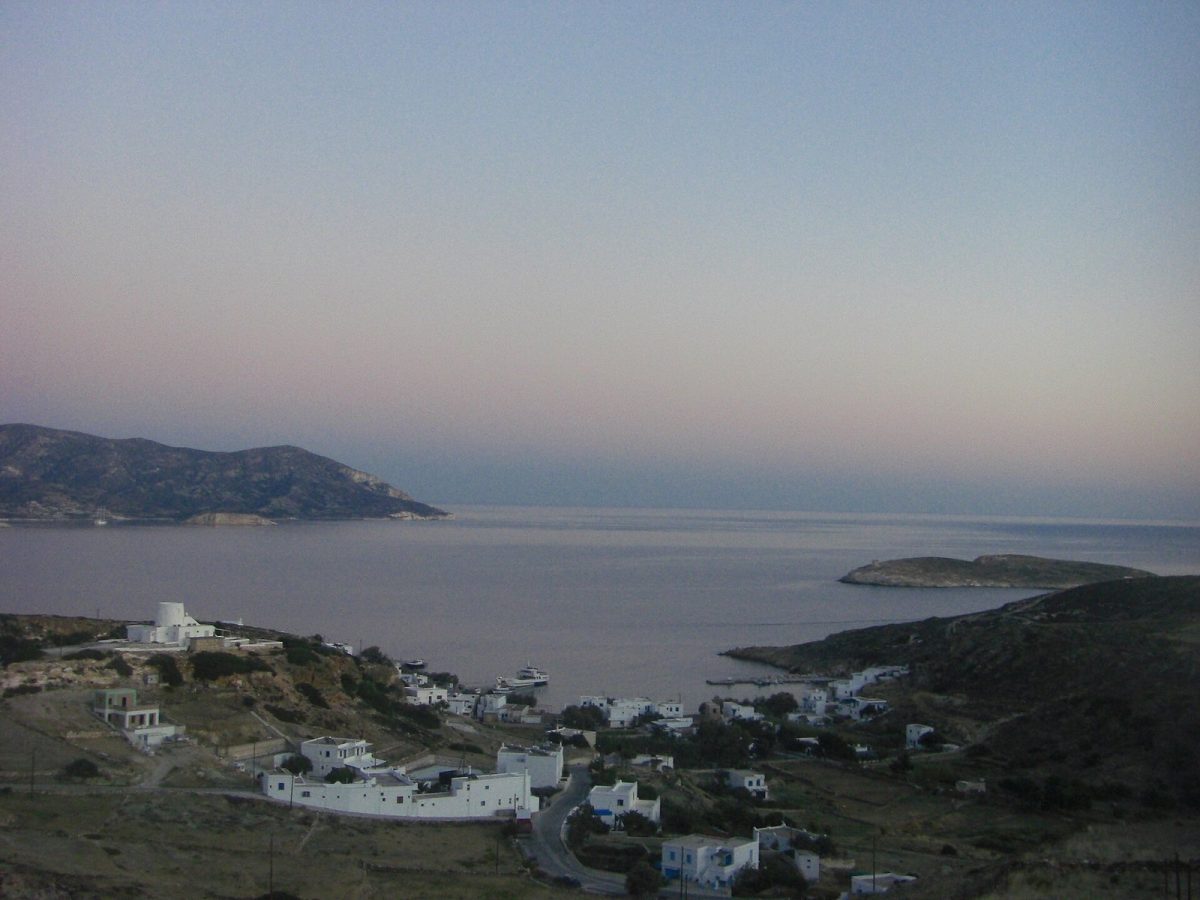
Kimolos is a small, quiet Cycladic island of 36 square kilometres just off the north-east tip of Milos, with about 800 residents, a fortified hilltop village and pale beaches carved from chalky volcanic rock. It is the simple, slower neighbour of Milos, and the base for boats to uninhabited Polyaigos.
| Getting there | Small ferry from Pollonia on Milos in about 30 min, several times a day; ferries from Piraeus on the Milos line |
|---|---|
| Gateway | Milos (Pollonia) |
| Travel time | About 30 min by ferry from Pollonia |
| Days | A day trip, or 1 to 2 nights |
| Best months | Jun–Sep; Jul–Aug windy with the meltemi; most rooms shut Nov–Apr |
| Getting around | Walk from Psathi to Chora; bring or rent a scooter or car; little public transport |
| Booking | Rooms well ahead for August; boat trips to Polyaigos a day or two ahead |
| Cost | Mid-range for Greece; cheaper than Milos |
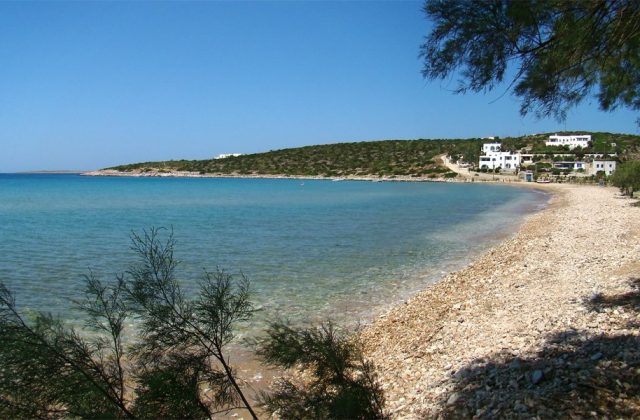
| Beaches | White chalky sand and clear water: Prassa, Bonatsa, Kalamitsi, Elliniko; few sunbeds |
| Sea | Aegean Sea |
| Archipelago | Cyclades |
| Area | 36 km² |
| Population | 810 (2021) |
| Highest point | 364 m |
| Ferry | 30 min from Milos (Pollonia) |
| Airport | No |
| Car-free | No |
| Checked | October 2026 |
Most visitors see Kimolos from the water, on a boat day from Milos. Sailing catamarans and motorboats leave Pollonia or Adamas in the morning, cross the narrow strait and spend the day in the coves of Kimolos and uninhabited Polyaigos, where the water is a famous pale turquoise. A typical full day includes the boat, snorkelling gear, lunch cooked on board and drinks; transfers to the port are sometimes extra. Some trips from Milos also take in the west coast of Milos or the rocks of Sarakiniko, and a few sail from Sifnos.
Private boats with a skipper cost more but let a family or group choose the route and stay away from the busiest bays. Small boats also leave from Psathi, the port of Kimolos, for those staying on the island.
None of these trips shows the island on land. For that, take the small ferry from Pollonia, walk up to Chora, and eat in the port before an evening boat back, or stay a night. The wind decides everything: in a strong meltemi, boats change route or cancel. Book a sailing day from Milos for the sea, and give the island itself at least one unhurried afternoon.
The island's only real village, a 15-minute walk uphill from the port, is a maze of whitewashed lanes, small churches and windmills. At its heart is the Kastro, a 16th-century fortified settlement whose outer houses form the walls, with two gates. Part is ruined and part restored. Come at dusk, when the lanes fill with families and the tavernas open.
The uninhabited island just south-east of Kimolos is one of the largest without people in the Aegean, a protected area where Mediterranean monk seals breed. Boats anchor in its sheltered coves, where white sand and pale rock give the water a pale-blue colour, ideal for snorkelling. There is no landing infrastructure and no shade, so this is a boat-only outing.
On the north-east coast, about 20 minutes by car from the port, Prassa is the island's best-known beach: a long strip of fine white sand and shallow water so clear it looks tropical, coloured by the white rock and old mines nearby. There is a small canteen and limited shade. In a north wind it can be rough, so check the forecast.
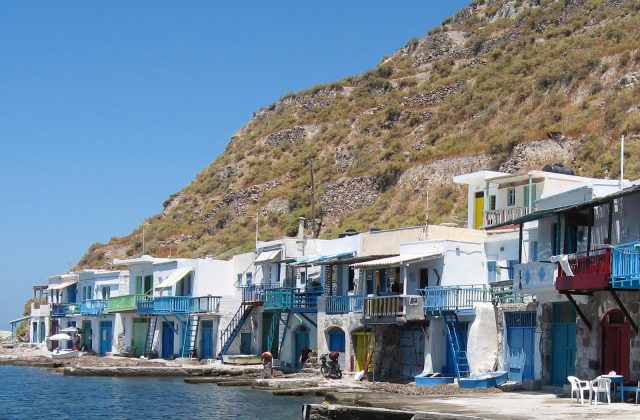
On the east coast below Chora, the hamlets of Goupa and Rema have tiny harbours where fishing boats are kept in garages carved into the soft volcanic rock, with living space above. Walk down from Chora in about 20 minutes and swim off the rocks in the clear water. It is one of the most photographed corners of the island.
On the south-west coast, the beach of Elliniko is named after the remains of an ancient settlement that partly lies under the sea, along with a cemetery on the shore. Snorkel to look for walls in the shallows. The beach faces the islet of Agios Andreas and is quiet even in August. Bonatsa and Kalamitsi, sandy and calm, lie on the way.
In the island's barren interior, a footpath of about an hour from Chora leads to Skiadi, a giant mushroom-shaped rock eroded by the wind, one of the island's symbols. Go early or late, since there is no shade, carry water and wear walking shoes. The path also gives wide views over Milos and the sea.
Our pick for each kind of trip, with live dates and prices. Free cancellation on most.
Best for: First visit, a sailing day from Milos
A full day under sail from Milos with swims in the turquoise coves of Polyaigos and along the Kimolos coast, usually with lunch on board.
The usual way is the small car ferry from Pollonia, on the north-east tip of Milos, to Psathi, the port of Kimolos. It takes about 30 minutes and runs several times a day in summer, fewer in winter, with tickets sold at the quay. Milos has an airport with short flights from Athens and ferries from Piraeus, so most people arrive there first.
Kimolos also sits on the western Cyclades ferry line from Piraeus via Kythnos, Serifos, Sifnos and Milos, a long trip of six hours or more on conventional ferries, a few times a week. There is no airport. Bring a car from Milos only if you plan to explore the far beaches; rental is limited on the island itself. In strong north winds, the small ferry can be delayed.
Chora is a short walk up from the port at Psathi, and the nearest beaches can be reached on foot. A small bus or minibus may run to Prassa and some beaches in high summer, but schedules are thin. Most visitors rent a scooter, quad or car, which should be booked ahead in August, or bring one from Milos. Many roads to the south and west beaches are dirt tracks. Water taxis also run to some coves.
Kimolos has a short season. June and September are the best months, with warm sea, calm villages and all services open; early October can still be fine. July and August are the warmest, but the meltemi blows strongly from the north, roughening the north-facing beaches and sometimes cancelling boats; August brings Greek holidaymakers and makes rooms scarce.
From November to April most rooms and tavernas close, and the island returns to its residents; the ferry from Pollonia still runs, so a winter day trip is possible but quiet. Local church festivals in summer are shared with visitors, with music and food. A day trip shows Chora and one beach; a night or two lets you enjoy the evenings in the Kastro and visit Polyaigos by boat.
Most visitors stay in Chora, with rooms in old village houses and the best tavernas within walking distance, or at Psathi, the port, which is handy for the ferry and has a few places to eat on the water. A small number of rooms and villas lie near Prassa and the southern beaches, best for a quiet beach stay with a car. Choice is limited, so book early for summer.
Kimolos has been inhabited since antiquity; the ancient town of Elliniko now partly lies under the sea. Its soft white rock produced Kimolian earth, a clay used from ancient times to wash cloth, and later mining of bentonite and other minerals shaped the landscape of the north. In the Middle Ages the island was known as Argentiera, after its silvery rocks, and suffered pirate raids, which led islanders to build the fortified Kastro. Today mining continues on a smaller scale, and tourism remains modest.
Kimolos is usually combined with Milos, just 30 minutes away, for its volcanic coastline, Sarakiniko and the catacombs; many visitors stay on Milos and come for a day. Sifnos and Serifos are within reach on the western Cyclades ferry line, a few hours north, and Folegandros connects on some routes.
Small ferry from Pollonia on Milos in about 30 min, several times a day; ferries from Piraeus on the Milos line.
From Milos (Pollonia): about 30 min by ferry from Pollonia.
A day trip, or 1 to 2 nights.
Jun–Sep; Jul–Aug windy with the meltemi; most rooms shut Nov–Apr.
Walk from Psathi to Chora; bring or rent a scooter or car; little public transport.
Go if you want an authentic, uncrowded Cycladic village, white-rock beaches and turquoise coves within half an hour of Milos. Skip it or stay on Milos if you want nightlife, many restaurants, organised beaches or plenty of sights. With about 30 min each way from Milos (Pollonia), a day trip is easy to do.
Mid-range for Greece; cheaper than Milos.
White chalky sand and clear water: Prassa, Bonatsa, Kalamitsi, Elliniko; few sunbeds.
Rooms well ahead for August; boat trips to Polyaigos a day or two ahead.
Yes. Boat trips, guided tours and day trips for Kimolos can be booked online; live prices and free cancellation on most are shown on this page.
Cyclades, Greece
Santorini is the ring of a drowned volcano in the southern Cyclades: white villages along a 300-metre cliff, black-sand…
772 tours & trips
Cyclades, Greece
Mykonos is a small, dry and windy island in the central Cyclades, about 85 square kilometres of brown hills ringed by…
294 tours & trips
Cyclades, Greece
Naxos is the largest and greenest of the Cyclades, 428 square kilometres of long sandy beaches, marble villages and…
208 tours & trips
Cyclades, Greece
Paros sits at the heart of the Cyclades, about 150 km south-east of Piraeus and a short hop from Naxos and Mykonos, a…
138 tours & trips
Cyclades, Greece
Milos is a volcanic island at the south-western edge of the Cyclades, wrapped round a large flooded caldera that forms…
122 tours & trips
Cyclades, Greece
Antiparos is a small, relaxed island in the Cyclades, separated from Paros by a channel less than two kilometres wide…
38 tours & trips