Mallorca
Balearic Islands, Spain
Mallorca is the largest of the Balearic Islands, about 3,640 square kilometres of coast and mountains off eastern…
909 tours & trips
Spain · Mediterranean Sea · Nature & wildlife island
Benidorm Island is a small, rocky, uninhabited islet about 3.5 km off the beaches of Benidorm, its wedge shape visible from every seafront hotel. Part of the Serra Gelada natural park, it is a short boat ride from the harbour, with clear water for snorkelling, a jetty and a simple bar.
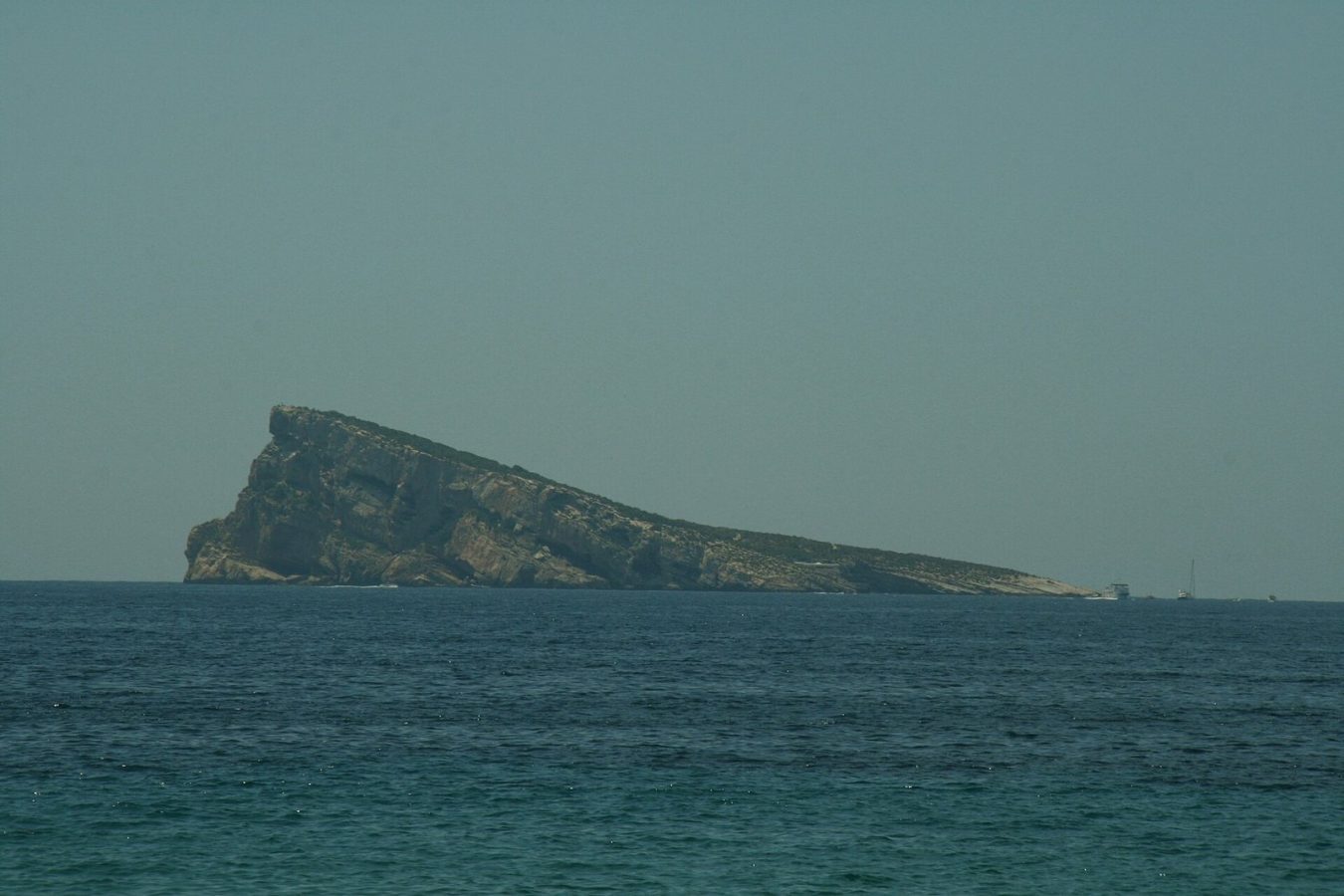
Photo: Tamorlan, CC BY 3.0
| Getting there | Regular boats from Benidorm harbour, about 15 min, most days of the year |
|---|---|
| Gateway | Benidorm (harbour by the old town) |
| Travel time | About 15 min by boat |
| Days | A half day is enough |
| Best months | May–Oct; sea calmest and warmest Jul–Sep; boats can stop in rough weather |
| Getting around | On foot around the jetty area only; most of the islet is closed to protect seabirds |
| Booking | Nothing ahead; buy boat tickets at the harbour kiosk on the day |
| Cost | Cheap, even by Costa Blanca standards |
| Beaches | No sandy beach; swim and snorkel from rocks and the small pebbly area near the jetty |
| Sea | Mediterranean Sea |
| Area | 7 ha |
| Population | Uninhabited |
| Airport | No |
| Checked | November 2026 |
Very little is sold online for Benidorm Island itself. Only a few products involve the islet directly, mainly a guided snorkelling excursion and some dive trips that use its rocky shores. The island is a nature reserve.
The usual way to visit is simply to take the regular boat from the harbour at the foot of the old town. Boats run several times a day for much of the year, more often in summer, and some have glass-bottomed hulls or underwater windows. You buy a return ticket at the kiosk, stay as long as you like, and come back on a later boat.
If you want guidance, a snorkelling trip includes the boat, mask, fins and an instructor who shows you the marine life; a try-dive adds a short lesson and a shallow dive. Kayak and paddleboard tours along the coast sometimes head towards the island in calm weather but rarely land.
Bring water, sun protection and your own snorkel if you have one. For most visitors, the regular boat and two or three hours on the islet are all they need.
The boat leaves from the small harbour between Levante and Poniente beaches and crosses in about 15 minutes, with fine views back to the skyline and the old town on its headland. Choose a seat on the open deck, or watch the seabed through the hull on the glass-bottomed boats. In rough weather crossings are cancelled.
The water around the island is part of a marine reserve and much clearer than at the town beaches. From the rocks near the jetty, snorkel over seagrass meadows and boulders and look for bream, wrasse, octopus and the occasional grouper. Divers find walls and small caves on the seaward side; go with a local dive centre.
Around the landing there is a small bar, a few tables and a short path to viewpoints over the cliffs. Most of the islet, including the summit, is off limits to protect the colonies of yellow-legged gulls and other seabirds. Expect a busy, simple stop rather than walks; bring shoes for the rocks.
Back in Benidorm, the whitewashed old town sits on a rocky headland between the two big beaches. At its tip, the Balcón del Mediterráneo, a viewpoint with blue and white railings, looks out over both bays and the island. The lanes behind are full of tapas bars, and the church of San Jaime has a blue-tiled dome.
North of Benidorm, the Serra Gelada ridge falls in cliffs of more than 300 metres into the sea; the island belongs to the same natural park. An easy paved path from Albir leads to the lighthouse, about an hour's walk return, with views over the coast, old ochre mines and the bay of Altea.
Live dates and prices. Free cancellation on most tours.
Boats to the island leave from the harbour in Benidorm, beside the old town and the Balcón del Mediterráneo, between the Levante and Poniente beaches. In summer there are departures roughly every hour from morning to late afternoon; in winter they are fewer and depend on the weather. The crossing takes about 15 minutes. Buy a return ticket at the harbour; no booking is needed. Some boats also link Benidorm with Calpe further up the coast.
Benidorm itself is about 45 km north of Alicante airport, which has flights from much of Europe; airport buses take about an hour. The TRAM line from Alicante also reaches Benidorm, more slowly. If you are driving, park in one of the underground car parks near the old town, as street parking is scarce.
There is nothing to get around on the islet itself: the landing area, bar and swimming rocks are within a few minutes' walk, and the rest is closed. In Benidorm, the harbour is a short walk from the old town and from the western end of Levante beach. Local buses run along both beaches and up to the hotel districts, taxis are plentiful, and the TRAM links Benidorm with Altea, Villajoyosa and Alicante.
The boats run for most of the year, but the best time for a visit is May to October, when the sea is warm and usually calm. July and August bring the warmest water, around 26 degrees, but also the biggest crowds on the boats; go on the first sailing of the morning for clearer water and space on the rocks.
Spring and autumn are pleasant for the crossing and for walking in the Serra Gelada, though the water is cooler and a wetsuit helps for snorkelling. In winter, Benidorm is busy with long-stay visitors from northern Europe, but boats run less often and are cancelled when the wind blows from the east.
The islet needs two to three hours. Combine it with an afternoon in the old town or a walk to the Albir lighthouse.
You visit the island from Benidorm, which has hotels for every budget. Levante, the eastern beach, is the liveliest, with bars and nightlife, and suits younger visitors. Poniente, to the west, is quieter and more Spanish, with a long promenade, and suits families and couples. The old town between them is the most convenient for the harbour. Altea, a short tram ride north, is a calmer and prettier alternative.
The island was once known as Peacock Island, though no peacocks live there now. A local legend says a giant kicked a chunk out of the Puig Campana mountain behind Benidorm, and it landed in the sea as the island, which explains the notch in the peak. Fishermen used the waters for centuries, and Benidorm itself was a small fishing village until the 1950s, when tourism transformed it. Since 2005 the island has been part of the Serra Gelada natural park, protecting the seabird colonies and the seagrass meadows around it.
Tabarca, a real island with a walled village, is a longer boat trip from Alicante or Santa Pola, and some boats sail there from Benidorm in summer. Inland, Guadalest and the Algar waterfalls are about 30 to 45 minutes by car. Altea is 15 minutes away by tram, and Alicante under an hour.
Regular boats from Benidorm harbour, about 15 min, most days of the year.
From Benidorm (harbour by the old town): about 15 min by boat.
A half day is enough.
May–Oct; sea calmest and warmest Jul–Sep; boats can stop in rough weather.
On foot around the jetty area only; most of the islet is closed to protect seabirds.
Go if you want a cheap, easy half-day boat trip and snorkelling in clear water within sight of the hotels. Skip it or choose Tabarca if you want a real island with a village, beaches and seafood restaurants.
Cheap, even by Costa Blanca standards.
No sandy beach; swim and snorkel from rocks and the small pebbly area near the jetty.
Nothing ahead; buy boat tickets at the harbour kiosk on the day.
Yes. Boat trips, guided tours and day trips for Benidorm Island can be booked online; live prices and free cancellation on most are shown on this page.
Balearic Islands, Spain
Mallorca is the largest of the Balearic Islands, about 3,640 square kilometres of coast and mountains off eastern…
909 tours & trips
Canary Islands, Spain
Tenerife is the largest of the Canary Islands, 2,034 square kilometres of Atlantic volcano off north-west Africa,…
723 tours & trips
Balearic Islands, Spain
Ibiza is the third-largest of the Balearic Islands, 577 square kilometres of pine hills, small coves and salt pans…
372 tours & trips
Canary Islands, Spain
Gran Canaria is a round volcanic island of 1,560 square kilometres in the Canaries, rising from the dunes of Maspalomas…
350 tours & trips
Canary Islands, Spain
Lanzarote is the easternmost of the Canary Islands, about 125 km off the coast of Africa, a low island of black lava…
273 tours & trips
Canary Islands, Spain
Fuerteventura is the second-largest of the Canary Islands and the closest to Africa, about 97 km off the Moroccan…
233 tours & trips