São Miguel
Azores, Portugal
São Miguel is the largest island of the Azores, a green volcanic island in the mid-Atlantic about two hours'…
269 tours & trips
Portugal · Atlantic Ocean · Nature & wildlife island
Corvo is the smallest and most northerly island of the Azores, an extinct volcano of 17 square kilometres with a single village of about 435 people. Most visitors come for a day by boat from neighbouring Flores to stand on the rim of the Caldeirão crater, a green bowl with a lake and tiny islets.
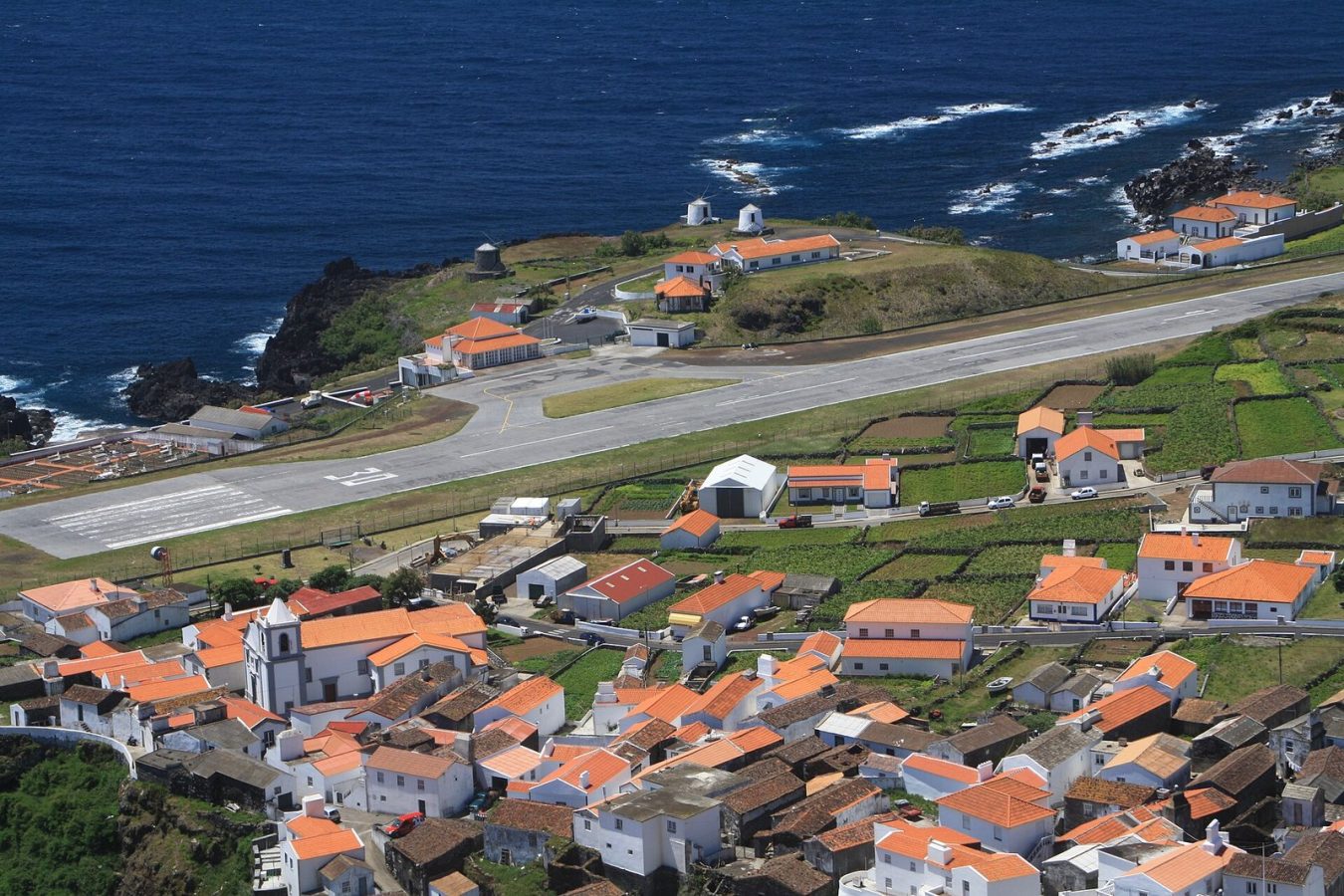
Photo: Dreizung, CC BY-SA 3.0
| Getting there | Boat from Santa Cruz das Flores in under an hour, or a small-plane flight from Flores or other Azores islands |
|---|---|
| Gateway | Flores (Santa Cruz das Flores) |
| Travel time | Under an hour by boat; short flight |
| Days | A day trip is enough |
| Best months | Jun–Sep for calm crossings; October for rare birds; winter boats often cancelled |
| Getting around | Walk the village; local vans or taxis drive up to the crater rim |
| Booking | Boat seats from Flores a few days ahead in summer; rooms on Corvo well ahead |
| Cost | Mid-range for the Azores |
| Beaches | Praia da Areia, a small dark-sand beach beside the airstrip; otherwise rocky shores |
| Sea | Atlantic Ocean |
| Archipelago | Azores |
| Area | 17 km² |
| Population | 435 (2023) |
| Highest point | 718 m (Morro dos Homens) |
| Airport | Yes, scheduled flights |
| Car-free | No |
| Checked | November 2026 |
What is sold for Corvo is really one product in several versions: a day excursion by boat from Flores.
The boats are fast open or semi-covered launches leaving from Santa Cruz das Flores, sometimes from Lajes. The crossing itself is part of the appeal, because dolphins are often seen, and many trips run along the cliffs and waterfalls of the north coast of Flores on the way out. On Corvo, a minibus or van takes the group up the only road to the rim of the Caldeirão, with time to look into the crater or walk down to the lake, and then back to the village for lunch and a stroll. The fuller versions add a local guide for the day; lunch is usually extra and paid in the village.
A cheaper do-it-yourself route is the regular passenger boat from Santa Cruz, then a taxi van up to the crater. This works, but timings are tighter and you need to arrange the van yourself.
Recommendation: book a guided day trip from Flores with the crater transfer included, and keep a second day free in case the sea cancels it.
The collapsed summit of the old volcano is about 2 km across and some 300 metres deep, with a shallow lake and small islets on its grassy floor, grazed by cattle. From the rim, reached by road, a steep path drops to the water in about 40 minutes. Clouds roll in fast, so go up while it is clear.
The only village sits on a lava platform at the southern tip, a tight grid of dark stone houses and narrow lanes. Look for the traditional wooden locks still on some doors, the church of Nossa Senhora dos Milagres, and the small ecomuseum. Everything is within ten minutes on foot from the harbour.
Above the village stand a few restored stone windmills with conical roofs, once used to grind maize and now one of the best viewpoints over the village, the harbour and Flores across the strait. Below them the short runway runs right to the sea; watching the small plane land is a local event.
The highest point of the island, at 718 metres, rises on the rim of the crater. On a clear day a walk along the edge from the end of the road gives views down into the Caldeirão on one side and sheer cliffs dropping to the Atlantic on the other. Only go with good visibility and stay on the tracks.
Corvo is known among European birdwatchers for the rare American songbirds blown across the Atlantic by autumn storms. In October the island fills with birders working the sheltered valleys and fields above the village. The rest of the year Cory's shearwaters nest on the cliffs, and their eerie calls at night are hard to forget.
Our pick for each kind of trip, with live dates and prices. Free cancellation on most.
Best for: First visit, a day from Flores
Combines the boat crossing from Santa Cruz with a drive up to the crater and time in the village, the simplest way to see Corvo in a day.
Corvo has two links with the outside world, both often hostage to the weather. The regular passenger boat crosses from Santa Cruz das Flores in well under an hour and runs most often in summer, with fewer sailings in winter; tourist launches on the same route add sightseeing. The crossing is open water and can be rough even in summer.
The small airstrip next to the village takes island flights in small turboprop planes, connecting with Flores and other Azores islands such as Faial and Terceira; flights are few and fill up. To reach Flores, fly from Ponta Delgada or Horta. Do not bring a car: there is no car ferry for visitors, and you would not need one. If you plan a return to Flores the same day, check the last boat and allow for cancellations.
The village is tiny and walkable, and the harbour, airstrip, windmills and beach are all within a 15-minute walk. The only real road climbs about 6 km to the crater rim; most visitors go up in a local van or taxi waiting at the harbour, agree a pickup time and walk part of the way down. Walking the whole road takes around two hours uphill. There is no public bus and no car hire worth speaking of.
June to September is the season: the sea is calmest, the boats run most reliably, the hydrangeas flower in early summer and daytime temperatures sit in the low to mid twenties. The sea warms to around 22 degrees by late summer. August is the busiest month, but busy here means a few dozen day visitors.
October is a special season for birders, who book every room on the island for the rare migrants, while for other visitors the weather begins to turn. From November to April Atlantic storms bring wind, rain and long gaps between boats and flights, and the crater is often in cloud.
Whatever the month, mist can hide the Caldeirão within minutes, so if the summit is clear when you land, go there first. One day is enough for most people; spend a night only to feel the island once the boat has gone.
Most people sleep on Flores and visit Corvo for the day. Santa Cruz das Flores is the obvious base, with the boat harbour and the main airport, while Lajes in the south has a quieter harbour and is closer to the waterfalls of the west coast. On Corvo itself there are only a handful of rooms in Vila do Corvo and a small campsite by the beach, so staying overnight needs booking well ahead, especially in October.
Corvo appears on fourteenth-century maps, but it was only settled for good in the sixteenth century, partly by people sent from Terceira and by enslaved workers. For centuries the islanders lived almost cut off, farming the slopes in common, grinding maize in windmills and fending off pirates; in 1632 they drove off a raid that local tradition credits to the Virgin of the Miracles. The community governed itself by consensus, which is why the wooden locks never needed metal keys. Many families emigrated to America, and the population still hovers around 400.
Corvo is a side trip from Flores, and the two together make up the western group of the Azores. Give Flores at least three days for the waterfalls, crater lakes and coastal walks, with Corvo as one of them. Faial and Pico in the central group are a flight away via Horta, so a route can run São Miguel, Pico, Faial, Flores and Corvo.
Boat from Santa Cruz das Flores in under an hour, or a small-plane flight from Flores or other Azores islands.
From Flores (Santa Cruz das Flores): under an hour by boat; short flight.
A day trip is enough.
Jun–Sep for calm crossings; October for rare birds; winter boats often cancelled.
Walk the village; local vans or taxis drive up to the crater rim.
Go if you want a remote Atlantic island, a crater walk and the feel of a village where everyone knows everyone. Skip it, or stay on Flores, if you need beaches, restaurants or certainty: rough seas cancel the boats often.
Mid-range for the Azores.
Praia da Areia, a small dark-sand beach beside the airstrip; otherwise rocky shores.
Boat seats from Flores a few days ahead in summer; rooms on Corvo well ahead.
Yes. Boat trips, guided tours and day trips for Corvo can be booked online; live prices and free cancellation on most are shown on this page.
Azores, Portugal
São Miguel is the largest island of the Azores, a green volcanic island in the mid-Atlantic about two hours'…
269 tours & trips
Azores, Portugal
Santa Maria is the southernmost and oldest island of the Azores, a 97-square-kilometre island less than 100 km south of…
210 tours & trips
Azores, Portugal
Pico is the second-largest island of the Azores, a black volcanic cone rising 2,351 metres out of the Atlantic, the…
181 tours & trips
Azores, Portugal
Terceira is a green volcanic island of 400 square kilometres in the central Azores, about 1,200 km west of Lisbon,…
86 tours & trips
Azores, Portugal
Faial is a volcanic island of 173 square kilometres in the central Azores, facing the cone of Pico across a channel…
23 tours & trips
Azores, Portugal
Sao Jorge is a long, narrow island in the central Azores, 53 km long and only 8 km wide, a volcanic ridge with high…
15 tours & trips