São Miguel
Azores, Portugal
São Miguel is the largest island of the Azores, a green volcanic island in the mid-Atlantic about two hours'…
269 tours & trips
Portugal · Atlantic Ocean · Nature & wildlife island
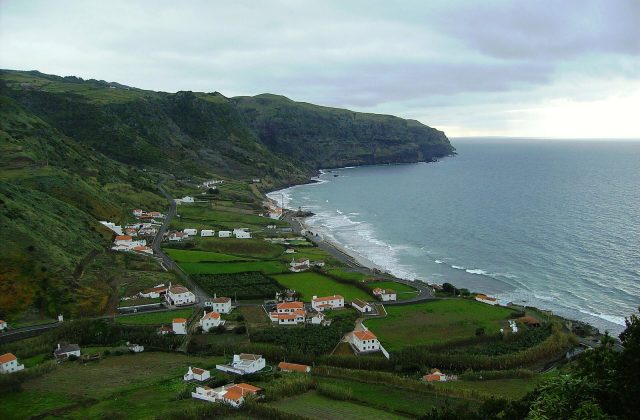
Sao Jorge is a long, narrow island in the central Azores, 53 km long and only 8 km wide, a volcanic ridge with high cliffs falling to flat fajas, small coastal plains where villages and fields sit by the sea. It is famous for its strong cheese and some of the best hiking in the archipelago.
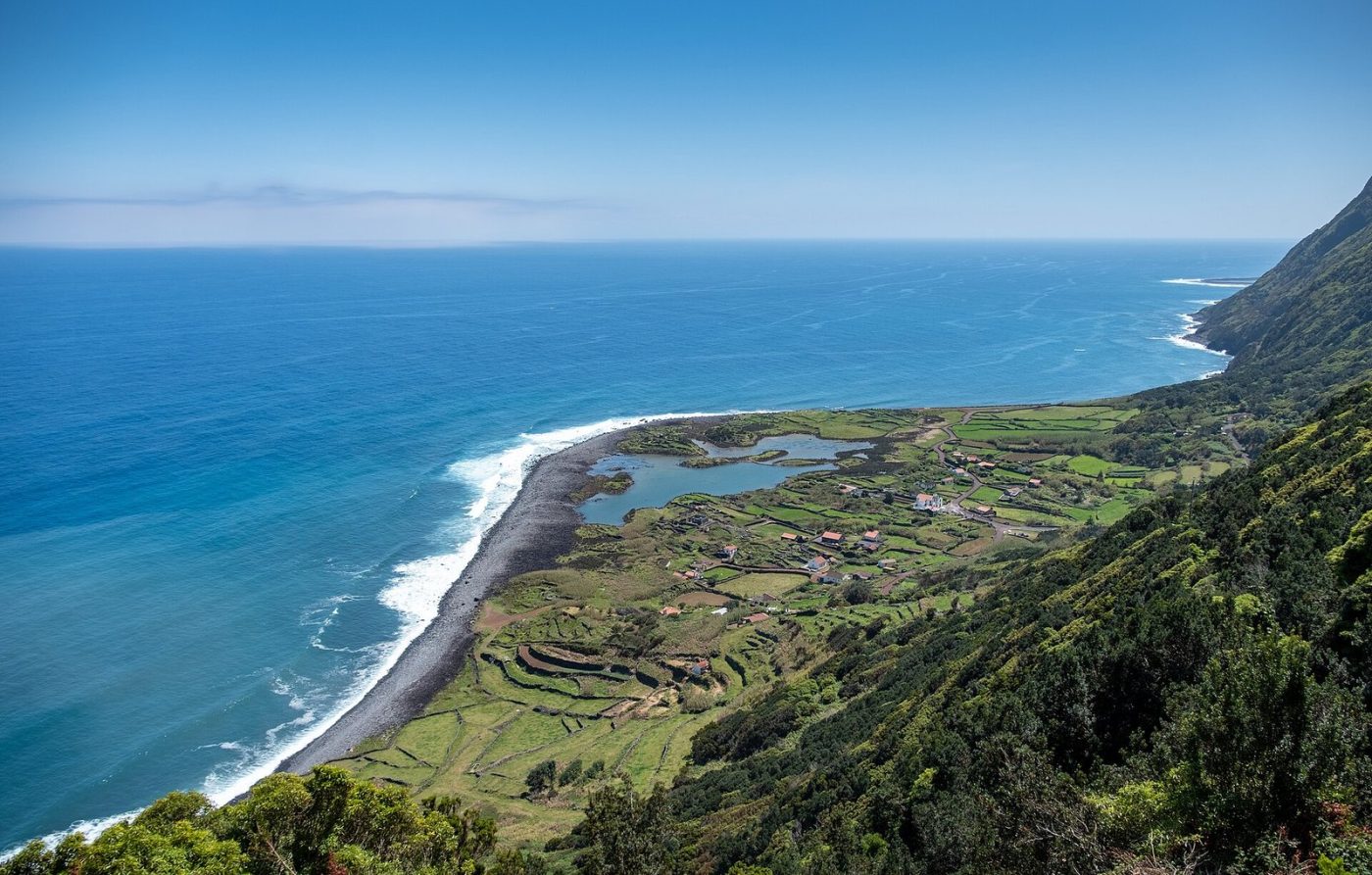
Photo: Jules Verne Times Two, CC BY-SA 4.0
| Getting there | Ferries from Horta (Faial) and Madalena (Pico) in about 1 to 2 h; short flights from Ponta Delgada and Terceira |
|---|---|
| Gateway | Horta (Faial) or Madalena (Pico); own airport |
| Travel time | 1 to 2 h by ferry; about 40 min flight from Ponta Delgada |
| Days | 3 to 5 nights |
| Best months | May–September; wetter and windier Nov–Mar, with rougher seas |
| Getting around | Rent a car; taxis and guided transfers to trailheads; buses are few |
| Booking | Cars and rooms weeks ahead in summer; ferries a few days ahead in July–August |
| Cost | Mid-range, cheaper than Sao Miguel |
| Beaches | No sandy beaches; natural rock pools at Faja do Ouvidor and Velas; swim in the harbours |
| Sea | Atlantic Ocean |
| Archipelago | Azores |
| Area | 238 km² |
| Population | 8,373 (2021) |
| Highest point | 1,053 m (Pico da Esperanca) |
| Airport | Yes, scheduled flights |
| Car-free | No |
| Checked | October 2026 |
Sao Jorge is a quiet island and the products sold reflect that: hiking, small-boat trips and food, all run by local operators.
The most useful are guided hikes. The famous walk from the Serra do Topo down to the Faja da Caldeira de Santo Cristo and on to Faja dos Cubres is one way, so a guide with transport saves arranging a taxi at the end. Full-day treks cover longer sections of the north coast, and shorter guided walks visit the forest reserve and the southern fajas around Faja dos Vimes. Camping trips stay a night on a faja.
On the water, whale and dolphin watching runs from Velas and Calheta, with a biologist and a briefing; two-hour coastal boat rides stop for snorkelling under the cliffs, and dive centres offer two-dive mornings for certified divers.
Land tours by jeep or minivan cover the viewpoints, villages and fajas in four hours or a day, sometimes with lunch or a boat trip. Food tours visit cheese makers, a volcanic cave exhibition and producers of local products, and a sunset picnic with wine is offered too.
Recommendation: rent a car, book the guided Santo Cristo hike, and add a whale-watching trip on a calm day.
The most famous faja lies at the foot of the north cliffs, around a lagoon where clams are farmed, unique in the Azores. There is no road: walk down a steep path from the Serra do Topo in about 90 minutes, eat clams at the small restaurant, and continue along the coast to Faja dos Cubres. Surfers come for the waves.
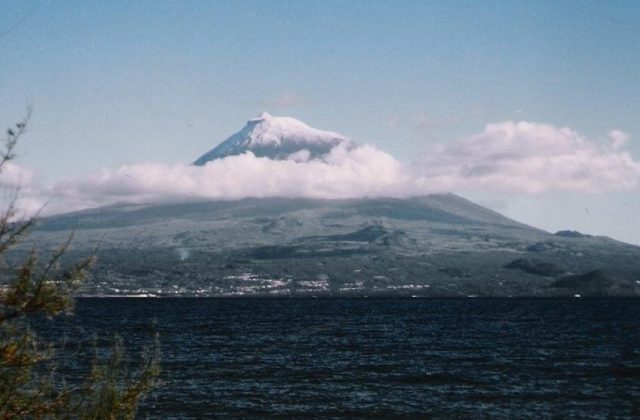
The island's spine is a line of volcanic cones and green pasture, highest at Pico da Esperanca, 1,053 metres. On a clear day the views reach Pico, Faial, Graciosa and Terceira. Drive the high road and stop at viewpoints, or walk part of the ridge trail, but check the weather first: cloud often hides everything.
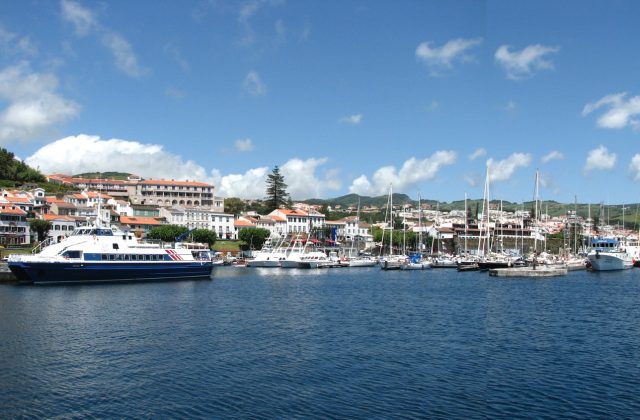
The main town has a harbour, a stone sea gate, a fine church and natural swimming pools below the cliffs. Nearby, the bell tower at Urzelina stands alone after lava from the eruption of 1808 buried its church, and the viewpoints at Morro de Velas look straight across to Pico. Rosais lighthouse marks the western tip.
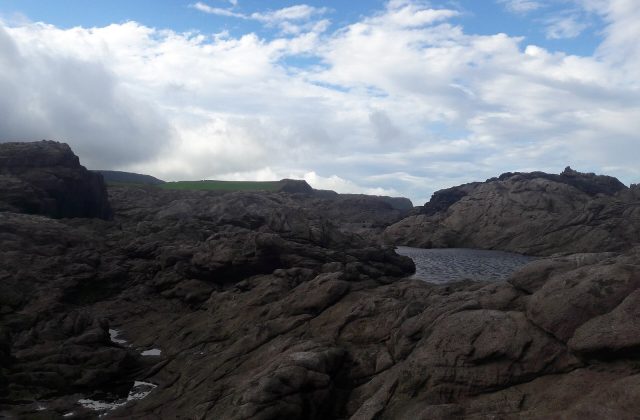
A road winds down the north cliffs to Faja do Ouvidor, a fishing hamlet with a natural rock pool among black basalt columns, the best swimming spot on the island in calm weather. On the way, the viewpoint at Norte Grande looks down on the faja. Bring water shoes, and avoid swimming when the Atlantic swell is up.
East along the south coast, Calheta is the second town and centre of cheese making. Further on, Faja dos Vimes grows coffee in a sheltered microclimate and keeps a tradition of hand-woven quilts. At the eastern tip, Topo has a lighthouse and an islet offshore where seabirds nest, with good walks over the cliff tops.
Our pick for each kind of trip, with live dates and prices. Free cancellation on most.
Best for: First visit, the classic faja hike
A guide and transport for the walk down from the ridge to the lagoon of Santo Cristo and along the coast, solving the problem of getting back to your car.
Sao Jorge has a small airport near Velas with flights of about 40 minutes from Ponta Delgada and short hops from Terceira; there are no direct flights from mainland Portugal, so connect in Ponta Delgada or Terceira.
Most visitors come by ferry from the neighbouring islands of the central group. Atlanticoline boats link Velas with Madalena or Sao Roque on Pico and with Horta on Faial, taking between one and two hours depending on the route, with more sailings from May to September and fewer, weather-dependent ones in winter. In summer, longer routes also connect Terceira and Graciosa. Buy tickets at the port offices or online, and allow a buffer for cancellations when the sea is rough. Cars can be taken on some ferries, but renting on the island is usually simpler.
A rental car is the practical choice: the main road runs the length of the island along the ridge and southern slopes, with steep, winding side roads down to the fajas. Buses are few and timed for locals. Taxis can be booked for hike transfers, an important service as many trails are one-way. Some fajas, including Santo Cristo, are reached only on foot or by quad along a rough track.
The best time is May to September, when temperatures sit around 20 to 25 degrees, the sea warms to 20 to 23 degrees, ferries run most often and the trails are driest. July and August are busiest but rarely crowded, with local festivals in the villages. Hydrangeas flower along the roads from late June.
From November to March the island is mild but wet and windy, with frequent cloud on the ridge, slippery trails and ferries sometimes cancelled by Atlantic storms, though a few clear days can be beautiful. Spring and autumn are good for hiking. Weather changes quickly at any time of year, so keep plans flexible. Three days allow the main hikes and drives; five give room for bad weather.
Velas, the main town, has the most rooms, restaurants and the ferry port, and is the best base for a first visit and for seeing Pico across the water. Calheta, on the south coast, is quieter and central for both ends of the island. Rural houses and small inns in the fajas, such as Faja dos Cubres and Faja do Ouvidor, give peace and sea views but mean steep drives. Topo, at the far east, is remote.
The Portuguese settled Sao Jorge in the fifteenth century, joined by Flemish colonists at Topo, and the island lived from cattle, wheat and woad. Its cheese, a hard, peppery cow's milk cheese now protected by origin, has been traded for centuries. Earthquakes and eruptions shaped life here: a great earthquake in 1757 killed many people and dropped cliffs into the sea, creating new fajas. Many islanders emigrated to America, and today dairy farming and quiet tourism keep the villages alive.
Sao Jorge forms the Triangle with Pico and Faial. Pico, 15 km across the channel, is about an hour away by ferry and offers the climb of Portugal's highest mountain and UNESCO-listed vineyards; Horta on Faial, with its yacht harbour, is a little further. A good week is three nights on each. Terceira is a short flight away.
Ferries from Horta (Faial) and Madalena (Pico) in about 1 to 2 h; short flights from Ponta Delgada and Terceira.
From Horta (Faial) or Madalena (Pico); own airport: 1 to 2 h by ferry; about 40 min flight from Ponta Delgada.
3 to 5 nights.
May–September; wetter and windier Nov–Mar, with rougher seas.
Rent a car; taxis and guided transfers to trailheads; buses are few.
Go if you want spectacular cliff hikes down to fajas, quiet villages, good cheese and views of Pico across the channel. Skip it or choose Sao Miguel if you want hot springs, crater lakes, more restaurants and easy flights.
Mid-range, cheaper than Sao Miguel.
No sandy beaches; natural rock pools at Faja do Ouvidor and Velas; swim in the harbours.
Cars and rooms weeks ahead in summer; ferries a few days ahead in July–August.
Yes. Boat trips, guided tours and day trips for Sao Jorge can be booked online; live prices and free cancellation on most are shown on this page.
Azores, Portugal
São Miguel is the largest island of the Azores, a green volcanic island in the mid-Atlantic about two hours'…
269 tours & trips
Azores, Portugal
Santa Maria is the southernmost and oldest island of the Azores, a 97-square-kilometre island less than 100 km south of…
210 tours & trips
Azores, Portugal
Pico is the second-largest island of the Azores, a black volcanic cone rising 2,351 metres out of the Atlantic, the…
181 tours & trips
Azores, Portugal
Terceira is a green volcanic island of 400 square kilometres in the central Azores, about 1,200 km west of Lisbon,…
86 tours & trips
Azores, Portugal
Faial is a volcanic island of 173 square kilometres in the central Azores, facing the cone of Pico across a channel…
23 tours & trips
Azores, Portugal
Corvo is the smallest and most northerly island of the Azores, an extinct volcano of 17 square kilometres with a single…
4 tours & trips